Why Commercial Fish Farm Projects Exceed Budget and How to Prevent Cost Overruns
Short answer: Commercial fish farm projects typically exceed their initial budget because buyers focus on equipment prices while overlooking system interfaces, site-specific civil works, and international logistics. Cost overruns frequently stem from scope gaps—items that neither the manufacturer nor the local contractor included in their quotes—such as specialized pipework or commissioning labor. Without a feasibility study guide and a rigorous RFQ process, these hidden expenses only surface during construction. This article is a planning guide only, not engineering or financial advice.
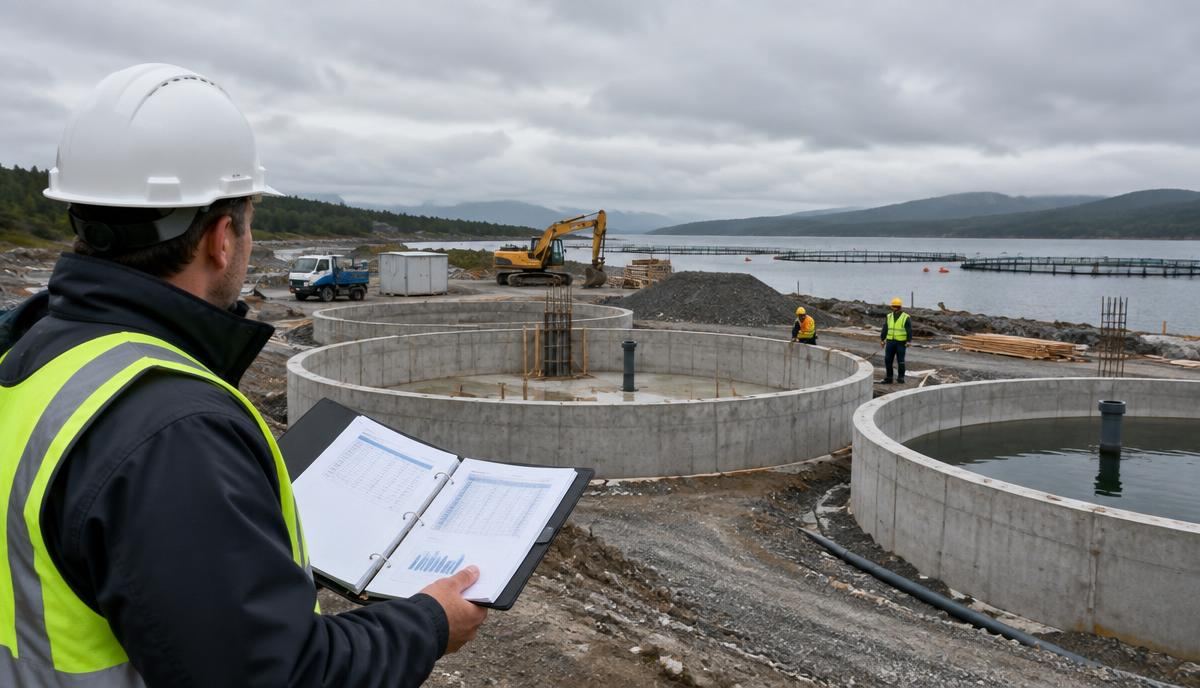
Why do scope gaps between aquaculture equipment suppliers cause budget overruns?
A primary reason for budget failure is the lack of clear boundaries between technology providers. In a large project, a buyer might purchase filtration from one manufacturer and oxygenation from another, assuming they fit perfectly. However, if contracts do not define responsibility for interconnecting pipes and software integration, the buyer pays for these missing components at a premium. These RAS cost overruns and scope gaps can add significant costs to the total expenditure. Using a multi-supplier aquaculture project interfaces strategy forces suppliers to state exactly where their responsibility ends.
What hidden site development and civil works costs should buyers expect?
While equipment quotes are accessible, the cost of preparing land for a fish farm is highly variable. Many buyers focus on equipment but fail to account for investment in soil stabilization, drainage, and foundations capable of supporting heavy water tanks. A thorough aquaculture site selection and water assessment is crucial to identify geological issues that require expensive treatments. If these site-specific requirements are not integrated into the budget using a capex estimator, the project may run out of funds.
How do power and water utility connections impact the total project cost?
Bringing high-capacity electricity and water to a remote site is a major financial undertaking that developers often fail to quantify early. Commercial fish farms require significant, reliable power to run pumps and monitoring systems daily. If the local grid is insufficient, the buyer must pay for new substations or high-voltage lines. Similarly, securing consistent high-quality water involves drilling deep wells or building intake structures, both subject to permitting. To mitigate these risks, buyers should consult a fish farm backup power generator guide and use a procurement toolkit.
Why are freight, duties, and international logistics often underestimated?
When sourcing specialized technology globally, the factory price is only a fraction of the total landed cost. Many buyers are surprised by the cost of shipping containers, especially when freight rates fluctuate. Beyond transportation, import duties and local taxes add a substantial percentage to the price, depending on the country. Navigating the complexities of shipping RAS equipment internationally requires understanding incoterms for aquaculture equipment purchases to determine who pays for insurance. Failing to account for these logistical expenses is a primary driver of budget overruns.
How do construction delays and design changes inflate aquaculture capital expenditure?
Time is money in large-scale construction, and any delay increases project overheads. In aquaculture, delays are often caused by late deliveries, permit holdups, or design mismatches with local codes. When a design change is required mid-construction, the cost of retrofitting structures is much higher than if the change were made on paper. These adjustments ripple through the system, requiring new calculations and potentially different equipment. To maintain control over what affects aquaculture capex, buyers must insist on locked designs.
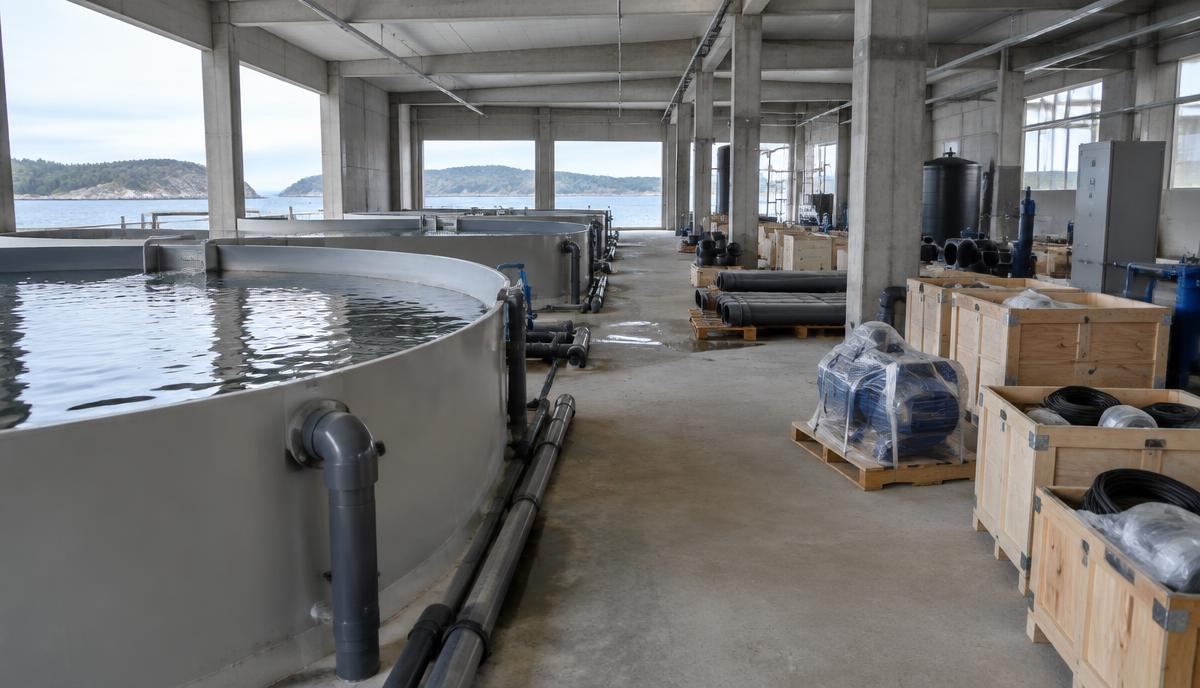
What role does the commissioning phase play in unexpected fish farm expenses?
Commissioning is technically demanding and financially risky. This stage involves testing every pump and sensor to ensure they operate according to design. Many buyers fail to budget for specialized labor from manufacturers to supervise this, plus the cost of electricity and consumables used during testing. A comprehensive aquaculture equipment commissioning and handover plan is essential to identify who is responsible for the biological start-up of filters. If commissioning reveals technical flaws requiring remediation, costs escalate quickly, especially if supply contracts did not clearly define written performance commitments.
Why is insufficient working capital a risk for new aquaculture project launches?
A common mistake is focusing exclusively on hardware costs while neglecting working capital needed to reach the first harvest. Once the facility is stocked, the farm incurs costs for feed, labor, and energy without generating revenue. If the budget does not include a sufficient buffer for these operating expenses, the business may face a liquidity crisis as the fish reach their most valuable stage. Buyers should use a fish farm mortality reduction planning strategy to account for potential stock losses and ensure financing covers a full production cycle.
How can buyers secure comprehensive quotes from aquaculture technology manufacturers?
To prevent overruns, procurement must shift from asking for a price list to requesting detailed, all-inclusive proposals. When buyers submit an RFQ intake form, they should demand a breakdown of every component, including shipping and installation supervision. It is vital to ask suppliers to state exactly what is excluded from their scope, which forces them to highlight potential gaps that the buyer will need to fill through other vendors. Comparing offers line-by-line is the only way to ensure a fair comparison. Engaging with a platform that provides a human-reviewed RFQ process helps to normalize these bids.
What strategies prevent cost escalations during the procurement of RAS equipment?
Success in building a commercial fish farm depends on rigorous preparation and a transparent sourcing strategy. Buyers should begin by using aquaculture calculators and farm planning workflows to define technical requirements before approaching the market. Standardizing requirements for every supplier reduces the risk of receiving incomparable quotes that hide scope gaps. Another strategy is to appoint a single point of contact for project integration who tracks the interfaces between civil, mechanical, and electrical contractors. Finally, maintaining a healthy contingency fund provides flexibility.
Checklist
Define clear scope boundaries for every supplier; conduct a detailed geological site assessment; obtain firm quotes for power and water connections; calculate all international freight and import duty expenses; include a significant contingency fund for design changes; budget for expert supervision during the commissioning phase; secure enough working capital to cover the first growth cycle; verify that all interconnecting pipework is included in the bid; establish a formal change-order process; and normalize all supplier quotes to ensure a direct line-by-line comparison.
Frequently asked questions
Q: Why do equipment quotes differ between suppliers? A: Variations stem from automation levels and the inclusion of installation services. Q: How much should I set aside as a contingency for a new project? A: While every project is different, setting aside a substantial portion of the capital cost as a buffer for unforeseen conditions is standard practice. Q: Can I save money by sourcing equipment from multiple manufacturers? A: Sourcing from multiple vendors can reduce prices but increases the risk of scope gaps. Q: What is the most common hidden cost? A: Unexpected import duties and specialized labor for on-site commissioning are frequently overlooked.
How do FishMatch Group's calculators and reviewed RFQ help?
FishMatch Group provides the tools and expertise needed to bridge the gap between initial concepts and bankable aquaculture projects. Our suite of calculators allows buyers to estimate capital expenditure and operating costs with greater accuracy by highlighting variables that impact the bottom line. By submitting a reviewed RFQ, buyers benefit from a process where our team identifies potential scope gaps and helps make supplier offers directly comparable. This transparent approach eliminates the ambiguity that leads to budget overruns, allowing developers to make informed procurement decisions based on the true total cost of ownership.
Related: Integrated aquaculture project planning, How to plan a commercial aquaculture project, and Why successful aquaculture projects begin before equipment.
Aquaculture planning benchmarks
| Figure | Value | Context |
|---|---|---|
| CAPEX — RAS | USD 9,000–14,000 per tonne/yr | Global baseline before country cost factor. |
| CAPEX — Ponds | USD 1,800–4,000 per tonne/yr | Lined or earthen ponds, excluding land. |
| CAPEX — Cages | USD 2,500–5,500 per tonne/yr | Cages, moorings, nets and service equipment. |
| CAPEX — Flow-through | USD 4,000–7,000 per tonne/yr | Raceways and water intake works. |
| Energy use | RAS ~6 kWh/kg; ponds ~1.2; flow-through ~1.5; cages ~0.3 | Per kg of fish produced. |
| Typical FCR | Trout 1.1; salmon 1.2; shrimp 1.4; tilapia 1.6; carp 1.8 | kg feed per kg growth; varies with feed and management. |
| Farm size where FishMatch reviews projects | From ~USD 250,000 total project value | Commercial fish and shrimp projects. |
Related articles
Why Feed Conversion Ratio (FCR) Drives Fish and Shrimp Farm Economics
Feed Conversion Ratio (FCR) is the primary driver of aquaculture profitability, linking feed expenditure to biomass output and determining financial viability.
PlanningWhy Aquaculture Buyers Need a Written Technical Specification Before Requesting Quotes
Sending a detailed technical specification ensures you receive comparable equipment quotes, reduces the risk of expensive change orders, and provides a clear basis for system acceptance tests.
PlanningHow to Start a Commercial Shrimp Farm: A Step-by-Step Guide for Global Investors
Start a commercial shrimp farm by assessing site water quality, choosing production systems, and securing reliable aeration and post-larvae supply through a structured RFQ.
PlanningHow to Start a Commercial Tilapia Farm: A Buyer’s Guide to Systems and Equipment
Starting a commercial tilapia farm involves selecting the right production system, securing high-quality inputs, and utilizing professional sourcing platforms for technical equipment procurement.
Where this fits in a real project
Every FishMatch project runs through the same five reviewed stages, from a first enquiry to comparable quotations. See the full buyer journey.