Global Integrated Aquaculture Project Planning: Maximizing Output and Quality
Short answer: Integrated aquaculture project planning ensures that every component of the farm—from water treatment and life support systems to feed supply and cold chain logistics—is designed to work in harmony. By treating these variables as a single system, commercial operators can significantly reduce biological risk, optimize feed conversion, and maintain higher product quality from harvest to market. This holistic approach is essential for achieving the predictable output required for large-scale commercial success and long-term financial stability.
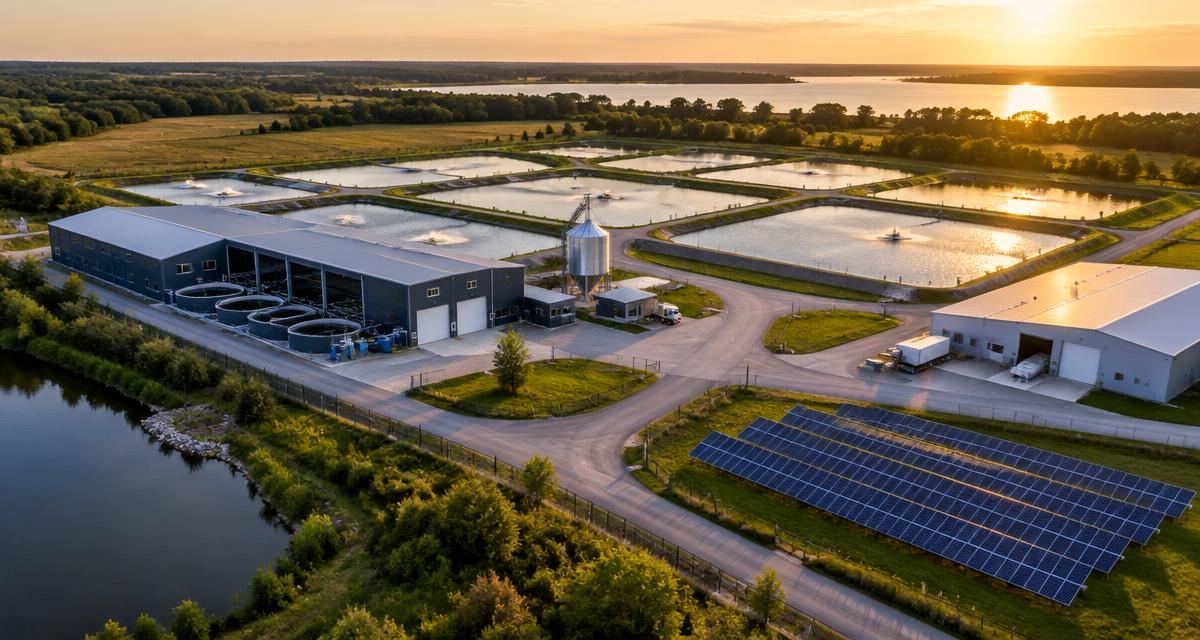
Why does integrated planning matter for commercial aquaculture?
In commercial aquaculture, system performance is only as strong as its weakest link. A common mistake is sourcing equipment, fingerlings, and feed in isolation, without considering how these elements interact.
How to choose equipment suppliers for an integrated system?
Selecting suppliers for an integrated project requires a focus on technical compatibility and post-sales support. Equipment must be capable of integrating with other systems.
How much does a fully integrated aquaculture project cost?
The cost of an integrated aquaculture project varies by scale, species, location, and technology. Because these projects involve complex systems, there is no single 'standard' price.
How to synchronize feed and fingerling supply with farm operations?
A complex aspect of integrated aquaculture is synchronizing biological cycles with supply chain logistics. Growth rates are tied to fingerling quality and the nutritional profile of the feed.
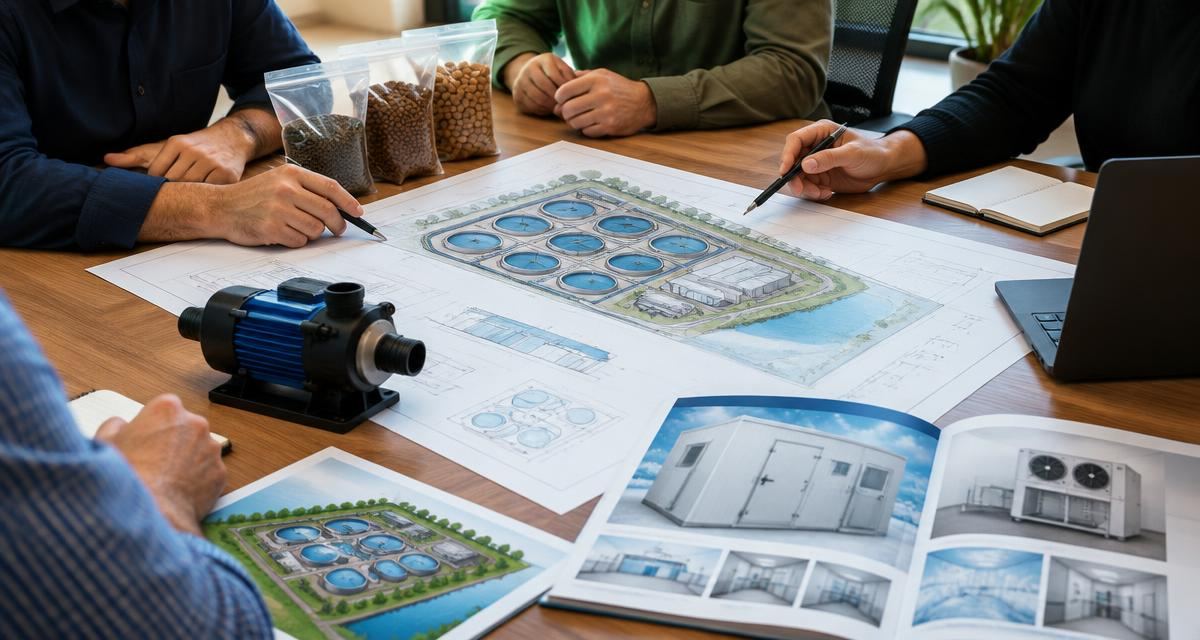
How does power reliability affect the cold chain and farm output?
Power is the lifeblood of modern commercial aquaculture. In systems like Recirculating Aquaculture Systems (RAS), power loss for even a short duration can lead to rapid oxygen depletion and mass mortality.
What is the impact of integrated planning on fish mortality rates?
Reducing mortality is one of the most effective ways to improve profitability. High mortality often results from cumulative stress caused by poor water quality, inadequate nutrition, or improper handling. Integrated planning addresses these issues by creating a stable environment. When filtration, aeration, and feeding schedules are designed to work together, water quality remains consistent, reducing stress and strengthening immune systems. This stability is the foundation of high-survival rates in intensive systems, which is a commercial necessity that increases the total biomass available for sale. Mortality rates are also affected by the quality of the initial stock. Integrated planning ensures that hatchery supplies are free from pathogens and have the genetic potential for high survival in the farm's specific conditions. Combined with a high-quality feed regimen, the fish are better equipped to handle environmental fluctuations. An integrated approach includes standard operating procedures for harvesting and transport, critical moments where stress can lead to delayed mortality. By managing these risks holistically, the farm can achieve a higher percentage of marketable biomass and avoid the significant financial losses associated with catastrophic mortality events. A well-planned project prioritizes biosecurity and environmental stability as its primary defense against the biological risks inherent in commercial aquaculture operations.
How to manage multiple commercial suppliers in a single project?
Feed, cold storage and wider agriculture often sit outside an aquaculture equipment scope, yet they decide how much good product reaches the market. FishMatch Group works alongside sister sourcing platforms: FeedMatch for aqua feed sourcing and feed mill projects, ColdMatch for industrial refrigeration and cold storage, and SeedMatch for agriculture project suppliers. Planning these pieces together means the feed arrives in the pellet sizes the feeders handle, the cold room is sized to the harvest plan, and nothing is left to a late change order.
Managing a large-scale project involves coordinating with various suppliers across multiple regions. This is a logistical challenge involving international shipping, customs, and site delivery schedules. Success depends on clear communication and a well-defined timeline. Each supplier must understand how their component fits into the larger picture and what the critical milestones are for delivery and installation. Effective management ensures that the project progresses logically, without the costly delays caused by out-of-sequence deliveries or missing parts. Misaligned schedules lead to expensive delays and damage to sensitive equipment stored in suboptimal conditions. Standardized procurement practices, such as clearly defined Incoterms, help manage international trade risks. Buyers should ensure each contract specifies responsibilities for shipping, insurance, and unloading. Supplier management also ensures that technical teams collaborate effectively. In a complex project, electrical contractors, plumbers, and equipment technicians must work together to commission the system. An integrated plan includes a lead coordinator who oversees these interactions. While FishMatch Group is not an engineering firm, the platform ensures that the initial RFQ is comprehensive, reducing the risk of missing critical components needed for a fully functional system. Strong relationships with suppliers, based on clear written expectations, are the foundation of smooth project execution and long-term operational reliability.
How to evaluate the long-term ROI of integrated planning?
Evaluating the Return on Investment (ROI) requires looking beyond initial costs. Integrated planning provides long-term value by improving yield and quality. Higher output is achieved through faster growth cycles and lower mortality, while better quality results in higher market prices and access to premium export markets. When these factors are considered over a five to ten-year period, the benefits of integrated planning become clear. It is an investment in the long-term stability and profitability of the business, as an integrated system uses fewer resources—such as water, energy, and labor—per kilogram of fish produced, significantly lowering the cost of production. Finally, the reduced risk profile of an integrated project makes it more attractive to lenders and investors. A project with a clear plan for power redundancy, biosecurity, and cold chain logistics is a safer investment than one with fragmented systems. This can lead to better financing terms and lower insurance premiums. By demonstrating a holistic understanding of commercial and biological risks, project owners can secure the capital needed for growth. Long-term ROI is the result of thousands of small efficiencies working together to create a robust and profitable aquaculture venture that can withstand market fluctuations and environmental challenges throughout its life, providing a sustainable return on the initial capital investment.
Checklist for integrated aquaculture project planning
A successful integrated plan requires attention to detail: define the target species and production volume to establish the project scale; verify water source quality and quantity to ensure long-term availability; design the energy system with primary and backup solutions to protect biological assets; coordinate with hatcheries for a reliable supply of high-quality seed stock; source feed that is nutritionally optimized for the specific life stages; integrate the cold chain and processing facilities to maintain product quality; establish automated monitoring for water quality and feeding to reduce human error; plan for effluent treatment to comply with environmental regulations; secure all necessary permits and licenses before breaking ground; and ensure that all equipment is compatible and supported by reliable technical services.
Frequently asked questions
Q: Why shouldn't I buy the cheapest equipment available? A: Cheap equipment often lacks the efficiency and durability needed for commercial operations, leading to higher long-term costs and increased risk of system failure. Q: Can I integrate new equipment into an existing farm? A: Yes, but it requires careful technical assessment to ensure that new components are compatible with existing control systems and power infrastructure. Q: How do I know if my feed is the right quality? A: Request detailed nutritional analysis and performance data from your supplier in writing and use sourcing platforms like FeedMatch to compare options. Q: What is the most common cause of failure in new projects? A: A lack of integrated planning is often the root cause, leading to mismatched systems, power failures, or an unstable cold chain.
Leveraging FishMatch Group tools for project success
Successful project planning starts with clear numbers and technical requirements. The FishMatch Group platform provides tools to help commercial buyers prepare projects. Starting with a detailed RFQ intake allows the team to review specific needs and match you with the right suppliers. This human-reviewed process ensures that offers are comparable and cover the full scope of requirements. By consolidating the sourcing process, you save time and reduce the risk of missing critical components needed for a fully functional system. Our calculators also help model the financial aspects of your farm, including the commercial-capex calculator, operating-cost calculator, energy-cost calculator, and feed-budget calculator. Using these resources allows for data-driven decisions that enhance project viability. These tools, combined with matched offers from reviewed suppliers, provide a solid foundation for commercial success, ensuring that all components of the farm are financially and technically aligned from the start, supporting long-term operational excellence and profitability in a competitive global market.
Related: Supplier checklist for aquaculture projects, Guide to fish farm feasibility studies, and Aquaculture project financing requirements.
Please note that the information provided in this article is for general planning guidance only and does not constitute engineering design, biological advice, or financial consulting. Commercial aquaculture projects involve significant risks, and all technical specifications and financial projections should be verified with qualified professionals and obtained from suppliers in writing before making any investment decisions.
Aquaculture planning benchmarks
| Figure | Value | Context |
|---|---|---|
| CAPEX — RAS | USD 9,000–14,000 per tonne/yr | Global baseline before country cost factor. |
| CAPEX — Ponds | USD 1,800–4,000 per tonne/yr | Lined or earthen ponds, excluding land. |
| CAPEX — Cages | USD 2,500–5,500 per tonne/yr | Cages, moorings, nets and service equipment. |
| CAPEX — Flow-through | USD 4,000–7,000 per tonne/yr | Raceways and water intake works. |
| Energy use | RAS ~6 kWh/kg; ponds ~1.2; flow-through ~1.5; cages ~0.3 | Per kg of fish produced. |
| Typical FCR | Trout 1.1; salmon 1.2; shrimp 1.4; tilapia 1.6; carp 1.8 | kg feed per kg growth; varies with feed and management. |
| Farm size where FishMatch reviews projects | From ~USD 250,000 total project value | Commercial fish and shrimp projects. |
Related articles
Planning a Commercial Biofloc Farm: Tanks, Aeration, Power and Equipment List
Short answer: a commercial biofloc farm needs tanks or lined ponds, heavy aeration/mixing, backup power, carbon dosing, solids removal and monitoring, sized and quoted as one matched scope.
PlanningFish Farm Permits and Environmental Licensing: What Approvals Does a Commercial Aquaculture Project Need?
Short answer: most commercial fish farms need water use, discharge, land use, species/health, building and import approvals; exact rules depend on your country, so confirm requirements with local authorities early.
PlanningFish Farm Insurance and Risk Management: What Insurers and Lenders Look For
What drives fish farm risk, what insurers and lenders typically ask about, and how design, backup systems and supplier documentation reduce exposure.
PlanningHow Long Does It Take to Build a Commercial Fish Farm?
Commercial fish farm timelines depend on permits, financing, and suppliers; ask suppliers for written schedule commitments instead of fixed estimates.
Where this fits in a real project
Every FishMatch project runs through the same five reviewed stages, from a first enquiry to comparable quotations. See the full buyer journey.