FishMatch Group · Technology, market and sourcing intelligence

Aquaculture Innovation & Intelligence Center

Buyer’s guide: free knowledge, innovation and intelligence →

Free, source-dated research and decision support for commercial buyers of fish and shrimp farm projects, hatcheries, processing equipment and farmed seafood. FishMatch Group is a supplier-neutral sourcing and procurement platform—not a manufacturer, farm operator or contractor.

Use existing guides, input-based tools and checklists to prepare a reviewed project scope. Technology briefs retain their technical-review status; no vendor endorsement, paid ranking or production, cost, yield or ROI promise.

Managed projects: USD 250,000 minimum. Free planning tools; confidential human review, no guaranteed match.

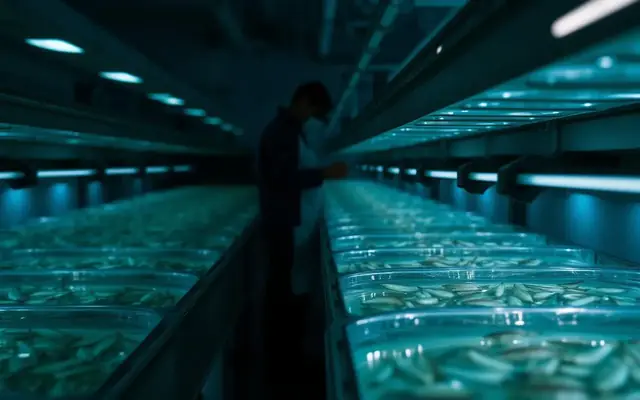
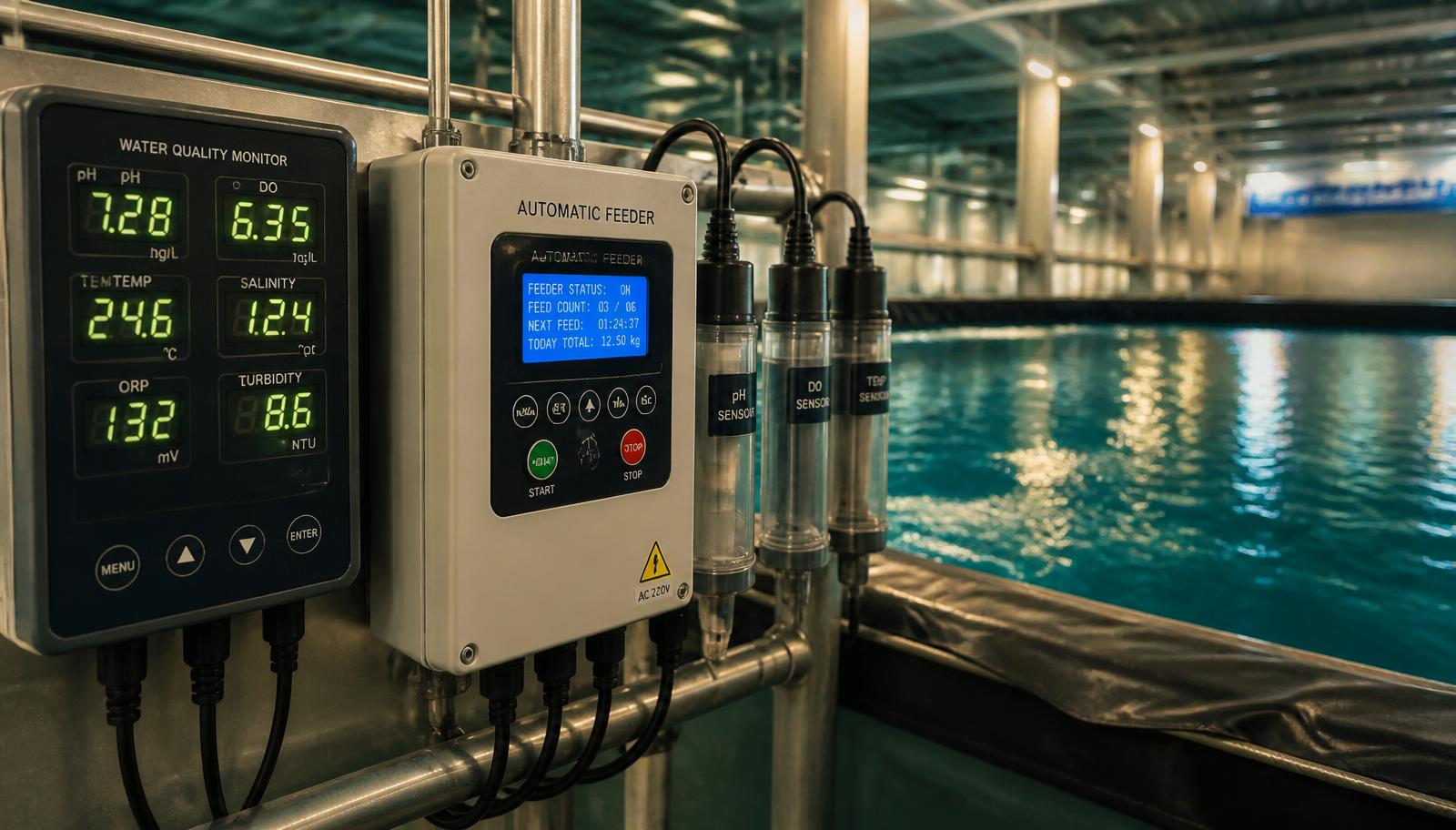
Conceptual illustration of water-monitoring and feeding equipment; not a verified facility or operating data
Existing FishMatch conceptual illustration — not product evidence or confirmed measurements.

Explore by topic

Eight topic areas for commercial buyers. Each links to the guides, calculators, technology briefs and request forms already on this site. Everything is free to read; requests are optional.

8 topics shown

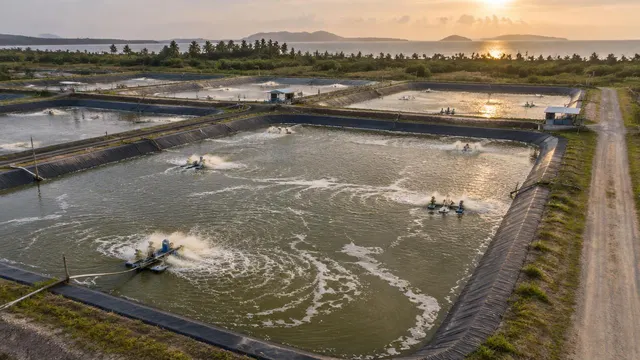
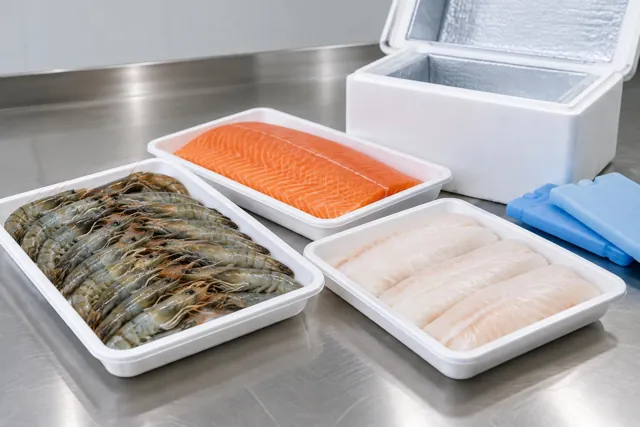
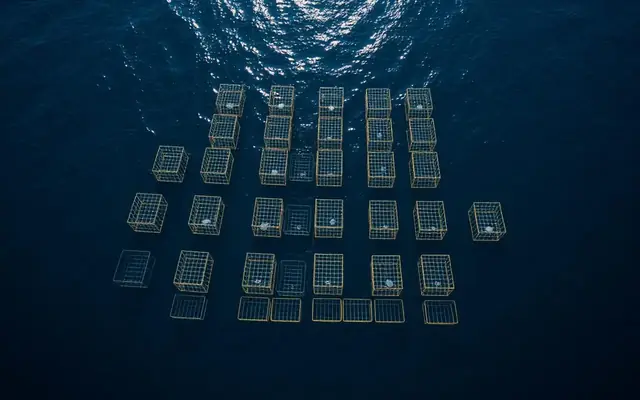
Images are illustrations, not photos of FishMatch projects or supplier facilities.

Before you buy any aquaculture technology: five checks

A short framework from the FishMatch procurement team. It applies to sensors, oxygen systems, feeders, RAS components and processing equipment alike.

  1. Name the problem and measure the baseline

    Write down what the technology must change — oxygen reserve, labour, survival risk, energy per kg — and record today's measured values. Without a baseline, no supplier claim can be checked.

  2. Check maturity for your case

    Ask whether the evidence is research, pilot or commercial use, and for which species, life stage and scale. A label for one setting does not carry over to yours.

  3. Get a site-specific design basis

    Require the offer to state the biomass, feed load, water and power assumptions it is sized for, plus the operating inputs it needs.

  4. Agree how acceptance is tested

    Define the acceptance test or pilot, who measures, for how long, and what counts as a pass — before the order is placed.

  5. Contract for the life of the equipment

    Cover installation, commissioning, training, warranty start and exclusions, spare-parts lead time, after-sales support and who owns the operating data.

Research and industry update · checked 19 October 2026

What is changing in aquaculture technology — and what to verify

Each topic is labelled by maturity. Labels describe the cited evidence only, not every product. Results depend on your site, species and operators.

Commercial supply

AI/IoT water-quality and farm monitoring

Oxygen and temperature probes are routine in RAS. Multi-parameter platforms (pH, behaviour, feed response) and AI analytics are offered commercially, but their accuracy on your site is not established by marketing.

Ask suppliers to show

  • Sensor type, range and sampling point per parameter
  • Calibration method, reference checks and drift handling
  • Integration with existing controllers, local alarms and offline mode
  • Named human responder and escalation for every alarm
  • Data ownership, export format and retention

Sources: FAO — Office of the Director-General (20 May 2025); The Fish Site (2026 (event 21–23 April 2026))

Water-quality sensors brief →
Pilot / research

Acoustic and computer-vision feeding/biomass observation

Acoustic AI that recognises active feeding in RAS has been tested in DTU research with an equipment supplier. Such tools can support feeding decisions and may help reduce feed waste; no saving or FCR result is promised.

Ask suppliers to show

  • Evidence for your species, tank type and pellet
  • Manual override and operator sign-off on feed changes
  • Biomass estimate error range and how it was measured
  • Which decisions stay with staff

Sources: The Fish Site (2026 (conference 22 September 2026))

Feeding automation brief →
Feasibility gate

RAS design, energy efficiency and modular systems

Modular RAS and IoT platforms are being marketed actively. Treat power, water, biosecurity, operating cost and technical-operator capability as go/no-go gates before comparing technology.

Ask suppliers to show

  • Power cost, grid reliability and full backup duty
  • Water source, quality, volume and discharge permit
  • Biosecurity zoning, quarantine and disinfection
  • Operating-cost basis entered by you (energy, oxygen, feed, labour)
  • Qualified RAS operators, training and remote support

Sources: The Fish Site (2026 (event 21–23 April 2026)); FAO — Office of the Director-General (20 May 2025)

RAS & water treatment brief →
Emerging, qualify first

Alternative aquafeed ingredients

Insect meal, single-cell protein and algae/microalgae are named alternatives to fishmeal. The World Bank notes insect meal must still compete with fishmeal on price and scale, and producers often sell first to pet food.

Ask suppliers to show

  • Nutrient profile and digestibility for the species and life stage
  • Delivered price and volume available at scale
  • Contaminant, safety and traceability testing
  • Feed and import regulatory approval in your market

Sources: World Bank (2025); FAO — Office of the Director-General (20 May 2025)

Feed sourcing via FeedMatch →

Premium and emerging species: the sources checked for this update do not provide comparable market evidence, so no species is recommended here. See the sourced country pages in Markets instead.

Infrastructure RFQ checklist

For farm, hatchery, RAS and equipment projects of USD 250,000 or more. Free for buyers; reviewed by our team before any introduction.

  1. Species and life stage
  2. Target annual output and harvest size
  3. Survival and yield assumptions — supplied by you, not by us
  4. Water source, quality and volume
  5. Power cost per kWh, reliability and backup
  6. Biosecurity plan and zoning
  7. Feed conversion assumption and feed supply (FeedMatch)
  8. Sensor/controls interoperability, data export and offline fallback
  9. Processing, packing and cold chain (ColdMatch)
  10. After-sales service, spare parts, training and response time in writing

Buying farmed fish or shrimp as product, not building a farm? Use the separate seafood path: shrimp sourcing request or premium seafood directory.

Commercial hatchery decisions: start with the project brief

For commercial Litopenaeus vannamei hatcheries, separate broodstock, larval rearing, post-larvae and nursery capacity. Record units, batch schedule and your own assumptions before comparing equipment. This is commercial aquaculture planning—not an aquarium or hobby hatchery guide.

Managed infrastructure procurement: USD 250,000 minimum; confidential human review, no guaranteed match. Tools do not submit a request automatically.

SPF/SPR, water and live feed: request scoped evidence

SPF and SPR are not interchangeable. Ask for the specified pathogen scope, programme, batch records, current testing and biosecurity controls—not a label alone. Include water-treatment responsibilities and live-feed production, treatment and contamination controls in the hatchery specification. Neither a label nor equipment purchase guarantees health, survival or output.

Source: FAO, 2005: hatchery guidelines for health management · checked 18 October 2026. Historical guidance, not a current batch certification or universal operating protocol; qualified site-specific review remains necessary.

Next: RAS, sensors, automation and biosecurity buyer guide (English technical-review draft). Detailed technology briefs below keep their individual evidence and maturity limits.

Project technology briefs

Each maturity stage applies only to the stated scope and cited source, never to the whole category.

11 briefs

Commercial deployment (scoped)

RAS & water treatment

Aligning water treatment with the production design basis.

Finfish or shrimp RAS; hatchery and nursery loops, subject to species-specific design.

Read planning brief
Commercial deployment (scoped)

Water-quality sensors

Turning measurements into a defined operating response.

Ponds, RAS, hatchery and nursery; parameter selection depends on species and water conditions.

Read planning brief
Commercial deployment (scoped)

Oxygenation & aeration

Defining oxygen delivery and emergency continuity.

Shrimp ponds, finfish RAS, nurseries and hatcheries; confirm exact species and life stage.

Read planning brief
Commercial deployment (scoped)

Feeding automation

Matching feed delivery controls to the farm's operating plan.

Finfish cages, ponds and RAS; shrimp or hatchery applications require their own validation.

Read planning brief
Not assessed

Health & biosecurity monitoring

Keeping monitoring, diagnosis and biosecurity responsibilities distinct.

Shrimp and finfish farms, broodstock, hatcheries and nurseries; pathogen and life-stage scope matters.

Read planning brief
Not assessed

Energy use & recovery

Testing whether energy integration fits the site's actual loads.

Temperature-managed RAS and hatchery facilities; other systems only after a load assessment.

Read planning brief
Not assessed

Hatchery & nursery systems

Specifying output by species and life stage, not a generic capacity claim.

Shrimp post-larvae and finfish juveniles; process requirements are not interchangeable.

Read planning brief
Research

Pond & biofloc operation

Understanding the operating obligations behind a system choice.

Shrimp or finfish ponds and tanks only where species-specific operating evidence supports the design.

Read planning brief
Pilot / development

Offshore & cage systems

Matching the structure and operating plan to the exposure of the site.

Marine finfish cages; exposure, species, permissions and service access require individual review.

Read planning brief

From technology to a project brief

Define species, life stage, site, water and utilities, then request engineer-reviewed scope and acceptance methods. Managed infrastructure RFQs require USD 250,000 or more. Buyer and supplier identities remain confidential; matching is human-reviewed.

Commercial buyer questions

What does the Innovation & Intelligence Center cover?
Commercial aquaculture and seafood sourcing: production systems (RAS, ponds, biofloc, cages), hatcheries and nurseries, water quality, oxygen and energy, costs and business cases, procurement and offer comparison, processing and cold chain, seafood trade data and market and regulatory updates. Reading and the calculators are free; RFQs are optional.
Are the prices, trade figures and market data on these pages live?
No. Trade statistics and official updates show their source and date, and calculators only organise the figures you enter. None of it is a live price, a supplier quotation or a forecast. Verify current prices, rules and availability before relying on them.
What should a commercial shrimp hatchery RFQ contain?
Define species and life stage, whether the scope includes broodstock, larval rearing, nursery or grow-out, intended output units and schedule, measured seasonal water conditions, site utilities, biosecurity responsibilities and acceptance tests. Capacity and cost calculations require your own assumptions and engineering review.
Are SPF and SPR interchangeable assurances?
No. SPF is a health-status claim scoped to specified pathogens and a documented programme; SPR concerns resistance to a named pathogen. Request current batch, testing and programme evidence. Neither label alone proves freedom from all pathogens or guarantees survival or output.
Can these tools establish CAPEX, OPEX or bankability?
No. Calculators organize user-entered scenarios, not supplier quotations or verified forecasts. Bankability requires site-specific technical evidence, dated costs, risks, permissions and independent provider assessment. These tools do not establish credit approval, financing availability or project returns.
What is FishMatch Group’s role and who can submit a managed project RFQ?
FishMatch Group is an independent, supplier-neutral sourcing and procurement platform, not a manufacturer, farm operator or contractor. Managed infrastructure RFQs require projects of at least USD 250,000. Human review governs sourcing, identities remain confidential and no match or outcome is guaranteed. Public planning tools are available without a procurement commitment.
Short answer

What is the fastest way to get quotes for Technology?

Submit one structured request for Technology. FishMatch Group translates it into a technical RFQ, runs a confidential sourcing round with project-matched international suppliers, and returns comparable quotations. No fee is charged to the buyer, and your identity and project details stay private until you choose to proceed.

How it works:
One structured request, human-reviewed before any supplier outreach
Typical turnaround:
Depends on scope and site data; no turnaround is guaranteed
Confidentiality:
Supplier names are never exposed during evaluation
Cost to buyers:
No fee charged to the buyer

FishMatch Group email updates

Get the buyer intelligence briefing

Practical aquaculture intelligence for sourcing and project decisions: new buyer guides, dated official-source updates and free tools, for the topics you choose.

What you will receive

  • A short digest of newly published FishMatch Group articles and center updates for your topics
  • A summary, publication date and link to the full article for every item
  • No advertising, supplier promotions or sales calls; subscribing never creates a sourcing request

We first email you a confirmation link. Your subscription starts only after you confirm.

Digest sending is still being set up. Confirmed subscribers receive the first digest when it starts; nothing else is sent.

Topics
How often

Read our Privacy Policy. Subscribing is separate from any procurement request.