Planning a Commercial Biofloc Farm: Tanks, Aeration, Power and Equipment List
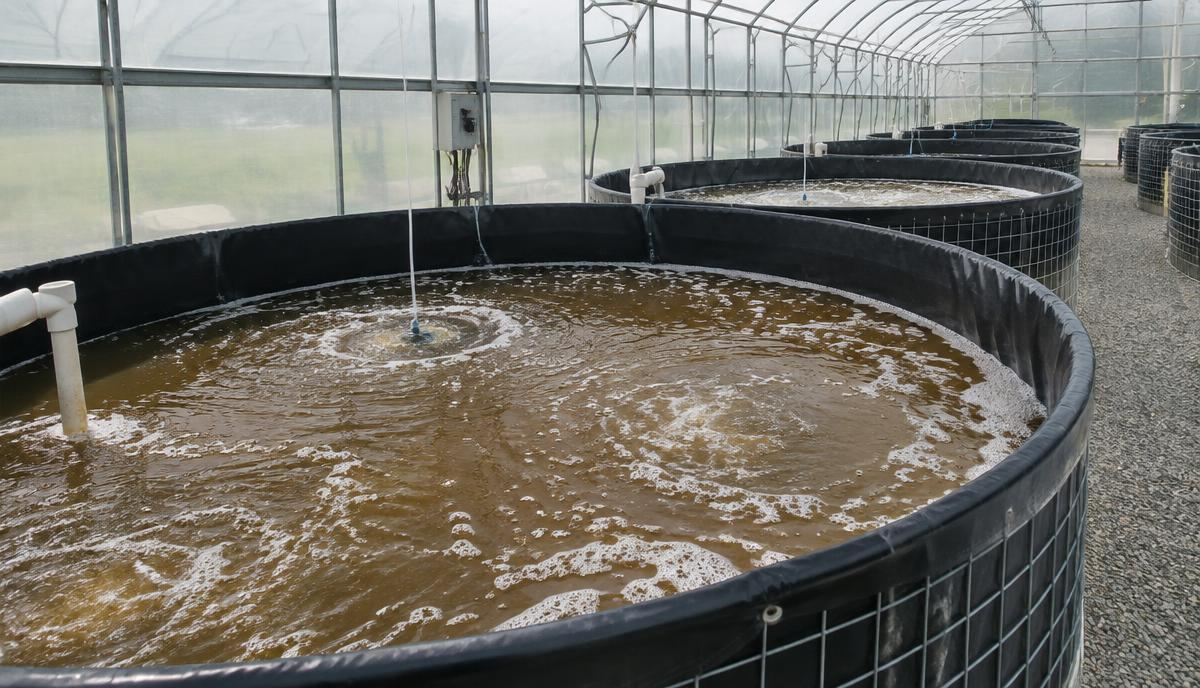
Short answer: a commercial biofloc farm for fish or shrimp is built around round tanks or lined ponds, continuous aeration and water mixing, dependable backup power, a carbon dosing routine to manage the floc, solids removal equipment, and monitoring instruments. The system only works as a whole, so equipment should be sized together and quoted from suppliers on one matching scope rather than bought piece by piece.

What equipment does a commercial biofloc farm need?
A core equipment list typically includes culture tanks or lined ponds, a liner or tank wall system, blowers or aerators with diffuser grids, paddlewheels or other mixing devices, a backup power source, carbon dosing equipment, settling or solids-removal units, pumps and piping, and water quality monitoring instruments. Greenhouse or shade structures, feed storage, and harvest equipment usually round out the list. The exact mix depends on species, scale and climate, which is why a written specification helps suppliers quote comparable packages rather than guessing at assumptions.
Tanks or lined ponds: which should I plan around?
Round or octagonal tanks with a center drain are common in biofloc because the geometry supports solids concentration and efficient mixing, and they are often easier to clean and manage biosecurity around. Lined earthen ponds can lower structural cost and suit larger shrimp operations, but they generally need more aeration per unit volume to keep floc suspended and are harder to drain fully. Biofloc and other minimal-exchange systems were developed partly to move away from the roughly 10 percent daily water exchange historically used in conventional shrimp ponds, according to the Southern Regional Aquaculture Center's Biofloc Production Systems for Aquaculture, a biosecurity benefit that applies to both tank and pond designs. The choice affects nearly every other equipment decision, so it should be fixed early, ideally alongside a site assessment; see site selection and water assessment guidance for the factors that typically drive this choice.
How much aeration and mixing does a biofloc system need?
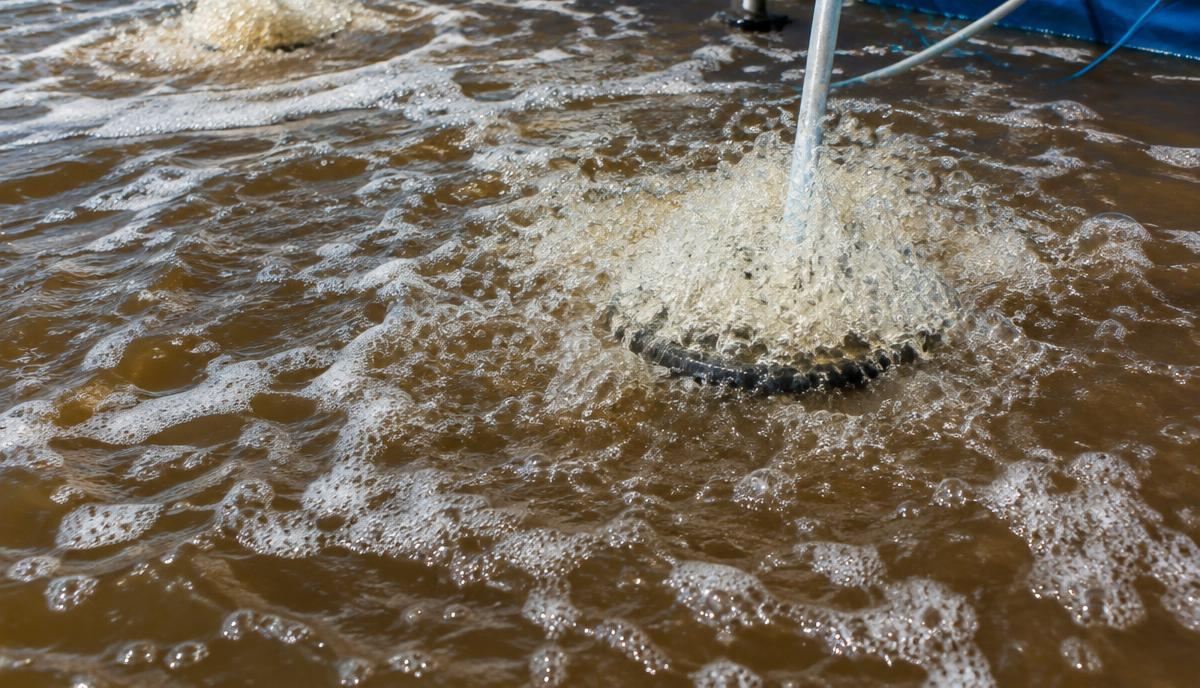
Biofloc relies on suspended bacterial flocs that consume waste nutrients, and those flocs must stay in suspension and well oxygenated around the clock; aeration is not optional or intermittent in this system, it is continuous and central to both water quality and biological function. Sizing depends on stocking density, feed load and tank geometry rather than a fixed ratio, so use an aeration sizing calculator and a dissolved oxygen calculator as a starting point, then ask suppliers to confirm blower, diffuser and mixing capacity in writing against your stated biomass and feeding plan.
Why does backup power matter so much in biofloc?
Because flocs and stock can crash within a short outage once aeration and mixing stop, backup power is one of the highest-priority line items in a biofloc budget, not an afterthought. Planning typically covers a generator sized to the full aeration and pumping load, automatic transfer switching, and fuel or battery runtime appropriate to the site's grid reliability. A generator sizing calculator and the backup power and generator planning guide are useful starting points, and the power requirement calculator helps frame the full connected load before you request quotes.
How is carbon managed in a biofloc system, and what equipment does that take?
Maintaining the bacterial floc generally means dosing a carbon source, such as a carbohydrate feedstock, to balance the carbon-to-nitrogen (C:N) ratio and keep ammonia converted into microbial biomass rather than accumulating in the water. Published guidance on pond and biofloc systems puts stable biological C:N ratios in roughly the 10:1 to 12:1 range, similar to the ratio found in bacterial biomass itself, according to Boyd's analysis of carbon-nitrogen ratios in pond fertilization and biofloc systems; peer-reviewed trials with Nile tilapia have also tested ratios from 10:1 up to 20:1 to compare production outcomes. Equipment needs are usually modest compared to aeration, but can include storage, metering or dosing tools, and mixing to distribute the carbon source evenly. Exact dosing rates remain system-specific and should be confirmed with a water quality specialist or supplier rather than copied from a generic figure; the water quality management guide covers the surrounding monitoring routine.
How is solids control handled, and which equipment is used?
As floc volume grows, excess solids need to be removed to prevent oxygen demand and water quality problems, commonly through settling chambers, sludge collectors, or mechanical separators depending on scale. Pump and piping selection for solids handling is part of the same decision; a pump sizing calculator and the general filtration planning tool can help frame flow and capacity before quoting, though actual solids loads should be verified against your feed rate and stocking plan rather than assumed.
What monitoring and instrumentation should be included?
Because biofloc systems depend on a living bacterial community, consistent monitoring of dissolved oxygen, pH, alkalinity, ammonia, nitrite and settleable solids is part of normal operation rather than an occasional check. Equipment typically includes portable or fixed probes, test kits, and in larger projects continuous monitoring and alarm systems tied to the backup power plan. Staff training to interpret these readings matters as much as the instruments themselves; see the staff training and operations guide for how this fits into commissioning.
How much does a commercial biofloc farm cost to equip?
Costs vary widely with tank or pond choice, aeration capacity, backup power scope, automation level, and regional pricing, so this article does not state figures. Instead, build a bill of materials by category, then use the commercial capex calculator, operating cost calculator and farm equipment cost tool to structure your own estimate before approaching suppliers, who can then quote actual current pricing in writing against your specification. The shrimp farm planning tool is useful if the project targets shrimp specifically.
How do I choose a supplier for biofloc equipment?
A sound approach is to define tank or pond type, target biomass, aeration and backup power requirements, and water quality targets in a single document, then send that same scope to multiple suppliers so their quotes can be compared line by line rather than package to package. The supplier checklist for aquaculture equipment and how to compare RAS equipment quotes outline questions worth asking about warranty, spare parts and installation support even though that article is framed around RAS; most of the comparison logic applies equally to biofloc packages.
Checklist
Confirm tank or lined pond choice against site and species; size aeration and mixing for continuous worst-case demand, not average load; plan backup power and automatic transfer switching before construction, not after; define a carbon dosing routine and the equipment to support it; specify solids removal capacity matched to feed rate; include monitoring instruments and an alarm or notification plan; request fuel, electrical and water quality baseline data from the site before quoting; put all requirements in one written scope sent to every supplier you compare.
Frequently asked questions
Can biofloc run without a backup generator? Continuous aeration is essential to the system, so most commercial operators plan backup power as a standard requirement rather than an optional extra, especially where grid reliability is uncertain. Do biofloc ponds need less equipment than tanks? Not necessarily; lined ponds can reduce structural cost but often require more aeration and mixing capacity per unit volume to keep floc suspended, which shifts the cost rather than removing it. Is carbon dosing automated? It can be, from manual metering to automated dosing systems, and the right level of automation depends on labor availability and scale, which is a specification detail to discuss directly with suppliers. How is biofloc different from RAS equipment planning? Biofloc relies on in-tank biological processes rather than external biofiltration, so equipment lists emphasize aeration, mixing and carbon management more heavily, while RAS emphasizes external filtration stages; see the RAS farm cost guide for a comparison point.
How can FishMatch Group help once the equipment list is defined?
Once tank or pond type, aeration capacity, backup power scope and monitoring needs are documented, FishMatch Group's calculators, including the oxygen demand calculator, land requirement calculator and water consumption calculator, help translate that plan into a structured specification. Submitting the finished scope through the reviewed RFQ intake lets the team review it by hand and approach matched suppliers for comparable, apples-to-apples offers on the same biofloc package; buyers never see supplier identities, and FishMatch is not a manufacturer, lender or engineer. This article is planning guidance only, not engineering design or financial advice, and specific figures should be confirmed with qualified suppliers or engineers before committing budget.
If your project also involves feed milling or feed sourcing, the sister platform FeedMatch Group (https://feedmatchgroup.com) focuses on animal and aqua feed and feed mill projects, while ColdMatch Group (https://coldmatchgroup.com) covers industrial refrigeration and cold storage procurement for post-harvest handling, and SeedMatch Group (https://seedmatchgroup.com) serves broader agriculture project suppliers if the farm sits within a larger diversified operation.
Related: see the shrimp farming equipment guide, the fish farm feasibility study guide, and the aquaculture calculators and farm planning workflow for how to sequence these decisions before requesting quotes.
Aquaculture planning benchmarks
| Figure | Value | Context |
|---|---|---|
| CAPEX — RAS | USD 9,000–14,000 per tonne/yr | Global baseline before country cost factor. |
| CAPEX — Ponds | USD 1,800–4,000 per tonne/yr | Lined or earthen ponds, excluding land. |
| CAPEX — Cages | USD 2,500–5,500 per tonne/yr | Cages, moorings, nets and service equipment. |
| CAPEX — Flow-through | USD 4,000–7,000 per tonne/yr | Raceways and water intake works. |
| Energy use | RAS ~6 kWh/kg; ponds ~1.2; flow-through ~1.5; cages ~0.3 | Per kg of fish produced. |
| Typical FCR | Trout 1.1; salmon 1.2; shrimp 1.4; tilapia 1.6; carp 1.8 | kg feed per kg growth; varies with feed and management. |
| Farm size where FishMatch reviews projects | From ~USD 250,000 total project value | Commercial fish and shrimp projects. |
Related articles
Where this fits in a real project
Every FishMatch project runs through the same five reviewed stages, from a first enquiry to comparable quotations. See the full buyer journey.
Planning a commercial aquaculture project?
Send your project brief. A FishMatch specialist reviews it before relevant suppliers are contacted privately.
Request a quote