Backup Power for Fish Farms and RAS: Sizing Generators, Automatic Transfer, Solar and Batteries
Short answer: a fish farm or RAS backup power plan starts with a load calculation covering every pump, blower, and aerator that must keep running, then matches that load to a generator (or generator plus battery and solar) sized with margin for starting surges, paired with an automatic transfer switch and alarms so the system kicks in within seconds of a grid outage.
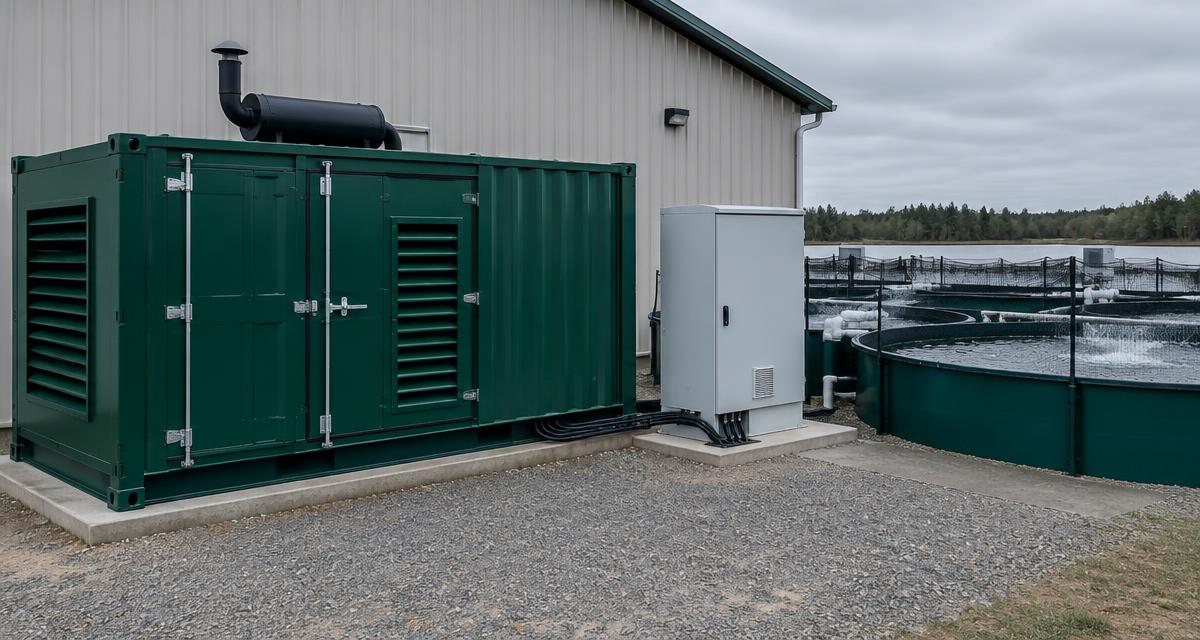
Why does a fish farm need backup power at all?
Recirculating and intensive pond systems depend on continuous mechanical aeration and water movement. A grid outage that lasts only minutes can drop dissolved oxygen to dangerous levels in a densely stocked system, and losses can escalate quickly once fish begin to stress. Backup power is not an optional add-on for most commercial projects; it is treated as core infrastructure alongside pumps, filtration, and oxygen systems. The scale of the risk depends on biomass density, water temperature, and species tolerance, so the right backup capacity is specific to each farm rather than a generic number.
How do you size a backup generator for a fish farm?
Sizing starts with a full electrical load list: blowers, pumps, paddlewheels, oxygen generators, chillers or heaters, lighting, and any office or processing loads you want to keep alive. Group loads into "must run" (life support) and "can wait" (processing, lighting, non-critical equipment) categories, because a smaller generator covering only life-support loads is cheaper and easier to maintain than one sized for the whole farm. Motors draw a brief surge current when starting, well above their running load, so the generator must be rated for the largest expected starting surge on top of the steady running total, not just the sum of nameplate running wattages. A power requirement estimate is a reasonable starting point, and a generator sizing calculation then translates that load profile into a generator capacity range to discuss with suppliers. Treat any output as planning guidance only, not a final engineering design.
How does automatic transfer switching work?
An automatic transfer switch (ATS) senses a grid outage, signals the generator to start, and switches the farm's load from utility power to generator power once voltage and frequency stabilize, then switches back when utility power returns. The gap between outage and generator pickup is the period of highest risk, so ask suppliers for the ATS's transfer time and whether it includes a time delay for generator warm-up versus an instant transfer. For RAS systems where even a short gap matters, some operators add an uninterruptible power supply (UPS) or battery buffer sized only to cover life-support loads during the transfer window, bridging the seconds between grid loss and generator pickup.
What role do solar panels and batteries play?
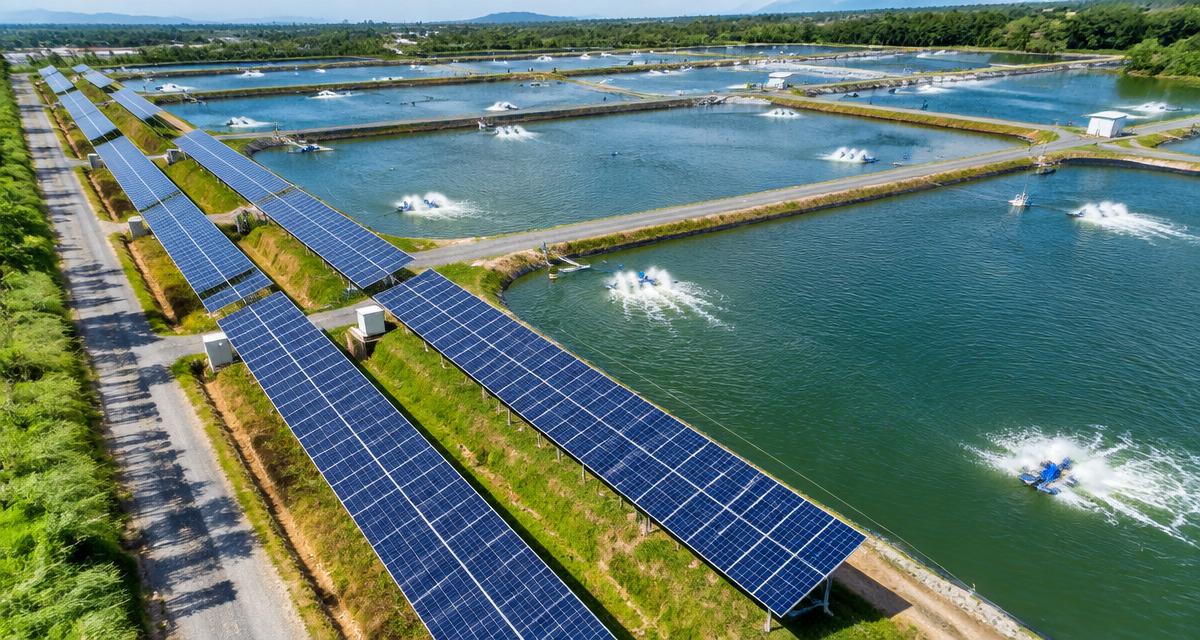
Solar paired with battery storage can reduce reliance on fuel-based generators for routine backup and can also offset day-to-day grid consumption where sunlight hours align with farm operating hours. For backup purposes specifically, a battery bank sized to your critical aeration and pumping load can carry the farm through short outages without starting a generator at all, extending generator service life and cutting fuel use. Solar generation is intermittent and weather-dependent, so most commercial backup designs treat solar and battery storage as a complement to a generator rather than a full replacement, particularly in regions with limited sun hours or in RAS facilities that run equipment around the clock regardless of daylight. A solar ROI estimate and a battery storage sizing exercise help frame whether the combination pencils out for your site before you request supplier quotes.
How much does backup power cost for a fish farm?
Costs vary with generator capacity, fuel type, enclosure and sound attenuation requirements, ATS sophistication, installation and wiring, permitting, and ongoing fuel, maintenance, and testing. Solar and battery additions carry their own equipment, installation, and inverter costs, offset over time by reduced fuel and grid consumption. Because site conditions, local fuel prices, and equipment specifications differ widely, do not rely on general figures found online; ask suppliers for an itemized, written quote covering equipment, freight, installation, and commissioning, and use an energy cost estimate to compare ongoing operating costs across different backup configurations.
How do you choose a generator and backup power supplier?
Look for a supplier who asks for your load list and site conditions before recommending a model, rather than quoting a generic size off a catalog. A supplier who proposes a load study, confirms fuel type and availability in your region, and explains maintenance intervals in writing is giving you the information needed to compare offers on equal terms. Ask how the ATS integrates with your existing electrical panel, what remote monitoring or alarm options exist, and whether they provide commissioning and training on-site or remotely. Avoid relying on a single supplier's recommendation alone; request comparable scopes from more than one source so you can compare runtime, fuel consumption, and total installed cost side by side.
What should you ask suppliers before buying?
Request a written load study or confirm they will size equipment from your load list rather than a flat farm size assumption. Ask for documented starting-surge ratings for your largest motors, the generator's continuous and prime power ratings, expected fuel consumption at your typical load, noise levels if the farm is near residential areas, and ATS transfer time. For solar and battery components, ask for expected system lifespan, warranty terms, and how performance may degrade with temperature and age at your location. Ask for references to projects of comparable scale, and get all performance claims in writing rather than verbally, since written commitments are what you can hold a supplier to later.
How do backup power needs differ between RAS and pond systems?
RAS facilities typically run pumps, biofilters, and oxygen systems continuously with little tolerance for downtime, since water quality can deteriorate within minutes without circulation and aeration. Pond-based or flow-through systems may have more buffer time depending on stocking density and water volume, but paddlewheel aerators and pumps are still critical during warm, low-oxygen periods. A RAS backup plan generally prioritizes near-instant transfer and sometimes a battery bridge, while pond systems may rely more heavily on a well-sized generator with a slightly longer acceptable transfer time. Reviewing your plan alongside a broader RAS feasibility assessment helps confirm that backup power sizing is consistent with the rest of your system design.
Checklist
Complete a full electrical load list separating life-support from non-critical equipment; calculate starting-surge requirements for your largest motors, not just running wattage; confirm generator continuous and prime power ratings in writing; specify ATS transfer time and whether a battery bridge is needed for RAS; evaluate solar and battery storage as a complement to, not a replacement for, generator backup; request fuel type, consumption rates, and local fuel availability; ask for noise and emissions compliance details if near residential or protected areas; obtain itemized quotes covering equipment, installation, commissioning, and maintenance; request references and get all performance claims in writing; confirm monitoring, alarm, and remote notification capabilities.
Frequently asked questions
How long should a backup generator run during an outage? Runtime depends on your fuel tank size and local grid reliability history; ask suppliers for fuel consumption at your expected load and size the tank for your region's typical outage duration, with margin for extended events. Can solar alone power a RAS facility's backup needs? Generally no, because RAS equipment often runs continuously regardless of daylight; solar paired with battery storage can offset some demand, but most RAS backup plans still include a generator for extended or nighttime outages. Do I need a generator for a small pond-based farm? Even smaller operations benefit from backup aeration, since fish kills can occur quickly during warm weather or disease stress; the generator size and sophistication can scale down, but the principle of having a life-support backup remains. How often should backup power systems be tested? Suppliers typically recommend regular load testing on a documented schedule; ask your supplier for their recommended testing interval and what a test should include, such as a full transfer simulation under load.
How can FishMatch Group help with backup power procurement?
This article is planning guidance only, not engineering design or financial advice; final sizing, electrical design, and compliance should be confirmed with a qualified engineer and your suppliers. FishMatch Group does not manufacture, finance, or design backup power systems, but the power requirement, generator sizing, solar ROI, battery storage, and energy cost calculators can help you frame a load profile and rough budget before you approach the market. When you are ready to request quotes, submit your project through the RFQ intake; the FishMatch team reviews the brief by hand and requests comparable offers from matched suppliers on the same scope, so you can compare generator, ATS, solar, and battery proposals side by side without sharing your contact details broadly.
Related: see the RAS farm cost guide, the supplier checklist for aquaculture, and aquaculture project financing: what lenders require for related planning steps.
Aquaculture planning benchmarks
| Figure | Value | Context |
|---|---|---|
| CAPEX — RAS | USD 9,000–14,000 per tonne/yr | Global baseline before country cost factor. |
| CAPEX — Ponds | USD 1,800–4,000 per tonne/yr | Lined or earthen ponds, excluding land. |
| CAPEX — Cages | USD 2,500–5,500 per tonne/yr | Cages, moorings, nets and service equipment. |
| CAPEX — Flow-through | USD 4,000–7,000 per tonne/yr | Raceways and water intake works. |
| Energy use | RAS ~6 kWh/kg; ponds ~1.2; flow-through ~1.5; cages ~0.3 | Per kg of fish produced. |
| Typical FCR | Trout 1.1; salmon 1.2; shrimp 1.4; tilapia 1.6; carp 1.8 | kg feed per kg growth; varies with feed and management. |
| Farm size where FishMatch reviews projects | From ~USD 250,000 total project value | Commercial fish and shrimp projects. |
Related articles
Fish Farm Automation and Monitoring Systems: Sensors, Alarms and Remote Control for Stock Protection
Short answer: a complete automation package combines water quality sensors, alarms, control panels, automatic feeders and remote monitoring to protect stock and should be specified and compared as one integrated scope in an RFQ.
EquipmentHow Should You Size Heating, Cooling, and Heat Pump Systems for Aquaculture Water?
Short answer: size heat pumps, chillers, boilers, and heat exchangers from a site heat balance, then compare supplier quotes on that same basis.
EquipmentFish Grading, Pumping and Harvest Equipment: A Buyer's Guide
Gentle handling with the right grader, pump, crowding net and stunner protects fish quality and survival; here is what to specify and compare.
EquipmentAquaculture Tank Types and Materials: A Buyer's Guide
Short answer: compare fibreglass, HDPE, concrete, steel-frame lined and raceway tanks on lifespan, cleaning, transport and installed cost before you request a quote.
Where this fits in a real project
Every FishMatch project runs through the same five reviewed stages, from a first enquiry to comparable quotations. See the full buyer journey.