Fish Grading, Pumping and Harvest Equipment: A Buyer's Guide
Short answer: graders, fish pumps, crowding nets, counters and stunning equipment work together as a harvest and handling chain, and the weakest link decides how much stress, injury and quality loss the fish experience; buyers should specify each item for the species, size range and flow rate involved, require suppliers to state capacity, pressure and gentleness features in writing, and compare offers line by line rather than on headline price alone.
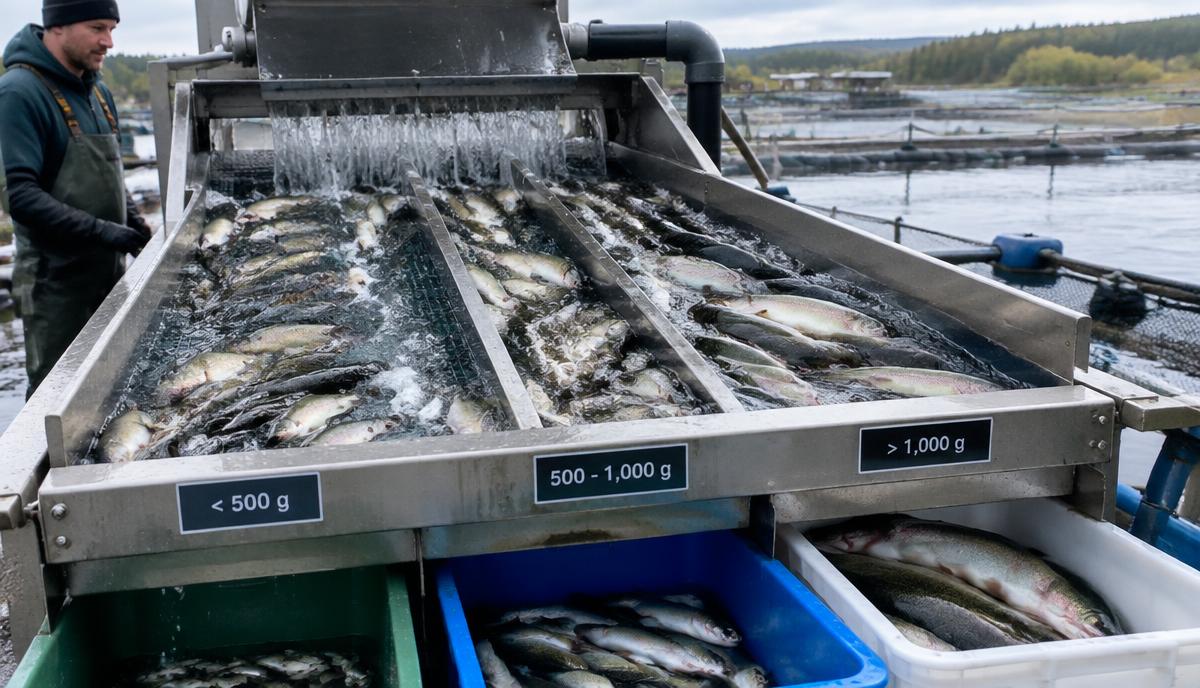
What does a fish grader actually do on a commercial farm?
A grader separates live fish into size classes by passing them over bars, plates or rotating rollers set to a gap, and the goal is to even out growth within a population, reduce competition for feed, and prepare batches for sale or further grow-out; on a commercial scale this is not a manual sieve but a mechanical or hydraulic unit sized to a stated throughput, and buyers evaluating a fish farm equipment guide should treat the grader as a capacity-defining asset rather than an accessory, because a unit sized for the wrong flow becomes a bottleneck at harvest or a source of avoidable injury.
How do vacuum fish pumps and impeller pumps differ for live transfer?
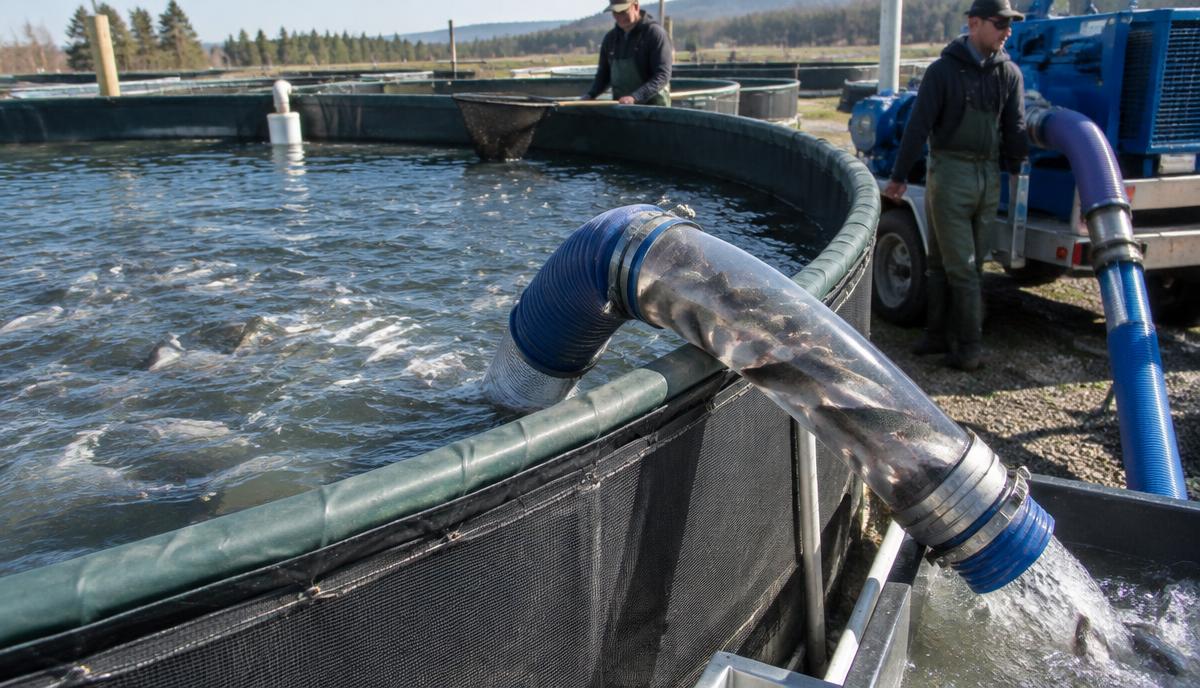
Vacuum pumps move fish and water together using negative pressure and a holding chamber, which tends to be gentler at the point of contact because fish are suspended in water rather than driven through a narrow throat, while impeller pumps use a rotating wheel to push a water-fish slurry through a hose and can achieve higher continuous flow but carry more risk of scale loss or injury if clearances and tip speed are not matched to the species and size; ask suppliers to state in writing the fish-to-water ratio, maximum recommended flow, and any speed or pressure limits for the species you intend to move, and cross-check this against a pump sizing estimate before committing to one technology over the other.
Why does gentle handling protect survival and product quality?
Every grading, pumping or crowding step imposes physical and physiological stress on fish, and the cumulative effect of rough handling shows up later as reduced survival, lower feed conversion, skin and fin damage, or downgraded flesh quality at processing; this is why specifications should describe not just throughput but also drop heights, hose bend radius, chamber fill levels and dwell time in crowded conditions, and why a review of fish farm mortality reduction planning is useful groundwork before finalizing equipment choices, since the harvest chain is often where avoidable losses concentrate.
What should a crowding net specification include?
Crowding nets or seines concentrate fish into a smaller volume so a pump or grader can work efficiently, and a specification should state mesh size and knot type relative to fish size, net material and buoyancy, the winching or lift mechanism if mechanized, and how the supplier recommends managing density and oxygen levels while fish are crowded, since overcrowding during this stage is a common cause of stress-related losses; pairing the crowding plan with a stocking density calculation and an oxygen requirement estimate helps buyers set realistic limits rather than relying on a supplier's general assurances.
How should counters and sizing cameras be specified for accuracy?
Automated counters and sizing cameras estimate fish numbers and weight distribution as fish pass through the pumping or grading line, and accuracy depends on flow rate, water clarity, fish orientation and the calibration method the supplier uses for your species and size range; buyers should ask suppliers to state the expected counting accuracy range, the conditions under which that accuracy holds, and how recalibration is handled over time, and should request this information in writing rather than accepting a single demonstration result as representative of ongoing farm conditions.
What stunning methods are available and how do they interact with equipment choice?
Stunning methods, including percussive, electrical and carbon dioxide or other controlled-atmosphere systems, are chosen based on species, local regulation and downstream processing requirements, and the stunning unit must be matched in throughput to the pump or conveyor feeding it so fish are not held waiting in a crowded or low-oxygen state; buyers should ask each supplier to state the stunning method's compatibility with their species and harvest volume in writing, and should review fish farm permits and environmental licensing requirements early since stunning method choice can be subject to local rules.
How does the harvest line connect to cold chain and product quality?
Grading, pumping and stunning are the first stages of a chain that continues into chilling, transport and processing, and a harvest line that handles fish gently but delivers them into a slow or poorly sized cooling step still risks quality loss; buyers should plan harvest equipment alongside aquaculture harvest and cold chain quality and aquaculture product quality and market value considerations so that gentle handling upstream is not undone by gaps downstream, and should ask suppliers how their equipment's output rate aligns with the cooling or processing capacity it feeds.
What power, water and footprint requirements should be confirmed before ordering?
Vacuum and impeller pumps, graders and counters all draw power and often require a water supply or integration with existing pipework, and footprint and service access around the units affect how harvest crews operate during peak periods; buyers should request a layout drawing, power draw and connection requirements, and ask the supplier to state any civil works, platform or drainage needs in writing before finalizing a quote, and should check these figures against a power requirement estimate for the site.
How should buyers evaluate hygiene, cleaning and biosecurity features?
Equipment that contacts live fish and water repeatedly can become a pathway for disease transfer between batches or sites if it is not designed for cleaning and disinfection, so specifications should cover surface materials, drainage for cleaning fluids, and whether the unit can be disassembled or accessed for inspection; this connects to wider farm biosecurity planning, and buyers should also review how grading and pumping equipment fits into biosecurity zoning and HACCP for commercial aquaculture when multiple sites or batches share equipment.
What training and operating procedures should accompany new equipment?
Even well-specified equipment performs poorly if operators are not trained on correct fill levels, flow settings, crowding duration limits and stunning sequencing, so buyers should ask suppliers to state what training, manuals and commissioning support are included, and should budget for staff time to learn the equipment before peak harvest; this is closely tied to broader fish farm staff training and operations planning, which should be scoped alongside the equipment purchase rather than treated as an afterthought.
How do buyers compare offers for grading, pumping and harvest equipment line by line?
Because throughput, gentleness features, materials, controls and service terms vary widely between suppliers, buyers should request a common specification table covering capacity, power, dimensions, materials, warranty and included training, and should ask each supplier to state assumptions about fish size, water temperature and density used to produce their performance figures, since offers based on different assumptions are not directly comparable; a structured approach described in comparing aquaculture proposals line by line and how to compare RAS equipment quotes applies equally well to harvest and handling equipment.
Checklist
Confirm species, size range and flow rate for grader and pump selection; compare vacuum versus impeller pump suitability and ask for stated fish-to-water ratios; specify crowding net mesh, material and density limits; set accuracy expectations for counters and sizing cameras in writing; match stunning method throughput to upstream pumping and crowding stages; align harvest output rate with downstream cold chain capacity; confirm power, water supply and footprint needs before ordering; review cleaning, drainage and biosecurity design features; budget training and commissioning support into the purchase; request a common specification table from every supplier to compare offers line by line.
Frequently asked questions
Does a vacuum pump always cause less stress than an impeller pump? Not necessarily; gentleness depends on correct sizing and operating settings as much as pump type, so ask suppliers to state recommended settings for your species. How long can fish safely stay in a crowding net? There is no universal figure; it depends on density, oxygen levels and water temperature, so ask suppliers and your farm team to agree limits in writing based on site conditions. Can one grader handle multiple species or size ranges? Some graders are adjustable across ranges while others are built for a narrower range; confirm adjustability and changeover time with the supplier before assuming flexibility. Do counters replace manual sampling entirely? Many farms use automated counts alongside periodic manual checks to validate accuracy, particularly during initial commissioning.
How do FishMatch Group's calculators and reviewed RFQ help?
FishMatch Group lets a buyer submit one RFQ describing species, size ranges, flow rates and harvest volumes, which the team reviews by hand before approaching matching suppliers for grading, pumping, crowding and stunning equipment, returning comparable offers without revealing supplier names; buyers can use the pump sizing, stocking density and oxygen requirement calculators from the procurement toolkit to prepare realistic figures before submitting a request through rfq-intake, and can browse general equipment categories via equipment or ask process questions through faq.
Related: fish farming equipment guide, aquaculture harvest and cold chain quality, how to evaluate aquaculture equipment suppliers. This article is a planning guide only, not engineering or financial advice.
Aquaculture planning benchmarks
| Figure | Value | Context |
|---|---|---|
| CAPEX — RAS | USD 9,000–14,000 per tonne/yr | Global baseline before country cost factor. |
| CAPEX — Ponds | USD 1,800–4,000 per tonne/yr | Lined or earthen ponds, excluding land. |
| CAPEX — Cages | USD 2,500–5,500 per tonne/yr | Cages, moorings, nets and service equipment. |
| CAPEX — Flow-through | USD 4,000–7,000 per tonne/yr | Raceways and water intake works. |
| Energy use | RAS ~6 kWh/kg; ponds ~1.2; flow-through ~1.5; cages ~0.3 | Per kg of fish produced. |
| Typical FCR | Trout 1.1; salmon 1.2; shrimp 1.4; tilapia 1.6; carp 1.8 | kg feed per kg growth; varies with feed and management. |
| Farm size where FishMatch reviews projects | From ~USD 250,000 total project value | Commercial fish and shrimp projects. |
Related articles
Fish Farm Automation and Monitoring Systems: Sensors, Alarms and Remote Control for Stock Protection
Short answer: a complete automation package combines water quality sensors, alarms, control panels, automatic feeders and remote monitoring to protect stock and should be specified and compared as one integrated scope in an RFQ.
EquipmentHow Should You Size Heating, Cooling, and Heat Pump Systems for Aquaculture Water?
Short answer: size heat pumps, chillers, boilers, and heat exchangers from a site heat balance, then compare supplier quotes on that same basis.
EquipmentAquaculture Tank Types and Materials: A Buyer's Guide
Short answer: compare fibreglass, HDPE, concrete, steel-frame lined and raceway tanks on lifespan, cleaning, transport and installed cost before you request a quote.
EquipmentBackup Power for Fish Farms and RAS: Sizing Generators, Automatic Transfer, Solar and Batteries
Short answer: size backup power to your peak aeration and pumping load, add automatic transfer and alarms, and ask suppliers for load studies and runtime data in writing.
Where this fits in a real project
Every FishMatch project runs through the same five reviewed stages, from a first enquiry to comparable quotations. See the full buyer journey.