How Should You Size Heating, Cooling, and Heat Pump Systems for Aquaculture Water?
Short answer: temperature control equipment for aquaculture water should be sized from a documented heat balance that accounts for heat loss through tanks, pipes, and building envelope, heat gained or lost through makeup water exchange, pump and blower heat, and ambient conditions across the seasons, not from a single rule of thumb. Buyers who ask suppliers to state assumptions in writing and compare quotes against the same heat balance tend to avoid undersized or oversized systems that raise energy cost or compromise growth and survival.
Why does water temperature control matter for growth and survival?
Fish and shrimp are ectotherms, so their metabolism, feed intake, feed conversion, and immune response move with water temperature, and sustained deviation outside the target range for the species and life stage can slow growth, increase stress, and raise susceptibility to disease. A heating and cooling system that cannot hold the intended setpoint through daily and seasonal swings introduces variability into production planning, so buyers evaluating equipment for a new or upgraded site should treat temperature stability as a production variable with direct consequences, not only as a utility cost, and should document target ranges before requesting quotes through rfq-intake.
What goes into a heat balance for sizing a heating or cooling system?
A heat balance adds up heat losses and gains across the system boundary: conduction through tank walls, pipework, and building surfaces; heat carried away or added by makeup and exchange water; evaporation where water surfaces are open to air; heat from pumps, blowers, and lighting; and the influence of ambient air and incoming source water temperature across the coldest and warmest periods expected at the site. Buyers should ask suppliers to state the heat balance assumptions used to size a heat pump, chiller, or boiler in writing, including insulation values and expected makeup water volumes, so the proposed capacity can be checked against the site's own numbers rather than accepted on trust; the ras-sizing and energy-cost calculators can help buyers build an independent reference before comparing offers.
How do heat pumps, chillers, and boilers differ for recirculating systems?
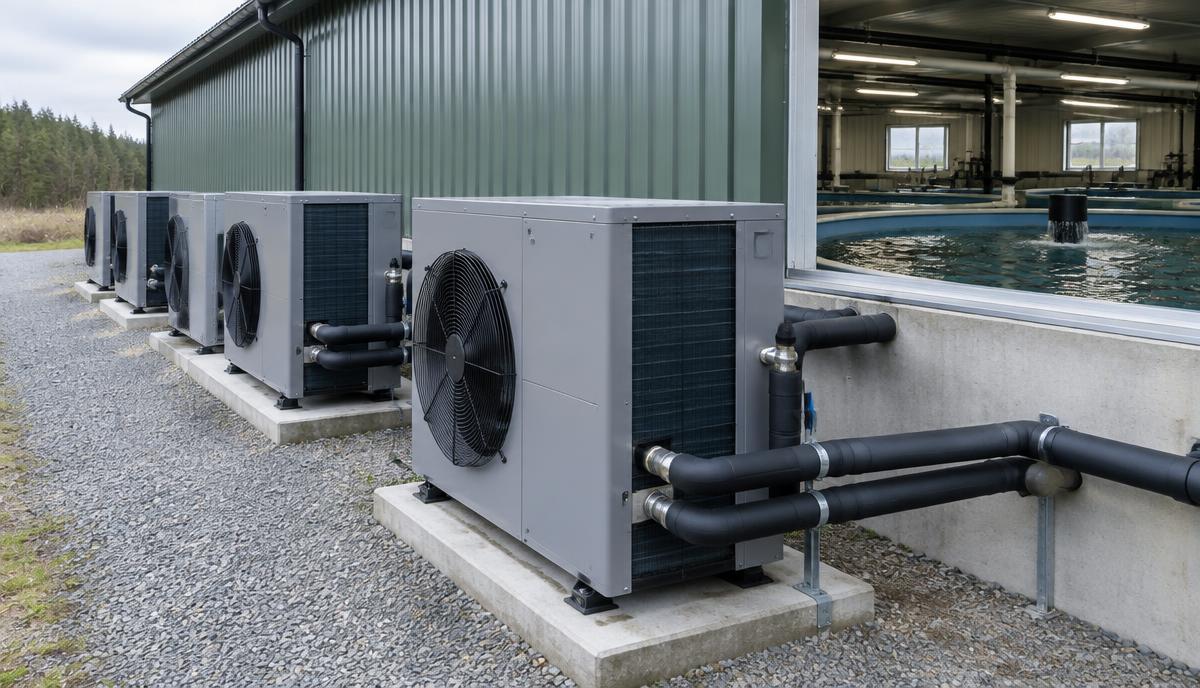
Heat pumps move heat rather than generate it directly, which can make them an efficient choice for sites needing moderate heating or cooling where ambient conditions support efficient operation; chillers are typically specified where cooling load dominates, such as sites with warm source water or high internal heat gain; boilers remain relevant where heating load is large, ambient temperatures are low, or a backup heat source is wanted alongside a heat pump. Because each technology has different operating ranges and efficiency curves, buyers should ask each supplier to state the expected performance of their proposed equipment across the site's actual temperature range in writing, rather than relying on a single rated capacity figure quoted at standard test conditions, before reviewing proposals through a rfq-intake.
What role do heat exchangers and insulation play in reducing load?
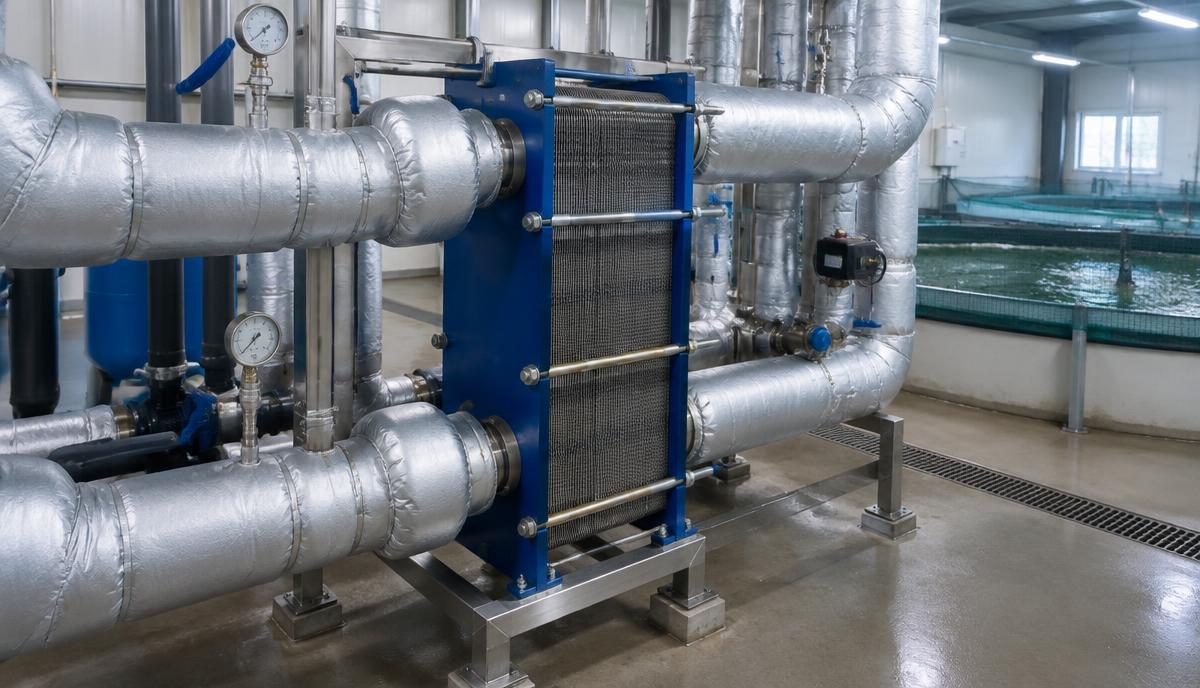
Plate heat exchangers can recover heat from outgoing water, process water, or other waste heat streams and transfer it to incoming water, which can reduce the load placed on a heat pump, chiller, or boiler and so reduce installed capacity and running cost. Insulation on tanks, pipework, and building envelope reduces continuous heat loss or gain, which directly affects the heat balance used for sizing; buyers should ask suppliers whether heat recovery and insulation specifications were included in their proposed heat balance, since a quote that omits these elements can understate running cost and overstate the need for larger heating or cooling capacity.
What typically drives energy cost in heating and cooling water?
Energy cost for temperature control is driven by the magnitude of the heat balance gap between target water temperature and ambient conditions, the efficiency of the chosen heat pump, chiller, or boiler across that range, the volume and temperature of makeup or exchange water, insulation quality, and how closely the installed capacity matches actual demand across seasons rather than only peak demand. Oversized equipment can cycle inefficiently and add unnecessary capital cost, while undersized equipment can run continuously near its limit without holding setpoint; buyers can use the energy-cost and operating-cost calculators to compare how different capacity and efficiency assumptions affect projected running cost before committing to a quote.
How should buyers compare supplier quotes for heating and cooling equipment?
Quotes for heat pumps, chillers, boilers, and heat exchangers can look similar on price while differing in the heat balance assumptions, ambient design conditions, insulation scope, and controls included, so a line-by-line comparison matters more than a single headline number. Buyers should ask each supplier to state in writing the heat balance used, the design ambient range, whether insulation and heat recovery were included, expected performance across that range, and what controls and monitoring are supplied, then align the proposals on the same basis before deciding; see how-to-compare-ras-equipment-quotes for a broader framework on reading quotes consistently.
What controls and monitoring should be specified alongside the equipment?
Temperature control equipment works within a wider control loop that typically includes sensors, setpoint controllers, and alarms, so buyers should confirm how the heat pump, chiller, or boiler integrates with existing or planned monitoring before ordering. Specifying data logging and alarm thresholds for temperature deviation helps catch equipment faults before they affect growth or survival; see aquaculture-automation-monitoring-systems for more detail.
How does site location and water source affect equipment selection?
Source water temperature, ambient air temperature range, humidity, and whether the site draws from a borehole, surface water, or municipal supply all change the heat balance and therefore the choice between a heat pump, chiller, or boiler. A site assessment that documents these conditions before equipment selection reduces the risk of specifying equipment suited to a different climate or water source; see aquaculture-site-selection-water-assessment for guidance.
How does heating and cooling fit into the overall equipment interface on a project?
Heating and cooling equipment interacts with filtration, oxygenation, and pumping systems through shared piping, electrical load, and controls, so sizing decisions for one system can affect the others. Buyers coordinating multiple suppliers should map these interfaces explicitly rather than assuming each supplier will account for the others' equipment; see multi-supplier-aquaculture-project-interfaces for a framework on managing these handoffs.
How does temperature control affect feed conversion and operating cost over time?
Because feed conversion and growth rate respond to water temperature, a heating or cooling system that keeps temperature closer to the species target across seasons can support steadier feed conversion than one that lets temperature drift, which affects feed cost and harvest timing. Buyers planning feed budgets alongside equipment selection should connect the two using the fish-growth and feed-budget calculators during planning.
What should a request for quote include so suppliers price the same scope?
A request for quote for heating and cooling equipment should state the target water temperature range, tank and building dimensions, makeup water volume and source temperature, ambient design conditions, insulation specification, and whether heat recovery, controls, and monitoring are in scope, so competing suppliers price against the same requirements. See rfq-best-practices-aquaculture-buyers for guidance on building a request that supports a fair comparison.
Checklist
Document target water temperature range and acceptable variation for the species and life stage; build or request a heat balance covering conduction, makeup water, evaporation, and internal heat gains; confirm whether a heat pump, chiller, boiler, or combination fits the site's ambient and source water conditions; ask suppliers to state sizing assumptions and expected performance across the site's temperature range in writing; confirm insulation and heat recovery scope and whether they were included in the heat balance; specify controls, sensors, and alarm thresholds alongside the mechanical equipment; request energy cost projections based on the same heat balance across all quotes; compare proposals line by line rather than on headline price alone; check how the equipment interfaces with filtration, pumping, and electrical systems on site.
Frequently asked questions
Can one heat pump handle both heating and cooling needs at a site? Some heat pumps can provide both functions depending on design and ambient range, so ask the supplier to state in writing whether their unit is intended for both duties at the site's conditions. Does better insulation reduce the size of equipment needed? Improved insulation reduces continuous heat loss or gain included in the heat balance, which can reduce the required capacity, so ask suppliers whether their sizing reflects the actual insulation specification. Should heat exchangers be considered even on a smaller site? Heat exchangers can reduce load on primary heating or cooling equipment at various scales, so it is worth asking suppliers whether heat recovery was evaluated for the site rather than assuming it only applies to larger operations. How often should heating and cooling capacity be reviewed as a farm expands? Capacity should be reviewed whenever production volume, tank footprint, or target species changes, since the original heat balance may no longer reflect actual conditions; see phased-aquaculture-farm-expansion for related planning considerations.
How do FishMatch Group's calculators and reviewed RFQ help?
FishMatch Group's calculators, including ras-sizing, energy-cost, and operating-cost, give buyers an independent reference point for the heat balance and running cost assumptions behind a heating or cooling quote, which supports a more consistent comparison across suppliers. Buyers can also submit one request through rfq-intake, after which the request is reviewed by hand and matched to suppliers who can respond with comparable offers, with supplier names withheld during the comparison stage; supporting documents and templates are available through the procurement-toolkit. This article is a planning guide only, not engineering or financial advice.
Related: how-to-compare-ras-equipment-quotes, energy-efficiency-ras-and-pond-systems, aquaculture-equipment-sourcing-step-by-step
Aquaculture planning benchmarks
| Figure | Value | Context |
|---|---|---|
| CAPEX — RAS | USD 9,000–14,000 per tonne/yr | Global baseline before country cost factor. |
| CAPEX — Ponds | USD 1,800–4,000 per tonne/yr | Lined or earthen ponds, excluding land. |
| CAPEX — Cages | USD 2,500–5,500 per tonne/yr | Cages, moorings, nets and service equipment. |
| CAPEX — Flow-through | USD 4,000–7,000 per tonne/yr | Raceways and water intake works. |
| Energy use | RAS ~6 kWh/kg; ponds ~1.2; flow-through ~1.5; cages ~0.3 | Per kg of fish produced. |
| Typical FCR | Trout 1.1; salmon 1.2; shrimp 1.4; tilapia 1.6; carp 1.8 | kg feed per kg growth; varies with feed and management. |
| Farm size where FishMatch reviews projects | From ~USD 250,000 total project value | Commercial fish and shrimp projects. |
Related articles
Fish Farm Automation and Monitoring Systems: Sensors, Alarms and Remote Control for Stock Protection
Short answer: a complete automation package combines water quality sensors, alarms, control panels, automatic feeders and remote monitoring to protect stock and should be specified and compared as one integrated scope in an RFQ.
EquipmentFish Grading, Pumping and Harvest Equipment: A Buyer's Guide
Gentle handling with the right grader, pump, crowding net and stunner protects fish quality and survival; here is what to specify and compare.
EquipmentAquaculture Tank Types and Materials: A Buyer's Guide
Short answer: compare fibreglass, HDPE, concrete, steel-frame lined and raceway tanks on lifespan, cleaning, transport and installed cost before you request a quote.
EquipmentBackup Power for Fish Farms and RAS: Sizing Generators, Automatic Transfer, Solar and Batteries
Short answer: size backup power to your peak aeration and pumping load, add automatic transfer and alarms, and ask suppliers for load studies and runtime data in writing.
Where this fits in a real project
Every FishMatch project runs through the same five reviewed stages, from a first enquiry to comparable quotations. See the full buyer journey.