Aquaculture Tank Types and Materials: A Buyer's Guide
Short answer: there is no single best tank material or shape for every farm; the right choice depends on species, site conditions, budget, build timeline and how the tank will be cleaned and maintained over its working life. Fibreglass (GRP), HDPE, concrete, steel-frame lined units and raceways each solve different problems, and round versus rectangular geometry changes how solids move and how fish behave inside the tank. Buyers who understand these trade-offs before they request a quote tend to receive more comparable offers and avoid late redesigns.
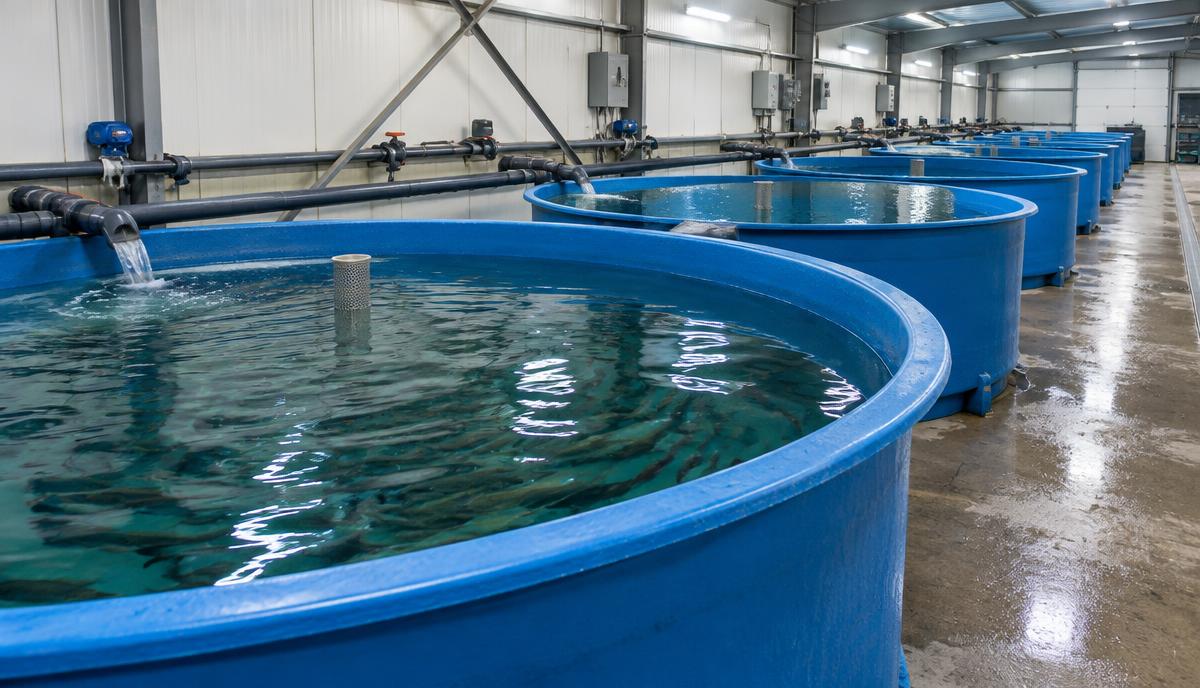
What is the difference between fibreglass, HDPE and steel-frame lined tanks?
Fibreglass (GRP) tanks are moulded as a single smooth shell, which gives good self-cleaning flow and relatively light weight for transport, but shell thickness and resin quality vary between manufacturers and should be stated in writing rather than assumed. HDPE tanks are welded from sheet or rotomoulded, are generally resistant to a wide range of water chemistries, and can be repaired by welding rather than patching, though wall flex at larger diameters needs to be checked against the supplier's structural data. Steel-frame lined tanks pair a rigid frame with a liner, which can lower the delivered cost for very large volumes but makes the liner itself a wear item with its own replacement schedule; ask suppliers to state expected liner life in writing as part of the equipment specification.
When does concrete make sense versus modular tanks?
Concrete tanks and raceways are built in place, which suits farms that want a fixed, permanent structure integrated with the building or earthworks, and they can be shaped to match a specific site rather than fitting a standard mould. The trade-off is a longer construction timeline, dependence on local contractor skill for a smooth, crack-resistant finish, and a fixed footprint that is harder to change later if the farm needs to be reconfigured. Modular tanks such as GRP or HDPE units can be installed faster and relocated or added to during a phased aquaculture farm expansion, which matters for buyers who want to start production before the full build-out is financed.
Round or rectangular: which tank shape suits my species and flow design?
Round tanks with a center drain are widely used because the circular flow helps carry solids to a single collection point, supporting a cleaner bottom with less manual intervention and more even water quality across the tank. Rectangular tanks and raceways make more efficient use of floor area and building footprint, and are common where a plug-flow pattern down the length of the tank suits the species or where multiple tanks share walls to reduce material and construction cost. The decision interacts directly with stocking density and flow design, so it is worth running the numbers through a stocking density and water exchange calculator before committing to a shape.
What makes a tank genuinely self-cleaning in daily operation?
A self-cleaning design depends on the combination of tank geometry, inlet placement and drain configuration working together rather than any single feature; a round tank with a poorly placed inlet can still accumulate dead zones, while a well-designed rectangular raceway with cross-flow inlets can clear solids effectively. Ask suppliers to describe, in writing, how inlet velocity and drain type are matched to the stocking density and flow rate you plan to run, since these details are rarely visible from a tank's outward appearance. Poor self-cleaning performance raises the risk of water quality swings, which connects directly to fish farm mortality reduction planning.
What factors determine how long a tank will actually last?
Tank lifespan depends on water chemistry exposure, UV exposure if installed outdoors, mechanical stress from fish activity and cleaning equipment, and how well the tank was supported and installed rather than on material alone. Liners and gelcoats degrade faster under direct sunlight and aggressive water chemistry, so ask suppliers to state recommended protective coatings, UV inhibitors and expected service life in writing rather than relying on generic marketing claims. Inspection access, repairability and the availability of spare parts and warranty service for fittings and liners should all be part of the lifespan conversation before you sign a quote.
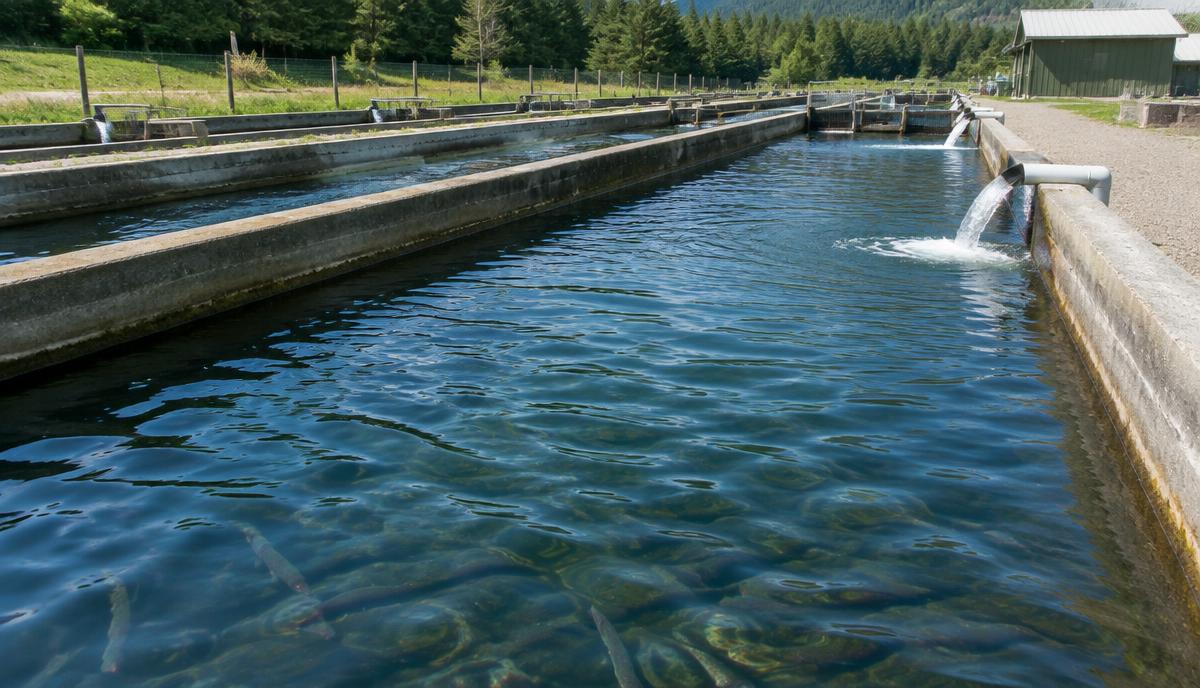
How do transport and site access affect tank choice and cost?
Large one-piece fibreglass tanks can be difficult and costly to transport by road or sea, especially to inland or remote sites, and oversized loads may require route surveys and special permits that add time to the project schedule. Modular HDPE panels, steel-frame kits and sectional designs can be shipped more compactly and assembled on site, which often reduces freight cost and avoids access restrictions, but on-site welding or assembly quality then becomes the critical variable. Buyers should ask suppliers to quote delivered and installed cost together, including any site access requirements, rather than comparing ex-works prices alone, and should account for this when reviewing incoterms for aquaculture equipment purchases.
What should a proper tank installation include beyond the tank itself?
A complete installation covers the foundation or base preparation, structural support appropriate to the tank's filled weight, piping and fittings for inlet, outlet and overflow, and commissioning checks before fish are introduced. Foundation requirements differ significantly between a lightweight HDPE tank on a built-up base and a concrete raceway tied into the building slab, so site conditions should be assessed with a site selection and water assessment review early in planning. Buyers should also plan for commissioning and handover documentation so that installation quality and leak testing are recorded rather than assumed.
How do tank choices interact with filtration and water treatment design?
The tank is only one part of the water loop, and its shape and drain configuration need to match the filtration train, whether that is a simple flow-through setup or a recirculating system with mechanical and biological filtration. A tank designed for efficient solids removal reduces the load on downstream filtration, which can lower both capital and running cost across the system; see the broader aquaculture filtration systems guide for how these pieces fit together. Mismatched tank and filtration sizing is a common source of underperformance, so it is worth sizing both together using a filtration calculator before finalising tank quantities.
How many tanks and what total volume should I be quoting for?
Tank count and volume should be derived from your target biomass, stocking density and growth plan rather than chosen first and worked backward from,. Use a tank volume calculator alongside a biomass and fish growth projection to arrive at a defensible number of units and sizes before approaching suppliers. This also helps when comparing quotes, since suppliers proposing different tank counts or shapes for the same target biomass should be asked to justify the difference in writing.
How should I compare tank quotes that use different materials?
Quotes for the same production target can look very different once you account for material, wall thickness, fittings included, warranty terms and delivered-and-installed cost versus ex-works pricing, so a line-by-line comparison matters more than a single bottom-line number. Ask each supplier to state material specification, expected lifespan, drain and inlet design, and installation scope in writing so that offers can be lined up on the same basis; see comparing aquaculture proposals line by line for a structured approach. Price alone is a poor signal when tank shape, self-cleaning performance and lifespan differ between offers.
Checklist
Confirm tank material (GRP, HDPE, concrete, steel-frame lined) suits your water chemistry and site; choose round or rectangular shape based on species behaviour and solids removal needs; ask suppliers to state wall thickness, UV protection and expected lifespan in writing; size tank count and volume against biomass and stocking density calculators; confirm inlet and drain design supports self-cleaning at your planned flow rate; check transport method and site access constraints before selecting tank size; request delivered-and-installed pricing, not ex-works only; align tank design with downstream filtration capacity; plan foundation and structural support for the filled tank weight; confirm commissioning and leak-testing steps are documented; ask about spare parts and liner replacement availability; compare quotes line by line rather than on total price alone.
Frequently asked questions
Is fibreglass or HDPE better for a commercial RAS farm? Neither is universally better; fibreglass offers a smooth single-piece shell while HDPE offers chemical resistance and weldable repairs, so the choice should follow your water chemistry, transport constraints and budget. Do round tanks always clean themselves better than rectangular ones? Round tanks support strong center-drain solids removal, but a well-designed rectangular raceway with correct inlet placement can also self-clean effectively, so inlet and drain design matter as much as shape. How long should a commercial tank last? Lifespan depends on material, UV exposure, water chemistry and installation quality, so ask suppliers to state expected service life and warranty terms in writing rather than relying on a general industry figure. Should I buy tanks and filtration from the same supplier? Not necessarily; what matters is that tank drain design and filtration capacity are matched, which can be coordinated across suppliers if the project interfaces are managed clearly.
How do FishMatch Group's calculators and reviewed RFQ help?
FishMatch Group's planning calculators let you work out tank volume, biomass and flow requirements before you approach suppliers, so your request for quote describes the production target rather than a guessed tank list. Submitting one RFQ lets the FishMatch Group team review your requirements by hand and approach suppliers across tank materials and designs, returning offers that can be compared on the same basis using the procurement toolkit; supplier identities are not shown during this stage, and financing options can be discussed as part of the same process. This article is a planning guide only, not engineering or financial advice.
Related: RAS farm equipment checklist, how to compare RAS equipment quotes, aquaculture equipment sourcing step by step.
Aquaculture planning benchmarks
| Figure | Value | Context |
|---|---|---|
| CAPEX — RAS | USD 9,000–14,000 per tonne/yr | Global baseline before country cost factor. |
| CAPEX — Ponds | USD 1,800–4,000 per tonne/yr | Lined or earthen ponds, excluding land. |
| CAPEX — Cages | USD 2,500–5,500 per tonne/yr | Cages, moorings, nets and service equipment. |
| CAPEX — Flow-through | USD 4,000–7,000 per tonne/yr | Raceways and water intake works. |
| Energy use | RAS ~6 kWh/kg; ponds ~1.2; flow-through ~1.5; cages ~0.3 | Per kg of fish produced. |
| Typical FCR | Trout 1.1; salmon 1.2; shrimp 1.4; tilapia 1.6; carp 1.8 | kg feed per kg growth; varies with feed and management. |
| Farm size where FishMatch reviews projects | From ~USD 250,000 total project value | Commercial fish and shrimp projects. |
Related articles
Fish Farm Automation and Monitoring Systems: Sensors, Alarms and Remote Control for Stock Protection
Short answer: a complete automation package combines water quality sensors, alarms, control panels, automatic feeders and remote monitoring to protect stock and should be specified and compared as one integrated scope in an RFQ.
EquipmentHow Should You Size Heating, Cooling, and Heat Pump Systems for Aquaculture Water?
Short answer: size heat pumps, chillers, boilers, and heat exchangers from a site heat balance, then compare supplier quotes on that same basis.
EquipmentFish Grading, Pumping and Harvest Equipment: A Buyer's Guide
Gentle handling with the right grader, pump, crowding net and stunner protects fish quality and survival; here is what to specify and compare.
EquipmentBackup Power for Fish Farms and RAS: Sizing Generators, Automatic Transfer, Solar and Batteries
Short answer: size backup power to your peak aeration and pumping load, add automatic transfer and alarms, and ask suppliers for load studies and runtime data in writing.
Where this fits in a real project
Every FishMatch project runs through the same five reviewed stages, from a first enquiry to comparable quotations. See the full buyer journey.