Commissioning a Fish Farm or RAS: Acceptance Tests, Handover and Supplier Contract Terms
Short answer: commissioning works best when the acceptance tests, handover documents, and training obligations are written into the supplier contract before equipment ships, not negotiated after it arrives. A clear commissioning plan defines what "working" means for pumps, aeration, oxygenation, biofiltration and controls, who tests it, and what happens if results fall short.
What does commissioning actually cover on a fish farm or RAS?
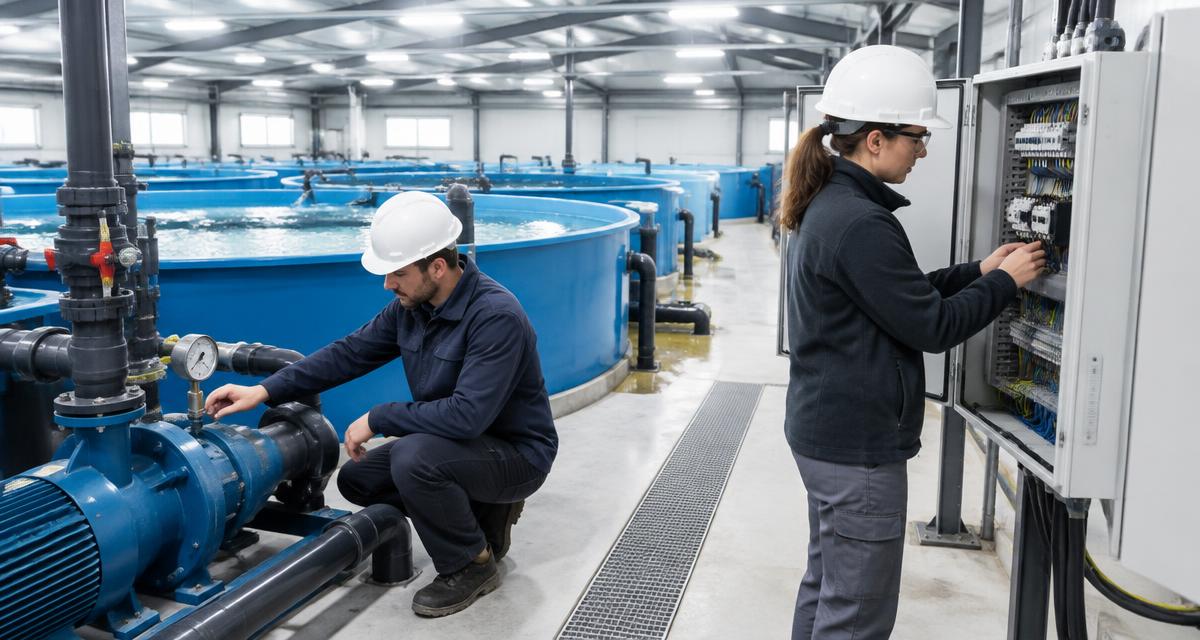
Commissioning is the structured process of installing, starting up, testing and formally accepting equipment before a buyer takes over daily operation. On a recirculating aquaculture system (RAS) or flow-through farm this typically includes pumps and piping, aeration or oxygenation systems, biofiltration, solids removal, UV or ozone disinfection, monitoring and control panels, backup power, and alarm systems. Commissioning is distinct from installation: installation gets equipment physically in place, while commissioning proves it performs to the agreed specification under real or simulated production conditions.
What should acceptance tests actually check?
Acceptance tests should verify measurable performance against the numbers in the contract, not just that a unit switches on. For pumps this generally means flow rate and pressure at the design operating point; for oxygenation or aeration, dissolved oxygen delivery under a stated load; for biofilters, ammonia and nitrite handling under a defined feed or bioload; for controls, that alarms, failovers and data logging behave as specified. Tests should be run at more than one load point where practical, since equipment can look fine at low load and underperform near design capacity. Ask the supplier to propose the exact test protocol in writing during negotiation, including instruments used, duration, and acceptable tolerance bands, so there is no ambiguity once equipment arrives on site.
How do you write acceptance criteria into the supplier contract?
Acceptance criteria should be a contract exhibit, not a verbal understanding. Spell out the specific parameter, the test method, the measurement point, the acceptable range, and who is present to witness the test — buyer, supplier representative, or an independent third party. Tie a portion of payment to successful acceptance rather than to shipment or delivery alone, so the supplier retains an incentive to support commissioning. Also define what happens on partial failure: does the supplier get a fixed window to remediate, is there a holdback amount released only after a repeat test passes, and who covers the cost of retesting. These terms are far easier to negotiate before signing than after a deposit has been paid.
What handover documents should you require before final payment?
A complete handover package typically includes as-built drawings and piping and instrumentation diagrams, equipment datasheets and model numbers, operation and maintenance manuals, spare parts lists with part numbers, control system logic documentation and passwords, warranty terms in writing, and the signed acceptance test results themselves. For software-controlled systems, ask for exported configuration files and a description of how to restore them. Missing documentation is one of the most common gaps buyers report after commissioning, because it is easy to treat as an afterthought rather than a deliverable with its own due date in the contract.
How should training be structured so it actually transfers knowledge?
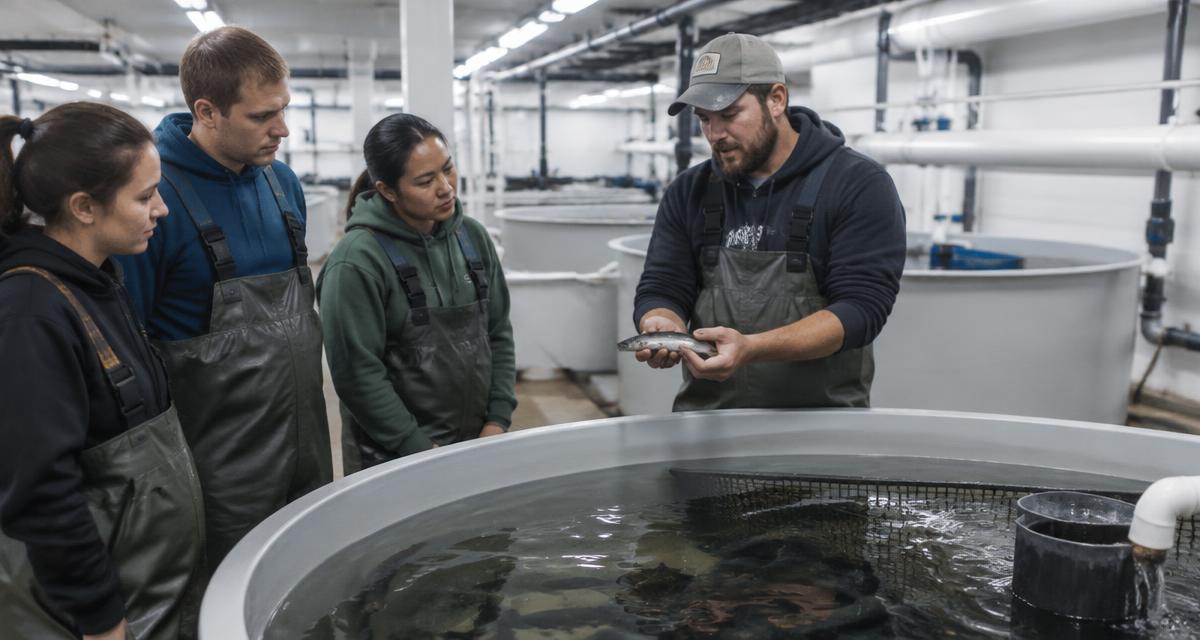
Training works best when it is scheduled to overlap with live commissioning, so staff see real startup, normal operation, and troubleshooting rather than a classroom walkthrough on idle equipment. Ask the supplier contract to specify the number of training days, the topics covered, the number of trainees, and the language of instruction and manuals. Consider requesting a mix of hands-on sessions and written or recorded material that new hires can use later, since staff turnover is common in commercial aquaculture and institutional knowledge should not depend on one person who attended the original training.
How long does commissioning take and when should it happen?
Commissioning duration depends on system scale and complexity, and ranges from a few days for simple aeration or pumping packages to several weeks for a full RAS with biofiltration, disinfection and automated controls needing to stabilize under live bioload. Build commissioning into the project timeline as its own phase with a start and end date, rather than assuming it happens automatically once equipment is unloaded. Confirm with the supplier in writing how commissioning sequencing interacts with stocking plans, since introducing fish before a system has been proven can mask or worsen equipment problems.
How much does commissioning and acceptance testing cost?
Commissioning costs vary by scope, travel requirements, and whether the supplier sends technicians on site or supports remotely, so ask suppliers to quote commissioning, travel and testing as a distinct line item rather than assuming it is bundled into the equipment price. Some suppliers include a baseline commissioning visit in the equipment quote and charge separately for follow-up visits or for testing beyond the original scope. Get these terms in writing before you buy, and compare like-for-like scope across offers using a ras-bid-normalizer so that one supplier's all-inclusive price is not compared against another's bare equipment price.
How do you choose a supplier based on their commissioning process, not just price?
A supplier's commissioning approach is a reasonable proxy for how seriously they treat long-term support. Ask prospective suppliers for a sample commissioning plan, a sample test protocol, and references from buyers who went through startup with similar equipment. Compare how each supplier structures payment milestones around acceptance, how much documentation they provide as standard versus as a paid add-on, and how training is scoped. A supplier checklist can help structure this comparison alongside price and lead time, and should be part of the same due-diligence pass as technical specification review.
What goes wrong when commissioning terms are left out of the contract?
The most common problems are vague acceptance language such as "equipment to perform satisfactorily," payment released in full before any testing occurs, documentation treated as optional rather than a deliverable, and training reduced to a brief remote call. These gaps usually surface only once equipment is installed and underperforming, at which point the buyer has far less leverage than before signing. Writing specific, measurable terms into the contract up front protects both sides by removing ambiguity about what success looks like.
Checklist
Define acceptance test parameters, methods and tolerances for each major equipment group in writing; specify who witnesses testing and how disputes are resolved; tie a portion of payment to successful acceptance rather than shipment; require as-built drawings, O&M manuals, spare parts lists and control documentation before final payment; schedule training to overlap with live commissioning and specify duration, topics and language; confirm commissioning cost and scope as a distinct contract line item; agree a remediation window and retest process for partial failures; align commissioning sequencing with stocking plans before fish arrive.
Frequently asked questions
Does commissioning include training staff, or is that separate? Training is often bundled with commissioning but should still be scoped explicitly in the contract, including duration, topics and number of trainees, so it is not treated as an informal add-on. Who should witness acceptance testing? Many buyers have their own technical representative or an independent third party present alongside the supplier, particularly for larger systems, and this should be agreed in the contract before testing begins. What happens if equipment fails its acceptance test? The contract should define a remediation period, a retest process, and who bears the cost of retesting, so the response is predictable rather than negotiated under pressure. Can commissioning happen remotely? Some commissioning support, such as control system configuration, can be done remotely, but physical tests like flow, pressure and dissolved oxygen delivery generally require someone on site with calibrated instruments.
How can FishMatch Group's calculators and RFQ process help with commissioning planning?
Before you buy, use the oxygen-demand, pump-sizing and biofilter-sizing calculators to establish the performance targets that acceptance tests should be measured against, so contract language reflects your actual design load rather than generic supplier claims. A tco-comparison helps weigh differences in commissioning support, training scope and documentation across offers, not just upfront equipment price. When you are ready to compare suppliers on the same defined scope, including commissioning and handover terms, a reviewed RFQ lets the FishMatch Group team review your brief by hand and request comparable offers from matched suppliers. This article is planning guidance only, not engineering design or financial advice; final commissioning protocols and test specifications should be confirmed with your engineer and suppliers in writing.
Related: Supplier Checklist for Aquaculture Equipment, RAS Farm Cost Guide, Shipping RAS Equipment Internationally
Aquaculture planning benchmarks
| Figure | Value | Context |
|---|---|---|
| CAPEX — RAS | USD 9,000–14,000 per tonne/yr | Global baseline before country cost factor. |
| CAPEX — Ponds | USD 1,800–4,000 per tonne/yr | Lined or earthen ponds, excluding land. |
| CAPEX — Cages | USD 2,500–5,500 per tonne/yr | Cages, moorings, nets and service equipment. |
| CAPEX — Flow-through | USD 4,000–7,000 per tonne/yr | Raceways and water intake works. |
| Energy use | RAS ~6 kWh/kg; ponds ~1.2; flow-through ~1.5; cages ~0.3 | Per kg of fish produced. |
| Typical FCR | Trout 1.1; salmon 1.2; shrimp 1.4; tilapia 1.6; carp 1.8 | kg feed per kg growth; varies with feed and management. |
| Farm size where FishMatch reviews projects | From ~USD 250,000 total project value | Commercial fish and shrimp projects. |
Related articles
Multi-Supplier Aquaculture Projects: Turnkey Integrator vs Specialist Packages
A single integrator simplifies interfaces but costs more; multiple specialists can save money if someone owns the interface drawings and responsibility map.
ProcurementSpare Parts, Warranty and After-Sales Service for Aquaculture Equipment: What to Ask Before You Buy
Short answer: compare suppliers on spare parts availability, warranty scope, response time and service coverage, then budget after-sales support as a recurring line item, not an afterthought.
ProcurementHow to Request Aquaculture Supplier Quotes
What to include in an aquaculture RFQ so different suppliers price the same scope, and what to check before the first supplier is contacted.
ProcurementWhy Commercial Aquaculture Projects Need Supplier Comparison
Why contacting one supplier early locks the design, and how a reviewed RFQ produces comparable proposals across equipment, EPC and technology partners.
Where this fits in a real project
Every FishMatch project runs through the same five reviewed stages, from a first enquiry to comparable quotations. See the full buyer journey.