Phased Fish Farm Expansion: Planning Phase 1 So Later Phases Don't Require Rebuilding
Short answer: plan phase 1 around modular tank units, oversized shared infrastructure (land, water, power, permits), and supplier continuity, so later phases add capacity by extending the same systems rather than tearing out and rebuilding them.
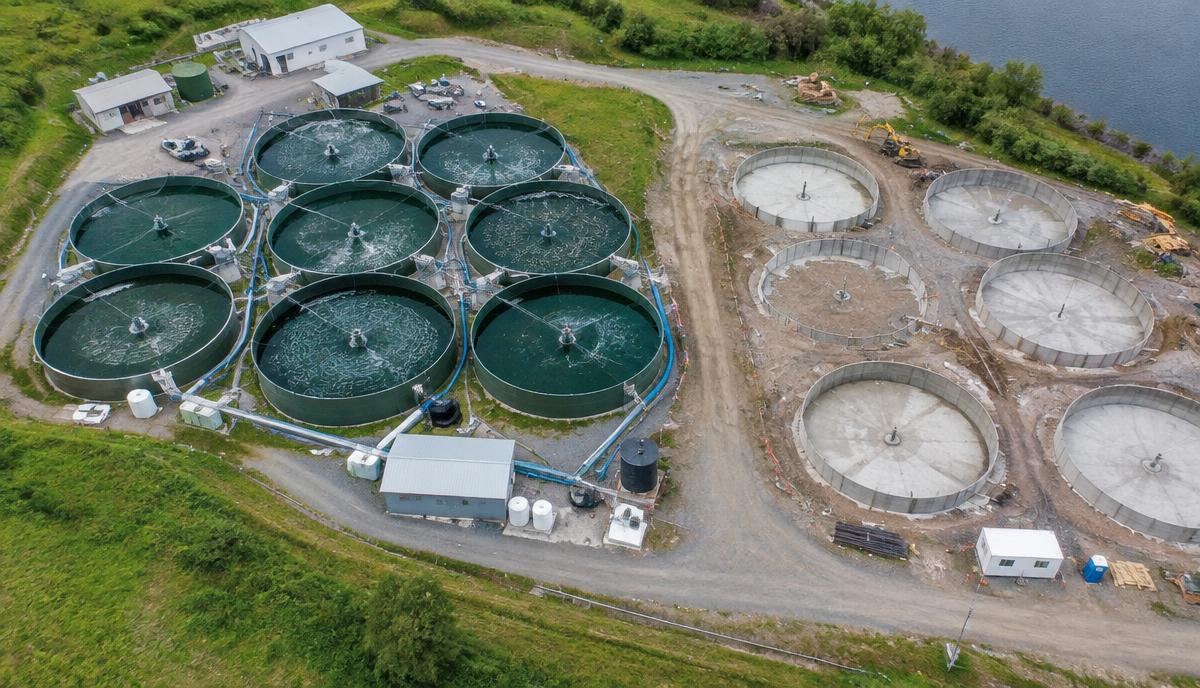
Why does phased development matter for a fish farm?
Few buyers can finance a full-scale farm on day one, and few lenders want to fund one before production and market data exist. Phasing lets a project start at a size the buyer can finance and operate, prove performance, and reinvest earnings or secured financing into the next stage. The risk is that a phase 1 designed in isolation creates bottlenecks: a pump room sized only for current tanks, a permit capped at today's water volume, or a feed store with no room to expand. Good phased planning treats phase 1 as the first module of a finished system, not a standalone farm.
What should phase 1 include to support later expansion?
Phase 1 should include the full backbone the farm will eventually need, even if only part is used at first: the final site boundary and grading plan, main water intake and discharge routing sized for end-state flow, electrical service and standby power rated above initial demand, and a tank layout built on a repeatable module. Hard-to-relocate items, such as underground piping, concrete pads and main switchgear, are best installed near final scale from the start, even if tanks and biofilters are added over time.
How do modular tanks and systems avoid rebuilding later?
Modular design means each production unit (a tank, a biofilter train, an aeration skid) is a repeatable block that can be duplicated without re-engineering the whole system. Choosing standard tank sizes and a consistent piping, aeration and filtration layout lets phase 2 copy the phase 1 design rather than redesigning it. Buyers should ask suppliers in writing whether a given model is still available for future phases, since discontinued equipment forces mismatched systems later. The biofilter sizing and filtration calculators help a buyer see how a module scales before committing to a design.
How much land should phase 1 reserve for future phases?
Land is one of the cheapest things to reserve early and one of the most expensive to add later, especially if neighboring parcels are sold or rezoned in the meantime. Phase 1 site planning should map the final footprint, including future tank rows, settling ponds, discharge areas, access roads and buffer zones, and secure that land or a clear option on it before construction starts. The land requirement calculator gives a starting estimate for how footprint grows across phases.
How much water and power headroom does phase 1 need?
Water and electrical capacity are the two resources most likely to force a rebuild if underestimated. A farm that draws its full permitted water allocation or maxes out its electrical service in phase 1 has no room to add tanks in phase 2 without a new permit or utility upgrade, both of which can take considerable time. Sizing the water source, pumps and main electrical feed for the end-state farm, then running phase 1 at partial load, avoids that delay. The water consumption and power requirement calculators, with generator sizing, help translate a multi-phase plan into infrastructure sizing suppliers can quote against. Sites without reliable grid capacity should also review a backup power guide early.
What permits and approvals need to anticipate future phases?
Permitting agencies generally review the project as presented, so an application describing only phase 1 may need reopening or amending when phase 2 is proposed. Where possible, apply for approvals referencing the full build-out plan, with phase 1 as the initial construction stage, even if operating conditions are phased. This matters most for water withdrawal, discharge and environmental permits, which often set hard volume caps. A site and water assessment, as in this guide, should model the end-state scenario, not just phase 1 flows.
How does financing work across multiple phases?
Lenders typically fund phased projects in stages, releasing capital for phase 2 once phase 1 reaches agreed milestones. Structuring financing this way from the outset, rather than negotiating each phase separately, gives suppliers and the buyer more certainty about timing. The commercial capex, financing loan and project ROI calculators can model each stage, and this financing guide outlines what lenders generally expect. The financing page describes how staged funding commonly aligns with phased construction.
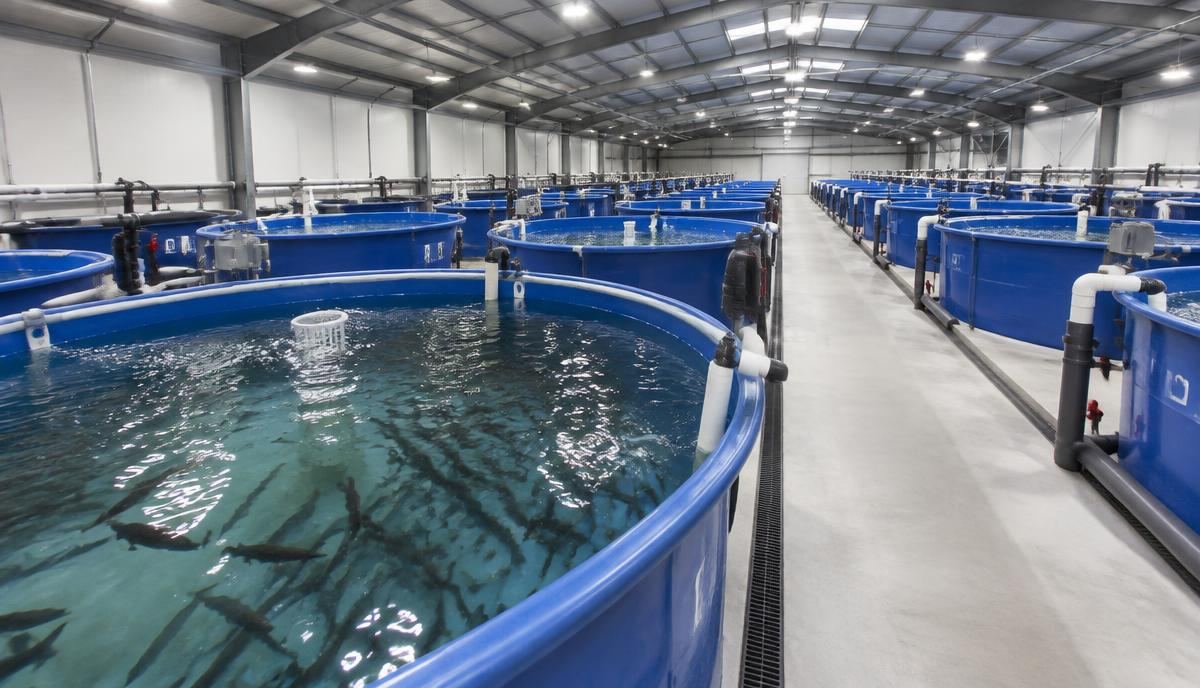
How do you keep the same equipment supplier across phases?
Supplier continuity reduces integration risk: equipment from the same product family tends to share spare parts, control systems and installation methods, keeping phase 2 compatible with phase 1 without custom adapters or retraining. Buyers should ask prospective suppliers in writing about expected product availability over the project's timeline, repeat-order lead times, and whether a model may be discontinued. A documented supplier checklist and clear spare parts and warranty terms, covered in this guide, help a buyer evaluate continuity risk before phase 1 is even ordered.
How much does a phased fish farm expansion cost?
There is no fixed cost for a phased build; it depends on species, target scale, site conditions and local labor and equipment sourcing. Overbuilding shared infrastructure (land, water, power, permits) in phase 1 raises the initial budget versus a bare-minimum build, but is generally more cost-effective than demolishing and re-engineering that infrastructure for phase 2. Buyers should ask suppliers for itemized, scope-matched written quotes so the incremental cost of headroom is visible and comparable, rather than estimating it from general market figures. The commercial capex and operating cost calculators can structure a phase-by-phase budget for that comparison.
How do you choose a supplier for a multi-phase project?
Choosing a supplier for a phased project means evaluating more than the phase 1 price: check whether the supplier can document product continuity, whether their equipment integrates with common control and monitoring systems, how they handle spare parts and service over several years, and whether they will quote phase 2 and phase 3 on the same basis as phase 1 so pricing stays comparable. Because FishMatch Group does not disclose supplier names to buyers, the team instead structures the request so matched suppliers respond to the same documented scope for each phase, keeping comparisons consistent as the project grows.
Checklist
Reserve final site footprint and buffer land before phase 1 construction; size water intake, discharge and electrical service for end-state capacity; choose a repeatable tank module suppliers confirm is available long-term; apply for permits referencing the full build-out where possible; structure financing in stages tied to milestones; document spare parts, warranty and service terms before ordering; confirm supplier lead times for repeat orders in writing; model each phase with calculators before requesting quotes.
Frequently asked questions
Can phase 1 be built smaller than the final design and still expand later? Yes, if shared infrastructure (land, water, power, permits) is sized or reserved for the end-state plan, tank modules can be added later without rebuilding that backbone. What happens if phase 1 uses its full water or power allocation? Adding phase 2 may require a new permit or utility upgrade, which can delay construction, so it is generally better to size these early even if initial usage is lower. Should every phase use the same equipment supplier? Not necessarily the same company, but compatible, documented product lines reduce integration issues; ask any supplier in writing about long-term availability and compatibility before ordering. Does phased financing change how suppliers quote the project? Suppliers can quote each phase separately as long as scope is documented clearly, which is part of why a structured, reviewed RFQ process keeps phased pricing comparable.
How can FishMatch Group's calculators and RFQ process help plan a phased expansion?
Planning a multi-phase farm involves many moving estimates: land, water, power, capex, operating cost and financing all shift as the project scales. The land requirement, water consumption, power requirement, commercial capex and project ROI calculators let a buyer model phase 1 and later phases separately before approaching suppliers. Once the phased scope is clear, submitting it through the reviewed RFQ intake lets the FishMatch Group team review the plan by hand and request comparable, scope-matched offers from matched suppliers for each phase, without disclosing the request to the open market. This is planning guidance only, not engineering design or financial advice, and buyers should confirm site-specific figures with qualified engineers, permitting authorities and lenders.
Related: see the RAS farm cost guide for a broader cost framework, the fish farm feasibility study guide for pre-phase 1 planning, and the aquaculture calculators workflow for sequencing the tools above. For projects also involving feed milling, cold storage or wider agricultural supply, sister sourcing platforms FeedMatch, ColdMatch and SeedMatch cover related procurement alongside FishMatch Group.
Aquaculture planning benchmarks
| Figure | Value | Context |
|---|---|---|
| CAPEX — RAS | USD 9,000–14,000 per tonne/yr | Global baseline before country cost factor. |
| CAPEX — Ponds | USD 1,800–4,000 per tonne/yr | Lined or earthen ponds, excluding land. |
| CAPEX — Cages | USD 2,500–5,500 per tonne/yr | Cages, moorings, nets and service equipment. |
| CAPEX — Flow-through | USD 4,000–7,000 per tonne/yr | Raceways and water intake works. |
| Energy use | RAS ~6 kWh/kg; ponds ~1.2; flow-through ~1.5; cages ~0.3 | Per kg of fish produced. |
| Typical FCR | Trout 1.1; salmon 1.2; shrimp 1.4; tilapia 1.6; carp 1.8 | kg feed per kg growth; varies with feed and management. |
| Farm size where FishMatch reviews projects | From ~USD 250,000 total project value | Commercial fish and shrimp projects. |
Related articles
Planning a Commercial Biofloc Farm: Tanks, Aeration, Power and Equipment List
Short answer: a commercial biofloc farm needs tanks or lined ponds, heavy aeration/mixing, backup power, carbon dosing, solids removal and monitoring, sized and quoted as one matched scope.
PlanningFish Farm Permits and Environmental Licensing: What Approvals Does a Commercial Aquaculture Project Need?
Short answer: most commercial fish farms need water use, discharge, land use, species/health, building and import approvals; exact rules depend on your country, so confirm requirements with local authorities early.
PlanningFish Farm Insurance and Risk Management: What Insurers and Lenders Look For
What drives fish farm risk, what insurers and lenders typically ask about, and how design, backup systems and supplier documentation reduce exposure.
PlanningHow Long Does It Take to Build a Commercial Fish Farm?
Commercial fish farm timelines depend on permits, financing, and suppliers; ask suppliers for written schedule commitments instead of fixed estimates.
Where this fits in a real project
Every FishMatch project runs through the same five reviewed stages, from a first enquiry to comparable quotations. See the full buyer journey.