Fish Farm Staff Training and Operating Procedures: What to Require From Suppliers
Short answer: a fish farm reaches its planned output, quality and survival targets only when equipment is paired with trained people and written procedures. Buyers should require suppliers to provide structured operator training, documented standard operating procedures (SOPs), alarm-response protocols, water-quality monitoring routines and feeding routines as part of the commissioning scope, not as an informal afterthought once the system is running.
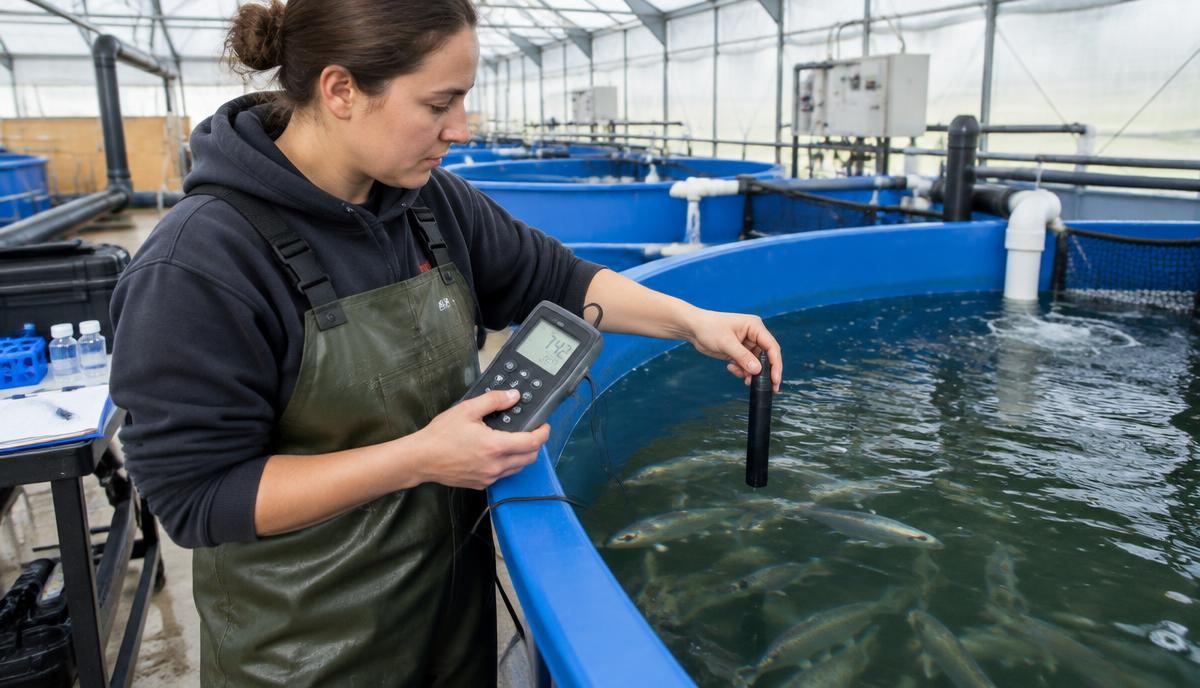
Why does staff training matter as much as equipment selection?
Even well-sized equipment underperforms if operators do not understand how to run it day to day. Pumps, aeration, filtration and monitoring systems are designed around operating ranges, and staff need to know how to read those ranges, respond to drift, and carry out routine maintenance. A farm with correctly sized equipment but untrained staff can still see inconsistent growth, avoidable mortality events and quality variation at harvest. Training closes the gap between what a system is capable of and what it actually delivers in daily operation.
What should a supplier training package include?
A credible training package generally covers startup and shutdown sequences, routine inspection checklists, calibration of sensors and meters, basic troubleshooting of pumps and aeration or oxygenation equipment, and safe handling of chemicals or treatments used onsite. Buyers should ask suppliers to confirm, in writing, who delivers the training, whether it happens onsite or remotely, how many staff can attend, and whether reference materials and video or written documentation are left behind for future hires. Ask for this scope before signing so it is not treated as optional later.
What written SOPs should suppliers hand over at commissioning?
Standard operating procedures should be specific to the equipment and site, not generic manuals. Useful SOPs typically include daily and weekly water-quality checks, feeding schedules and adjustments tied to biomass and growth stage, cleaning and backwashing routines for filtration, record-keeping formats for logging readings and events, and escalation steps when a parameter moves outside the normal range. Buyers should request SOPs in their working language and in a format that can be printed and posted near control panels, since digital-only documentation is often unused in daily practice.
How should alarm response be defined and tested?
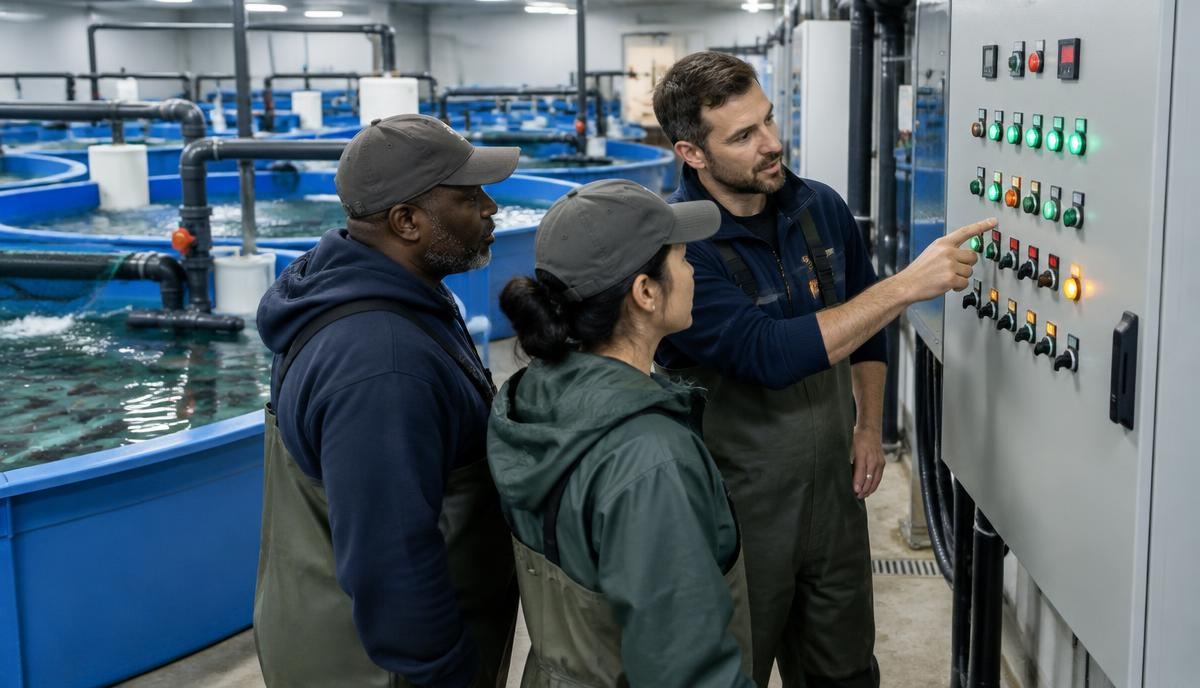
Alarm systems are only useful if staff know what each alarm means and what action follows it. A supplier should provide an alarm matrix listing each trigger (such as low dissolved oxygen, pump failure, power loss or high ammonia), the threshold that fires it, who is notified, and the immediate steps to take before a technician arrives. Buyers should ask for an on-site test of the alarm chain during commissioning, including backup notification paths such as text messages or phone calls, so gaps are found before the first real emergency rather than during one. Mortality-reduction planning depends heavily on how fast and how correctly an alarm is answered, a topic covered in more depth in fish farm mortality reduction planning.
What water-quality routines should be built into daily operations?
Water-quality monitoring should be scheduled, not reactive. Typical routines include fixed-time readings of dissolved oxygen, temperature, pH, ammonia and other relevant parameters, calibration checks on probes and meters, and a simple log that shows trends over time rather than single readings. Suppliers who provide monitoring equipment should also explain its expected accuracy drift and calibration interval so staff are not relying on an instrument that has silently gone out of range. Related planning around site and water characteristics is covered in aquaculture site selection and water assessment.
How should feeding routines be set up and supervised?
Feeding is one of the biggest day-to-day cost and performance drivers on a farm, and it needs a documented routine rather than operator judgement alone. SOPs should define feeding frequency, ration adjustment logic tied to biomass estimates and observed behavior, and how feed is stored and rotated to avoid spoilage. Buyers sourcing feed and feeding systems together should also review how feed properties interact with equipment, a topic explored in fish feed and feeding system matching. Tracking feed conversion ratio against targets is one of the most direct ways to catch a drifting feeding routine early, which the FCR calculator and FCR cost impact calculator can help quantify.
How much does supplier training and SOP support typically add to a project?
There is no fixed figure that applies across projects, since scope varies by farm size, equipment complexity and whether training is delivered onsite or remotely. Buyers should ask each supplier to itemize training and documentation as a separate line in their offer so it can be compared across bids rather than assumed to be bundled for free. Underpricing or omitting this line is a common way offers look cheaper on paper while leaving the buyer to absorb the cost of slower startup and avoidable losses later. The operating cost calculator can help buyers model staffing and training as part of ongoing operating cost rather than a one-time afterthought.
How do buyers compare suppliers on training and operating support?
Because training quality is hard to see from a brochure, buyers should ask each candidate supplier the same specific questions: what is included in the training scope, how many days or sessions are covered, what documentation is left behind, how alarm response is tested, and what support is available in the weeks after startup when most operational questions arise. A structured comparison like this is easier to run as a reviewed RFQ than through informal conversations, since every supplier answers the same scope and the answers can be placed side by side. General supplier evaluation criteria are covered in supplier checklist for aquaculture.
How to choose a supplier that takes operations seriously, not just equipment delivery?
Look for suppliers willing to put training scope, SOP deliverables and post-startup support terms in writing as part of the commercial offer, not as a verbal assurance. Ask how commissioning and handover are structured and whether operational sign-off is tied to a working alarm chain and a trained team, a sequence described in aquaculture equipment commissioning and handover. Also ask about spare parts and service response after handover, since training and ongoing support work together; see aquaculture equipment spare parts, warranty and service. Buyers combining equipment with feed sourcing may also want to review feed mill and supply arrangements through the sister platform FeedMatch (https://feedmatchgroup.com), and those with cold storage or processing needs after harvest can look at the sister platform ColdMatch (https://coldmatchgroup.com).
Checklist
Written operator training scope confirmed before contract signing; SOPs delivered in working language for daily water-quality and feeding routines; alarm matrix with thresholds and response steps tested onsite; calibration schedule for sensors and meters documented; feeding routine tied to biomass and FCR tracking rather than fixed guesswork; post-startup support window and response time stated in writing; documentation left behind in a format new hires can use without the original trainer present; training and SOP scope itemized separately in every supplier offer for comparison.
Frequently asked questions
Does every farm need formal SOPs, even a small one? Yes; smaller farms often have fewer staff covering more roles, which makes written routines more important, not less, since there is less informal knowledge-sharing to fall back on. Who should deliver operator training, the equipment supplier or a separate trainer? Either can work, but the responsible party and the training content should be named in the contract so there is no gap between suppliers assuming the other covers it. How often should alarm response be re-tested after commissioning? Routine periodic testing is good practice, and the exact interval should be agreed with the supplier or service provider based on the equipment and site conditions. Can training be done remotely instead of onsite? Remote training can cover some material, but hands-on tasks like calibration and emergency response generally benefit from at least some onsite component, which buyers should clarify before the offer is finalized.
How can FishMatch Group help buyers get this right?
FishMatch Group does not design training programs or write SOPs itself; it is a sourcing platform that helps buyers request comparable, written offers from multiple suppliers covering the same training, documentation and support scope. Submitting a project through the RFQ intake lets a buyer specify that training, SOPs and alarm-response testing must be itemized in every response, so offers can be compared on operational readiness as well as price. Buyers can also use planning tools before and during supplier conversations, including the stocking density calculator, the dissolved oxygen calculator, the biomass calculator and the harvest profit calculator to frame realistic targets that training and SOPs are then built around. This article is planning guidance only, not engineering design or financial advice, and any technical or operational commitments should be confirmed directly with suppliers in writing.
Related: supplier checklist for aquaculture, fish farm mortality reduction planning, aquaculture equipment commissioning and handover.
Aquaculture planning benchmarks
| Figure | Value | Context |
|---|---|---|
| CAPEX — RAS | USD 9,000–14,000 per tonne/yr | Global baseline before country cost factor. |
| CAPEX — Ponds | USD 1,800–4,000 per tonne/yr | Lined or earthen ponds, excluding land. |
| CAPEX — Cages | USD 2,500–5,500 per tonne/yr | Cages, moorings, nets and service equipment. |
| CAPEX — Flow-through | USD 4,000–7,000 per tonne/yr | Raceways and water intake works. |
| Energy use | RAS ~6 kWh/kg; ponds ~1.2; flow-through ~1.5; cages ~0.3 | Per kg of fish produced. |
| Typical FCR | Trout 1.1; salmon 1.2; shrimp 1.4; tilapia 1.6; carp 1.8 | kg feed per kg growth; varies with feed and management. |
| Farm size where FishMatch reviews projects | From ~USD 250,000 total project value | Commercial fish and shrimp projects. |
Related articles
Global Reducing Fish and Shrimp Mortality Through Strategic Planning and Procurement
Mitigate mortality risks in aquaculture through rigorous equipment planning, biosecurity protocols, and precise supplier RFQs to protect your commercial investment.
OperationsEmergency aquaculture sourcing: replacing critical kit fast
When a blower, oxygen plant or feed line fails, you have days, not months. A short guide to emergency sourcing the right way.
EquipmentFish Farm Automation and Monitoring Systems: Sensors, Alarms and Remote Control for Stock Protection
Short answer: a complete automation package combines water quality sensors, alarms, control panels, automatic feeders and remote monitoring to protect stock and should be specified and compared as one integrated scope in an RFQ.
PlanningPlanning a Commercial Biofloc Farm: Tanks, Aeration, Power and Equipment List
Short answer: a commercial biofloc farm needs tanks or lined ponds, heavy aeration/mixing, backup power, carbon dosing, solids removal and monitoring, sized and quoted as one matched scope.
Where this fits in a real project
Every FishMatch project runs through the same five reviewed stages, from a first enquiry to comparable quotations. See the full buyer journey.