How to Start a Commercial Tilapia Farm: A Buyer’s Guide to Systems and Equipment
Short answer: Commercial tilapia farming requires a systematic approach to site selection, technology adoption, and robust procurement. Success depends on aligning your production system—whether earthen ponds, floating cages, Recirculating Aquaculture Systems (RAS), or biofloc—with local environmental conditions and market demand. By securing high-quality fingerlings, optimizing feed conversion ratios through automated systems, and maintaining strict water quality standards, operators can build scalable enterprises. Utilizing professional sourcing platforms like FishMatch Group ensures that buyers can compare technical specifications and landed costs across multiple global suppliers efficiently. This article is a planning guide only, not engineering or financial advice.
How to analyze the local tilapia market and sales channels?
Before investing in infrastructure, commercial operators must evaluate specific market requirements. Profitability depends on whether the local market prefers whole-chilled fish, live sales, or fillets. Buyers should investigate logistics for reaching wholesalers, as aquaculture product quality and market value are determined by cold chain reliability. Commercial farms must decide between domestic consumption or export standards, which requires different certification and processing equipment. Understanding buyer volume requirements helps in sizing production units. Ask suppliers to state in writing the typical harvest weights achieved by their recommended systems to ensure they align with market expectations and sales channels.
How to choose between ponds, cages, RAS, and biofloc systems?
Selecting the appropriate production technology is a critical decision. Earthen ponds offer lower capital costs but require significant land, whereas floating cages in reservoirs provide high yields if environmental permits are secured. For intensive production in areas with limited water, Recirculating Aquaculture Systems (RAS) or biofloc technology provide greater control over environmental variables. Each system has unique equipment requirements, from liners and aerators to sophisticated filtration units. Commercial buyers should compare RAS vs pond vs cage farming to determine which aligns with their site. Additionally, biofloc farm planning and equipment offers a high-density culture option with reduced water exchange needs.
How to secure a reliable tilapia fingerling supply for commercial stocking?
The genetic quality and health of the initial stock directly impact farm productivity. Commercial farms must establish relationships with hatcheries providing consistent batches of monosex male fingerlings to prevent breeding. A robust fingerling supply and stocking plan includes verifying health status and ensuring fish are pathogen-free. Buyers should ask suppliers to state in writing the genetic strain and expected growth performance under specific conditions. Inconsistent seed quality can lead to uneven harvest sizes and increased mortality, undermining financial stability. Large-scale operations may eventually consider onsite hatchery facilities to gain full control over their production cycle and reduce reliance on external vendors for seed supply.
How to select high-performance fish feed and automated feeding systems?
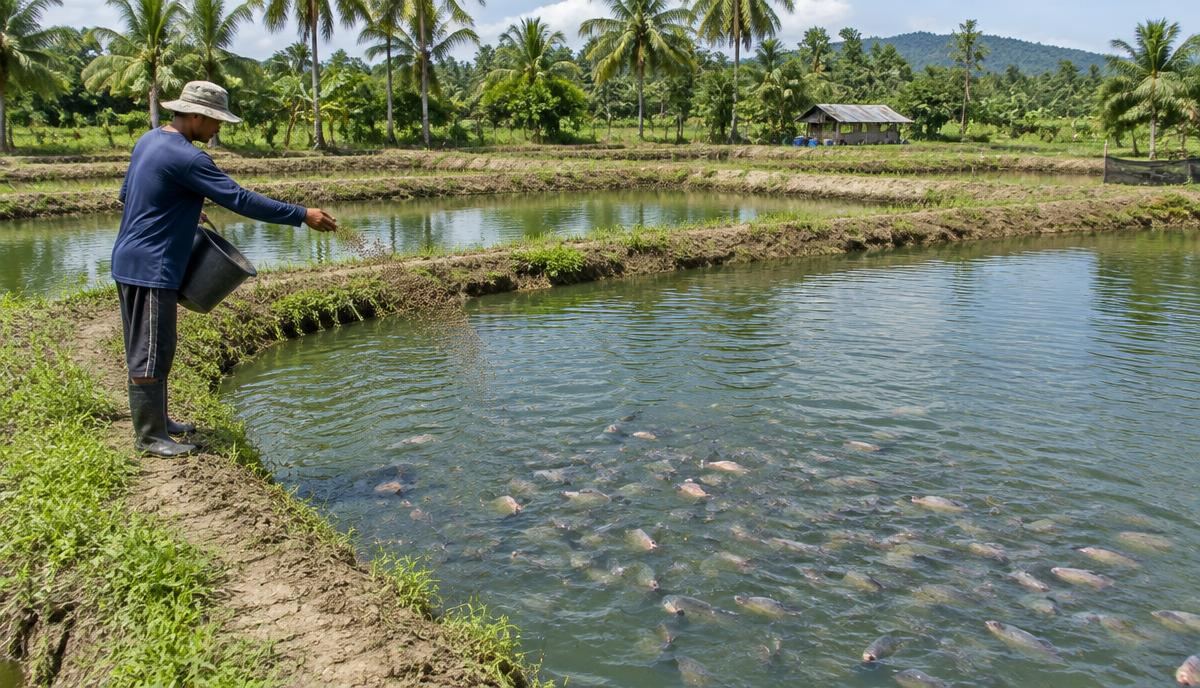
Feed represents the largest ongoing operational expense, making efficient delivery and high nutrition essential. Commercial operators should source high-protein pellets formulated for specific life stages. Implementing automated feeding systems can improve Feed Conversion Ratios (FCR) by delivering precise amounts at optimal intervals. When sourcing equipment, look for fish feed and feeding system matching to ensure dispensers are compatible with pellet size. Ask suppliers to state in writing the projected FCR and growth performance based on their recommendations. Proper storage in climate-controlled silos is vital to prevent spoilage and maintain nutritional integrity throughout the grow-out cycle, ensuring that the investment results in optimal biomass gains.
How to manage aeration and dissolved oxygen in tilapia production?
Dissolved oxygen is the most critical limiting factor in intensive culture, as low levels lead to stress and mortality. Commercial farms require robust aeration systems, such as paddlewheels or diffuse air systems, to maintain optimal levels during the night. Effective dissolved oxygen management for bankable farms involves continuous monitoring using digital sensors and automated alerts. Buyers should ensure aeration capacity is scaled to the maximum biomass expected at harvest. Ask suppliers to state in writing the oxygen transfer efficiency of their equipment and recommended backup power requirements. Reliable aeration protects the standing crop and allows for higher stocking densities, maximizing the return on infrastructure investment.
How to maintain water quality and biosecurity in commercial tilapia farms?
Maintaining stable water chemistry is essential for preventing disease and ensuring rapid growth. Monitoring parameters like ammonia, nitrites, and pH allows managers to take corrective actions before conditions become toxic. A comprehensive approach to water quality management for commercial aquaculture includes physical filtration and regular water exchange. Biosecurity measures, such as disinfection stations and water screening, are necessary to protect the farm from external pathogens. Buyers should invest in high-quality testing equipment and consider automated monitoring systems providing real-time data. Ask suppliers to state in writing the maintenance requirements and calibration schedules for all sensors to ensure long-term reliability and accuracy in the field.
How to plan for efficient tilapia harvest and cold chain logistics?
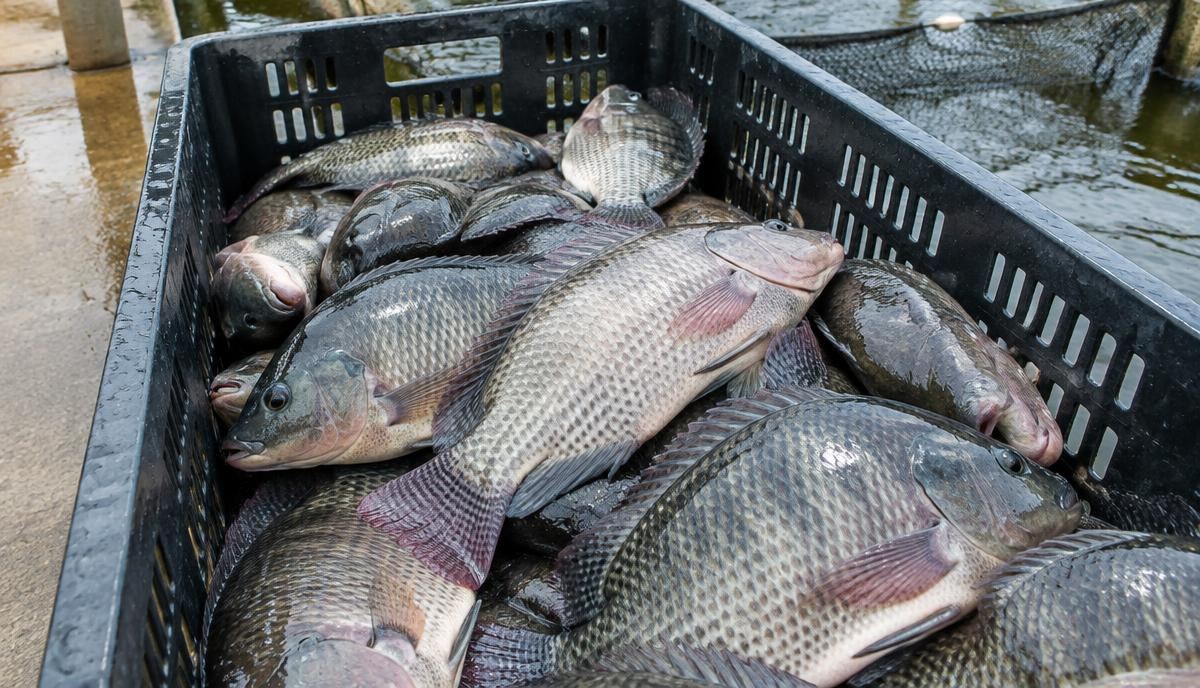
The transition from production to market is a phase where product quality can be compromised. Efficient harvesting requires specialized nets, pumps, and grading equipment to minimize stress. Once harvested, tilapia must be rapidly cooled to preserve freshness, necessitating investment in ice machines and cold storage. Proper aquaculture harvest and cold chain quality management ensures the final product meets standards for premium retailers. Commercial buyers should plan harvest schedules to match market demand cycles, ensuring fish are not held at harvest size longer than necessary. Ask suppliers to state in writing the capacity and cooling rates of their post-harvest equipment to ensure it can handle peak production volumes while maintaining quality.
How to calculate the budget and CAPEX for a commercial tilapia project?
A realistic budget covers both capital expenditures (CAPEX) and operating expenses (OPEX). CAPEX includes land, earthworks, and procurement of technical equipment like pumps and aerators. Using tools like the /calculators/project-roi helps investors understand break-even timelines and potential returns. It is important to account for what affects aquaculture CAPEX, such as site preparation and import duties on machinery. Operating costs, including feed and electricity, must be managed to maintain profitability. Buyers should request detailed quotes including shipping and installation costs to avoid unexpected financial gaps. Ask suppliers to state in writing the expected lifespan of major equipment components to accurately forecast long-term replacement costs.
How to request a commercial equipment RFQ from global manufacturers?
Sourcing equipment from international suppliers can be complex for individual buyers. Utilizing a structured tilapia farming equipment guide helps in identifying components needed for specific systems. The most efficient way to obtain comparable offers is to submit a comprehensive /rfq-intake through a professional sourcing platform. This allows buyers to receive technical proposals from various manufacturers without managing dozens of contacts. When reviewing quotes, focus on technical specifications and warranty terms. Ask suppliers to state in writing the lead times for delivery and the level of technical support provided during installation. Comparing offers line-by-line ensures the chosen equipment meets farm needs while providing long-term value, reducing the risks associated with procurement.
Checklist
Conduct site assessments; obtain permits; select a system; design layout; source fingerlings; install aeration; establish feed supply; plan backup power; implement monitoring; arrange cold chain logistics.
Frequently asked questions
Q: How to determine stocking density? A: Ask suppliers to state in writing biomass limits. Q: Why use an RFQ platform? A: It provides access to multiple reviewed suppliers and helps compare specifications. Q: Can tilapia grow in cooler climates? A: Yes, using greenhouse structures or heated RAS. Q: How often to test water? A: Oxygen continuously, other parameters daily.
How do FishMatch Group's calculators and reviewed RFQ help?
FishMatch Group simplifies planning and equipping a tilapia farm through professional tools and sourcing expertise. Their calculators allow investors to estimate project ROI and equipment needs. By submitting an RFQ through the platform, buyers receive reviewed offers from global manufacturers. This service removes the guesswork from procurement, allowing owners to focus on management while the team handles evaluations. The platform’s vendor-neutral approach ensures buyers receive the most appropriate technology for their site, reducing the risk of costly mistakes.
Related: fish farming economics cost per kilogram; how to plan commercial aquaculture project; why use an rfq platform
Aquaculture planning benchmarks
| Figure | Value | Context |
|---|---|---|
| CAPEX — RAS | USD 9,000–14,000 per tonne/yr | Global baseline before country cost factor. |
| CAPEX — Ponds | USD 1,800–4,000 per tonne/yr | Lined or earthen ponds, excluding land. |
| CAPEX — Cages | USD 2,500–5,500 per tonne/yr | Cages, moorings, nets and service equipment. |
| CAPEX — Flow-through | USD 4,000–7,000 per tonne/yr | Raceways and water intake works. |
| Energy use | RAS ~6 kWh/kg; ponds ~1.2; flow-through ~1.5; cages ~0.3 | Per kg of fish produced. |
| Typical FCR | Trout 1.1; salmon 1.2; shrimp 1.4; tilapia 1.6; carp 1.8 | kg feed per kg growth; varies with feed and management. |
| Farm size where FishMatch reviews projects | From ~USD 250,000 total project value | Commercial fish and shrimp projects. |
Related articles
Why Commercial Fish Farm Projects Exceed Budget and How to Prevent Cost Overruns
Commercial aquaculture projects often go over budget due to scope gaps, hidden site costs, and logistics. This guide explains how to identify these risks and secure accurate quotes.
PlanningWhy Feed Conversion Ratio (FCR) Drives Fish and Shrimp Farm Economics
Feed Conversion Ratio (FCR) is the primary driver of aquaculture profitability, linking feed expenditure to biomass output and determining financial viability.
PlanningWhy Aquaculture Buyers Need a Written Technical Specification Before Requesting Quotes
Sending a detailed technical specification ensures you receive comparable equipment quotes, reduces the risk of expensive change orders, and provides a clear basis for system acceptance tests.
PlanningHow to Start a Commercial Shrimp Farm: A Step-by-Step Guide for Global Investors
Start a commercial shrimp farm by assessing site water quality, choosing production systems, and securing reliable aeration and post-larvae supply through a structured RFQ.
Where this fits in a real project
Every FishMatch project runs through the same five reviewed stages, from a first enquiry to comparable quotations. See the full buyer journey.