Fingerling and Post-Larvae Sourcing: Matching Hatchery Supply to Your Stocking Plan
Short answer: reliable fingerling and post-larvae supply depends on confirming hatchery health status in writing, scheduling batches to match your grow-out capacity and cycle timing, planning transport and acclimation carefully, and stocking at densities your system's oxygen and filtration can actually support. Getting the seed right and matching it to the right system is what keeps early mortality down and output on track.
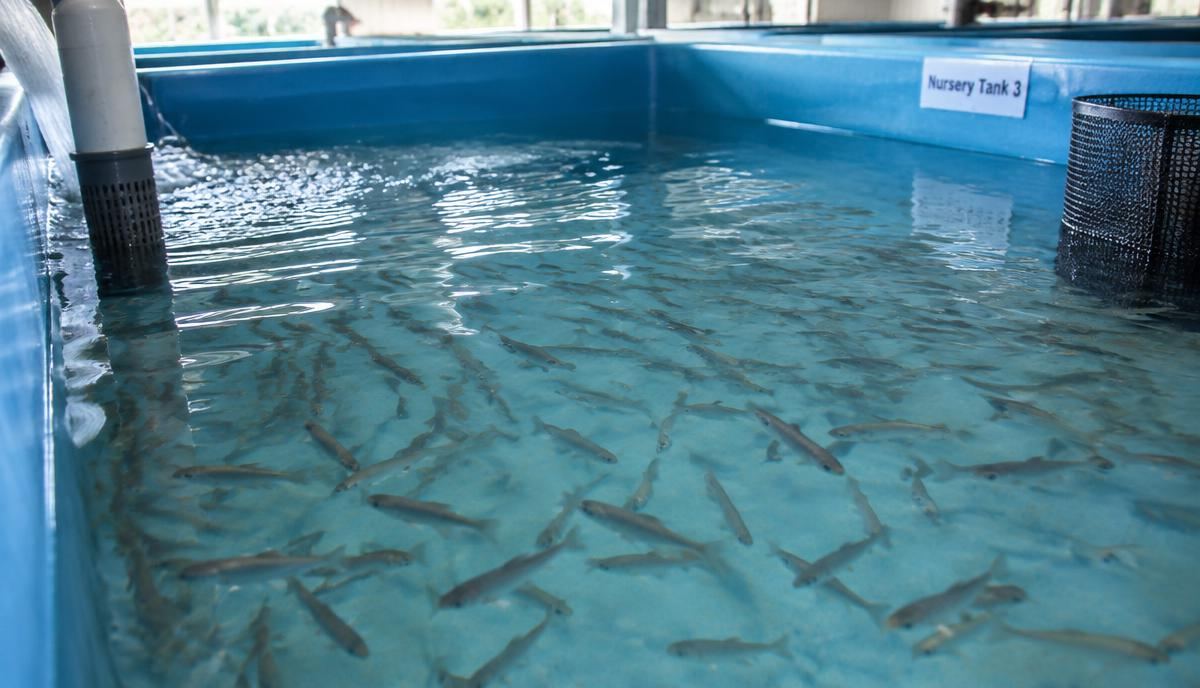
What makes fingerling or post-larvae quality acceptable for commercial stocking?
Quality starts with uniform size distribution, active swimming behavior, intact fins or appendages, and the absence of visible deformities, lesions, or abnormal coloration. For shrimp post-larvae, buyers generally look at stage consistency (PL age), gut fullness, and activity response to stress tests such as a brief formalin or salinity dip, which the hatchery should be able to demonstrate or document. For fish fingerlings, size grading matters because mixed sizes increase aggression and uneven feeding later in grow-out. None of these indicators substitute for a direct conversation with the hatchery about its broodstock source, rearing conditions, and recent batch performance — ask for that information in writing rather than relying on visual inspection alone.
How should health documentation and biosecurity be verified before accepting a batch?
Commercial-scale stocking should be supported by health certification covering the pathogens relevant to your species and region, along with records of any prophylactic treatments used in the hatchery. For shrimp, this typically includes specific pathogen status documentation; for finfish, it includes disease screening appropriate to the species and destination. Ask the hatchery for the testing laboratory used, the date of the most recent screening, and whether results are available for the specific batch you are purchasing rather than a general facility certification. Quarantine or observation periods on your own site, even short ones, are a reasonable practice before mixing new seed with existing stock, and your biosecurity plan should specify how incoming batches are isolated and monitored.
How do you match hatchery supply schedules to your farm's stocking plan?
Grow-out capacity, not hatchery availability, should drive your stocking calendar. Start from your target harvest schedule and system turnover, then work backward to determine when each batch of seed needs to arrive. Hatcheries often produce on their own biological cycle, so securing supply agreements or production slots well ahead of your planned stocking date reduces the risk of gaps or oversupply. If your farm runs multiple ponds or tanks on staggered cycles, coordinate with the hatchery on batch sizing so you are not forced to either overstock a system or let seed age in holding tanks waiting for space to open up.
How much fingerling or post-larvae supply do you need for your capacity?
The quantity to order depends on your planned stocking density, the system's confirmed water quality and oxygen capacity, and an allowance for expected mortality between stocking and harvest. Rather than guessing a mortality buffer, ask the hatchery and any technical advisor what allowance is reasonable for your species, system type, and season, and build that into your order quantity. A stocking density calculator and a biomass calculator can help translate your system's size and carrying capacity into a seed order range before you approach suppliers, and a shrimp farm planning tool can help frame pond-level assumptions for shrimp operations specifically.
How much do fingerlings and post-larvae cost, and what drives the price?
Seed pricing varies by species, size at sale, health certification level, season, and distance from the hatchery to your farm, so any number quoted here would be misleading. What you can control is getting comparable, itemized quotes: price per unit at a specified size and age, packaging and transport costs, any health certification fees, and payment and delivery terms. Ask every supplier under consideration to quote on the same batch size, size specification, and delivery timeline so the figures are actually comparable, and get all commercial terms in writing before committing.
How do you choose a hatchery or seed supplier for a commercial project?
Compare suppliers on documented health status, consistency of past batch quality, ability to meet your delivery schedule reliably, and willingness to provide traceability back to broodstock source. Request references from other commercial buyers where possible and ask about their experience with order fulfillment and batch consistency over multiple cycles, not just a single purchase. Transport capability and distance also matter: a hatchery with excellent stock but no reliable packing and shipping process for your distance can still produce poor outcomes on arrival. Avoid selecting purely on unit price, since the real cost of a weak batch shows up later in mortality and uneven growth.
How should transport and acclimation be planned to protect the seed?
Transport stress is one of the largest controllable sources of early mortality, so plan the logistics as carefully as the sourcing decision itself. Confirm packing density per bag or tank, oxygen supply for the transit duration, water temperature control, and total transit time before the shipment leaves the hatchery. On arrival, acclimation should equalize temperature, salinity (for shrimp or brackish species), and pH gradually rather than releasing seed directly into the receiving system; the hatchery or a technical advisor can specify an appropriate acclimation rate for your species and water chemistry difference. Have your receiving tanks or ponds fully prepared, tested, and at target water quality before the shipment arrives, since delays at this stage compound transport stress.
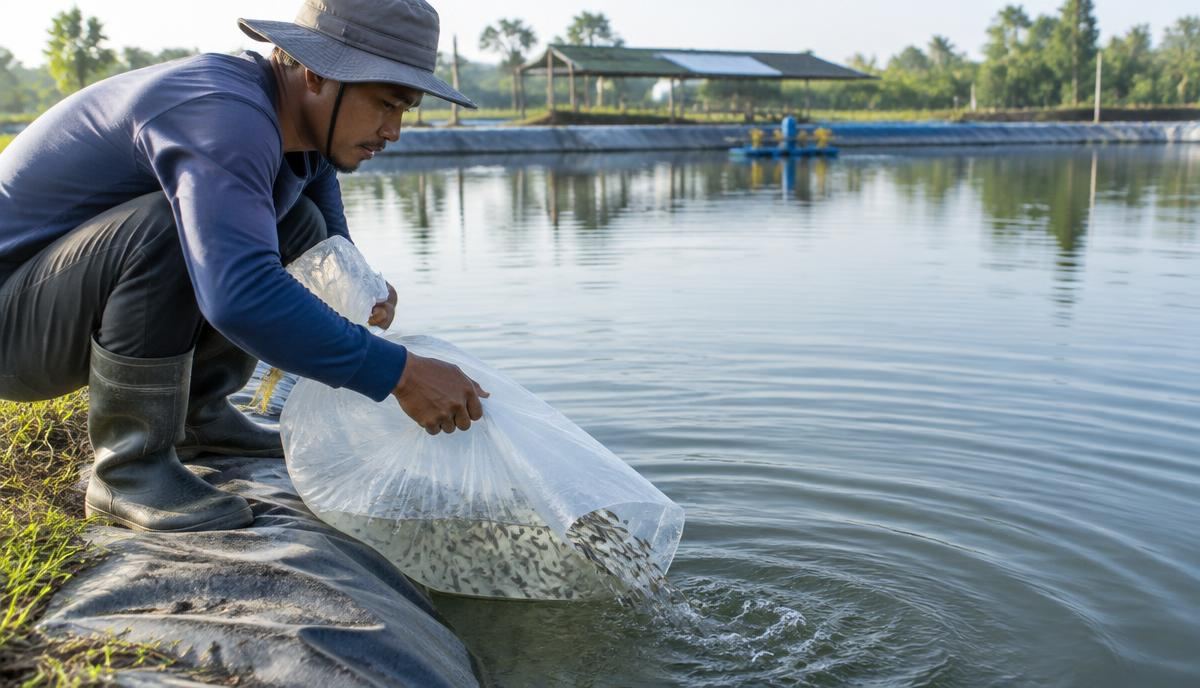
What stocking density is appropriate for your system?
Appropriate stocking density depends on your system's oxygen supply, filtration or water exchange capacity, feeding strategy, and target harvest size, not on a single rule of thumb that applies across systems. Overstocking relative to your system's actual capacity is a common cause of stress-related mortality and poor growth, even when the seed itself was high quality at stocking. Use an oxygen demand calculator, an aeration sizing calculator, and dissolved oxygen planning tools to confirm your system can support the density you intend to stock, and revisit that figure if you change feed rates or extend the grow-out period.
How does seed quality connect to mortality and overall output?
Weak or poorly documented seed can undermine an otherwise well-designed system, while strong seed stocked into an undersized or poorly matched system can still underperform. The pairing of quality seed with a system properly sized for the resulting biomass is what supports lower mortality and higher output over a full cycle. This is also where feed and equipment choices interact with your seed plan: review fish feed and feeding system matching and mortality reduction planning alongside your stocking schedule, and coordinate feed procurement timing with your stocking calendar through a sister platform such as FeedMatch (https://feedmatchgroup.com), which focuses on animal and aqua feed sourcing and feed mill projects.
Checklist
Confirm broodstock source and written health documentation for the specific batch; verify size uniformity and activity or stress-test results before accepting seed; align hatchery production slots with your grow-out cycle and harvest calendar; calculate order quantity from system capacity plus a reasonable mortality allowance, not guesswork; request itemized, comparable quotes covering unit price, packaging, transport, and certification fees; confirm transport packing density, oxygen supply, and transit duration in advance; prepare and test receiving systems before the shipment arrives; follow a gradual acclimation process for temperature, salinity, and pH; verify stocking density against confirmed oxygen and filtration capacity; put quarantine or observation procedures in place for new batches.
Frequently asked questions
How far in advance should fingerlings or post-larvae be ordered? Generally several weeks to a few months ahead, depending on hatchery production cycles and your system's readiness; confirm the hatchery's lead time directly rather than assuming a standard timeline. Can you mix seed from more than one hatchery in the same stocking batch? It is possible but increases biosecurity and size-uniformity risk, so if you do, keep batches separate initially and monitor each one before combining. What happens if seed arrives smaller or larger than specified? Ask the hatchery in advance how size variance is handled commercially, including replacement or credit terms, and get that agreement in writing before the shipment ships. Does post-larvae stage (PL age) matter for stocking success? Yes, PL age affects robustness and readiness for pond conditions, and the appropriate stage depends on your system and water conditions, so confirm the recommended stage with the hatchery and a technical advisor for your specific setup.
How can FishMatch Group help with hatchery sourcing and stocking planning?
FishMatch Group is a sourcing platform, not a hatchery or engineering firm, so it does not design your stocking plan or guarantee seed performance. What the team can do is take a clearly scoped brief — species, target stocking density, system capacity, health documentation requirements, and delivery timeline — and have it reviewed by hand before matched hatchery and equipment suppliers are asked for comparable offers on the same scope. Use the stocking density, biomass, shrimp survival and profit, and hatchery planning calculators to frame your numbers before submitting a brief through RFQ intake; these tools and this article are planning guidance only, not engineering design or financial advice, and final sizing and health decisions should be confirmed with qualified suppliers and advisors in writing.
Related: see the supplier checklist for aquaculture, the fish farm feasibility study guide, and the aquaculture calculators farm planning workflow for related sourcing and planning steps.
Aquaculture planning benchmarks
| Figure | Value | Context |
|---|---|---|
| CAPEX — RAS | USD 9,000–14,000 per tonne/yr | Global baseline before country cost factor. |
| CAPEX — Ponds | USD 1,800–4,000 per tonne/yr | Lined or earthen ponds, excluding land. |
| CAPEX — Cages | USD 2,500–5,500 per tonne/yr | Cages, moorings, nets and service equipment. |
| CAPEX — Flow-through | USD 4,000–7,000 per tonne/yr | Raceways and water intake works. |
| Energy use | RAS ~6 kWh/kg; ponds ~1.2; flow-through ~1.5; cages ~0.3 | Per kg of fish produced. |
| Typical FCR | Trout 1.1; salmon 1.2; shrimp 1.4; tilapia 1.6; carp 1.8 | kg feed per kg growth; varies with feed and management. |
| Farm size where FishMatch reviews projects | From ~USD 250,000 total project value | Commercial fish and shrimp projects. |
Related articles
Procuring hatchery equipment: what to ask before signing
Survival targets, larval rearing tank uniformity, live-feed capacity and after-sales support — the questions that separate good vendors from great ones.
EquipmentFish Farm Automation and Monitoring Systems: Sensors, Alarms and Remote Control for Stock Protection
Short answer: a complete automation package combines water quality sensors, alarms, control panels, automatic feeders and remote monitoring to protect stock and should be specified and compared as one integrated scope in an RFQ.
PlanningPlanning a Commercial Biofloc Farm: Tanks, Aeration, Power and Equipment List
Short answer: a commercial biofloc farm needs tanks or lined ponds, heavy aeration/mixing, backup power, carbon dosing, solids removal and monitoring, sized and quoted as one matched scope.
Water QualityUV and Ozone Disinfection Equipment for Aquaculture: Where Each Fits and How to Compare Quotes
UV suits clear, downstream flows like RAS loops and hatcheries; ozone suits intake and higher-organic-load water needing oxidation. Compare quotes on full scope, not price alone.
Where this fits in a real project
Every FishMatch project runs through the same five reviewed stages, from a first enquiry to comparable quotations. See the full buyer journey.