UV and Ozone Disinfection Equipment for Aquaculture: Where Each Fits and How to Compare Quotes
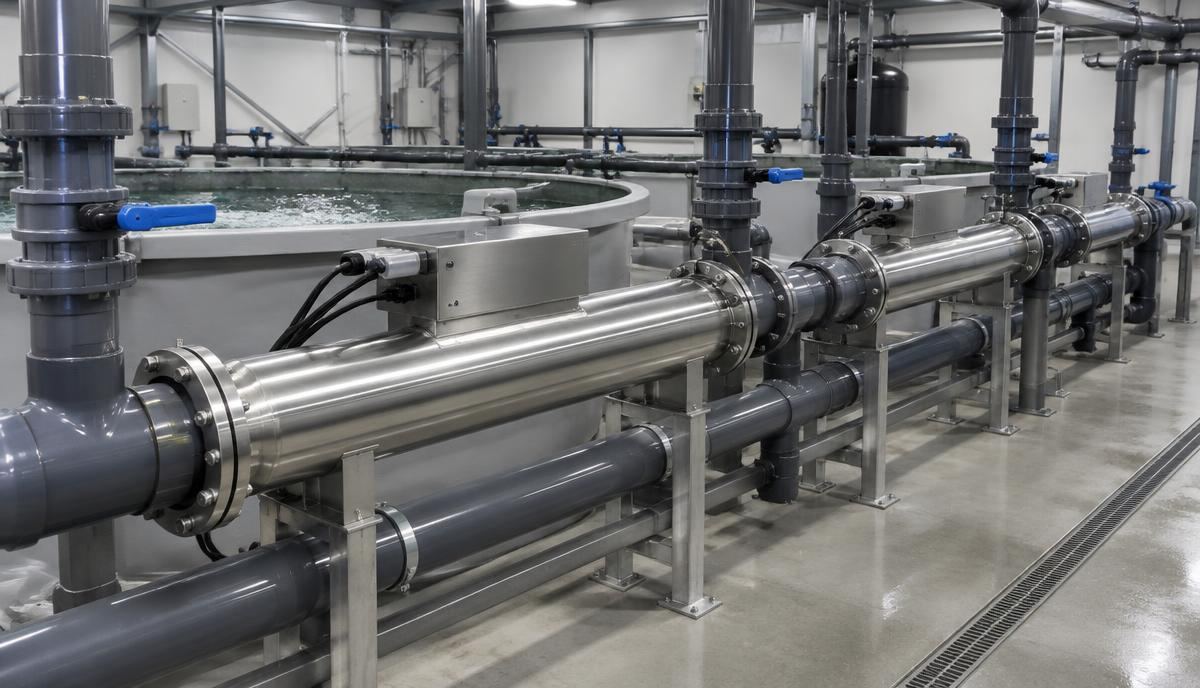
Short answer: UV disinfection is typically used for fine, continuous pathogen control on clear water streams such as a RAS loop or hatchery supply, while ozone is chosen where stronger oxidation is needed, for example treating intake water with higher organic load or improving water clarity alongside disinfection. Many commercial projects use both in different parts of the same system rather than picking one technology for the whole farm.

Where does UV disinfection fit in an aquaculture system?
UV steriliser units are generally placed in locations where water is already reasonably clear, because suspended solids and organic matter can shield pathogens from UV light and reduce effectiveness. This makes UV a common fit for the RAS recirculation loop, where water has already passed through mechanical and biological filtration, and for hatchery or nursery supply lines where consistent, low-turbidity flow is expected. UV is valued for not adding residual chemical oxidants to the water, which matters in sensitive larval or broodstock systems.
Where does ozone fit in an aquaculture system?
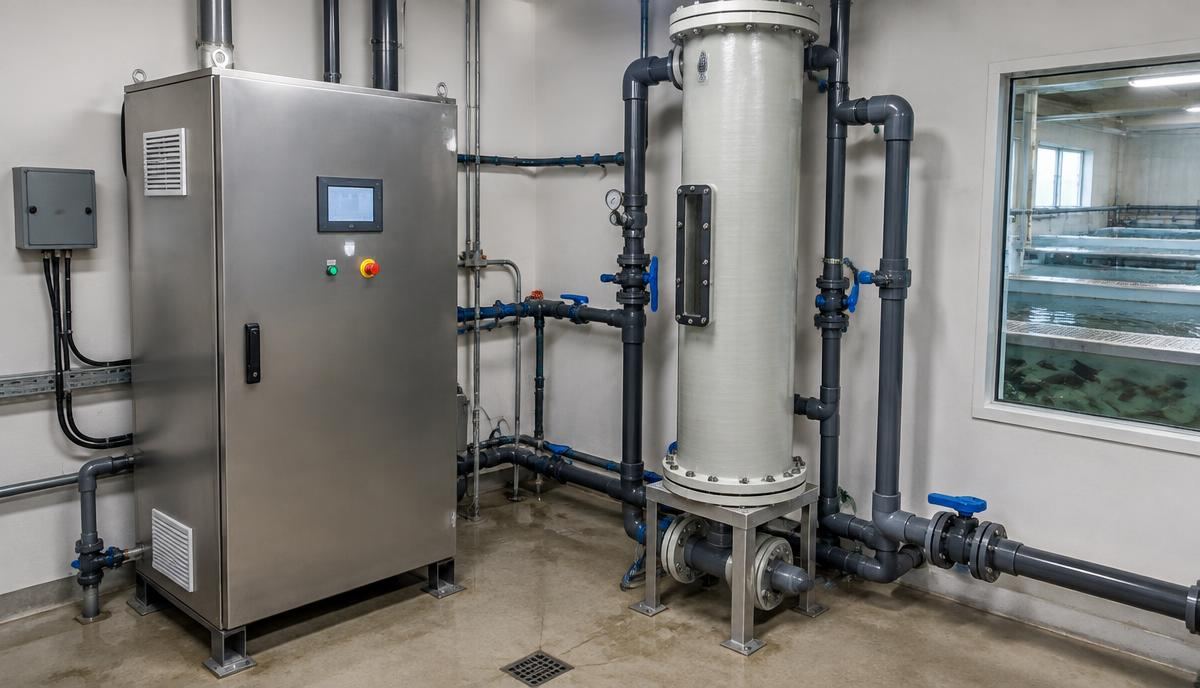
Ozone is an oxidant, so it does more than disinfect; it can also break down organic compounds, help control fine and colloidal solids, and improve water clarity and color. This makes ozone a frequent choice for intake water treatment, where raw source water may carry higher organic load, and in some RAS designs as a polishing step within the loop, usually with a contact column and careful residual management before water reaches the fish. Because ozone is reactive, it is almost always applied with downstream monitoring and sometimes an off-gas or degassing step to protect stock.
Can UV and ozone be used together in the same system?
Yes, and on many commercial projects they are complementary rather than competing. A typical pattern is ozone applied at intake or at a side-stream contact point for oxidation and organics control, with UV applied closer to the point of use for a final, chemical-free disinfection pass. The exact combination depends on source water quality, species sensitivity, and the specific RAS or hatchery layout, which is why this is a question to work through with suppliers and, where needed, an independent engineer rather than deciding on technology preference alone.
What sizing inputs should go into a disinfection RFQ?
Suppliers can only quote accurately if they receive consistent figures, not vague ranges. Useful inputs to gather before sending an RFQ include: design flow rate through the disinfection unit, expected water quality at the treatment point (turbidity, organic load, salinity if relevant); the application point (intake, RAS loop, or hatchery supply); target pathogens or indicator organisms if known; whether the system runs continuously or intermittently; available power supply and plant room space; and any species-specific sensitivity to ozone residual or UV exposure. Sending the same input set to every supplier is what makes quotes genuinely comparable.
How is a UV or ozone system sized for a given flow rate?
UV systems are generally sized around flow rate, required UV dose, and water quality (since transmittance affects how much dose actually reaches the water), so suppliers will typically ask for these before proposing lamp count and chamber size. As a reference point for the doses involved, Norwegian aquaculture research body Nofima's CtrlAQUA project found that a UV dose below 25 mJ/cm2 inactivated 99.9 percent of the salmon pathogens it tested, with a notable exception requiring 43 to 250 mJ/cm2, according to Nofima's UV requirements for inactivation fact sheet; actual required doses still depend on the specific pathogens and species a given farm needs to manage. Ozone systems are generally sized around flow rate, desired oxidant demand, and required contact time, which drives generator output and contact column dimensions. In both cases, exact dose and sizing figures should come from the supplier in writing based on your actual water quality data, not from a generic rule of thumb applied to a different site.
What safety and monitoring measures should be planned around ozone equipment?
Ozone is effective because it is reactive, which also means it requires deliberate safety planning. In the United States, the Occupational Safety and Health Administration sets a permissible exposure limit for ozone of 0.1 ppm as an 8-hour time-weighted average, according to OSHA's Table Z-1 air contaminants standard, a benchmark that plant room ambient monitoring is typically designed around. Typical elements include ambient ozone gas monitoring in the plant room, interlocks or alarms tied to residual ozone sensors in the water line, off-gas destruction before venting, and clear operating procedures for staff working near ozone equipment. Residual ozone in water reaching fish tanks is normally monitored and, where needed, neutralized or allowed to dissipate before the water reaches stock. Confirm these items in writing with each supplier.
What should be monitored once UV equipment is installed?
UV output degrades over time as lamps age and as the quartz sleeve can foul, so ongoing monitoring typically includes a UV intensity sensor with an alarm, a maintenance schedule for sleeve cleaning and lamp replacement, and periodic checks of water transmittance since a change in water quality can reduce dose even with the lamp performing normally. Ask suppliers how their control system reports and logs these parameters.
How much does UV or ozone disinfection equipment cost?
Cost depends on flow rate, dose requirements, materials of construction, monitoring and control features, and whether the system includes contact chambers, degassing, or destruct units. Because these variables differ project to project, published price lists rarely reflect an actual commercial quote. The more reliable approach is to send a complete, well-specified scope to multiple suppliers and compare like-for-like written quotes, which is the basis of the FishMatch reviewed RFQ process.
How do you compare UV and ozone system quotes from different suppliers?
Quotes are only comparable when they cover the same scope. When reviewing offers, check whether each quote includes the full assembly (not just the generator or lamp chamber), the control and monitoring instrumentation, installation and commissioning support, warranty terms, and spare parts such as lamps, sleeves, or ozone generator consumables. A lower headline price that excludes monitoring equipment or installation is not necessarily the lower total cost. For a broader view of this comparison process, see how to compare RAS equipment quotes and the supplier checklist for aquaculture equipment.
How do you choose between competing disinfection suppliers?
Rather than comparing on price alone, look at whether the supplier asked detailed questions about your water quality and application point, whether their proposal includes the monitoring and safety features discussed above, and how clearly they describe commissioning and after-sales support. For international purchases, it is also worth checking shipping and delivery terms early; see shipping RAS equipment internationally and Incoterms for aquaculture equipment purchases.
Checklist
Confirm design flow rate and peak flow at the treatment point; document source water quality including turbidity and organic load; decide the application point (intake, RAS loop or hatchery line); state species sensitivity to ozone residual or UV exposure; request dose, sizing and residual figures from each supplier in writing; confirm monitoring instrumentation (UV intensity sensor, ozone residual and ambient gas sensors); confirm whether degassing or off-gas destruct equipment is included; compare installation, commissioning and warranty terms, not just equipment price; confirm spare parts availability and lead times for lamps, sleeves and generator consumables.
Frequently asked questions
Is UV or ozone better for aquaculture? Neither is universally better; UV suits clearer water streams needing chemical-free disinfection, while ozone suits applications needing stronger oxidation or clarity improvement, and many projects use both at different points. Does ozone harm fish? Ozone itself is toxic to fish at residual levels, which is why ozone systems are designed with contact time, degassing and residual monitoring so treated water reaches stock only after the oxidant has been reduced to a safe level, a threshold suppliers and, where needed, an engineer should confirm for your species. Can UV replace a biofilter or mechanical filter? No; UV disinfects but does not remove solids or process ammonia, so it is normally installed downstream of mechanical and biological filtration. How long does disinfection equipment take to arrive after ordering? Lead times vary by supplier, equipment complexity and current order volume, so ask each supplier directly rather than assuming a standard timeline.
How can FishMatch Group's tools help with a disinfection equipment purchase?
Before approaching suppliers, the water consumption calculator and filtration calculator can help establish the flow and water quality figures a disinfection supplier will need, while the power requirement calculator can help check whether added UV or ozone load fits your planned electrical supply. Once you have a defined scope, the RAS bid normalizer can help line up multiple supplier quotes on a consistent basis. When you are ready, submitting a reviewed RFQ lets the FishMatch team review your brief by hand and approach matched suppliers for comparable offers on the same scope; if your project also involves feed systems or cold storage, the sister platforms FeedMatch (https://feedmatchgroup.com) and ColdMatch (https://coldmatchgroup.com) cover sourcing in those areas, and SeedMatch (https://seedmatchgroup.com) covers broader agriculture project suppliers. This article is planning guidance only, not engineering design or financial advice, and final disinfection system design should be confirmed with qualified suppliers and, where appropriate, an independent engineer.
Related: water quality management for commercial aquaculture, biosecurity zoning and HACCP for commercial aquaculture, how to compare RAS equipment quotes.
Aquaculture planning benchmarks
| Figure | Value | Context |
|---|---|---|
| CAPEX — RAS | USD 9,000–14,000 per tonne/yr | Global baseline before country cost factor. |
| CAPEX — Ponds | USD 1,800–4,000 per tonne/yr | Lined or earthen ponds, excluding land. |
| CAPEX — Cages | USD 2,500–5,500 per tonne/yr | Cages, moorings, nets and service equipment. |
| CAPEX — Flow-through | USD 4,000–7,000 per tonne/yr | Raceways and water intake works. |
| Energy use | RAS ~6 kWh/kg; ponds ~1.2; flow-through ~1.5; cages ~0.3 | Per kg of fish produced. |
| Typical FCR | Trout 1.1; salmon 1.2; shrimp 1.4; tilapia 1.6; carp 1.8 | kg feed per kg growth; varies with feed and management. |
| Farm size where FishMatch reviews projects | From ~USD 250,000 total project value | Commercial fish and shrimp projects. |
Related articles
Where this fits in a real project
Every FishMatch project runs through the same five reviewed stages, from a first enquiry to comparable quotations. See the full buyer journey.
Planning a commercial aquaculture project?
Send your project brief. A FishMatch specialist reviews it before relevant suppliers are contacted privately.
Request a quote