Seafood buyer-country guide: sourcing, approvals and cold chain
Start with species, form, origin and final use; ask the responsible importer to verify current product and establishment eligibility, then agree a documented cold-chain plan. Seafood trade data does not prove farmed origin, available stock or demand for farm equipment. Reading is free; managed opportunities require at least USD 250,000 and human review.
FishMatch Group editorial team · Editorial review
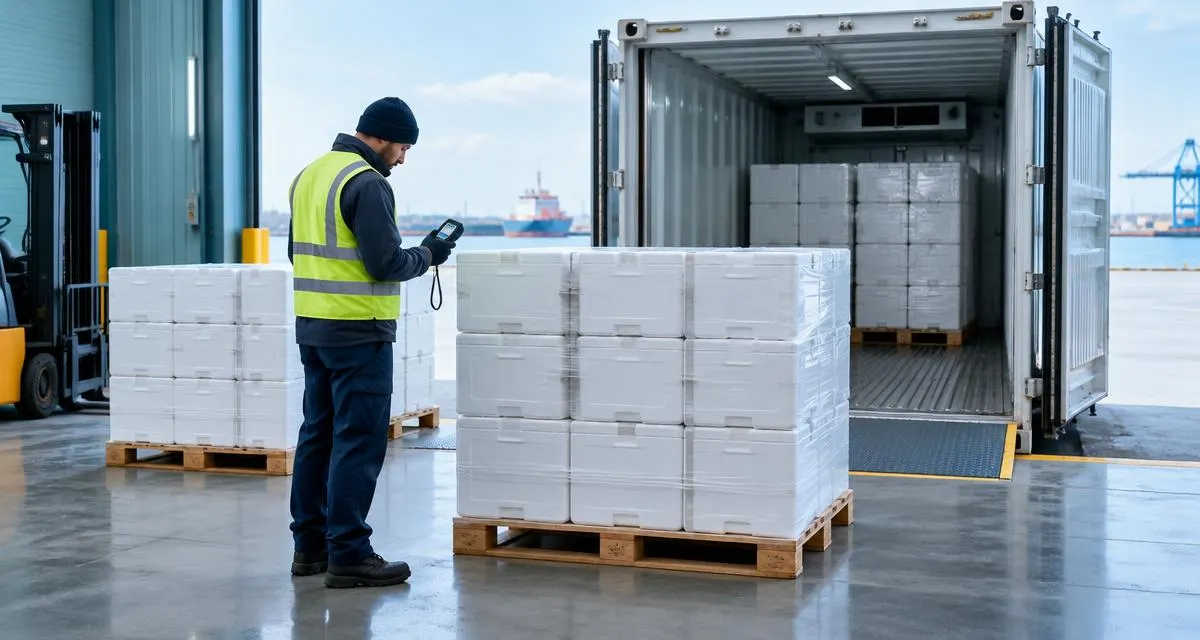
Two different decisions: seafood purchase or farm project?
A food purchase brief defines a product and delivery: species, size, processing, net quantity, destination and window. A farm, hatchery or RAS brief defines a site, production capacity, water, power, discharge and installation/commissioning scope. Do not use food imports to justify buying an aquaculture system or forecast a return.
The existing Markets briefings retain each observation’s year, currency and source coverage. HS03 is not a complete seafood basket; prepared products may be under HS1604 or HS1605. Gross imports do not establish a farmed share or domestic consumption in a re-export hub. This guide adds no market statistics or prices.
Prepare the sourcing specification before checking eligibility
Separate farming/capture country from processing, dispatch and final destination. Request scientific species, production method and origin evidence. “Premium” or a trade name establishes neither grade, farmed origin nor food safety. Wild or specialty requests require staff scope review and imply no available inventory.
- Shrimp: species, raw/cooked, head/shell/deveining form, count per kg or lb, and IQF versus block freezing.
- Fish: whole/gutted/fillet/portion, skin/bones, trim and unit weight.
- Net product quantity, glaze and additives where applicable, pack/carton weights and retail, foodservice or processing use.
- Arrival port, final destination, delivery window, receiving capacity and annual/seasonal program value.
An approval-check register, not an approval promise
Name the responsible importer and a qualified adviser where needed. Ask for the current requirements for the exact species, form, origin, establishment and use; one generic checklist cannot approve every shipment. Record the authority link or written response, check date, accountable operator and missing evidence. Requirements can change between inquiry and dispatch.
- Is this product/origin/establishment currently eligible, and what specific evidence confirms it?
- Which registration, licence, notification or inspection applies, and who files it?
- Which health, labeling or customs documents apply to this specific consignment?
- Who resolves missing documents or clearance delay, and where is the lot held meanwhile?
Plan the cold chain backwards from receiving
The Codex fish and fishery-products code is a practice reference, not a lot certificate. Agree product-specific temperature, time and shelf-life conditions with competent operators under applicable rules; this guide sets no universal temperature or safety/freshness promise. Chilled, frozen and live products are different briefs, not interchangeable forms.
Map custody handovers: processing, loading, transport, port, inspection, store and delivery. Assign an operator to each point, the logger location, its lot association and record retention. Agree excursion handling, hold/rejection decisions, backup storage and receiving inspection before dispatch, not after a failure.
Request a lot-specific harvest/processing calendar and a contingency window. A national fishing season does not establish a farm’s harvest schedule or availability. Keep dates proposed until the accountable operator confirms capacity and documents; a sailing schedule is not a cleared consignment.
Japan: destination questions
Ask the responsible importer which commercial food import notification, inspection and consignment documents apply to the exact species, origin and form. Use MHLW procedures as the starting reference, not as proof that a producer or lot is eligible. For chilled salmon or frozen shrimp, specify the arrival window, receiving capacity and remaining shelf-life acceptance criteria.
South Korea: destination questions
Ask the importer to confirm current MFDS requirements for the product and foreign facility. Distinguish raw from cooked shrimp, additives and retail from processing packs before the regulatory check. Include net weight, temperature records and the receiving inspection procedure; an import statistic is not an establishment approval.
Singapore: destination questions
Clarify local sale versus re-export and confirm the product classification and applicable SFA importer licence or registration. The commercial import guide distinguishes categories; do not assume one registration covers every seafood form. Identify the cold-store operator, onward transport and who retains lot records.
China: destination questions
Confirm the current GACC rules and applicable registration category with the importer, including the specific overseas facility and origin. Use the current official registration-rule publication, not an old decree alone. State domestic sale versus processing/re-export and retain production, processing and dispatch origins separately; a partner country in customs data proves none of these approvals.
Hong Kong: destination questions
Specify Hong Kong consumption versus re-export to another destination. Ask the importer about CFS registration, exemptions and product-specific arrangements rather than treating all seafood alike. Map each transfer between port, cold store and final customer, with custody, temperature and lot records assigned to an operator.
Taiwan: destination questions
Ask the importer or TFDA to establish current food inspection filing and product-specific conditions; a report about the seafood market is not an approval list. Separate live, chilled and frozen products, intended use and labeling responsibilities. Confirm unloading, inspection-delay contingencies and available cold storage before the delivery promise is negotiated.
Saudi Arabia: destination questions
Ask the responsible importer and SFDA to identify applicable product, establishment and consignment requirements from current rules. A generic country guide cannot establish an approval or certificate requirement for every shipment. Separate chilled salmon from frozen fillets and prepared products and allocate labeling, inspection and temperature-record responsibilities.
United Arab Emirates: destination questions
Identify the emirate, port and responsible local food authority with the importer; federal food-safety information is background, not proof of shipment approval. Clarify local distribution versus onward export. Record receiving and backup cold-storage capacity, handling during clearance and the operator accountable for each transfer.
Compare scope and landed cost after resolving the questions
Request offers on the same net weight, currency, specification and date. Agree the Incoterms rule, named place and edition with the responsible parties; record freight, insurance, clearance, inspection, storage and exclusions. Incoterms rules establish neither import approval nor food safety. Leave unknown costs unpriced; customs unit values are not commercial quotes.
Buyer market pages: sourcing, approvals and cold chain
One full page per buyer country with sourced import context, what to specify, and general approvals and cold-chain checklists.
All existing Markets guides: country project context
These links lead to existing country guides, not a list of approved import destinations or available suppliers. Project guides are separate from the food-trade briefings above. Review each guide’s source dates and assumptions locally before deciding; no trade figures or cost presets are copied into this article.
- Albania
- Algeria
- Angola
- Argentina
- Armenia
- Australia
- Austria
- Azerbaijan
- Belgium
- Belize
- Benin
- Bolivia
- Bosnia And Herzegovina
- Botswana
- Brazil
- Cameroon
- Canada
- Chile
- Colombia
- Costa Rica
- Cote D Ivoire
- Croatia
- Cyprus
- Denmark
- Dominican Republic
- Dr Congo
- Ecuador
- Egypt
- El Salvador
- Ethiopia
- Faroe Islands
- France
- Gabon
- Georgia
- Germany
- Ghana
- Greece
- Guatemala
- Guyana
- Honduras
- Iceland
- India
- Indonesia
- Ireland
- Italy
- Kenya
- Kuwait
- Luxembourg
- Malawi
- Malaysia
- Mauritius
- Mexico
- Moldova
- Mongolia
- Morocco
- Mozambique
- Namibia
- Nepal
- Netherlands
- New Zealand
- Nicaragua
- Nigeria
- Norway
- Oman
- Panama
- Paraguay
- Peru
- Philippines
- Poland
- Portugal
- Qatar
- Romania
- Russia
- Rwanda
- Saudi Arabia
- Senegal
- Serbia
- Singapore
- South Africa
- Spain
- Sri Lanka
- Sweden
- Switzerland
- Taiwan
- Tanzania
- Thailand
- Tunisia
- Türkiye
- Uganda
- United Arab Emirates
- United Kingdom
- United States
- Uruguay
- Venezuela
- Vietnam
- Zimbabwe
- Vietnam · project market
- Ecuador · project market
- India · project market
- Indonesia · project market
- Chile · project market
- Saudi Arabia · project market
- Egypt · project market
- Thailand · project market
- Norway · project market
- China · project market
- Türkiye · project market
- Brazil · project market
- Mexico · project market
- Bangladesh · project market
- Philippines · project market
- Malaysia · project market
- Morocco · project market
- United Arab Emirates · project market
- Oman · project market
- South Africa · project market
- Nigeria · project market
- Ghana · project market
- Kenya · project market
- Tanzania · project market
- Senegal · project market
- Colombia · project market
- Peru · project market
- South Korea · project market
- Greece · project market
- Spain · project market
- Kazakhstan · project market
- Mauritania · project market
- Bulgaria · project market
Buyer questions
Does a Markets page mean a supplier is approved?
No. It provides planning or source-qualified trade context, not a supplier directory, establishment approval or available lot.
Can seafood import totals prove RAS demand?
No. A project needs its own site, water, power, permit, capacity and budget evidence. Food trade and equipment investment are different decisions.
What value qualifies a managed request?
At least USD 250,000. For seafood this is the annual or seasonal program, not each shipment. Equipment/project opportunities have the same minimum. Reading and buyer access are free; staff still review qualification.
Who verifies import requirements and cold-chain evidence?
The responsible importer and relevant competent operators, with qualified advisers where needed, must establish applicable requirements and lot-specific evidence. FishMatch coordinates reviewed sourcing; it does not certify safety, approve imports or guarantee outcomes.
Official references: verify current scope and rules
- Japan: MHLW imported-food procedures
- South Korea: MFDS imported-food safety
- Singapore: SFA commercial food imports
- China: GACC registration rules, official publication
- Hong Kong: CFS food import questions
- Taiwan: TFDA imported-food inspection rules
- Saudi Arabia: SFDA regulations
- UAE: official food safety overview
- FAO/WHO: Codex codes of practice, CXC 52-2003 fish and fishery products
- ICC: Incoterms rules