How to Choose Automatic Fish Feeders for Commercial Aquaculture Projects
Short answer: Choosing the right automatic feeders involves matching the dispensing mechanism—whether timer-based or pneumatic—to your specific species and pond layout while ensuring the control system integrates with your farm's monitoring infrastructure. Buyers should prioritize hopper capacity that aligns with labor schedules, verify the availability of aquaculture equipment spare parts, and use a structured feed budget calculator to size the system correctly for maximum growth efficiency. This article is a planning guide only, not engineering or financial advice.
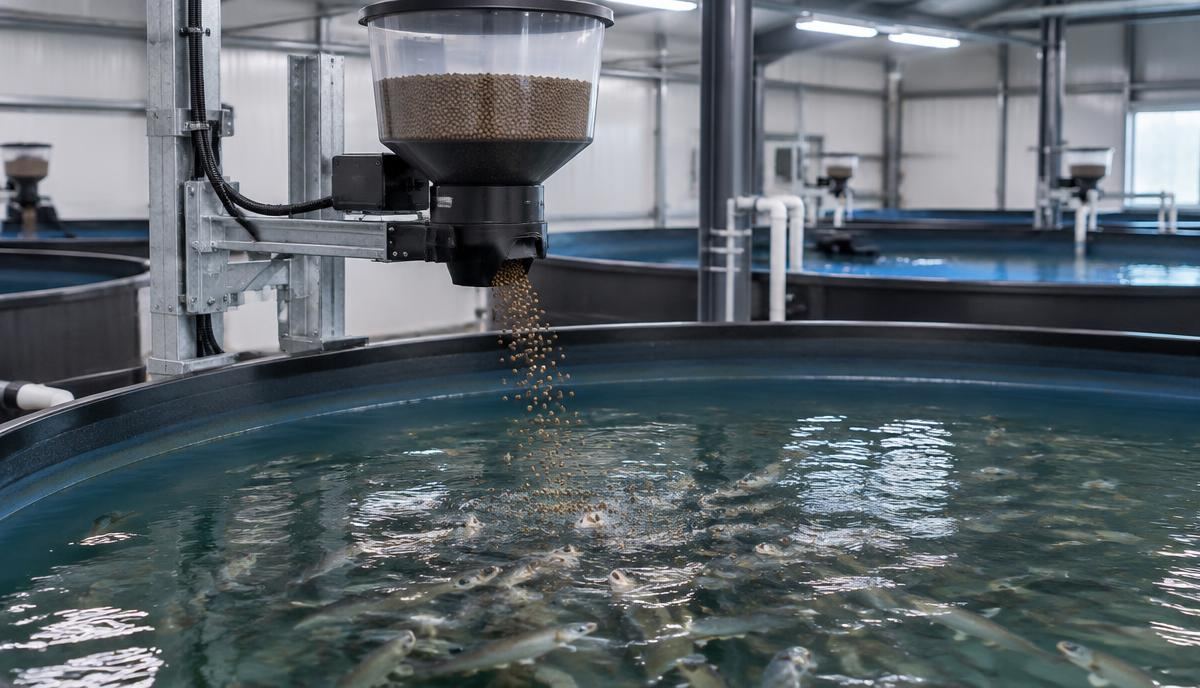
How do you determine if a timer-based or demand-based feeder is better for your aquaculture system?
Choosing between timer-based and demand-based feeders depends on species behavior and desired control. Timer-based feeders dispense fixed amounts at intervals, ideal for intensive systems where nutritional precision is vital. They allow farmers to regulate rations and track growth without relying on fish activity. Demand feeders use a trigger, like a pendulum, letting fish dictate feeding. This can reduce waste but often causes size variation as dominant individuals monopolize the trigger. For commercial projects, programmable timers provide the necessary predictability for financial planning and stock management.
What are the advantages of using blower or pneumatic feeders for large-scale pond operations?
Blower and pneumatic feeders are superior for large-scale ponds as they broadcast pellets over wide areas. This ensures more fish feed simultaneously, reducing competition and promoting uniform growth. When sourcing shrimp farming equipment, pneumatic units are preferred for handling delicate pellets without creating fines. Buyers should ask suppliers for written confirmation of broadcast radius for specific feed densities. Centralized systems integrate well into aquaculture automation and monitoring systems, allowing management of multiple ponds from a single location, thus lowering labor requirements.
Why should commercial farms consider solar-powered automatic feeders for remote pond locations?
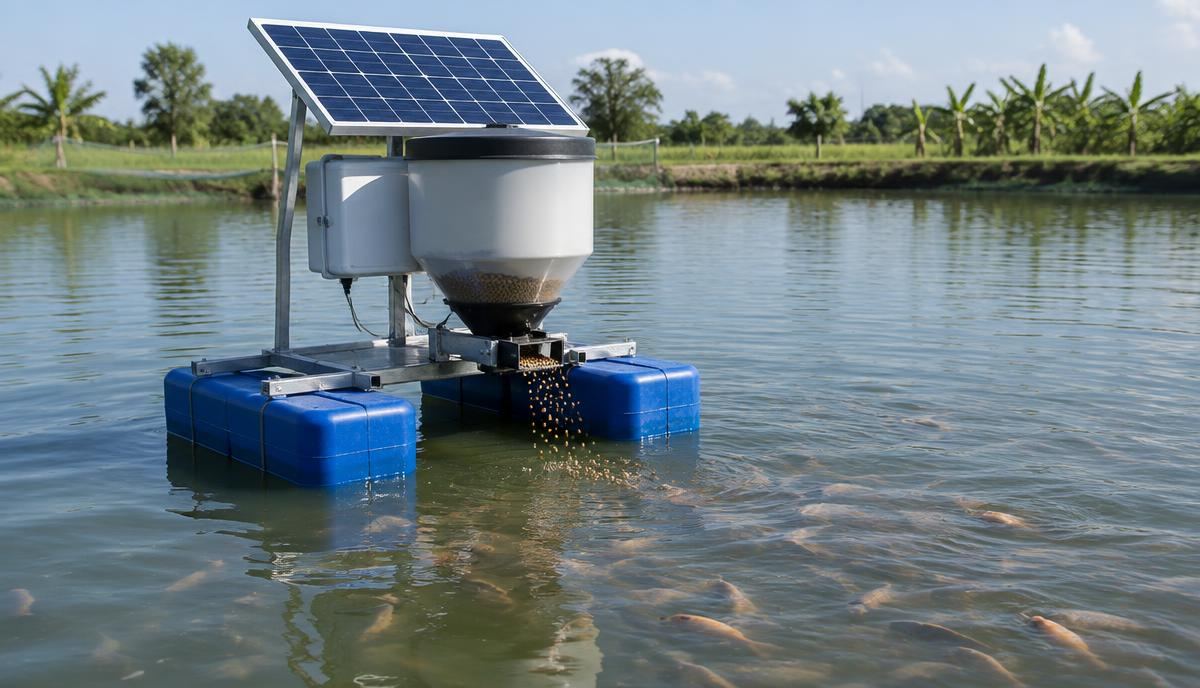
Running power to remote ponds is expensive. Solar-powered automatic feeders solve this by eliminating trenching and cabling. These units use a photovoltaic panel and battery to power feeding cycles. When buying equipment for remote sites, always verify the battery autonomy during cloudy weather and the unit's resistance to corrosion. A solar ROI calculator helps justify the initial cost against infrastructure savings. For many extensive pond farms, the ability to place feeders anywhere without electrical constraints makes solar the most scalable and flexible choice for expansion.
How does feed pellet size influence the selection of automatic feeder mechanisms?
Feed pellet size is critical for mechanical reliability. Not all dispensers are universal; an auger sized for small pellets can jam with much larger feed, while vibration feeders may struggle with oily pellets that clump. When matching fish feed and feeding systems, provide suppliers with exact feed specs, including density and durability. This prevents mechanical failures and missed feedings. Inquire about interchangeable parts like dosing screws, which allow the same feeder to grow with your stock. Proper matching ensures consistent growth and prevents equipment damage.
What hopper capacity is required for your daily feeding operations and labor reduction goals?
Hopper capacity determines labor needs. A feeder that holds several days of feed needs fewer refills than one requiring daily filling. However, hoppers must be balanced against feed degradation risks in humid climates. To optimize selection, calculate peak daily feed and ask the supplier to state in writing how many days of feed the hopper holds at that rate. Inspect designs for steep internal angles to prevent feed bridging and ensure "first-in, first-out" flow. Quality hoppers also feature weather-proof lids to protect the feed. This ensures the investment is protected from rain and pests while maintaining nutritional quality.
What control and monitoring features should you prioritize when buying feeders for a RAS or intensive pond?
In modern RAS, feeders must interface with aquaculture automation and monitoring systems. Priority should go to units with digital connectivity (Modbus/Wi-Fi). Advanced controllers adjust feeding based on environmental sensors, stopping delivery if oxygen levels drop. This prevents nutrient leaching and waste. When reviewing RAS farm equipment, ensure the software allows remote mobile adjustments. This integration is essential for large-scale operations with minimal staff, providing the precision needed for high-density production environments and ensuring long-term profitability.
How do you evaluate the availability and cost of spare parts for automatic feeders?
The total cost of ownership depends on spare parts availability. Motors and dosing units serve in harsh environments and will eventually fail. Before buying, request a spare parts and warranty schedule. Know if parts are proprietary or if industrial equivalents are available locally. A feeder down for weeks due to shipping delays for a unique motor hurts growth cycles. Reputable suppliers offer "critical spares" kits (belts, gaskets) for immediate repairs. This practice minimizes downtime and preserves the growth momentum of the production cycle.
What should you look for when comparing quotes for automatic fish and shrimp feeders?
Compare quotes by looking beyond the unit price to the full scope. Low quotes often exclude brackets, power cables, or control software. When you evaluate aquaculture equipment quotes, ensure materials are marine-grade, such as marine-grade stainless steel. Always ask for the landed cost, including shipping and duties, as transport for large hoppers is costly. Use a procurement toolkit to standardize your technical requirements across all bidders. Evaluate the supplier's reputation for technical support and their ability to provide installation guidance for centralized systems.
Why is matching your feeding system to your specific feed type critical for growth performance?
Successful feeding requires fish feed and feeding system matching, as the interaction affects water clarity and production costs. For example, slow-sinking pellets need different distribution than floating ones. Aggressive dispensing can break pellet coatings, increasing the waste load on biofilters. By selecting a feeder that maintains pellet integrity and delivers feed where fish are active, farmers improve their bottom line. This careful aquaculture equipment sourcing ensures that the hardware supports the biological requirements of the species throughout the entire production cycle.
Checklist
Define your target species and their specific feeding behaviors; Calculate peak daily feed requirements using a standard budget; Select a dispensing mechanism compatible with your intended pellet sizes and densities; Determine the power source availability and consider solar for remote ponds; Evaluate the broadcast radius or distribution pattern needed for your pond or tank size; Verify that the feeder's material construction is suitable for your local environment; Check for compatibility with existing automation and monitoring systems; Review the availability and lead times for critical spare parts; Request a detailed warranty statement from the manufacturer; Compare quotes based on total landed cost and inclusion of all hardware.
Frequently asked questions
How often should I calibrate my automatic feeder? Calibration should be performed every time you change feed batches or pellet sizes to ensure the weight matches the programmed setting. Can automatic feeders handle both floating and sinking pellets? Many can, but you must ensure the dispensing mechanism is rated for the specific density and oil content. Is it possible to integrate automatic feeders with water quality sensors? Yes, advanced automation systems can pause feeding if dissolved oxygen levels drop below a safe threshold. What is the typical lifespan of a feeder? With regular maintenance, high-quality units typically provide reliable service for five to ten years depending on conditions.
How do FishMatch Group's calculators and reviewed RFQ help?
Navigating the complexities of sourcing can be daunting for commercial buyers. FishMatch Group simplifies this process by providing technical tools that help you define your requirements before approaching the market. When you submit an RFQ, our team of experts manually reviews your project needs to ensure they are technically sound. We then approach matching suppliers and return comparable quotes. This supplier-neutral approach lets you compare technical options for your site without relying on a single manufacturer. By using our platform, you can confidently compare equipment options and secure the components needed for a successful operation.
Related: Sourcing aquaculture equipment step-by-step, Evaluating aquaculture equipment suppliers, Comparing aquaculture proposals line-by-line.
Aquaculture planning benchmarks
| Figure | Value | Context |
|---|---|---|
| CAPEX — RAS | USD 9,000–14,000 per tonne/yr | Global baseline before country cost factor. |
| CAPEX — Ponds | USD 1,800–4,000 per tonne/yr | Lined or earthen ponds, excluding land. |
| CAPEX — Cages | USD 2,500–5,500 per tonne/yr | Cages, moorings, nets and service equipment. |
| CAPEX — Flow-through | USD 4,000–7,000 per tonne/yr | Raceways and water intake works. |
| Energy use | RAS ~6 kWh/kg; ponds ~1.2; flow-through ~1.5; cages ~0.3 | Per kg of fish produced. |
| Typical FCR | Trout 1.1; salmon 1.2; shrimp 1.4; tilapia 1.6; carp 1.8 | kg feed per kg growth; varies with feed and management. |
| Farm size where FishMatch reviews projects | From ~USD 250,000 total project value | Commercial fish and shrimp projects. |
Related articles
Why the Cheapest Aquaculture Equipment Quote Can Cost More Than You Expect
Selecting the lowest-priced aquaculture equipment quote often obscures hidden expenses related to performance, durability, and operational compatibility.
EquipmentHow to Choose Aerators for Commercial Fish and Shrimp Ponds
A guide for commercial buyers on selecting aeration equipment, calculating oxygen demand, and comparing supplier quotes for large-scale aquaculture projects.
EquipmentSelecting Commercial Aquaculture Pumps, Pipework, and Valves: A Buyer’s Guide
Learn how to specify, compare, and buy water pumps, pipework, and valves for commercial RAS, hatcheries, and pond farms to ensure system reliability and energy efficiency.
EquipmentCommercial Fish Cage Farm Equipment Buying Guide: HDPE Collars, Nets, and Mooring Systems
A comprehensive guide for commercial buyers on sourcing HDPE cages, net materials, mooring grids, and site-specific equipment for sea and lake aquaculture projects.
Where this fits in a real project
Every FishMatch project runs through the same five reviewed stages, from a first enquiry to comparable quotations. See the full buyer journey.