How to Choose Aerators for Commercial Fish and Shrimp Ponds
Short answer: Choosing aeration equipment for commercial aquaculture involves calculating biological oxygen demand, matching technology like paddlewheels or diffused air to pond geometry, and ensuring reliable power backup. Commercial buyers should use an aeration sizing calculator to define technical requirements and compare supplier quotes based on standardized oxygen transfer rates and energy efficiency. This article is a planning guide only, not engineering or financial advice.
Why is defining total oxygen demand the first step for commercial buyers?
Establishing a precise oxygen demand baseline is critical for preventing crop loss and optimizing growth. The total demand combines metabolic needs of the stock, sediment respiration, and bacterial activity. For intensive shrimp operations, using a shrimp pond aeration calculator helps determine the necessary horsepower for the pond area. Buyers must ask suppliers for the Standard Oxygen Transfer Rate (SOTR) to ensure equipment meets the project's dissolved oxygen management needs. Relying on data from oxygen demand calculators prevents under-sizing, a common cause of production failure in high-density tropical farms.
When should buyers choose paddlewheel aerators for shrimp pond projects?
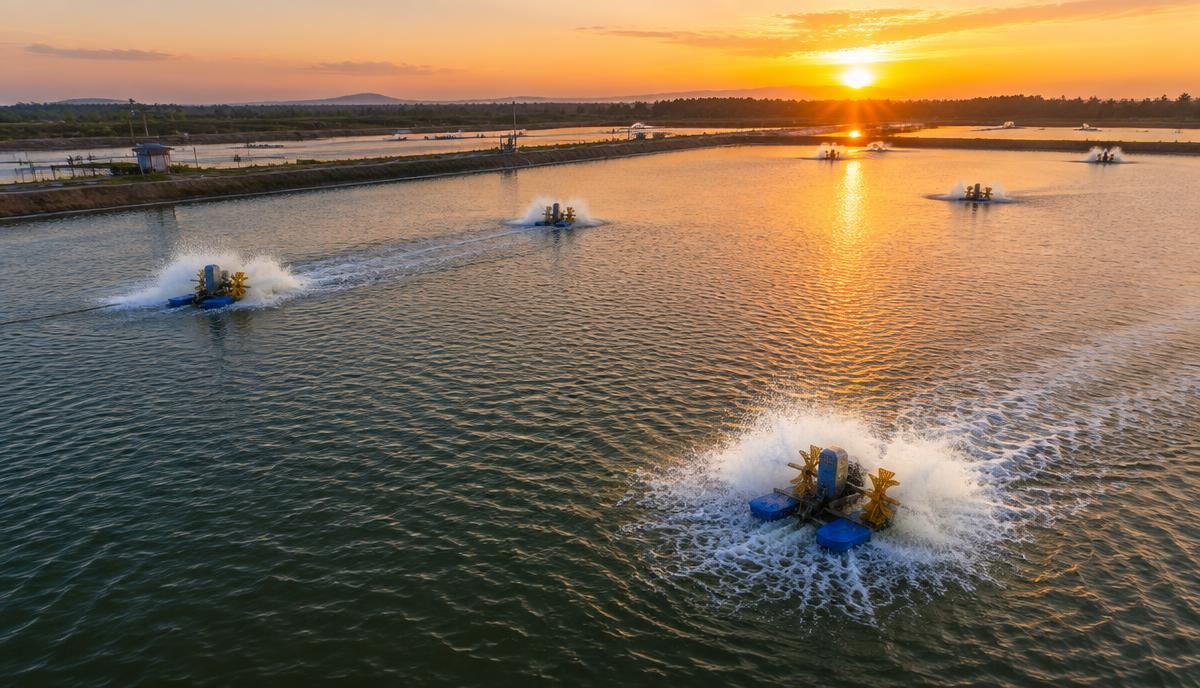
Paddlewheel aerators are the standard for shallow shrimp ponds because they provide both aeration and horizontal circulation. The splashing action increases surface gas exchange while the current moves oxygenated water and pushes waste toward central drains. When sourcing this equipment, buyers should prioritize motor durability and gearbox quality for continuous operation in corrosive environments. Comparing performance curves for oxygen transfer efficiency at different power settings allows for better cost analysis. It is essential to ensure that the paddle material and frame construction are suited for long-term immersion in saline water.
How do aspirator aerators improve deep water oxygen levels in large ponds?
Aspirator aerators use a high-speed propeller to create a vacuum, injecting fine bubbles deep into the water column. This technology effectively destratifies deep ponds where surface aeration cannot reach the bottom layers. By eliminating low-oxygen zones, aspirators improve the environment for benthic species. Buyers should verify shaft angle and propeller depth to ensure compatibility with their pond bathymetry. Selecting units with high-density plastic or stainless steel components reduces maintenance costs and prevents corrosion-related downtime in intensive farming operations.
What are the benefits of diffused air systems for high-density fish raceways?
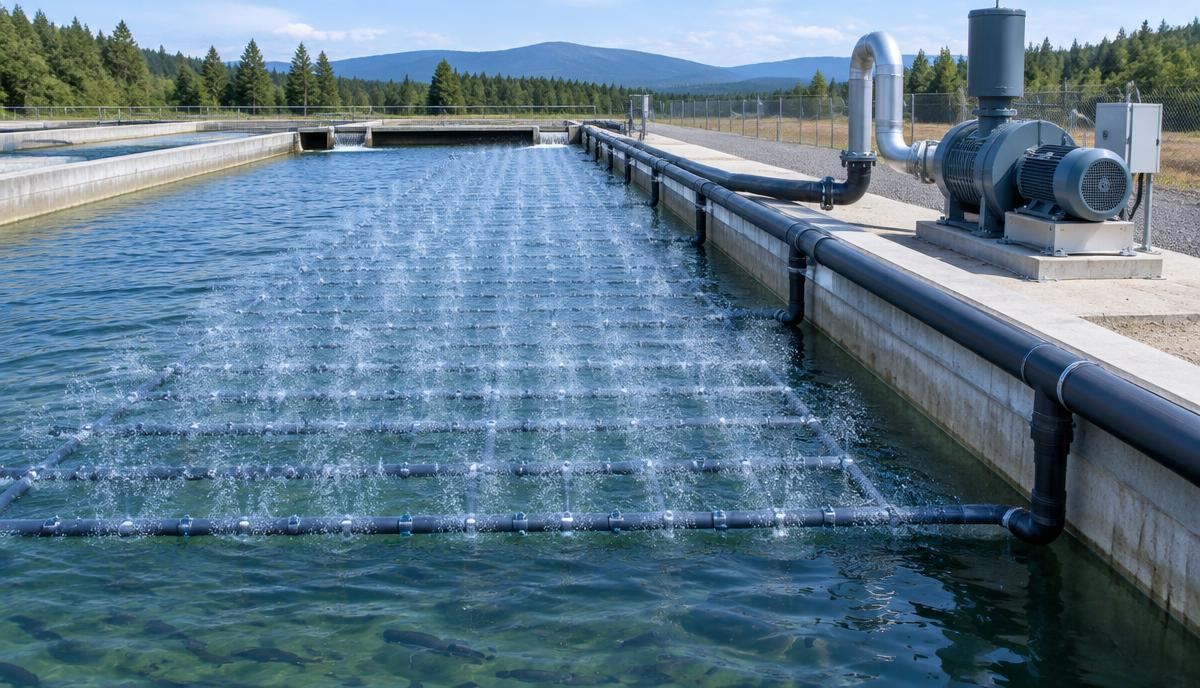
Diffused air systems use blowers to push air through fine-bubble diffusers, providing high oxygen transfer with minimal turbulence. This is ideal for fish raceways where excessive water movement can stress the stock. Efficiency is tied to bubble size and contact time, making tank depth a key design variable. Commercial buyers should consult an aquaculture equipment sourcing guide to find suppliers who offer clog-resistant diffusers. Proper piping layout is necessary for even air distribution, ensuring that every section of the raceway maintains optimal water quality for sensitive fish.
How do commercial blowers support oxygenation in biofloc and tank systems?
In biofloc systems, blowers provide the oxygen and turbulence required to keep organic solids in suspension. Unlike floating aerators, blowers are centralized, simplifying maintenance and protection from the elements. Buyers must select blowers based on the pressure needed to overcome water depth and pipe friction. Prioritizing energy efficiency in blower selection can significantly reduce the farm's monthly operating expenses. It is important to request noise and heat specifications from manufacturers, as these factors impact the design of the blower enclosure and the working conditions for farm personnel.
Why are oxygen cones preferred for intensive recirculation aquaculture systems?
Oxygen cones, or Speece cones, are pressurized vessels that dissolve pure oxygen into water with very high efficiency. They are indispensable for ultra-intensive systems where atmospheric aeration cannot sustain the massive oxygen demand of the biomass. By forcing water and oxygen through a conical chamber, these units achieve high dissolved oxygen levels before the water enters the tanks. Buyers should evaluate pressure ratings and construction materials to ensure the cones handle continuous high-pressure operation. Integrating these units with automated monitoring is essential for maintaining the precise parameters required for high-value species.
What power supply and backup generator considerations impact aerator selection?
Aeration is the largest electricity expense, making power reliability a cornerstone of farm stability. An unstable grid can cause motor failure or a total oxygen crash during an outage. Buyers must invest in a fish farm backup power generator sized to handle the entire aeration load, including high starting currents. Using generator sizing calculators during the planning phase ensures the backup system is adequate. Implementing variable frequency drives can also reduce electrical strain. Protecting infrastructure from the humid, salty air of a farm site is critical for the long-term reliability of all aeration components.
How can buyers compare manufacturer quotes for oxygen transfer and energy efficiency?
Comparing aeration quotes requires looking beyond the price to evaluate technical performance and total cost of ownership. Buyers should insist on third-party test reports for SOTR and Standard Aeration Efficiency to ensure an apples-to-apples comparison. It is vital to use a formal how to request aquaculture supplier quote process to obtain detailed information on motor brands, warranties, and spare parts. Evaluating projected energy costs over a multi-year period often reveals that higher-priced, high-efficiency units are the more economical choice. A structured procurement process avoids the risks associated with low-quality equipment that fails prematurely.
Checklist for selecting commercial aeration systems
Calculate total biological oxygen demand for maximum stocking density; match aerator technology to pond depth and layout; verify standardized oxygen transfer rates via third-party test reports; evaluate long-term energy efficiency and operating costs; size backup generators to handle peak starting currents; specify corrosion-resistant materials for all submerged components; map aerator placement to eliminate stagnant zones; confirm availability of local service support and spare parts; integrate automated oxygen monitoring to optimize power usage; compare total cost of ownership rather than initial capital price.
Frequently asked questions about aquaculture aerators
How much aeration horsepower is needed for shrimp farming? Commercial ponds require a specific amount of horsepower per hectare depending on biomass and environmental conditions. What is the advantage of fine-bubble diffusers? They provide high oxygen transfer efficiency and minimal water turbulence, ideal for sensitive species. Can I mix different types of aerators? Yes, many farms use paddlewheels for surface circulation and aspirators for deep-water mixing. How do I prevent aerator motors from burning out? Ensuring a stable power supply and performing regular maintenance on gearboxes are most effective. Buyers should use a procurement toolkit to find reliable electrical components.
How do FishMatch Group's calculators and reviewed RFQ help?
FishMatch Group simplifies aeration procurement by providing buyers with the tools and data needed to make informed decisions. By using the rfq-intake platform, buyers can submit their technical requirements and receive hand-reviewed, comparable quotes from multiple global suppliers. The platform's calculators give early planning estimates for sizing and cost. This supplier-neutral approach reduces guesswork, allowing buyers to focus on scaling production with confidence. Whether building a new facility or upgrading existing ponds, a human review of your request helps you compare offers on equal terms.
Related: Aquaculture equipment sourcing step-by-step, Procurement toolkit for aquaculture projects, and Dissolved oxygen management for bankable farms.
Aquaculture planning benchmarks
| Figure | Value | Context |
|---|---|---|
| CAPEX — RAS | USD 9,000–14,000 per tonne/yr | Global baseline before country cost factor. |
| CAPEX — Ponds | USD 1,800–4,000 per tonne/yr | Lined or earthen ponds, excluding land. |
| CAPEX — Cages | USD 2,500–5,500 per tonne/yr | Cages, moorings, nets and service equipment. |
| CAPEX — Flow-through | USD 4,000–7,000 per tonne/yr | Raceways and water intake works. |
| Energy use | RAS ~6 kWh/kg; ponds ~1.2; flow-through ~1.5; cages ~0.3 | Per kg of fish produced. |
| Typical FCR | Trout 1.1; salmon 1.2; shrimp 1.4; tilapia 1.6; carp 1.8 | kg feed per kg growth; varies with feed and management. |
| Farm size where FishMatch reviews projects | From ~USD 250,000 total project value | Commercial fish and shrimp projects. |
Related articles
Why the Cheapest Aquaculture Equipment Quote Can Cost More Than You Expect
Selecting the lowest-priced aquaculture equipment quote often obscures hidden expenses related to performance, durability, and operational compatibility.
EquipmentHow to Choose Automatic Fish Feeders for Commercial Aquaculture Projects
Learn how to select the right automatic fish and shrimp feeders based on system type, pellet size, and automation needs to optimize growth and reduce labor costs in commercial farming.
EquipmentSelecting Commercial Aquaculture Pumps, Pipework, and Valves: A Buyer’s Guide
Learn how to specify, compare, and buy water pumps, pipework, and valves for commercial RAS, hatcheries, and pond farms to ensure system reliability and energy efficiency.
EquipmentCommercial Fish Cage Farm Equipment Buying Guide: HDPE Collars, Nets, and Mooring Systems
A comprehensive guide for commercial buyers on sourcing HDPE cages, net materials, mooring grids, and site-specific equipment for sea and lake aquaculture projects.
Where this fits in a real project
Every FishMatch project runs through the same five reviewed stages, from a first enquiry to comparable quotations. See the full buyer journey.