Selecting Commercial Aquaculture Pumps, Pipework, and Valves: A Buyer’s Guide
Short answer: Successful procurement of aquaculture pumps, pipework, and valves requires a detailed definition of the system duty point—specifically the flow rate and total dynamic head—alongside a selection of non-corrosive materials and built-in redundancy to protect live stock during equipment failure.
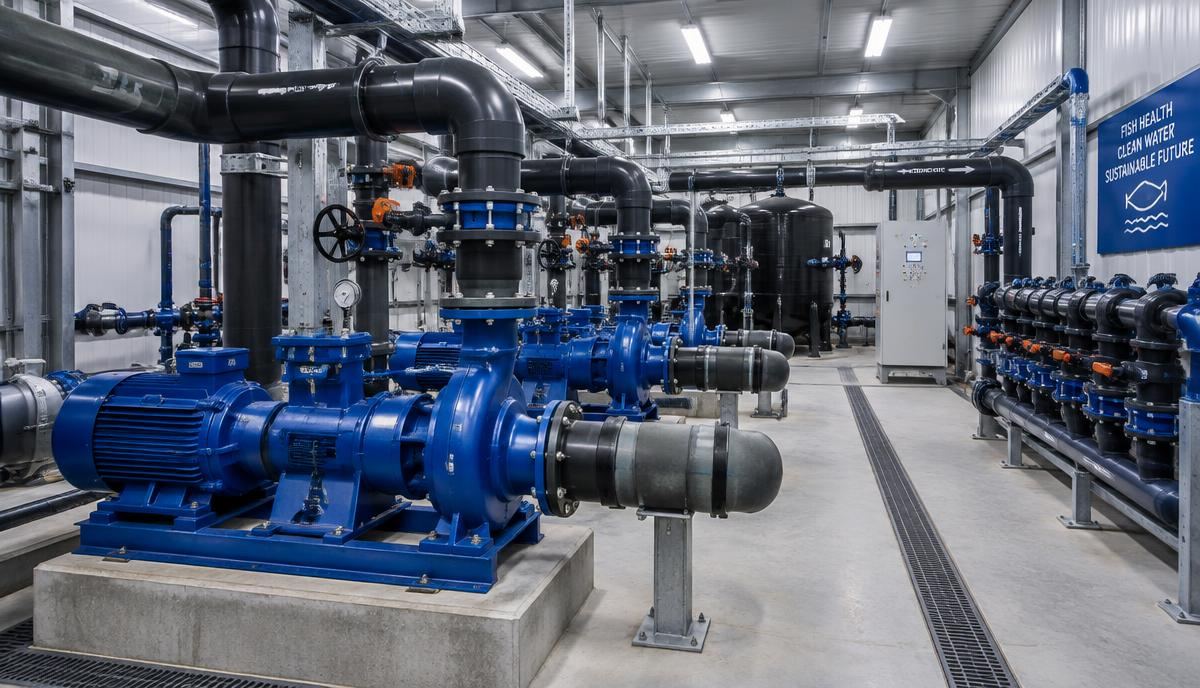
Specifying the pump duty point for commercial fish farm systems
In commercial aquaculture, procurement begins with defining the 'duty point'—the specific flow rate and pressure head at which the pump operates. System designers must provide hydraulic calculations to ensure the turnover rate maintains water quality. Undersized pumps lead to oxygen depletion, while oversized units inflate energy efficiency in RAS and pond systems costs. When requesting quotes, ask suppliers to state in writing the pump's performance curve and its efficiency at the target duty point. Using the /calculators/pump-sizing tool helps buyers verify these requirements before committing to a purchase. Accurate sizing prevents operational bottlenecks.
Calculating total dynamic head in aquaculture pipework layouts
Total dynamic head (TDH) is the sum of vertical lift and friction losses within the pipework. In integrated aquaculture project planning, ignoring friction loss leads to system underperformance. Friction increases with velocity, so small pipe diameters or excessive elbows significantly raise the pressure the pump must overcome. Buyers should ask suppliers for a friction loss calculation based on specific pipe materials, such as HDPE or PVC. Calculating TDH prevents the installation of pumps that cannot achieve their intended flow rate. This should account for every valve and fitting in the circulation loop.
Comparing energy use and motor efficiency in aquaculture pump quotes
Energy consumption is a major operational factor. When comparing quotes, evaluate motor efficiency ratings like IE3 or IE4. Utilizing Variable Frequency Drives (VFDs) allows pump speeds to be adjusted based on the farm's load, offering significant savings. Ask suppliers to state the power consumption in kilowatts at the duty point. The /calculators/energy-cost tool helps buyers see the long-term financial impact of higher-efficiency motors. This data is vital for aquaculture project financing. Efficient motors also reduce the load on backup generators, potentially lowering total power infrastructure costs.
Selecting materials for saltwater and freshwater aquaculture valves
Material choice is dictated by water salinity. In marine systems, standard cast iron corrodes rapidly, risking failure and water contamination. For saltwater, specify high-grade plastics like PVC, or corrosion-resistant metals like bronze. Even in freshwater, ozone or low pH can degrade standard materials. Ensure all wetted parts are compatible with your water profile. Ask suppliers to state material specifications for seals and gaskets in writing. Proper material selection prevents the introduction of heavy metals into the culture environment, ensuring long-term hardware integrity and livestock health.
Designing for redundancy and critical failure points in pump rooms
Pump failure is a life-critical event, making fish farm backup power and equipment redundancy essential. The 'N+1' redundancy model, where at least one spare pump is installed in parallel, is the industry standard. Redundancy should extend to pipework with bypass loops around filters, allowing maintenance without shutdowns. Buyers should evaluate how easily a failed pump can be isolated. When you compare aquaculture proposals line-by-line, check if the supplier has included necessary check valves for 'hot-swapping' equipment. Effective redundancy protects the investment in livestock.
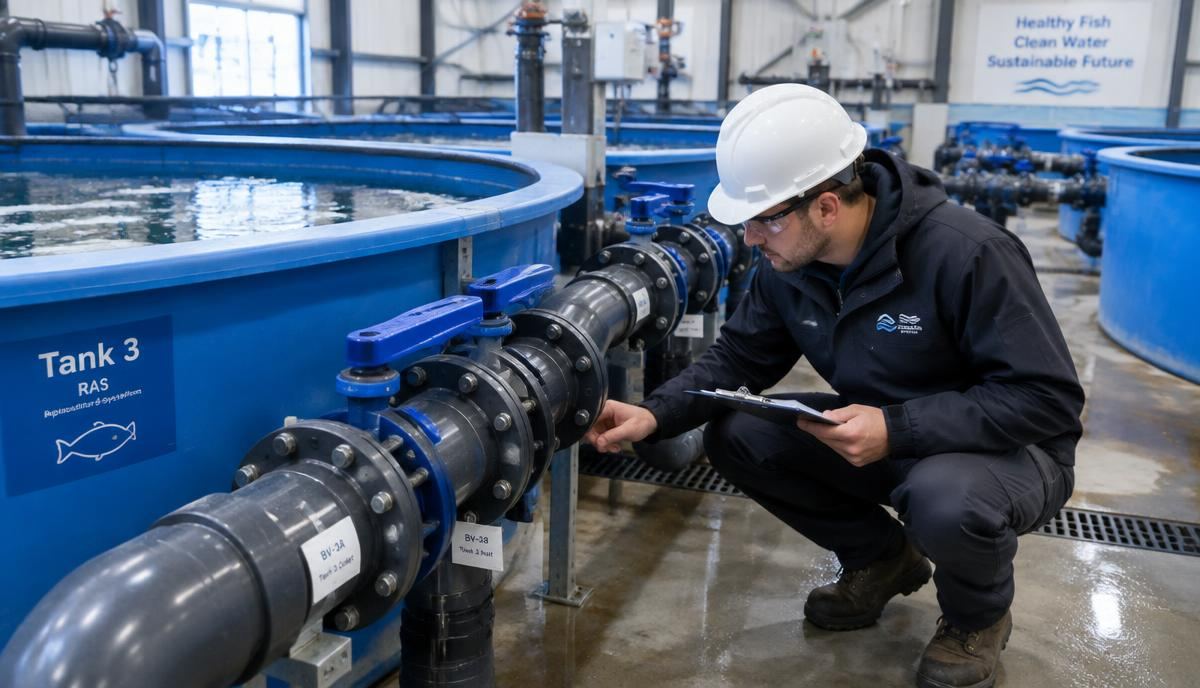
Evaluating pump spare parts availability and maintenance schedules
Long-term reliability depends on the availability of aquaculture equipment spare parts and warranty service. Pumps have wearing parts like seals and bearings that require replacement. Ask suppliers for a list of recommended spares for two years and confirm regional lead times. Remote farms may need to stock complete spare assemblies on-site. Ease of maintenance is crucial; 'back pull-out' designs allow motor removal without disconnecting pipework, reducing labor costs. During procurement, ask the manufacturer for a detailed maintenance schedule to ensure pumps operate at peak efficiency.
Comparing centrifugal versus axial flow pumps for pond aquaculture
The pump type depends on the farm's layout. Centrifugal pumps are ideal for RAS and hatcheries, where water must be pushed through filters at higher pressures. Axial flow pumps move massive volumes at very low heads, making them suitable for pond water exchange. Choosing the wrong type results in extreme inefficiency; centrifugal pumps waste power in low-head applications, while axial flow pumps fail against high resistance. Review your shrimp-farming equipment guide to understand the hydraulic profile. Ask suppliers to justify their pump type selection based on specific requirements.
Sizing pipework diameters to minimize friction loss and biofouling
Pipe diameter affects capital costs and operating efficiency. Larger pipes cost more initially but reduce friction loss and energy demand. Conversely, small pipes cause high velocities and 'water hammer,' which can damage valves. Biofouling also reduces internal diameters over time. Maintaining a velocity between 1.0 and 2.0 meters per second prevents sediment buildup while minimizing friction. Ensure your RAS farm equipment checklist includes a review of velocities across main headers. Ask designers to state the expected velocity at different production stages in writing to avoid acoustic issues.
Managing valve selection for RAS biofilter and solid removal loops
Valves serve functions from isolation to flow control. Butterfly valves are common for isolation in large pipes, while ball valves offer shut-off for smaller lines. For precise flow adjustment, globe or diaphragm valves are appropriate. In sludge management systems, knife gate valves are preferred for handling solids. Check valves must be installed after every pump to prevent backflow that could damage the motor. Buyers should define the function of every valve and ask suppliers to justify selections based on debris load. Selecting the correct valve type prevents leaks and allows for precise hydraulic balance.
Standardizing flanges and fittings for international equipment sourcing
Standardizing hardware is a hurdle in global procurement. Different regions use different standards like DIN or ANSI. If a European pump is paired with American pipework, flange holes may not align, requiring custom adapters. This issue extends to connection types like solvent welding or heat fusion. Buyers should mandate a single standard for all equipment interfaces to ensure on-site assembly. Request that suppliers state the specific flange and thread standard in their quote. Ensuring compatibility before equipment arrives is critical to avoiding construction delays and high costs from emergency sourcing.
How to normalize quotes from multiple aquaculture pump suppliers
Comparing quotes is difficult as suppliers package offers differently. To ensure a fair comparison, normalize quotes by verifying 'like-for-like' functionality, including VFDs and gauges. Consider the 'landed cost,' which includes shipping, duties, and insurance. A local supplier might have a higher price but a lower total cost once logistics are factored. Breaking down pricing by component allows for an accurate assessment of the total cost of ownership and ensures no critical items have been omitted from the proposal to artificially lower the price.
Checklist
Confirm the target flow rate and total dynamic head for every pump; Verify material compatibility for saltwater and ozone exposure; Ensure N+1 redundancy for all critical circulation loops; Check that the motor efficiency meets IE3 or IE4 standards; Request a two-year recommended spare parts list and lead times; Standardize all flange and thread connections to a single standard; Include bypass loops for all water treatment components; Verify that the pipe diameters maintain a velocity between 1.0 and 2.0 m/s; Ask suppliers to state warranty terms in writing; Confirm that provided pump curves match the intended duty point; Evaluate the availability of local technical support; Check for necessary check valves and isolation valves in the layout.
Frequently asked questions
How often should aquaculture pumps be serviced? Visual inspections should be conducted daily, with thorough checks of seals and bearings every six months depending on water quality. Can I use pool pumps for a fish farm? Pool pumps are rarely designed for continuous 24/7 duty and high solids loading, often leading to failure and higher energy costs. What is the benefit of VFDs? VFDs match pump output to actual demand, reducing energy waste and slowing mechanical wear during periods of lower biomass. Should I choose PVC or HDPE for pipework? PVC is common for indoor RAS due to ease of installation, while HDPE is preferred for outdoor ponds and buried lines due to flexibility and UV resistance.
How do FishMatch Group's calculators and reviewed RFQ help?
Navigating technical complexities requires a structured approach. FishMatch Group provides a procurement toolkit that streamlines the specification process, ensuring buyers account for variables like duty points and material compatibility. By using our independent tools, buyers can verify engineering requirements, avoiding the risk of oversized equipment. When you submit a request through our rfq-intake, our human advisors review technical details to ensure requirements are clear. This vendor-neutral oversight helps to normalize quotes from global manufacturers, allowing you to focus on technical merits and long-term operating costs. This article is a planning guide only, not engineering or financial advice.
Related: Sourcing aquaculture equipment for salmon farms, How to compare RAS equipment quotes, Aquaculture equipment spare parts and warranty service.
Aquaculture planning benchmarks
| Figure | Value | Context |
|---|---|---|
| CAPEX — RAS | USD 9,000–14,000 per tonne/yr | Global baseline before country cost factor. |
| CAPEX — Ponds | USD 1,800–4,000 per tonne/yr | Lined or earthen ponds, excluding land. |
| CAPEX — Cages | USD 2,500–5,500 per tonne/yr | Cages, moorings, nets and service equipment. |
| CAPEX — Flow-through | USD 4,000–7,000 per tonne/yr | Raceways and water intake works. |
| Energy use | RAS ~6 kWh/kg; ponds ~1.2; flow-through ~1.5; cages ~0.3 | Per kg of fish produced. |
| Typical FCR | Trout 1.1; salmon 1.2; shrimp 1.4; tilapia 1.6; carp 1.8 | kg feed per kg growth; varies with feed and management. |
| Farm size where FishMatch reviews projects | From ~USD 250,000 total project value | Commercial fish and shrimp projects. |
Related articles
Why the Cheapest Aquaculture Equipment Quote Can Cost More Than You Expect
Selecting the lowest-priced aquaculture equipment quote often obscures hidden expenses related to performance, durability, and operational compatibility.
EquipmentHow to Choose Aerators for Commercial Fish and Shrimp Ponds
A guide for commercial buyers on selecting aeration equipment, calculating oxygen demand, and comparing supplier quotes for large-scale aquaculture projects.
EquipmentHow to Choose Automatic Fish Feeders for Commercial Aquaculture Projects
Learn how to select the right automatic fish and shrimp feeders based on system type, pellet size, and automation needs to optimize growth and reduce labor costs in commercial farming.
EquipmentCommercial Fish Cage Farm Equipment Buying Guide: HDPE Collars, Nets, and Mooring Systems
A comprehensive guide for commercial buyers on sourcing HDPE cages, net materials, mooring grids, and site-specific equipment for sea and lake aquaculture projects.
Where this fits in a real project
Every FishMatch project runs through the same five reviewed stages, from a first enquiry to comparable quotations. See the full buyer journey.