Shrimp Farming: Practical Tips for Water Quality, Feeding and Biosecurity
Also in:EspañolPortuguêsFrançaisРусскийעברית
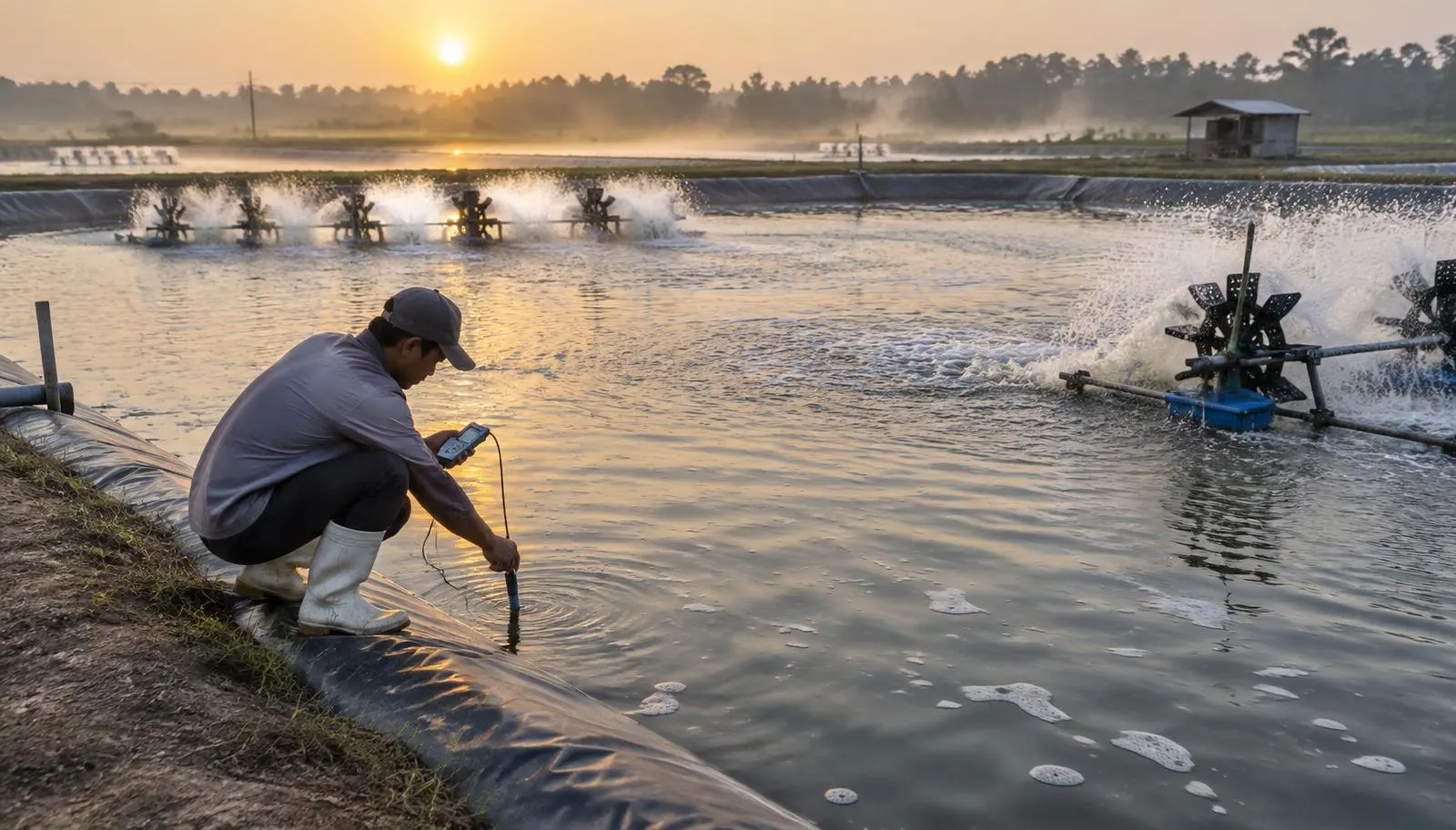
Short answer: stable shrimp farming starts with matching the site and the production system to the species, then running the farm on consistent records — water, stock behaviour, growth samples and feed use — with feeding adjusted to what the shrimp actually eat and biosecurity built into daily routine. There is no single recipe: targets for water, density, salinity and feed change with species, life stage, system, climate and country.
Editorial note: practical guide by the FishMatch Group editorial team, reviewed 14 October 2026, for farm managers, entrepreneurs and project planners. It draws on FAO shrimp-culture guidance, WOAH regional biosecurity work and an expert interview published by The Fish Site (sources below). It is not veterinary, engineering or financial advice, gives no universal stocking densities or water thresholds, and promises no yield, survival or profit. Operating ranges for your farm should come from a qualified local specialist and your own site measurements.
Key takeaways
- Site, water source and infrastructure decide more than any later management trick.
- Choose species and system together, against climate, water, market and regulation.
- Keep one daily log: water, behaviour, mortality, growth samples and feed.
- Adjust feed to sampling and feed-tray consumption, not to a fixed table.
- Plan aeration and backup power as one system.
- Treat biosecurity as routine: documented stock, access control, separate equipment, mortality records and an alert plan.
- Budget building and running costs with sensitivity scenarios before you commit.
How do you start shrimp farming?
If you are asking how to start shrimp farming, start with the site, not the equipment. FAO's shrimp-culture manual treats site selection as the foundation of pond design and operation: water supply and quality, soil, topography, climate, access, power and the legal situation all depend on the location (FAO, site selection). Before any purchase, confirm a reliable water source and its quality over the seasons, how water will be discharged, grid or generator power, road access for feed and harvest, and the permits that apply. Our step-by-step guide to starting a commercial shrimp farm covers the planning sequence in detail.
### Choose species and system together
Species and system are one decision. Climate and water temperature, salinity of the available water, the market you will sell to and local rules on species and discharge all narrow the choice. Lined ponds, earthen ponds, tanks and indoor recirculating systems carry very different investment, energy and skill requirements. For shrimp farming for beginners, a smaller, well-instrumented first phase usually teaches more than a large first build. See the shrimp farming overview for system options.
### Prepare ponds or tanks and receive postlarvae
Prepare and inspect each pond or tank before stocking: liner or bottom condition, inlet screens, drains, aeration and water level. Buy postlarvae (PL) only from a source that documents origin and health status, and agree in writing how batches are checked on arrival. Record batch, count method, transport conditions and acclimation steps, so that later problems can be traced back.
What water parameters should you monitor?
Monitor the parameters that matter for your species and system — typically dissolved oxygen, temperature, salinity and pH, plus nitrogen compounds, alkalinity and water transparency or colour where relevant. The useful thresholds differ by species, life stage, system and climate, so take operating ranges from a qualified local specialist and your own measurement history, not from a universal chart. What matters most is consistency: same instrument, same places, comparable times, calibrated equipment and written results.
FAO's grow-out guidance describes routine early-morning checks of pond condition and shrimp behaviour, alongside regular stock sampling (FAO, grow-out). The manual is historical, so use its principles rather than its specific numbers.
### A simple monitoring log
| What to check | When | What to record |
|---|---|---|
| Dissolved oxygen, temperature | On your specialist's schedule, including the low-oxygen period of the day | Values, time, location, aerators running |
| Salinity, pH and other agreed parameters | On the agreed routine and after rain, water exchange or unusual events | Values, method, any corrective step |
| Shrimp behaviour and pond appearance | Every visit | Surface activity, swimming at edges, colour or smell changes |
| Mortality | Every visit | Count, location, appearance, action taken |
| Growth and health samples | On a planned sampling routine | Sample size, average weight, size spread, observations |
| Feed given and feed-tray result | Every feeding | Amount, feed type and lot, leftover on trays |
| Equipment and power | Daily and after any outage | Aerator hours, faults, generator tests |
Your specialist sets the frequencies; the log only works if it is filled in every time.
How should you manage shrimp feeding?
Set feed amounts from what the shrimp actually eat and from growth samples, not from a rigid schedule. FAO's grow-out chapter describes using feed trays and regular stock samples to estimate biomass and adjust rations (FAO, grow-out). In practice: check trays after each feeding, reduce rations when feed is left over, investigate when appetite drops suddenly, and recalculate after each sample.
Overfeeding wastes money and loads the pond with organic matter that consumes oxygen and degrades water quality. In an interview with The Fish Site, a shrimp-farming specialist stressed reducing stress through moderate stocking, sufficient aeration, avoiding overfeeding and keeping routines consistent (The Fish Site, 3 Nov 2025). Treat that as one expert's practical view, not a universal standard. If growth or feed efficiency disappoints, work through our growth and feed-efficiency diagnosis.
Aeration and backup power
Plan aeration and power as one system. Aerator type, number and placement, wiring, generator capacity, automatic switchover and alarms all decide what happens on the night the grid fails. Write down what must keep running during an outage, how long the backup can run, and who is called. Our aeration guide for tropical shrimp ponds goes into sizing questions.
How do you reduce disease risk?
Reduce disease risk through prevention and records, not treatments. WOAH's regional work on biosecurity for small-scale farms groups the practical measures into risk assessment, record keeping, training, reducing pathogen transfer, emergency preparedness, and surveillance and reporting (WOAH Asia-Pacific). On a farm that means:
- Documented stock sources and arrival checks for every PL batch.
- Water intake screening or treatment appropriate to the site.
- Access control for people, vehicles and animals, with clean and dirty zones.
- Separate nets, buckets and tools per pond or unit, or cleaning between uses.
- Mortality recorded every day, with dead shrimp removed and disposed of safely.
- A written alert plan: who is called, what is isolated and what is reported.
Do not use antibiotics, drugs, lime or other chemicals, additives or treatments without a diagnosis and local professional guidance. If you see unusual mortality or behaviour, isolate the unit according to your protocol, record what you see, contact a local aquatic animal-health professional and follow the applicable reporting rules. Our shrimp mortality investigation checklist helps structure that first response.
Sludge, discharge water and environmental impact
Uneaten feed and waste accumulate as sludge. Plan how sediment is removed, where it goes and how discharge water is handled before the farm is built, and check what local rules require. Settling areas, drainage design and feeding discipline all reduce the load. See our guide to effluent and sludge management.
Harvest, quality, chilling and market access
Plan harvest backwards from the buyer: required size, presentation, quality checks, chilling or ice capacity, transport time and payment terms. A pond harvested without enough chilling capacity or a confirmed buyer loses value quickly. Agree the harvest method and the cold-chain steps before stocking.
Common mistakes
- Choosing equipment before the site, water and market are confirmed.
- Copying stocking densities or water targets from another country or species.
- Feeding to a table instead of to trays and samples.
- No tested backup power.
- Undocumented PL sources and shared tools between ponds.
- Treating with chemicals without a diagnosis.
- Budgets with no allowance for a weak first cycle.
What equipment do you need?
Shrimp farming equipment and supplies depend on the system, but a commercial brief usually covers water intake and pumps, filtration or treatment, aeration, backup power, monitoring instruments, feed storage and handling, harvest and chilling equipment, and biosecurity items. Compare suppliers on the same written scope, including installation, spare parts, training and service, rather than on headline price. Our shrimp farming equipment page lists what to specify.
How much does a shrimp farm cost, and is it profitable?
Shrimp farming startup cost depends on site works, system, scale, power, water treatment, permits and working capital, so any single number would mislead. Build two budgets: building costs (CAPEX) and running costs (OPEX), including feed, energy, PL, labour, maintenance and harvest. Then test sensitivity: what happens if survival, growth, feed efficiency, sale price or energy cost move against you? Profitability is the outcome of those assumptions, not a fixed property of shrimp. Use the aquaculture project cost guide, the shrimp farm planning calculators and our shrimp farming economics guide to run your own scenarios.
Checklist before you invest
- Site and water source checked across seasons by a qualified specialist.
- Species and system confirmed against climate, water, market and regulation.
- Documented PL source and arrival checks agreed.
- Monitoring plan and log format agreed with your technical adviser.
- Feeding approach based on trays and sampling.
- Aeration and backup power designed and tested.
- Biosecurity and alert plan written, with a local animal-health contact.
- Sludge and discharge plan checked against local rules.
- Harvest, chilling and buyer confirmed.
- CAPEX, OPEX and sensitivity scenarios written down.
Plan your project with FishMatch
FishMatch's buyer tools and buyer platform services are free and carry no obligation. For commercial projects from USD 250,000, our team can help define the scope and request comparable proposals from suitable suppliers; supplier identities stay private until you choose to proceed. We do not promise suppliers, financing or results. When you are ready, create a free project brief.
Sources
- FAO — Shrimp Culture: Pond Design, Operation and Management, site selection
- FAO — Shrimp Culture: Pond Design, Operation and Management, grow-out
- WOAH Asia-Pacific — Aquaculture biosecurity for small-scale farms in the region
- The Fish Site — Top tips to help shrimp farmers improve pond and feed management (3 Nov 2025)
Frequently asked questions
Related articles
Where this fits in a real project
Every FishMatch project runs through the same five reviewed stages, from a first enquiry to comparable quotations. See the full buyer journey.
Planning a commercial aquaculture project?
Send your project brief. A FishMatch specialist reviews it before relevant suppliers are contacted privately.
Request a quote