The Cost of Sourcing Alone: How a Wider Procurement Network Helps Aquaculture Buyers Make Better Decisions
Also in:EspañolPortuguêsFrançaisРусский中文DeutschTürkçeעברית日本語한국어ItalianoNOSVहिन्दीTETiếng ViệtID

Short answer: a farm that sources alone usually sees only its own contacts, its own quote and its own deadline. A structured, buyer-first sourcing process widens the search to relevant suppliers, sends every bidder the same specification and compares price together with freight, lead time, documents, service and risk. It does not guarantee a lower price, savings or a better outcome: supplier claims still need checking, and the buyer makes the final decision.
Picture a farm manager preparing the next production cycle. The aeration system needs an upgrade, the feed contract is due for renewal and the harvest date cannot move. A few supplier contacts sit in the phone, one answers quickly, and the first quote starts to feel like the answer. Nothing here is careless; it is what buying looks like when one person carries the purchase on top of running a farm.
What buying alone tends to miss
- Limited supplier visibility: you compare the suppliers you already know, not necessarily those best suited to your species, system, water or country.
- Quotes that cannot be compared: one includes installation, another leaves out spares, a third quotes a different pump or blower size.
- Price-only decisions: the unit price is the easiest figure to see, so it carries the whole decision.
- Hidden landed and lifecycle costs: freight, duties, installation, energy, consumables, spares and downtime often sit outside the quote. The CIPS overview of total cost of ownership explains why buyers look beyond purchase price to whole-life cost.
- Too much admin: chasing missing details by email and phone takes hours a manager needs on the farm.
- Continuity and documentation gaps: no tested alternative if the supplier cannot deliver, and certificates or warranty terms requested only after the order.
A practical sourcing process in five steps
The Chartered Institute of Procurement & Supply describes strategic sourcing as understanding the requirement and the supply market before choosing. That is general procurement guidance, not an endorsement of FishMatch Group. Applied to an aquaculture purchase, it looks like this:
1. Define the need and the specification
Write down species, production target, system, site and water conditions, delivery location, timing and the documents you will need. The project planning and RFQ checklist shows the order.
2. Submit one structured RFQ
Send the same specification to every supplier, so every answer responds to the same question. The project request form is built around these fields.
3. Source relevant options
The FishMatch project team looks for suppliers and solutions that fit the specification, not only the nearest contact. A wider pool can surface options you would not have found alone; it does not guarantee more offers or better ones.
4. Compare like for like
Line offers up on price, freight, minimum order, lead time, quality and specification match, documentation, payment terms, service and continuity. The aquaculture procurement cost calculator helps compare delivered cost from the figures suppliers give you.
5. Do your due diligence and choose
Check shortlisted suppliers and final offers directly, confirm local rules — the regulation and restricted items register lists official sources — and decide whether to proceed, with whom and on what terms.
Technology organises the work: the form, the fields and the side-by-side view. People add context: whether a quote really matches the specification, which questions are still open and what a document does and does not show. FishMatch Group facilitates sourcing. It is not the manufacturer, feed producer, farm operator or seller, and its supplier checks are document and profile reviews, not site audits or product inspections. The how we work page sets out each step.
What to compare: a short checklist
- Specification match, or a substitute?
- Total delivered cost: price, freight, insurance, duties, installation and commissioning.
- Lifecycle cost: energy, consumables, spares and maintenance.
- Lead time and delivery reliability against your stocking or harvest date.
- Minimum order quantity against storage and cash flow.
- Payment terms, warranty and after-sales service in your country.
- Documents: certificates, test reports, origin and, for live animals, feed or food, the health and import documents your destination requires.
- Continuity: a second option if the first supplier cannot deliver.
Buying alone vs. structured sourcing
| Factor | Buying alone may miss | Structured sourcing can compare |
|---|---|---|
| Supplier discovery | Relevant options outside existing contacts | A wider set of suppliers answering one specification |
| Specification | Quotes priced on different scopes | Every offer against the same written specification |
| Total cost | Freight, duties, installation, energy and spares | Delivered and whole-life cost items for each offer |
| Delivery | Whether lead time fits the stocking or harvest date | Stated lead times and delivery terms side by side |
| Documentation | Certificates requested too late | Required documents named in the RFQ and reviewed before a decision |
| Continuity and risk | No fallback if a supplier fails | Alternatives identified and open questions recorded |
Example: a farm sourcing feed
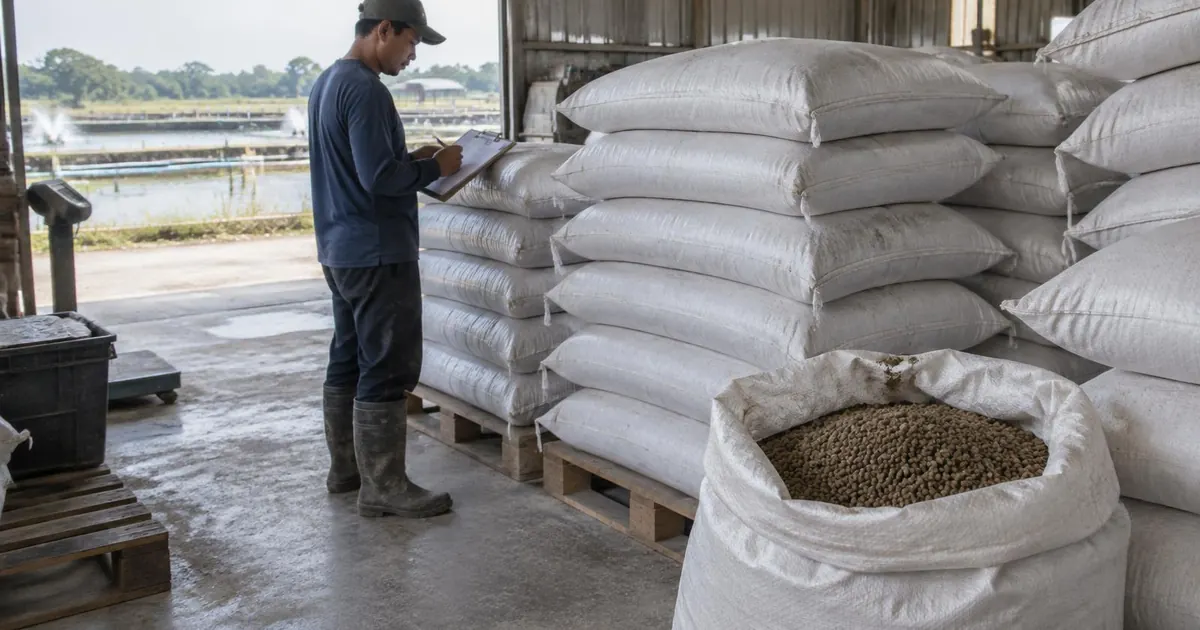
A farm comparing feed offers can line up the stated formulation and specification for its species and life stage; ingredient and nutritional documents; batch or traceability details where the supplier provides them; delivery cadence; storage and handling needs; minimum order; freight; and the full delivered cost of the feed actually received.
Feed safety matters as much as price. The FAO and IFIF manual Good Practices for the Feed Industry and the Codex Code of Practice on Good Animal Feeding describe general practice for safety across the feed chain, from production to use on the farm. The World Organisation for Animal Health (WOAH) chapter on control of hazards of animal health and public health importance in animal feed treats feed purchasing, handling, storage and distribution as relevant to animal and public health. These are general guidance documents; they do not assess any supplier and do not endorse FishMatch Group.
Whether a feed suits your fish or shrimp, and what your country requires, is a question for a qualified aquaculture nutritionist or veterinarian and your local authority. This article gives no feeding, veterinary or formulation advice.
Equipment, biosecurity, water systems and cold chain
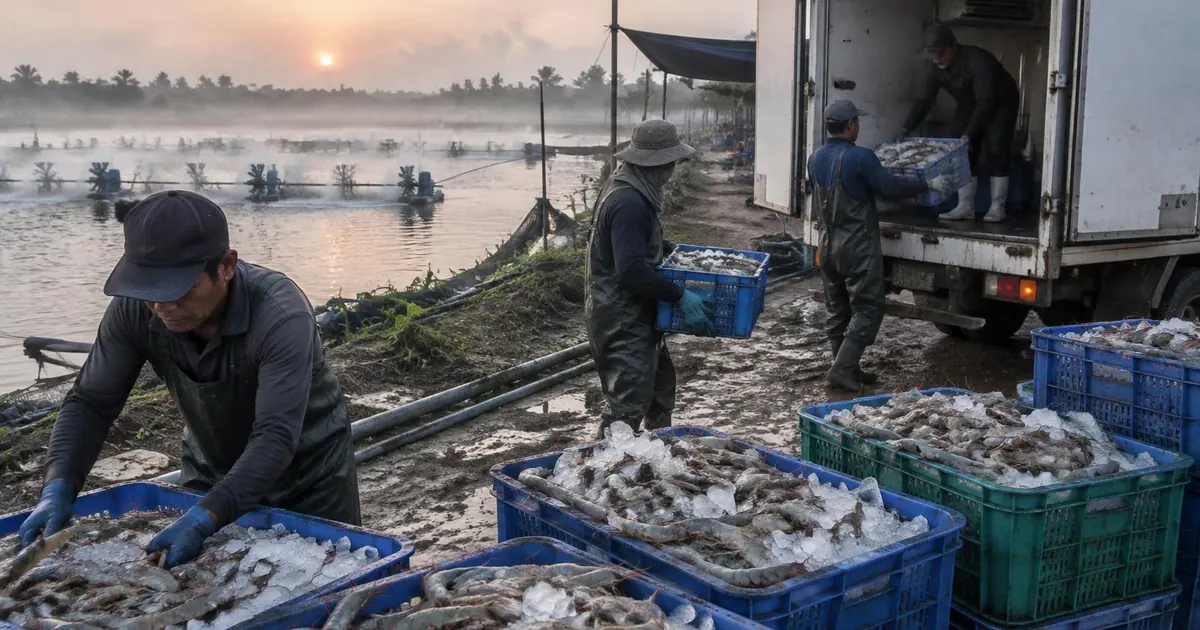
The same logic applies elsewhere. Aerators, pumps and recirculating systems compare on duty point, energy use, redundancy and local service — see dissolved oxygen management. Biosecurity purchases depend on the health documents for live stock and what disinfection and zoning equipment covers (biosecurity zoning). Harvest and cold chain depend on handling time and temperature control from pond or tank to truck (harvest planning, cold chain design).
What a wider sourcing network can and cannot do
A wider network brings more relevant options and shared market learning: which details suppliers often leave out, how terms and lead times differ, which documents a destination usually asks for. That only helps when the information is current, comparable and gathered lawfully and with permission. FishMatch Group does not publish other buyers' or suppliers' private information and does not offer a proprietary price database. Scale can widen the pool and make offers easier to compare; it does not guarantee a lower price, savings, a particular supplier or a better outcome.
Next step: discuss your sourcing requirements
If you are planning a commercial aquaculture project or a significant equipment, system or input purchase, you can submit a project RFQ and the FishMatch project team will review the specification with you. Buyers pay no fee, and suppliers cannot pay for ranking or shortlist position. Managed sourcing is for projects of USD 250,000 or more; the free calculators and guides are open for any budget. You stay in control: you decide whether to proceed, with whom and on what terms.
Frequently asked questions
Guides, calculators and country pages for this topic
Use the guides for the decision framework, the calculators for indicative numbers, and the country pages for local scope and cost context. FishMatch reviews every request by hand before any supplier is approached — directory and country pages are for research, not automatic matching.
Guides
- Supplier Comparison FrameworkHow to normalise offers that are not written the same way.
- Aquaculture Project RFQ GuideThe structured brief suppliers need before they can quote.
- Aquaculture Equipment Total CostLook past the purchase price to installation, energy, spares and service.
- How FishMatch WorksThe buyer-first sourcing steps, from RFQ to your decision.
Calculators
Aquaculture planning benchmarks
| Figure | Value | Context |
|---|---|---|
| CAPEX — RAS | USD 9,000–14,000 per tonne/yr | Global baseline before country cost factor. |
| CAPEX — Ponds | USD 1,800–4,000 per tonne/yr | Lined or earthen ponds, excluding land. |
| CAPEX — Cages | USD 2,500–5,500 per tonne/yr | Cages, moorings, nets and service equipment. |
| CAPEX — Flow-through | USD 4,000–7,000 per tonne/yr | Raceways and water intake works. |
| Energy use | RAS ~6 kWh/kg; ponds ~1.2; flow-through ~1.5; cages ~0.3 | Per kg of fish produced. |
| Typical FCR | Trout 1.1; salmon 1.2; shrimp 1.4; tilapia 1.6; carp 1.8 | kg feed per kg growth; varies with feed and management. |
| Farm size where FishMatch reviews projects | From ~USD 250,000 total project value | Commercial fish and shrimp projects. |
Related articles
Where this fits in a real project
Every FishMatch project runs through the same five reviewed stages, from a first enquiry to comparable quotations. See the full buyer journey.
Planning a commercial aquaculture project?
Send your project brief. A FishMatch specialist reviews it before relevant suppliers are contacted privately.
Request a quote