China and Asia Sourcing Platforms: What to Define Before You Contact Suppliers
Also in:EspañolPortuguêsFrançaisالعربيةРусский中文Deutschעברית日本語한국어SV
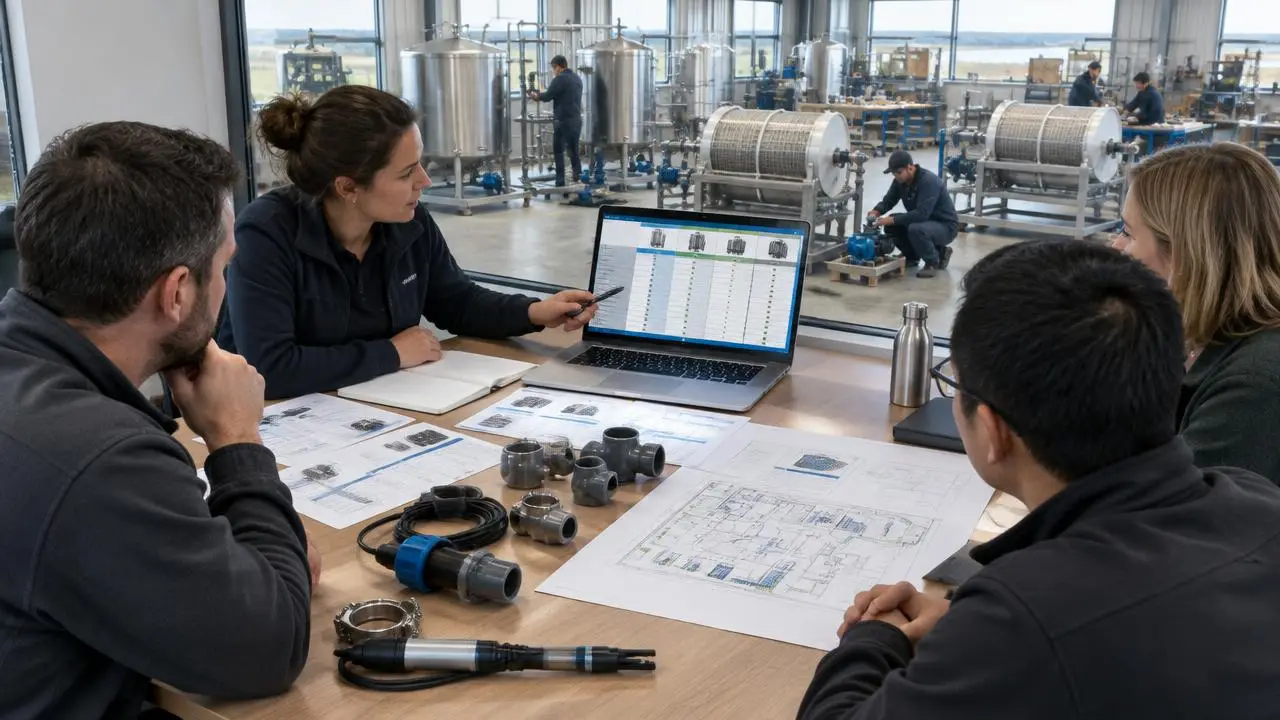
Short answer: China and Asia sourcing platforms such as Alibaba.com, 1688.com, Made-in-China.com, Global Sources and DHgate are good places to discover manufacturers and products. None of them can write your project brief for you. Before you contact suppliers for an aquaculture or agricultural project, define the business outcome, capacity, technical specification, compliance, budget, timeline, site constraints, service needs and total landed and lifecycle cost. Then send every supplier the same request and compare responses like-for-like. FishMatch's calculators, guides and project brief are free for buyers to use, with no subscription and no obligation.
Editorial note: platform facts below were checked on each company's own pages on 14 October 2026. This article describes examples of major China and Asia sourcing routes; it is not a complete list of every platform, and it does not rank them.
Who this guide is for
Purchasing teams, project owners and engineers buying equipment or turnkey solutions for fish farms, shrimp farms, RAS facilities, hatcheries, feed mills and processing lines — and anyone searching for China manufacturers or suppliers for an industrial project rather than a single catalogue item.
The China and Asia sourcing platform landscape
| Platform | Started | What it is today (company description) |
|---|---|---|
| Alibaba.com | Launched 1999, Alibaba Group's first business | Global B2B platform offering sourcing, online transactions, digital marketing, supply-chain fulfilment and after-sales support |
| 1688.com | Founded 1999 | China's domestic integrated wholesale marketplace, part of Alibaba Group |
| Made-in-China.com | Founded 1998, operated by Focus Technology | B2B platform connecting Chinese suppliers with global buyers; currently promotes SourcingAI and text/visual product search |
| Global Sources | Began 1971 as a trade publication; online platform launched 1995 | Hong Kong-based multichannel online-to-offline (O2O) sourcing: website, apps, trade shows and business matching across Asia |
| DHgate | DHGATE Group founded 2004 | Cross-border B2B ecommerce transaction and service platform, focused on wholesale |
Two details are easy to get wrong. First, a company's founding date is not always the date its platform launched — Global Sources is the clearest example. Second, Global Sources is Hong Kong-based and serves sourcing across Asia, so it is not a mainland-China-only marketplace.
How these platforms have changed
They started largely as directories and catalogues and have moved toward fuller trade support. Alibaba.com describes a suite covering sourcing, transactions, marketing, fulfilment and after-sales, and Alibaba Group now describes itself as focused on AI and cloud alongside commerce. 1688.com serves domestic wholesale inside China. Made-in-China.com highlights AI-assisted sourcing and product search on its homepage. Global Sources combines online sourcing with trade shows, and DHgate focuses on cross-border wholesale.
What marketplaces solve — and what they do not
Marketplaces help you find options quickly: product categories, supplier profiles, messaging, sometimes payment and logistics services, and in some cases trade shows. That is real value at the discovery stage.
What they cannot do is decide what your project needs. A listing shows what a supplier sells; it does not know your species, tonnes per year, water source, power supply, permits or service expectations. If you contact suppliers without a brief, each one quotes a different scope, and you end up comparing prices for different things.
Before you contact suppliers: a checklist
- Business outcome: what the project must deliver — for example annual tonnes, harvest size or processing throughput.
- Capacity and design basis: peak load, feed per day, flow, operating hours and redundancy.
- Technical specification: materials, performance at duty point, controls, power draw and spare parts.
- Compliance: import rules, electrical and pressure standards, food-safety and environmental permits in your country.
- Budget: CAPEX range, working capital and who carries freight, duties and installation.
- Timeline: order, manufacturing, shipping, installation and commissioning dates.
- Site constraints: land, water, power, access, climate and building limits.
- Service needs: commissioning support, training, warranty, local service and response time.
- Total landed and lifecycle cost: price + freight + duties + installation + energy + maintenance over the life of the equipment.
Free tools that help: the commercial CAPEX calculator, the ROI calculator and the whole-farm energy cost guide.
A repeatable sourcing workflow
- Step 1: Scope the project — outcome, site and constraints first. The free project brief walks through it.
- Step 2: Write one RFQ with packages suppliers can price on equal terms — see the aquaculture RFQ guide or start a structured RFQ.
- Step 3: Discover suppliers — through marketplaces, trade shows, referrals and directories. Use several routes, not one.
- Step 4: Verify suppliers — business registration, factory capability, references for similar projects, certificates and export experience.
- Step 5: Compare offers like-for-like — same scope, same performance basis, same delivery terms. The supplier comparison framework shows how.
- Step 6: Close the gaps — ask each supplier for what is missing before you shortlist.
- Step 7: Manage implementation — milestones, inspection, shipping, installation, commissioning and acceptance; see procurement management.
Where FishMatch fits
FishMatch is a supplier-neutral planning and procurement system for aquaculture projects. It sits before and across supplier conversations: project scoping, practical calculators and guides, a structured RFQ, offer comparison, supplier discovery and project tracking. Once your need is specified, we can help connect you to suitable manufacturers, and external platforms — including those above — can still be part of how suppliers are found. You do not have to use FishMatch, and we do not claim exclusive access to any supplier.
The buyer tools are free, with no subscription and no obligation. Optional human-assisted sourcing is for commercial projects from about USD 250,000. We do not guarantee prices, suppliers or results; you choose who to work with.
Industry focus: aquaculture and agricultural projects
Aquaculture projects are systems, not single products. A RAS needs pumps, drum filters, biofilters, oxygen, controls and backup power that work together; a shrimp farm needs aeration sized to its biomass; a feed mill needs its dryer matched to its extruder. Turnkey and engineering solutions are often split across several manufacturers, so the integration risk sits with the buyer unless the RFQ assigns it. Define interfaces — who supplies what, and who guarantees system performance — before quotes arrive. Browse equipment categories and supplier countries to see the scope.
Common buyer mistakes and how to avoid them
| Mistake | What happens | Mitigation |
|---|---|---|
| Asking for prices before defining scope | Quotes cover different things | Send one written brief and RFQ to everyone |
| Comparing headline price only | Freight, duties, energy and spares appear later | Compare total landed and lifecycle cost |
| Treating a profile badge as full verification | Capability gaps surface after payment | Check registration, references and factory capability yourself |
| Leaving system integration undefined | Each supplier blames the interface | Assign interfaces and system performance in the RFQ |
| Skipping commissioning and acceptance terms | Disputes at handover | Agree tests, documents and payment milestones up front |
Limitations of this guide
Platform features and policies change; check each platform's current terms before you rely on a service. This guide does not rate supplier quality or platform performance, and it is not legal, customs or financial advice. Your project's compliance requirements depend on the destination country.
Next step
Plan your project for free with the project brief and calculators. If you want, we can help write the specification and find suitable suppliers — supplier connection is optional and not a guaranteed result.
Frequently asked questions
Related articles
Where this fits in a real project
Every FishMatch project runs through the same five reviewed stages, from a first enquiry to comparable quotations. See the full buyer journey.
Planning a commercial aquaculture project?
Send your project brief. A FishMatch specialist reviews it before relevant suppliers are contacted privately.
Request a quote