Aquaculture Project Procurement Management: From Operational Outcome to Acceptance and Supplier Performance
Also in:EspañolPortuguêsFrançaisРусскийעברית
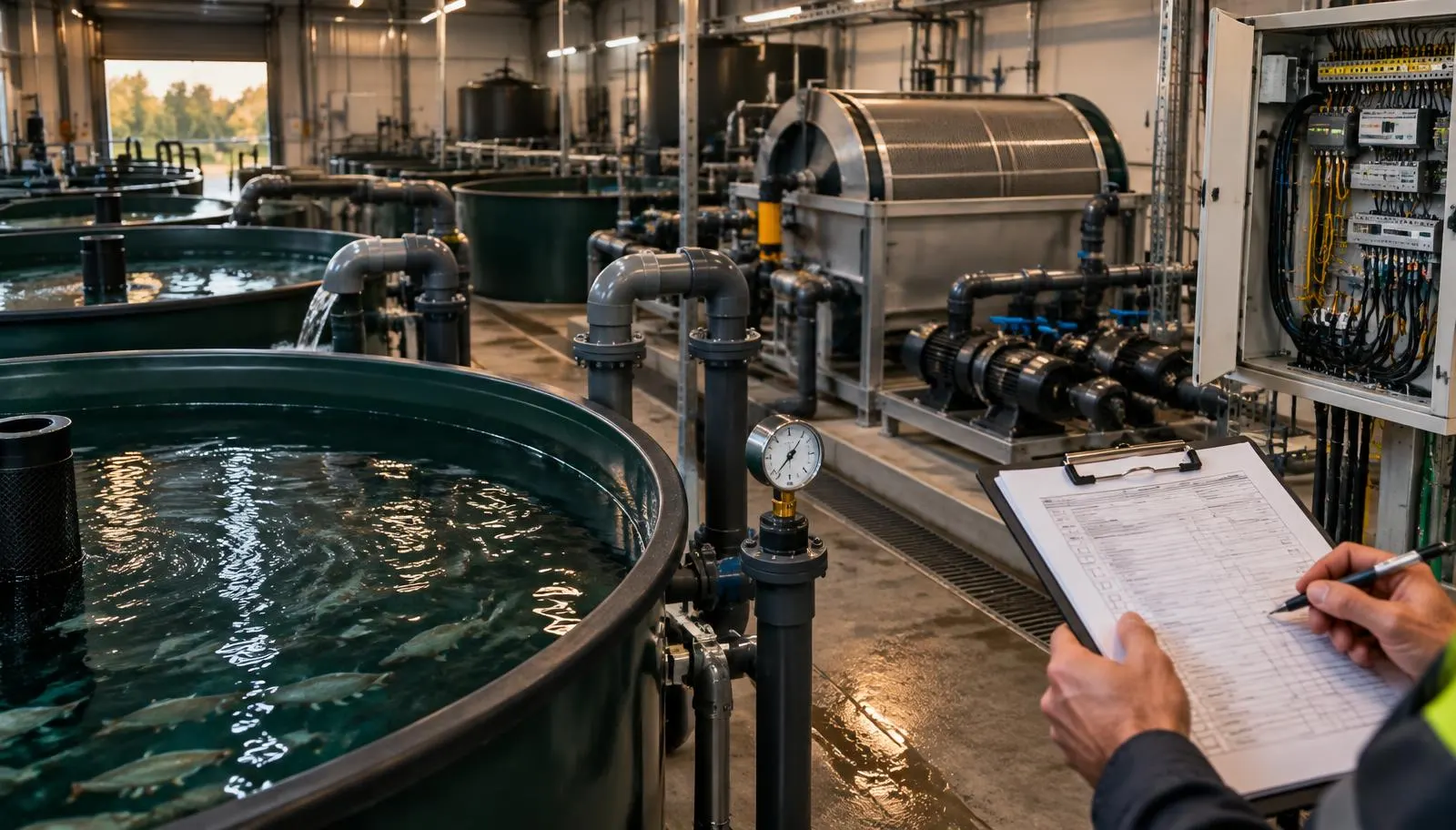
Short answer: aquaculture project procurement management is the work of buying a farm, hatchery or system as one project — starting from the operational outcome and a written user requirement, comparing supplier proposals against the same scope, technical fit, delivery, operating cost, support and risk, and continuing through installation, commissioning, acceptance and supplier-performance review. It does not end when a purchase order is signed. FishMatch's buyer tools are free for buyers, always: no platform fee to buyers and no obligation to request quotes or select anyone.
Editorial note: educational guide by the FishMatch Group editorial team, reviewed 14 October 2026. It draws on FAO aquaculture project-formulation guidance and general procurement frameworks from CIPS and the OECD (sources below). It is not legal, engineering, biological or financial advice and makes no yield, survival, savings or delivery promises. Site, species, water, climate, permits and the production model change the right solution; qualified local specialists must confirm design, permits and safety.
Key takeaways
- Procurement starts with the outcome and a written requirement, not with a catalogue.
- Draw the project boundary: who supplies each interface between tanks, pumps, oxygen, filtration, controls, power and buildings.
- Compare quotes on the same scope and on whole-life cost, not headline price.
- Agree acceptance tests and commissioning steps before signing.
- Keep measuring supplier performance after handover.
What is project procurement management in aquaculture?
In general procurement practice, the cycle runs from identifying the need and writing the specification, through sourcing and tendering, to contract and asset management. CIPS describes this full cycle, and stresses stakeholder input, clear specifications and bids that can be compared consistently (CIPS procurement and supply cycle). In aquaculture the 'asset' is a living production system: tanks, ponds or cages, water supply, pumps, aeration or oxygen, filtration and treatment, sensors and controls, feed handling, backup power, effluent and biosecurity measures — all of which must work together. FAO's project-formulation guidance treats design, specification, schedule, resources and cost as one package for exactly this reason (FAO, aquaculture project formulation).
The workflow: from outcome to supplier performance
### 1. Define the operational outcome
State what the facility must deliver: species and life stage, product and market, target annual output as your planning assumption, operating calendar and the level of automation and staffing you can support. This is the yardstick every later choice is measured against.
### 2. Write the user requirement specification
Turn the outcome into requirements suppliers can answer: production model (pond, cage, flow-through, RAS), water quality limits your operating plan needs, redundancy expectations, controls and alarms, documentation, training and spare parts. Say what is fixed and what suppliers may propose. Separate 'must have' from 'preferred'.
### 3. Set boundaries, site, utilities and interfaces
Record the measured site facts — water source and availability, seasonal quality tests, power supply and its reliability, access, ground, discharge and permit status. Then draw the boundary of each package. Most disputes start at interfaces: which supplier connects the pump skid to the filter, who sizes the generator for full start-up load, who integrates sensors into the control system, who supplies pipework between buildings.
### 4. Budget the full cost
Include equipment, freight and import duties, civil works, installation, commissioning, training, spares, energy, maintenance, consumables and working capital. OECD guidance encourages buyers to consider life-cycle costs and performance, not price alone (OECD, Reforming Public Procurement). Use the commercial CAPEX calculator to lay out your own cost lines and the energy cost calculator to test running-cost assumptions; both work with your inputs and do not supply prices.
### 5. Request comparable quotes
Send every supplier the same brief, site data and response format. Ask them to state exclusions, assumptions, performance basis, delivery terms, installation responsibilities and warranty conditions explicitly. Our RFQ process explains how a structured brief is reviewed before any supplier is approached.
### 6. Evaluate fit and risk
Score each proposal against your requirement, not against each other's marketing. A practical comparison table:
| Criterion | What to compare | Confirm with |
|---|---|---|
| Scope | Included / excluded items, interfaces | Your boundary drawing |
| Technical fit | Design basis vs your water, site and species assumptions | Qualified aquaculture engineer |
| Capacity and redundancy | Duty and standby equipment, alarm logic | Designer, insurer |
| Delivery and implementation | Lead time, installation team, site prerequisites | Supplier schedule, local contractor |
| Operating cost | Energy, consumables, labour assumptions | Your own calculations |
| Maintenance and support | Spares, service response, training, documentation | References, service contract |
| Risk | Single points of failure, biosecurity, regulatory | Local specialists, authorities |
| Budget | Whole-life cost and payment milestones | Finance adviser |
### 7. Plan timeline and implementation
Agree a schedule that links supplier milestones to site readiness: civil works, power connection, water supply and permits. Payment milestones should follow verified progress, not calendar dates alone.
### 8. Define acceptance and commissioning
Write the tests before signing: dry tests, wet tests with water, alarm and failover tests, control-system checks, documentation handover and operator training. Biological start-up — for example biofilter maturation in RAS — takes time and needs specialist guidance; acceptance should test the equipment against the specification, not promise production results.
### 9. Review supplier performance
After handover, track uptime, response to service calls, spare-part lead times, energy use against the proposal and open punch-list items. CIPS contract-management guidance includes performance criteria and whole-life cost, including maintenance and disposal (CIPS contract management cycle). This record makes phase 2 decisions evidence-based.
What can be compared and what must specialists confirm?
You can compare scope, exclusions, stated performance basis, delivery terms, documented support and whole-life cost assumptions. Qualified local specialists must confirm site suitability, structural and electrical design, permits, effluent rules, biosecurity and animal-health measures. Supplier lists are never endorsements, and the buyer decides whether and whom to select.
Free tools, and optional help for larger projects
FishMatch's calculators, guides and project brief are free for buyers, always. Supplier equipment, engineering, freight and financing are not free; they are priced by the providers. For commercial projects of USD 250,000 or more, our supplier-neutral team can help scope the solution, define requirements and identify suitable manufacturers to compare against your constraints, plan and budget. That help is optional and does not guarantee a match, price or delivery date.
Next step: create your free project brief and turn this workflow into a structured RFQ. If you are still at the planning stage, start with how to plan an aquaculture equipment project.
Sources
Frequently asked questions
Related articles
Where this fits in a real project
Every FishMatch project runs through the same five reviewed stages, from a first enquiry to comparable quotations. See the full buyer journey.
Planning a commercial aquaculture project?
Send your project brief. A FishMatch specialist reviews it before relevant suppliers are contacted privately.
Request a quote