Aquaculture Equipment Purchase Contract and Payment Terms Guide
Short answer: A robust aquaculture equipment purchase contract should include a detailed scope annex, clear payment milestones, and precise Incoterms. Buyers should ensure factory acceptance tests and performance commitments are documented in writing to protect their investment. Instruments like letters of credit provide security, while defined warranty and dispute resolution steps mitigate long-term risks. This article is a planning guide only, not engineering, legal, or financial advice.

What should be included in an aquaculture equipment purchase contract scope annex?
The scope annex is the foundation of any equipment purchase contract, detailing every component and spare part included in the price. Buyers must ask suppliers to state in writing the exact specifications and quantities for all items, from filtration units to sensors. A vague scope often leads to unexpected costs during installation when essential connectors are found to be missing. By defining the battery limits—where the supplier’s responsibility ends—you ensure that there are no gaps in the project infrastructure. This document should also list software licenses and tools required for startup. A well-defined scope annex prevents disputes over what was included and provides a baseline for verifying the delivery. sourcing-ras-equipment-for-salmon-farms
How do payment milestones work for large aquaculture equipment orders?
Structuring payment milestones correctly is essential for maintaining project cash flow and ensuring supplier accountability. Typically, an initial down payment is required, followed by subsequent payments linked to specific, verifiable events. Buyers should ask suppliers to state in writing the documentation required to trigger each payment, such as design approval or successful factory testing. These milestones shift the financial risk away from the buyer, as payments are only released when progress is demonstrated. Final payments are often held until the equipment is delivered or has passed commissioning tests. This phased approach encourages the manufacturer to adhere to the agreed timeline and quality standards throughout the process. financing-international-aquaculture-deals
When should a buyer use a letter of credit for international aquaculture equipment sourcing?
Letters of credit are widely used in international trade to provide financial security for both the buyer and the manufacturer when purchasing high-value aquaculture equipment. This mechanism ensures that the supplier only receives payment when they present specific shipping and quality documents to their bank. For the buyer, it helps ensure that funds are not released until the equipment is actually on its way and meet the agreed criteria. It is important to define the exact documents required, such as bills of lading and inspection certificates. While there are bank fees, the protection it offers against non-delivery is significant for large-scale capital investments. It acts as a neutral intermediary that balances the interests of both parties by ensuring that payment and delivery are linked. financing
What is the role of factory acceptance tests and pre-shipment inspections?
Factory acceptance tests (FAT) and pre-shipment inspections (PSI) are critical quality control steps that occur before the equipment leaves the facility. During a FAT, the equipment is operated under simulated conditions to verify that it meets the technical specifications outlined in the contract. Buyers should ask suppliers to state in writing the test protocols and success criteria before testing begins. If issues are identified, they can be corrected at the factory where tools are available, rather than at a remote farm site. A pre-shipment inspection by a third-party agency further verifies the quantity and condition of the goods, ensuring that what is loaded matches the packing list. These steps are vital for reducing the risk of receiving defective equipment. aquaculture-equipment-sourcing-step-by-step
How do Incoterms affect aquaculture equipment delivery and price?
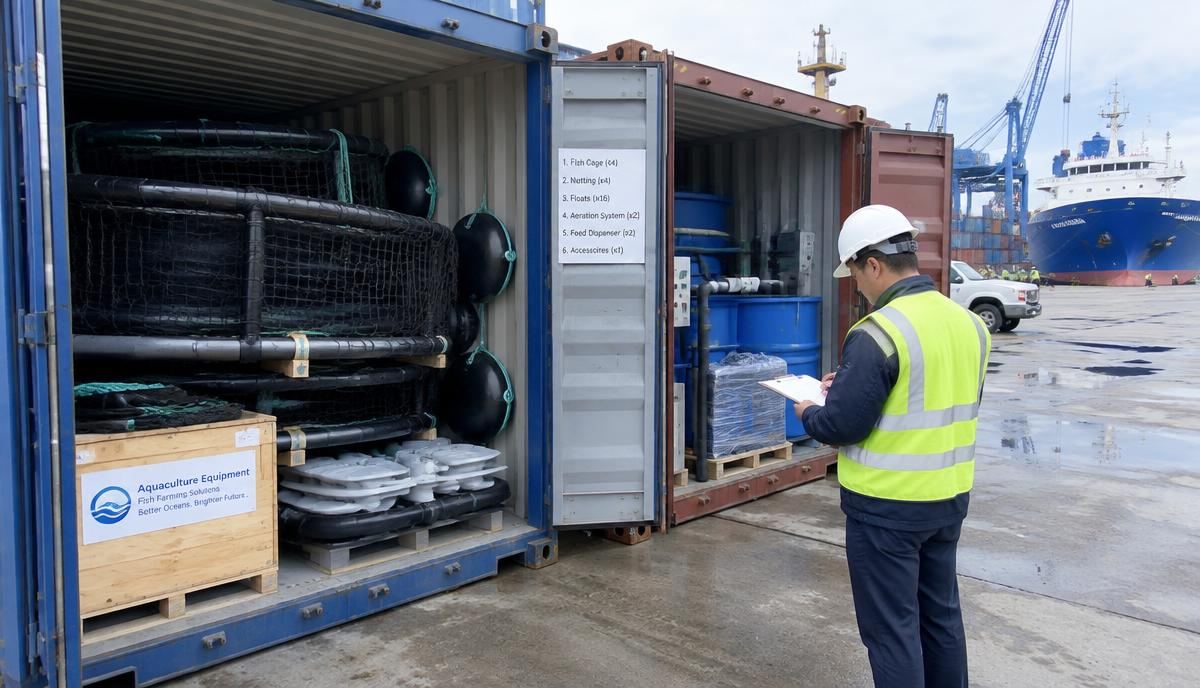
Incoterms define the responsibilities, costs, and risks associated with the transportation of equipment from the supplier to the buyer's site. Choosing the right Incoterm, such as CIF or DAP, determines who pays for freight, insurance, and duties, and exactly where the risk transfers. It is crucial to understand that the 'price' of equipment can vary significantly depending on which terms are applied, as shipping large systems across borders involves complex logistics. Buyers should ask suppliers to state in writing which Incoterm is being used in their quote to avoid hidden costs. Clear agreement on these terms prevents confusion over who is responsible for filing insurance claims in the event of damage during transit. incoterms-for-aquaculture-equipment-purchases
What terms should be included for delivery timelines and delay penalties?
The contract must clearly define the expected delivery dates for all equipment, accounting for production lead times and shipping. Because delays can stall the entire project, including a 'liquidated damages' clause for late delivery is a common practice. This clause specifies a predetermined amount that the supplier will pay for each day the delivery is delayed beyond the agreed deadline. Buyers should ask suppliers to state in writing the circumstances that might excuse a delay, such as force majeure, to ensure terms are fair. Establishing a realistic schedule with built-in buffers helps manage expectations and provides a legal framework for compensation if the timeline is compromised. These provisions serve to align the supplier's goals with the buyer's project schedule. ras-equipment-prices-landed-cost
How should equipment warranty and after-sales service be defined in the contract?
A comprehensive warranty section protects the buyer against defects in materials and workmanship for a specified period. The contract should detail what is covered, the process for filing a claim, and the supplier's obligations regarding the repair or replacement of faulty components. Beyond the basic warranty, it is beneficial to include terms for after-sales support, such as technical assistance and availability of spare parts. Buyers should ask suppliers to state in writing the expected lifespan of critical components and the cost of service agreements. Ensuring the manufacturer has a clear plan for supporting the equipment throughout its operational life is essential for long-term farm productivity. This proactive approach to maintenance ensures that the capital investment continues to generate value. aquaculture-equipment-spare-parts-warranty-service
Why are written performance commitments critical for aquaculture systems?
Unlike standalone hardware, many aquaculture components are part of a complex biological support system. Buyers should ask suppliers to state in writing specific performance commitments, such as the oxygen transfer rate or the filtration efficiency of a drum filter. These commitments should be measurable and linked to final acceptance. Without written performance promises, it can be difficult to hold a supplier accountable if the equipment fails to meet the biological needs of the fish or shrimp once installed. Performance-based milestones ensure the technical design actually delivers the results promised during the sales process, providing peace of mind. Having these metrics documented allows for objective evaluation and ensures the system is capable of supporting the planned biomass. how-to-compare-ras-equipment-quotes
What technical documentation must the supplier provide with the equipment?
The delivery of equipment is not complete without the technical documentation required for installation, operation, and maintenance. This includes detailed assembly drawings, electrical schematics, and operation manuals. The contract should specify that these documents must be provided at the time of delivery to allow the buyer's team to prepare for the arrival of the goods. Additionally, evidence of conformity and software backup files should be included. Having accurate and complete records is essential for troubleshooting issues, training farm staff, and ensuring that the system is operated within its design limits. The availability of this information is also critical for compliance with local regulations and for achieving third-party sustainability standards that require operational oversight. aquaculture-equipment-commissioning-handover
What steps should be followed for dispute resolution in international aquaculture contracts?
In the event of a disagreement regarding contract terms, having a pre-defined dispute resolution process can save time and costs. The contract should outline a stepped approach, starting with good-faith negotiations, followed by formal mediation if necessary. For international purchases, it is common to specify arbitration in a neutral jurisdiction as the final method for resolving disputes, rather than relying on local courts which may be unfamiliar with specialized aquaculture technology. Buyers should ask suppliers to state in writing the governing law of the contract to avoid ambiguity during legal proceedings. A clear path for resolution encourages both parties to find a professional solution and protects the continuity of the project even when challenges arise. shipping-ras-equipment-internationally
Checklist
Confirm the inclusion of a detailed scope annex listing every component and sensor; Verify that payment milestones are linked to verifiable project progress and documentation; Ensure Incoterms are clearly defined to establish responsibility for shipping and insurance; Schedule factory acceptance tests and pre-shipment inspections to verify quality before dispatch; Include liquidated damages clauses for delays to protect the project timeline; Define clear performance commitments and technical specifications in writing; Request a full set of technical documentation and operation manuals in the required language; Establish a multi-step dispute resolution process and define the governing law; Check for comprehensive warranty terms and after-sales support commitments.
Frequently asked questions
Q: What is a standard down payment for large aquaculture equipment orders? A: While it varies, buyers should ask suppliers to state in writing their standard terms, which often involve an initial payment to secure production slots. Q: Are Incoterms the same as shipping insurance? A: No, Incoterms define who is responsible for arranging and paying for insurance, but they do not automatically provide it. Q: Can I refuse payment if the equipment fails the factory acceptance test? A: Yes, if the contract specifies that the payment milestone is tied to a successful test, the supplier must rectify issues before payment is released. Q: Who is responsible for import duties in a DAP contract? A: Under DAP (Delivered at Place), the buyer is typically responsible for import clearance and paying any applicable duties or taxes.
How do FishMatch Group's calculators and reviewed RFQ help?
FishMatch Group simplifies the complex process of equipment procurement by providing a platform where buyers can submit a single, hand-reviewed RFQ to multiple qualified suppliers. Our team of experts reviews each request to ensure technical clarity, helping buyers define their scope annex and performance requirements accurately before reaching out to manufacturers. By anonymizing the sourcing process, we allow buyers to compare comparable offers based on technical merit and contract terms without early brand bias. Furthermore, our suite of specialized aquaculture calculators helps project planners estimate biomass, oxygen demand, and feed requirements, ensuring that the equipment specified in the contract is properly sized for the biological goals of the farm. This integrated approach reduces the risk of scope gaps and ensures that every purchase is backed by sound data and professional review. procurement-toolkit
Related: aquaculture-equipment-sourcing-step-by-step | how-to-compare-ras-equipment-quotes | incoterms-for-aquaculture-equipment-purchases
Aquaculture planning benchmarks
| Figure | Value | Context |
|---|---|---|
| CAPEX — RAS | USD 9,000–14,000 per tonne/yr | Global baseline before country cost factor. |
| CAPEX — Ponds | USD 1,800–4,000 per tonne/yr | Lined or earthen ponds, excluding land. |
| CAPEX — Cages | USD 2,500–5,500 per tonne/yr | Cages, moorings, nets and service equipment. |
| CAPEX — Flow-through | USD 4,000–7,000 per tonne/yr | Raceways and water intake works. |
| Energy use | RAS ~6 kWh/kg; ponds ~1.2; flow-through ~1.5; cages ~0.3 | Per kg of fish produced. |
| Typical FCR | Trout 1.1; salmon 1.2; shrimp 1.4; tilapia 1.6; carp 1.8 | kg feed per kg growth; varies with feed and management. |
| Farm size where FishMatch reviews projects | From ~USD 250,000 total project value | Commercial fish and shrimp projects. |
Related articles
Why Commercial Fish Farm Projects Exceed Budget and How to Prevent Cost Overruns
Commercial aquaculture projects often go over budget due to scope gaps, hidden site costs, and logistics. This guide explains how to identify these risks and secure accurate quotes.
PlanningWhy Feed Conversion Ratio (FCR) Drives Fish and Shrimp Farm Economics
Feed Conversion Ratio (FCR) is the primary driver of aquaculture profitability, linking feed expenditure to biomass output and determining financial viability.
PlanningWhy Aquaculture Buyers Need a Written Technical Specification Before Requesting Quotes
Sending a detailed technical specification ensures you receive comparable equipment quotes, reduces the risk of expensive change orders, and provides a clear basis for system acceptance tests.
PlanningHow to Start a Commercial Shrimp Farm: A Step-by-Step Guide for Global Investors
Start a commercial shrimp farm by assessing site water quality, choosing production systems, and securing reliable aeration and post-larvae supply through a structured RFQ.
Where this fits in a real project
Every FishMatch project runs through the same five reviewed stages, from a first enquiry to comparable quotations. See the full buyer journey.