Global Shrimp and Premium Seafood Import Quality Guide 2026: Specifications, Glaze, Additives, Residues and Market Access
Short answer: import quality is settled before the goods are shipped. Write a specification that fixes the species, presentation, count basis, net weight and glaze. Then check additives, veterinary-drug residues and the destination's registration and certificate rules for that exact product. The EU, the US and China all changed seafood import requirements in 2026, so check the current official texts for every contract.
FishMatch Group editorial team · Sources checked
Start with a specification both sides read the same way
Most quality disputes start with words that mean different things to buyer and seller. Write each point out in full in the specification.
- Shrimp count: head-on grades such as 30/40 are usually pieces per kilogram, while most other presentations such as 16/20 are pieces per pound; "U" means under. State the unit.
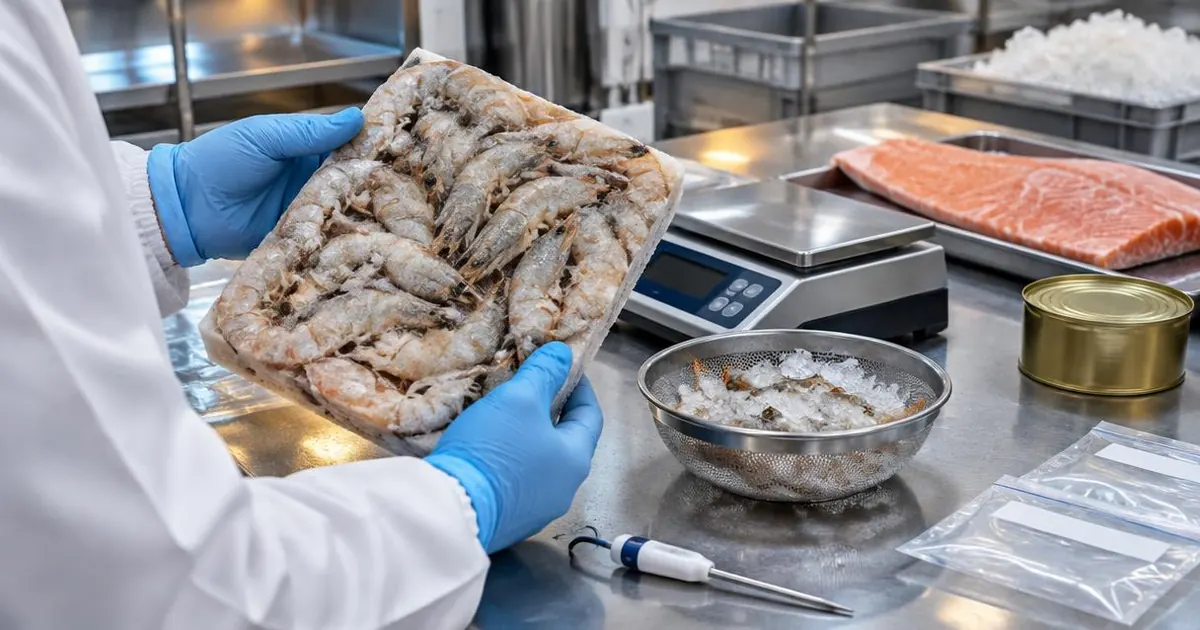
- Shrimp presentation: head-on shell-on, headless shell-on or peeled, raw or cooked. Europe imports whiteleg shrimp mainly frozen in these forms; black tiger shrimp is a premium niche that arrives mostly as packed final products.
- Salmon: the trim level is separate from the cut (fillet, loin, portion). Trim A removes backbone and belly bones; B also the back fin, collarbone and belly fat; C also the pin bones; D also the belly fins, tailpiece and membrane, with back and nape trimmed; E removes the skin. State the freezing history, size band and net-weight basis.
- Tilapia: European buyers generally prefer skinless, boneless, well-trimmed fillets. Ask whether carbon monoxide treatment is used. It makes the flesh redder but does not make it fresher, and the US FDA advises that colour alone cannot show freshness.
- Seabass: size bands such as 200/300 g up to 1,000 g and above are set by suppliers, not by law, so define the band you want.
Net weight, glaze and added water
The US FDA treats including the ice glaze in the declared net weight of frozen seafood as a fraudulent practice. In the EU, water added above 5% must be named in the product name and the ingredients list, which is a separate matter from the external glaze.
A 10–15% glaze is described as normal commercial practice for frozen tilapia, but that is a trade custom, not a legal maximum. We found no universal legal maximum glaze for shrimp. Write the glaze percentage, the net-weight basis and the deglazing test method into the contract.
Additives: sulphite limits on shrimp in the EU
Sulphites stop shrimp from blackening. The EU sets maximum levels by size class. The values below come from a dated 2018 snapshot of the EU food-additives regulation and a 2021 EU Market Advisory Council paper. Check the current consolidated text and the destination's labelling rules before you contract.
| Product and size class | Maximum level (mg/kg) | Source |
|---|---|---|
| Raw shrimp, up to 80 pieces per kg | 150 | Regulation (EC) 1333/2008, Annex II (2018 snapshot) |
| Raw shrimp, 80–120 pieces per kg | 200 | Regulation (EC) 1333/2008, Annex II (2018 snapshot) |
| Raw shrimp, more than 120 pieces per kg | 300 | Regulation (EC) 1333/2008, Annex II (2018 snapshot) |
| Cooked shrimp, three size classes | 135 / 180 / 270 | EU Market Advisory Council (2021) |
Veterinary-drug residues and the 2026 EU antimicrobial rule
United States: chloramphenicol is not approved for food animals. Under FDA Import Alert 16-127, shipments from listed firms can be detained without physical examination, and release requires evidence that the product does not contain it. Shrimp with nitrofuran or chloramphenicol residues are adulterated, and importers may submit private laboratory results. Related alerts cover unapproved drugs in aquaculture seafood (16-124) and processors that do not comply with seafood HACCP rules (16-120).
European Union: farmed shrimp can only be exported to the EU from countries with an approved residue-monitoring plan. Since 3 September 2026, animals and animal products exported to the EU must also meet the antimicrobial restrictions of Article 118 of Regulation (EU) 2019/6 for the animals' whole lives. In practice this means no antimicrobials to promote growth or increase yield, and none of the antimicrobials reserved for human medicine.
Ask the producer for treatment records covering the whole grow-out, results from an accredited laboratory for each lot listing every substance tested and its detection limit, and confirmation of the country's residue-plan status.
Market access in 2026: registration, certificates and border checks
Check the destination's conditions for the exact product, origin and establishment before signing. If an official source is unclear, treat the item as "regulatory review required" and get qualified advice.
| Market | What must be in place | 2026 change | Official source |
|---|---|---|---|
| European Union | Authorised country and listed establishment, official health certificate, and the consignment pre-notified on CHED-P in TRACES (the operator completes Part I, the border post Part II) | Article 118 antimicrobial conditions apply from 3 September 2026 | European Commission, DG SANTE |
| China | Overseas establishment registered with the customs authority (GACC), with the registration number on the packaging; aquatic products, including overseas cold stores, are registered on official recommendation | Decree 280 applies from 1 June 2026 with five-year registration; Announcement 27 of 2026 confirms the aquatic-products route | General Administration of Customs of China |
| United States | Seafood HACCP compliance, import alerts on drug residues, and NOAA marine-mammal comparability findings for the fishery the product comes from | From 1 January 2026, products from fisheries denied comparability findings are prohibited | US FDA; NOAA Fisheries |
Caviar and other CITES-listed products
CITES lists most sturgeon species in Appendix II, while Acipenser sturio and A. brevirostrum are in Appendix I. Every caviar container in international and domestic trade, including repackaged caviar, needs a label under the CITES universal labelling system, which EU law has made compulsory. Personal allowances for travellers, such as Spain's 125 g per person, do not cover company shipments. A 2025 CITES paper looked at adding QR codes to labels; this is not yet a requirement.
Pre-shipment checklist
Use this list before each contract and each shipment.
- Specification signed by both sides: species, presentation, count unit, glaze, net-weight basis and additives.
- Establishment listing or registration confirmed for the destination, including the registration number on the packaging for China.
- Draft health certificate checked against the destination's model certificate.
- Laboratory results for each lot from an accredited laboratory, plus treatment records for the whole grow-out.
- Agreed deglazing and net-weight test method, and an independent pre-shipment inspection chosen by the buyer.
- Temperature logging from freezing to delivery and a clear hand-over point at each stage of the cold chain.
- CITES labels and permits for caviar; documents that match the commercial invoice and packing list.
What FishMatch Group does and does not do
FishMatch Group helps buyers write the specification, puts the same request to suitable producers and exporters and coordinates the commercial conversation through its staff. It does not import, export, inspect, test or certify products, it does not hold stock, and it does not guarantee quality, compliance or delivery. The producer or exporter is responsible for meeting the destination's rules. Regulations change, so confirm the current official texts before every contract.
Questions about seafood import quality
Can glaze be included in the net weight of frozen shrimp?
Not in the United States: the FDA treats it as a fraudulent practice. In the EU, added water above 5% must be declared. Always state the net weight excluding glaze and the test method in the contract.
What sulphite level is allowed on shrimp in the EU?
A dated snapshot of the EU additives regulation sets 150, 200 and 300 mg/kg for raw shrimp by size class, and an EU advisory paper cites 135, 180 and 270 mg/kg for cooked shrimp. Check the current consolidated text before contracting.
What changed for seafood exports to China in 2026?
GACC Decree 280 applies from 1 June 2026. Overseas food establishments must register, registrations last five years, and packaging must show the registration number. Announcement 27 of 2026 keeps aquatic products, including overseas cold stores, under registration on official recommendation.
What is the EU Article 118 antimicrobial rule?
Since 3 September 2026, animals and animal products exported to the EU must come from animals never given antimicrobials to promote growth or increase yield, nor antimicrobials reserved for human medicine.
Do I need CITES documents to import caviar?
Yes, for commercial shipments. Most sturgeon species are listed under CITES, and every caviar container needs a CITES universal label, including repackaged caviar. Personal traveller allowances do not apply to company shipments.
Sources (checked 24 October 2026)
- US FDA: Guidance on including glaze as part of the weight of frozen seafood
- CBI (2019): Increased focus on mislabelling of added water in seafood
- CBI (2018): Tilapia in Europe
- Regulation (EC) 1333/2008, Annex II (2018 snapshot)
- EU Market Advisory Council (2021): Sulphite levels for crustaceans
- US FDA: Import Alert 16-127 (chloramphenicol)
- US FDA: Import alerts for fishery and seafood products
- European Commission: EU antimicrobial rules for imports of animals and animal products
- European Commission: TRACES modules
- European Commission: Import controls for food and feed, questions and answers
- GACC Decree 280 (2025, effective 1 June 2026)
- GACC Announcement No. 27 of 2026
- NOAA Fisheries: Seafood import prohibitions under the Marine Mammal Protection Act
- CITES: Universal caviar labelling requirements
- CBI: Pacific white shrimp, market entry requirements for Europe
- US FDA: Selecting and serving fresh and frozen seafood safely