Whiteleg shrimp: buyer guide
Penaeus vannamei · Also published as Litopenaeus vannamei. · Also called Pacific white shrimp, vannamei
Reviewed
Short answer
Whiteleg shrimp (Penaeus vannamei) is usually traded as Frozen head-on (HOSO), Frozen headless (HLSO), Peeled. Best fit: Buyers who need a widely traded farmed shrimp in standard counts and forms, from head-on frozen to value-added lines.
A penaeid shrimp whose colour is normally translucent white. FAO notes a maximum size of about 23 cm, with females commonly growing faster and larger than males.
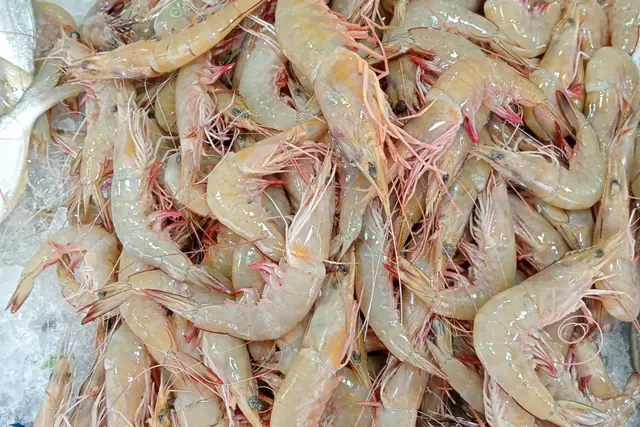
- Traded product forms
- Frozen head-on (HOSO)
- Frozen headless (HLSO)
- Peeled
- Value-added (ready-to-cook or ready-to-eat)
- Size, count and grade conventions
- Processing plants sort shrimp into standard export sizes, usually stated as a count per pound or per kilogram. Ask for the count range, its unit and whether it applies before or after glazing.
- Processing and handling
- FAO describes shrimp being washed, weighed and killed in iced water at 0–4 °C, often with a sulphite (sodium metabisulphite) added to prevent melanosis, then sorted, quickly frozen and stored at about −20 °C for export.
- Storage and logistics
- Shipped frozen by sea or air. Agree the product temperature, how it is recorded from loading to delivery, and the glaze and net-weight basis.
- Seasonality
- Not stated as a fixed season in the cited source. FAO notes partial harvests are common in intensive farms; ask each producer for its harvest calendar.
- Typical applications
- FAO notes a shift from plain frozen products towards value-added products for home cooking.
Strengths
- Traded in many forms, from head-on frozen to value-added
- Standard export size grading makes like-for-like comparison easier
Trade-offs
- Sulphite use during handling may need declaring on the label in your market; ask whether it is used
- Counts and glaze vary by producer, so prices are only comparable on the same basis
Best fit: Buyers who need a widely traded farmed shrimp in standard counts and forms, from head-on frozen to value-added lines.
Questions to include in your RFQ
- Species and scientific name
- Product form and count range, with unit and glazing basis
- Freezing method (IQF or block) and glaze percentage
- Sulphite or other additive use
- Packing, labelling and net-weight basis
- Volume per shipment, frequency and delivery window
- Destination and the documents your market requires
Production method (farmed or wild), origin and any certification must be stated and documented by the supplier for your lot.
Request Whiteleg shrimp through FishMatchOr start a request for one product form:
Common buyer questions
Related guides
Farming this species
Aquaculture planning and equipment, separate from buying the food product.
Every listing is an anonymous capability summary a producer, processor or exporter submitted and our team reviewed. Details are as stated by the supplier: they are not stock, price, quality or availability commitments, and FishMatch does not verify species, origin, production method or certifications. Requests go through FishMatch; buyers and suppliers are not put in direct contact. Managed seafood sourcing is free for buyers, for annual or seasonal programmes of USD 250,000 or more.
FishMatch Group and the other Global B2B Group platforms are committed to conducting their own activities in accordance with applicable laws and regulations. FishMatch facilitates sourcing and RFQs; it does not manufacture, process, export or sell the listed products and does not grant regulatory approval. Requirements differ by product and by origin, destination and transit country. As buyer or importer, you remain responsible for your own import permissions, local requirements and due diligence. This notice does not change anyone's legal duties and is not legal advice. Regulation & responsibilities