Aquaculture Equipment Specification & Quote Guide for Pakistan
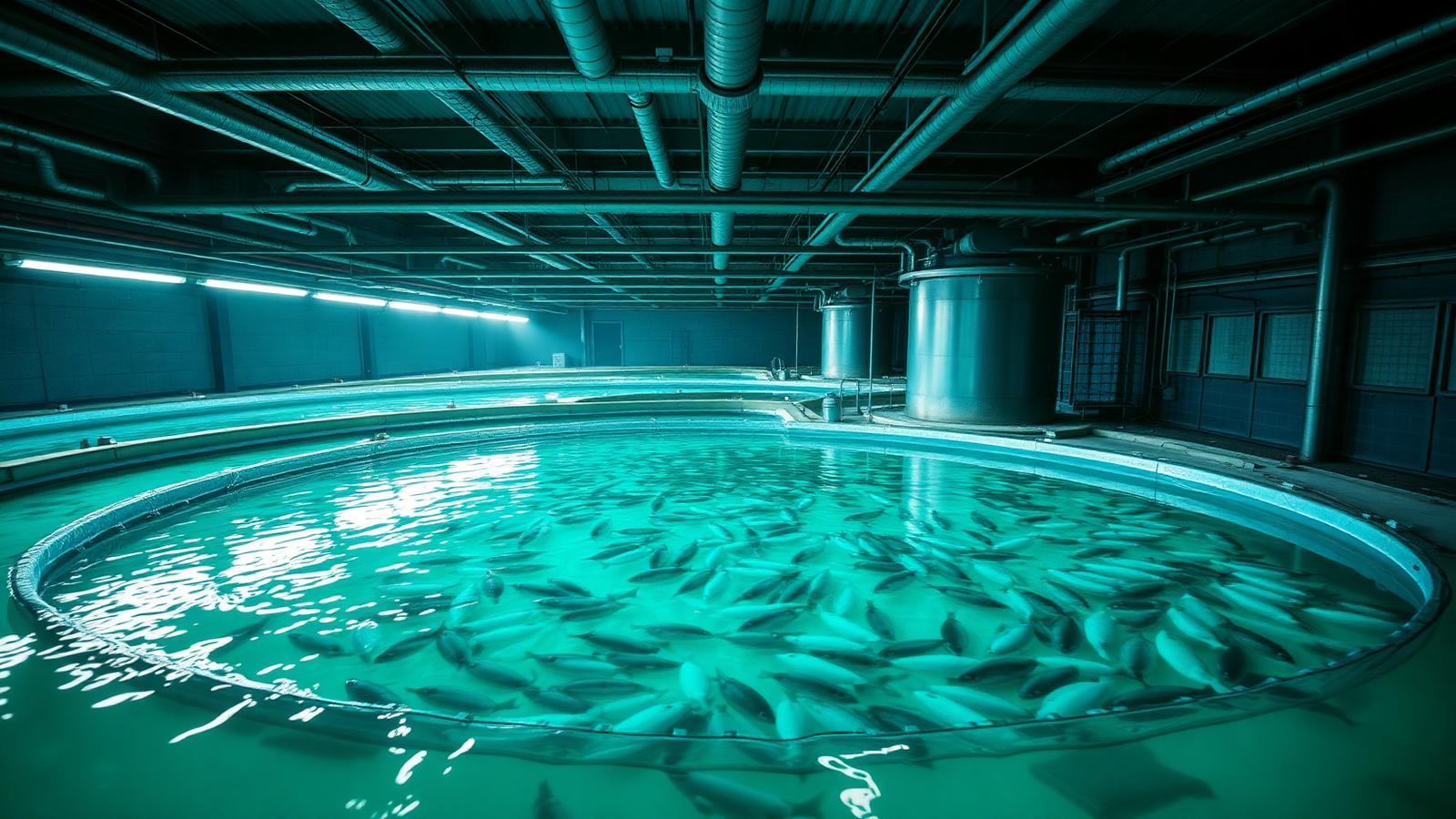
Short answer: To effectively specify and compare aquaculture equipment quotes in Pakistan, create detailed technical specifications for each item, group them into logical tender lots (e.g., aeration, pumping), and request pricing based on a single Incoterm to calculate the true landed cost. Use a comparison matrix to evaluate quotes on technical merits, warranty, and total cost, not just the initial price.
1. The Aquaculture Opportunity in Pakistan
Pakistan's aquaculture sector is a key component of its fisheries industry. The country's total fish production was 666,000 tonnes in 2022, with aquaculture complementing significant marine and inland capture fisheries along its 1,046 km coastline, as reported by fao.org. The dominant farmed species are freshwater carps, including rohu, mrigal, and various others, according to FAO GLOBEFISH. Furthermore, new opportunities are being explored; an FAO project (TCP/PAK/3710) has investigated the feasibility of shrimp and fish farming in saline areas of Punjab, Sindh, and Balochistan. This guide helps prospective investors and farm operators in Pakistan navigate the critical process of equipment procurement, from specification to quote comparison.
2. Structuring Your Tender: Equipment Lots
For a new farm or expansion project, it is rarely efficient to tender for 'all equipment' in a single request. Breaking the project into logical equipment packages, or 'lots', allows you to receive more competitive and specialised bids. It also simplifies the comparison process. Consider structuring your tender around the following lots:
- Earthworks & Civil Works: Pond and reservoir construction, building foundations. Often sourced from local contractors.
- Pond/Tank Liners & Geosynthetics: HDPE, LLDPE, or PVC liners, and geotextiles.
- Pumps, Pipes, Valves & Filtration: Main intake pumps, transfer pumps, distribution pipework, and mechanical or biological filters.
- Aeration & Oxygenation: Diffusers, airlines, blowers, paddlewheel aerators, or oxygen generators.
- Power & Electrical Systems: Generators, transformers, control panels, and cabling.
- Feed & Husbandry: Automatic feeders, feed storage, grading equipment, and nets.
- Harvesting Equipment: Fish pumps, cranes, and transport tanks.
- Monitoring & Lab Equipment: Water quality sensors (probes for DO, pH, temperature), lab instruments, and microscopes.
3. Writing an Effective Equipment Specification
A clear Request for Quotation (RFQ) document with precise technical specifications is the foundation of successful procurement. A weak specification leads to weak, incomparable quotes. For each major piece of equipment, your specification must clearly state:
- Design Basis: The context for the equipment. For example: "Aeration system for a 5-hectare shrimp pond in Sindh, with a target stocking density of 30 PL/m² and target production of 8 tonnes/hectare."
- Capacity & Performance: Use clear metrics. For a pump, specify 'flow rate (m³/hr) at a given head pressure (bar or meters)'. For an aerator, specify 'Standard Oxygen Transfer Rate (kg O₂/hour)'.
- Materials of Construction: This is critical for equipment longevity, especially in Pakistan's high-temperature, high-UV climate, or in saline water. Be specific, e.g., 'Pump impeller must be 316L stainless steel', 'All outdoor plastic components must be UV-stabilized'.
- Power & Utilities: Specify voltage, phase, and frequency requirements (e.g., 400V, 3-Phase, 50Hz). Request data on energy consumption (kW or kWh/day).
- Scope of Supply: Clearly state what should be included: main unit, required controllers, essential accessories, etc.
- Spares: Request a priced list of recommended spare parts for two years of operation.
- Warranty: Ask suppliers to state their warranty period, what it covers (parts, labour), and the claim process.
- Services: Specify if you require on-site supervision for installation, commissioning, and staff training, and ask for these to be quoted separately.
4. Normalising Quotes for Landed Cost in Pakistan
Comparing a quote for equipment Ex-Works (EXW) from a factory in Europe with a Cost and Freight (CFR) quote to Karachi Port is a common mistake. You must normalise all offers to a single basis to understand the true total cost. For more details, see our guide on Incoterms for aquaculture.
1. Standardise the Incoterm: In your RFQ, ask all suppliers to quote on the same basis. For international shipments, CFR or CIF (Cost, Insurance, and Freight) to a named port like Karachi or Port Qasim is common. For a complete picture, you could request DDP (Delivered Duty Paid) to your farm site, which puts the responsibility for customs clearance and inland transport on the seller. 2. Calculate the Landed Cost: If suppliers quote different Incoterms, you must build a landed cost model. This involves adding all costs to the factory price:
* Export packaging and handling * Ocean/air freight to Pakistan * Marine/air insurance * Pakistan customs duties, taxes, and fees (consult a local customs broker for accurate rates) * Port handling charges in Karachi or Port Qasim * Inland transportation to your final project site.
3. Currency: Note the currency of the quote and consider potential fluctuation against the Pakistani Rupee (PKR).
5. Using a Quote Comparison Matrix
Once you receive quotes, organise the information in a comparison matrix. This transforms complex documents into a clear, side-by-side format for objective decision-making. Your matrix should compare both technical and commercial aspects.
| Feature | Supplier A Offer | Supplier B Offer | Supplier C Offer |
|---|---|---|---|
| Technical Comparison | |||
| Item | Paddlewheel Aerator | Paddlewheel Aerator | Paddlewheel Aerator |
| Model | PW-2HP | Super-Aero 2.0 | Aqua-Mover 1500 |
| Motor Power (kW) | 1.5 kW | 1.5 kW | 1.8 kW (Higher consumption) |
| Impeller Material | Reinforced Nylon | SS304 | Reinforced Nylon |
| Warranty | 12 months | 24 months | 12 months |
| Commercial Comparison | |||
| Unit Price (USD) | $450 | $520 | $440 |
| Incoterm Quoted | FOB Shanghai Port | CFR Karachi Port | EXW Factory |
| Landed Cost (USD, Your Calc.) | $585 | $610 | $625 |
| Lead Time | 6 weeks | 8 weeks | 4 weeks |
Note: All prices and values in this table are for illustration only and must be replaced with your own data.
6. Red Flags in Equipment Quotations
Be vigilant for signs that a quote may not represent the best value or may lead to future problems:
- Vague Descriptions: Terms like "high-quality pump" or "standard aerator" are meaningless. A professional quote will have model numbers and detailed technical datasheets.
- Missing Key Information: A quote that omits power consumption, materials of construction, or warranty details is incomplete.
- Unusually Low Price: A price far below competitors may indicate undersized equipment, inferior materials (e.g., standard steel instead of stainless in a saline application), or hidden future costs.
- No Mention of Spares: A supplier who cannot or will not provide a two-year operational spares list may not be able to support you post-sale.
- Refusal to Quote Services: If commissioning and training are critical, a supplier's unwillingness to quote them is a major red flag.
7. Budgeting Tools & Further Reading
Before you even issue an RFQ, it is essential to have a realistic budget. Our free, interactive calculators provide excellent starting points for planning your Pakistan-based project. Remember to adjust the pre-filled values to match your specific project details.
- Estimate high-level project costs with the Pond farm CAPEX estimator.
- Understand how mortality impacts your bottom line with the Survival vs profit tool.
- Model your production economics with our calculator for Shrimp cost per kg.
For broader context on project development in Pakistan, see our related guides on overall procurement, project feasibility and finance, and planning for inland saline aquaculture.
8. The Advantage of an Independent Buyer-Side Review
Comparing complex technical equipment from multiple global suppliers is challenging. Each supplier presents their solution as the best, using their own terminology and metrics. An independent, buyer-side review process helps cut through the sales language.
By creating a standardized specification and comparison matrix, you force all potential suppliers onto a level playing field, evaluated against your project's unique needs—not their marketing priorities. This supplier-neutral approach ensures you are comparing technical function, build quality, and true landed cost, leading to a more informed and value-driven procurement decision. It protects you from becoming locked into a single supplier's proprietary system without first exploring all suitable alternatives.
9. Sources
- FAO Fishery and Aquaculture Country Profile for Pakistan — provided 2022 total production (666,000 tonnes), marine/inland capture breakdown, and coastline length (1,046 km) (fao.org, Dec 2024 brief).
- FAO GLOBEFISH Market Profile 2023 — identified top aquaculture species by volume, including rohu, mrigal, grass carp, silver carp and catla.
- FAO Project TCP/PAK/3710 — detailed the feasibility study into saline aquaculture in Punjab, Sindh, and Balochistan (FAO openknowledge, 2019-2021).
- Pakistan Fisheries Development Board — noted as a key federal-level entity working with provincial fisheries departments.
FishMatch Group is a buyer-side, supplier-neutral sourcing service. Our tools are free for all users, and a person reviews every project brief before any suppliers are contacted to ensure it is clear and complete. Supplier names are never shown to buyers. For qualified projects with a budget of approximately USD 250,000 or more, we offer a managed sourcing service to streamline your procurement. FishMatch is not an engineer, contractor, lender, or certifier; please confirm all permit, design, and financial matters with qualified local professionals. To start your equipment sourcing process, submit your project requirements through our human-reviewed intake form: Start Your RFQ for Pakistan.
Frequently asked questions
Key figures
| Figure | Value | Context |
|---|---|---|
| Size / capacity | 666,000 tonnes | The country's total fish production was 666,000 tonnes in 2022, with aquaculture complementing significant marine and inland capture fisheries along its 1,046 km coastline, as reported by fao. |
| Size / capacity | 8 tonnes | For example: "Aeration system for a 5-hectare shrimp pond in Sindh, with a target stocking density of 30 PL/m² and target production of 8 tonnes/hectare. |
| Size / capacity | 5 kW | 5 kW | 1. |
| Cost | $450; $520; $440 | 8 kW (Higher consumption) | | Impeller Material | Reinforced Nylon | SS304 | Reinforced Nylon | | Warranty | 12 months | 24 months | 12 months | | Commercial Comparison | | | | | Unit Price (USD)… |
| Cost | $585; $610; $625 | ) | $585 | $610 | $625 | | Lead Time | 6 weeks | 8 weeks | 4 weeks | |
| Cost | USD 250,000 | For qualified projects with a budget of approximately USD 250,000 or more, we offer a managed sourcing service to streamline your procurement. |
Related articles
Where this fits in a real project
Every FishMatch project runs through the same five reviewed stages, from a first enquiry to comparable quotations. See the full buyer journey.
Planning a commercial aquaculture project?
Send your project brief. A FishMatch specialist reviews it before relevant suppliers are contacted privately.
Request a quote