Whiteleg Shrimp Farming in Pakistan: A Project Planning Guide
Short answer: Planning a successful commercial whiteleg shrimp (Penaeus vannamei) project in Pakistan requires rigorous site validation, especially for water quality. Key steps include detailed analysis of water salinity and ionic composition, designing biosecure lined ponds with adequate aeration, securing a reliable supply of high-health post-larvae (PLs), and implementing a pilot phase before committing to full-scale investment.
1. Introduction to Shrimp Farming in Pakistan
While Pakistan's aquaculture has traditionally focused on freshwater carp species like rohu and mrigal, according to the FAO GLOBEFISH 2023 market profile, there is growing interest in diversifying into higher-value species. Whiteleg shrimp farming represents a significant opportunity, particularly in coastal areas and inland regions with saline groundwater. Recognizing this, an FAO project (TCP/PAK/3710, 2019-2021) specifically investigated the feasibility of new shrimp species in the saline areas of Punjab, Sindh, and Balochistan.
Pakistan's total fish production was 666,000 tonnes in 2022, with a coastline of 1,046 km, as reported by the FAO in December 2024. These geographic features, combined with saline inland resources, provide a strong foundation for developing a shrimp aquaculture sector. This guide outlines the critical planning steps for prospective investors and project managers.
2. Site Selection: The Critical Role of Water Analysis
Your most important initial investment is in comprehensive water testing. This is especially true for inland saline sites. While brackish water is suitable for P. vannamei, not all saline water is created equal. Beyond total salinity (measured in parts per thousand, ppt), the ionic composition of the water is critical for shrimp health and survival. Shrimp actively regulate their internal salt balance (osmoregulation), which depends on specific ratios of key ions in the external environment.
Before any other investment, send multiple water samples from your proposed source to a qualified laboratory for a full ionic profile analysis. Key ions to test for include Sodium (Na+), Potassium (K+), Magnesium (Mg2+), Calcium (Ca2+), Chloride (Cl-), and Sulfate (SO4^2-). A significant imbalance compared to natural seawater can lead to chronic stress, poor growth, and mass mortality, even if the overall salinity is in the target range (typically 10-25 ppt).
| Ion | Typical Seawater Ratio (to Salinity) | Illustrative Inland Saline Water Ratio (Example Only) | Potential Implication of Imbalance |
|---|---|---|---|
| Potassium (K+) | ~1.1% | 0.5% | Critical for osmoregulation; deficiency can be fatal. |
| Magnesium (Mg2+) | ~3.7% | 2.0% | Important for molting and enzyme function. |
| Calcium (Ca2+) | ~1.2% | 2.5% | Imbalances with Mg/K can affect molting and survival. |
The values in the table above are illustrative planning assumptions. You must replace them with certified lab results from your own site. If your water source is deficient in key ions like potassium or magnesium, you must budget for mineral additives to amend the water, which can be a significant operational cost.
3. Pond Design and Construction
Modern semi-intensive or intensive shrimp farming requires engineered ponds that prioritize biosecurity and water control. While traditional earthen ponds are cheaper to construct, they pose significant risks.
Lined Ponds: High-density polyethylene (HDPE) liners are the industry standard for commercial shrimp farming. Benefits include:
- Water Conservation: Prevents seepage, which is crucial in arid regions and for managing water chemistry.
- Biosecurity: Creates a barrier against soil-borne pathogens and unwanted species.
- Improved Harvest: Provides a smooth, clean surface that simplifies harvesting and reduces stress on the shrimp.
- Waste Management: Allows for more effective sludge removal from the center of the pond.
Pond design typically trends towards square or circular shapes for better water circulation. Depths usually range from 1.2 to 1.8 meters. The higher initial capital expenditure for lined ponds is an investment in risk reduction and operational efficiency.
4. Aeration and Water Movement
Stocking shrimp at commercial densities requires mechanical aeration to maintain sufficient dissolved oxygen (DO) levels, especially during the night when oxygen is not produced by phytoplankton. A lack of oxygen is a primary cause of emergency harvests and crop failure.
Common aeration equipment includes:
- Paddlewheel Aerators: The most common type, effective at surface aeration and creating a current.
- Aspirator-Type Aerators: Inject air and create strong directional flow.
- Diffused Aeration Systems: Use blowers to pump air through fine-pore diffusers on the pond bottom, providing efficient oxygen transfer.
Your aeration strategy will depend on your target stocking density, pond design, energy costs, and capital budget. A well-designed system not only provides oxygen but also helps concentrate waste in the center of the pond for easier removal.
5. Securing a High-Health Post-Larvae (PL) Supply
The single most important input for your farm is healthy, disease-free juvenile shrimp, known as post-larvae (PLs). Starting with weak or infected PLs makes a successful harvest nearly impossible. You must source from a reputable hatchery that can provide Specific-Pathogen-Free (SPF) or Specific-Pathogen-Resistant (SPR) stock. This means the parent stock (broodstock) and the larvae have been tested and found free of major shrimp viruses like WSSV (White Spot Syndrome Virus).
Key considerations include:
- Supplier Diligence: Identify potential hatchery suppliers early in your planning.
- Logistics: Plan for the transportation of PLs from the hatchery to your farm. This is a delicate process requiring controlled temperature and oxygen to minimize stress.
- Acclimation: PLs must be slowly and carefully acclimated to your farm's specific water temperature and chemistry upon arrival. A rushed acclimation process can cause significant mortality.
6. Biosecurity as a Core Operational Principle
Biosecurity is not a checklist; it is a management mindset focused on preventing the introduction and spread of disease. A disease outbreak can wipe out an entire crop. A robust biosecurity plan is essential and should be designed into the farm from the start. For a detailed overview, see our guide on Biosecurity, Zoning and HACCP in Commercial Aquaculture.
Core components include:
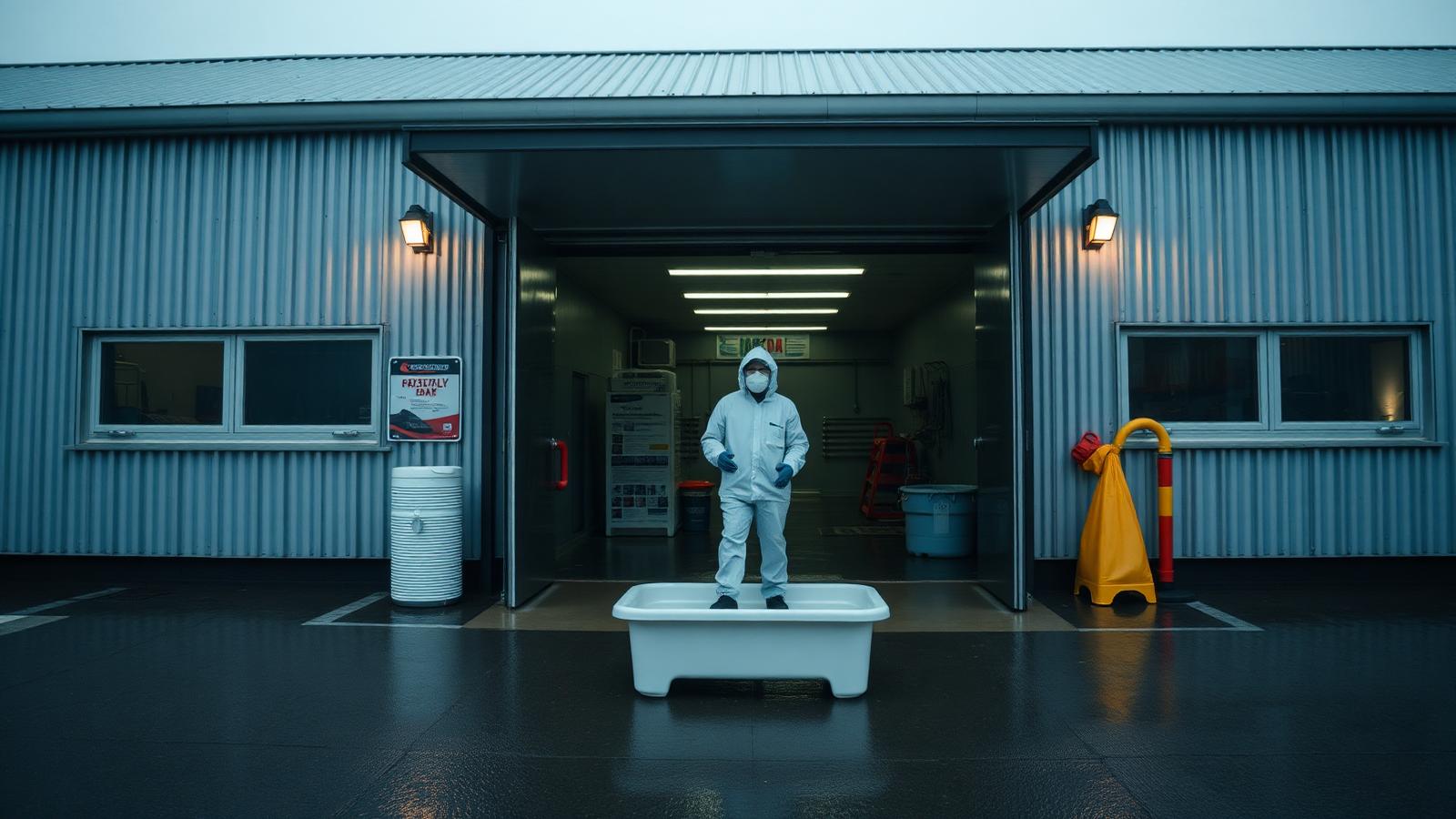
- Site Perimeter: Fencing, controlled entry points, and vehicle disinfection stations.
- Exclusion: Bird netting over ponds and crab fencing around them.
- Sanitation: Footbaths and hand-wash stations at the entrance to all production areas.
- Dedicated Equipment: Using separate nets, feeders, and tools for each pond to prevent cross-contamination.
- Water Treatment: Filtering and/or disinfecting all incoming water.
7. Pilot-Before-Scale: The Smartest Investment
Before investing in a 20-hectare farm, build a 1-hectare pilot project. A pilot phase of 2-4 ponds allows you to test all your assumptions in a real-world, lower-risk setting. This small-scale operation will:
- Validate your water source and any required amendments.
- Refine your pond management and feeding protocols.
- Train your technical staff and farm labor.
- Establish relationships with feed and PL suppliers.
- Generate actual performance data (growth rates, survival, FCR) to build a credible financial model for expansion.
The cost of a pilot project is a fraction of a full-scale buildout, and the lessons learned are invaluable for de-risking the larger investment.
8. Planning for Costs, Feasibility and Profitability
Developing a realistic budget and financial model is a key part of your business plan. FishMatch provides several free tools pre-filled with illustrative starting points for Pakistan that you must edit with your own project data and supplier quotes.
- Capital Expenditures (CAPEX): Use the Pond Farm CAPEX Estimator to budget for land preparation, pond construction, and buildings. The Pond Equipment Budget Calculator helps plan for machinery like aerators, pumps, and generators.
- Operational Expenditures (OPEX): Feed is the largest single operational cost. Model your needs with the Feed Budget Calculator. You can combine all costs to estimate your Shrimp Cost per kg.
- Profit Drivers: Survival rate is a key determinant of profitability. Explore different scenarios with the Survival vs. Profit Calculator. Our guide to Pakistan Fish Farm Feasibility, CAPEX & OPEX provides more detail on financial planning.
9. Navigating the Regulatory and Procurement Landscape
Aquaculture in Pakistan is primarily managed by provincial fisheries departments in Punjab, Sindh, and Balochistan, with the federal Fisheries Development Board playing a coordinating role. You must consult with these authorities to understand the full permitting process for site approval, water extraction, and environmental discharge. Legal and environmental consultants with local experience are critical to this process.
For procurement, major equipment may need to be imported via sea ports like Karachi and Port Qasim. Understanding procurement best practices is essential. For more information, refer to our guides on Pakistan Aquaculture Procurement and how to Specify Equipment and Compare Quotes.
Sources
- FAO Fishery and Aquaculture Country Profile: Pakistan — Stated total fish production for 2022 and coastline length. (fao.org, Dec 2024)
- FAO GLOBEFISH Market Profile: Pakistan — Identified top aquaculture species by volume. (FAO GLOBEFISH, 2023)
- FAO Project TCP/PAK/3710 Report Summary — Described the feasibility study for new species in saline areas of Punjab, Sindh and Balochistan. (FAO Open Knowledge, 2021)
- FAO WAPI factsheet "Aquaculture growth potential in Pakistan" — Noted growth potential. (FAO, planned March 2026)
FishMatch Group is a buyer-side, supplier-neutral sourcing service for commercial aquaculture projects. We are not engineers, lenders, or certifiers; our role is to help you define your project requirements and connect with the global supply chain. A person reviews every project brief before any suppliers are approached, and supplier names are never shown to buyers. Our online tools are free to use, while our managed sourcing service is designed for qualified projects with budgets starting from approximately USD 250,000. When you are ready to gather quotes for equipment or supplies, you can start your human-reviewed RFQ here.
Frequently asked questions
Key figures
| Figure | Value | Context |
|---|---|---|
| Size / capacity | 666,000 tonnes | Pakistan's total fish production was 666,000 tonnes in 2022, with a coastline of 1,046 km, as reported by the FAO in December 2024. |
| Performance | 10-25 ppt | A significant imbalance compared to natural seawater can lead to chronic stress, poor growth, and mass mortality, even if the overall salinity is in the target range (typically 10-25 ppt). |
| Performance | 1% | 1% | 0. |
| Performance | 5% | 5% | Critical for osmoregulation; deficiency can be fatal. |
| Performance | 7% | 7% | 2. |
| Performance | 0% | 0% | Important for molting and enzyme function. |
| Performance | 2% | 2% | 2. |
| Cost | USD 250,000. | Our online tools are free to use, while our managed sourcing service is designed for qualified projects with budgets starting from approximately USD 250,000. |
Related articles
Where this fits in a real project
Every FishMatch project runs through the same five reviewed stages, from a first enquiry to comparable quotations. See the full buyer journey.
Planning a commercial aquaculture project?
Send your project brief. A FishMatch specialist reviews it before relevant suppliers are contacted privately.
Request a quote