How to Reach a Stable First Harvest Faster: Fish and Shrimp Project Ramp-Up
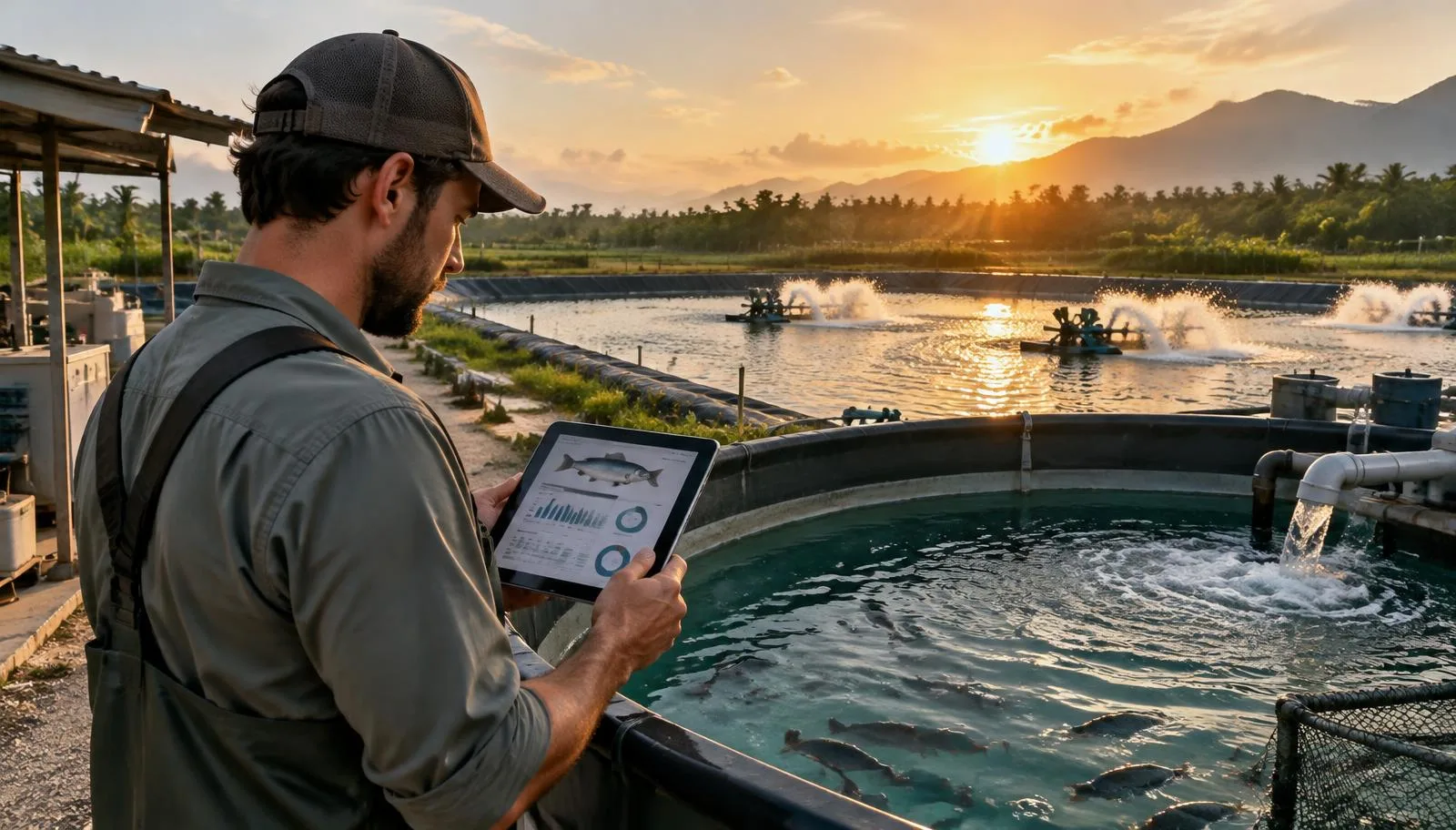
Short answer: fish and shrimp projects reach a stable first harvest faster when the slow decisions are taken early and in parallel — site and water data, permits, the production system, seed and feed supply, and the operating team — and when the first cycle is run as a measured ramp-up rather than a full-scale launch. Speed comes from fewer restarts, not from skipping steps.
Editorial note: practical guide by the FishMatch Group editorial team, reviewed 14 October 2026, for farm managers, entrepreneurs and project planners. It is not veterinary, engineering or financial advice, gives no universal stocking densities, water thresholds or timelines, and promises no yield, survival, speed or profit. Operating values for your farm should come from a qualified local specialist and your own measurements.
Key takeaways
- Most delays come from rework: a site that was not measured, a design changed after quotes, or seed that was not secured.
- Run long-lead items in parallel: permits, power, seed contracts and staff hiring can start before equipment is ordered.
- Treat the first cycle as a pilot of your own procedures, with fewer units stocked and more measurements taken.
- Decide in advance what results allow you to scale, and what results mean you stop and investigate.
- Records from the first cycle are what make the second cycle faster.
Why do aquaculture projects take longer than planned?
Projects rarely slow down because a pump arrives late. They slow down because a decision made early turns out to be wrong. FAO's shrimp-culture manual treats site selection as the foundation for everything that follows — water supply and quality, soil, topography, climate, access, power and legal status (FAO — Shrimp Culture: Pond Design, Operation and Management, site selection). When one of these is discovered late, the design, the quotes and the budget all have to be redone. The same is true for fish farms: a borehole that cannot deliver the planned flow, or a grid connection that is weaker than assumed, can reset months of work.
Typical causes of avoidable delay are: no seasonal water data, a production target that was never written down, equipment chosen before the system, seed or fingerling supply left until construction ends, and an operating team hired after commissioning instead of before it. For a full phase-by-phase view, see the aquaculture project timeline guide.
What can you run in parallel?
Once the site, species and system are fixed, several workstreams can move at the same time instead of one after another:
| Workstream | Start when | Why it saves time |
|---|---|---|
| Permits and environmental approvals | Site and outline design are fixed | Approval times are outside your control |
| Power, water intake and access works | Site is secured | Civil works often take longer than equipment delivery |
| Seed or fingerling supply agreement | Species, system and first stocking window are known | Good postlarvae and fingerlings are booked in advance |
| Feed supply and storage | Species and expected feed volumes are estimated | Avoids a first cycle on whatever feed is available |
| Key staff hiring and training | Before installation | Staff learn the systems while they are being built |
| Equipment quotes | Written brief and drawings are ready | Comparable quotes need one scope |
Parallel work only helps when every team works from the same written brief. Changing species, capacity or system after quotes arrive is the single most expensive way to lose time.
How should you run the first cycle?
Run the first production cycle as a ramp-up, not a launch. In practice this means stocking part of the farm first, checking water and stock behaviour more often than you will later, and writing down every procedure as it is actually done. FAO's grow-out guidance describes routine early-morning checks of condition and behaviour together with regular stock sampling (FAO — Shrimp Culture: Pond Design, Operation and Management, grow-out). Those records are what let you adjust feeding, aeration and staffing for the rest of the farm.
### A simple ramp-up sequence
1. Commission and test equipment without stock, including alarms and backup power. See commissioning and handover. 2. For RAS, allow the biofilter time to establish before full stocking — see why new RAS farms need biofilter start-up time. 3. Stock the first units from a documented seed source, with an agreed receiving and acclimation procedure. 4. Record water readings, feed use, growth samples and daily mortality from day one. 5. Review results with your specialist at agreed points before stocking the next units.
What does a successful first cycle look like?
Success in the first cycle is not a record harvest. It is a cycle where the team followed the procedures, the equipment behaved as specified, problems were noticed early and the records are complete enough to explain what happened. Define these review points before stocking:
- Water quality stayed inside the ranges your specialist set for your species and system.
- Feeding was adjusted from observed consumption and samples, not a fixed table.
- Mortality was counted daily, and any unusual increase was investigated.
- Equipment faults and alarms were logged with response times.
- Costs per unit of feed, energy and labour were recorded, so the business plan can be checked against reality.
Shrimp and fish: what changes?
For shrimp ponds, the critical early factors are pond preparation, postlarvae quality, water stability and feed management; an expert interview in The Fish Site stressed moderate stocking, sufficient aeration, avoiding overfeeding and consistent routines (The Fish Site — Top tips to help shrimp farmers improve pond and feed management (3 Nov 2025)). For fish in tanks or RAS, the critical factors are usually oxygen supply, biofiltration, solids removal and backup power. For cages, site exposure, net integrity and access for daily work matter most. In each case, the fastest route is the one you can measure.
Common mistakes that slow projects down
- Ordering equipment before the production target and system are written down.
- Planning a full-scale first stocking with an untrained team.
- Treating seed and feed as something to buy at the last minute.
- Not budgeting working capital for the months before first sales.
- Changing the scope after quotes, which makes them impossible to compare.
Free tools that help you move faster
Use the free aquaculture calculators to test capacity, feed, aeration and cost assumptions before you request quotes, and read the shrimp farming practical guide for daily routines. Calculators give planning estimates, not promised results.
Plan your project with FishMatch
FishMatch's buyer tools and buyer platform services are free and carry no obligation. For commercial projects from USD 250,000, our team can help define the scope and request comparable proposals from suitable suppliers; supplier identities stay private until you choose to proceed. We do not promise suppliers, financing or results. When you are ready, create a free project brief.
Sources
Frequently asked questions
Related articles
Where this fits in a real project
Every FishMatch project runs through the same five reviewed stages, from a first enquiry to comparable quotations. See the full buyer journey.
Planning a commercial aquaculture project?
Send your project brief. A FishMatch specialist reviews it before relevant suppliers are contacted privately.
Request a quote