Importing Farmed Shrimp into the United States in 2026: Requirements Checklist for Buyers
To import frozen farmed shrimp into the United States, the processing facility must be registered with FDA, FDA prior notice must be confirmed before arrival, the importer must run written seafood HACCP verification (21 CFR 123.12), the importer of record must report and keep harvest-to-entry records under NOAA's Seafood Import Monitoring Program, and each entry needs a DS-2031 shrimp declaration. Buyers should also screen suppliers against FDA import alerts on aquaculture drug residues and check whether antidumping or countervailing duty orders apply to the origin.
FishMatch Group editorial team · Official sources read 25 October 2026 · published
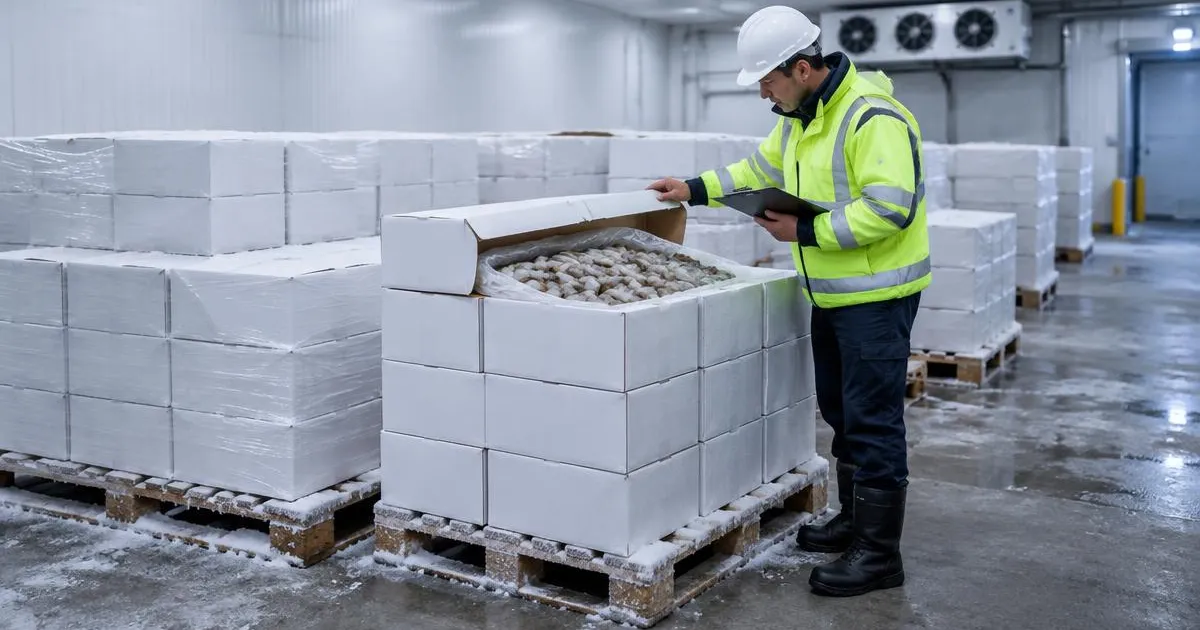
Confirmed requirements, guidance and open checks
Every line below cites an official US source and its date. FishMatch Group is a private commercial coordinator — not a government body, regulator, customs broker, inspector or certifier. Exporters and importers of record remain responsible for compliance.
| Requirement | Status | What it means for a buyer |
|---|---|---|
| FDA food facility registration | Confirmed | Foreign facilities that process, pack or hold food for US consumption must register and renew every two years; the 2026 renewal window is 1 October–31 December 2026 (FDA, 29 Sep 2026). |
| FDA prior notice | Confirmed | Submitted and confirmed by FDA before arrival — at least 8 hours before arrival by water, 4 by air or rail, 2 by road (21 CFR 1.279, CFR edition of 1 April 2025). |
| Seafood HACCP importer verification | Confirmed | The importer must have and implement written verification procedures and keep English-language records of the affirmative steps taken (21 CFR 123.12). |
| NOAA Seafood Import Monitoring Program | Confirmed for shrimp | Shrimp has been covered since 31 December 2018; the importer of record reports harvest-to-entry data, including the aquaculture facility and its farming authorisation (NOAA, updated 19 Oct 2026). |
| DS-2031 shrimp declaration | Confirmed | Required for shrimp imports, including farmed shrimp. The box depends on the harvesting country's Section 609 status (State Department notice, 21 Apr 2026). |
| FDA import alerts 16-124 and 16-129 | Confirmed to exist | Detention without physical examination for aquaculture seafood with unapproved drugs, and for nitrofurans. Screen the specific firm and product against the current alert lists. |
| Antidumping / countervailing duty orders | Confirmed to exist | December 2024: AD order on frozen warmwater shrimp from Indonesia; CVD orders on shrimp from Ecuador, India and Vietnam, including farm-raised shrimp. Rates and other orders: check with Commerce and your customs broker. |
| FDA Food Traceability Rule | Open check | FDA says Congress directed it not to enforce the rule before 20 July 2028; check product coverage and any final rule before relying on it. |
Step 1 — Check the supplier before you check the price
A US route can be confirmed at country level and still fail at the plant. Ask for documents, not statements.
- FDA registration number of the processing facility and confirmation it was renewed for the 2026 cycle.
- The supplier's HACCP plan in English (one of the verification options under 21 CFR 123.12) and recent lot records.
- Whether the firm or product appears on FDA import alerts 16-124 or 16-129, and if so what release evidence would be needed.
- Farm or aquaculture facility name, farming authorisation and harvest location — data the importer of record must report under SIMP.
- Which DS-2031 box applies: for uncertified harvesting countries the aquaculture box 7(A)(1) with exporter and government official signatures; for certified nations box 7(B), whether wild or farmed (State Department, 21 Apr 2026).
Step 2 — Write a comparable shrimp specification
General guidance, not a US legal requirement — but it is what makes offers comparable.
- Species: whiteleg shrimp (Penaeus vannamei) or black tiger (Penaeus monodon); farmed.
- Form: HOSO, HLSO, PD, PUD, PDTO or cooked; count per pound or kilogram with tolerance.
- Freezing: IQF or block; glaze percentage; price and weight net of glaze.
- Temperature: –18 °C or colder at the thermal centre (Codex CXS 92-1981 for quick-frozen shrimp), with data-logger records.
- Pack and labels: master carton, inner pack, net weight, country of origin, lot code.
- Volume per container, frequency, first delivery window, port of entry and Incoterms.
Step 3 — Shipping timeline checklist
Order of steps, not durations; transit times are quoted per request.
- Before contract: supplier documents checked (step 1); duty exposure confirmed with a customs broker.
- Before production: specification, labels and lot coding agreed.
- Before loading: DS-2031 completed and signed as the harvesting country's status requires; SIMP data assembled by the importer of record.
- Before arrival: FDA prior notice submitted and confirmed within the required window.
- On arrival: temperature records, labels and documents checked against the contract before acceptance.
Step 4 — Send one qualified RFQ
FishMatch is free for buyers and reviews annual or seasonal programmes of USD 250,000 or more. We check supplier documents for the exact product and lane, compare offers on the same specification and introduce parties only after qualification. No supply, price, clearance or duty outcome is guaranteed.
What remains open
These points were not fully verified on 25 October 2026 and must be checked for your shipment:
- The current consolidated eCFR text of 21 CFR Part 1 Subpart H, 1.279 and 123.12 (we cite the official CFR edition of 1 April 2025).
- Any SIMP rulemaking after NOAA's November 2024 action plan — that plan was a roadmap, not a final expansion rule.
- Firm-specific entries on FDA import alerts and the current inventory of AD/CVD orders and rates.
- Food Traceability Rule product coverage and whether a final compliance-date rule has been issued.
Frequently asked questions
Does farmed shrimp need a DS-2031 to enter the United States?
Yes. The State Department's April 2026 notice says shrimp and shrimp products must be accompanied by the DS-2031 declaration. Farmed shrimp from uncertified countries uses the aquaculture box 7(A)(1); shrimp from certified nations uses box 7(B), whether wild or farmed.
Is shrimp covered by NOAA's Seafood Import Monitoring Program?
Yes. Shrimp compliance became effective on 31 December 2018. The importer of record reports harvest-to-entry data, including the aquaculture facility and its farming authorisation, and keeps chain-of-custody records.
What must a US shrimp importer do under seafood HACCP?
Under 21 CFR 123.12 the importer must have and implement written verification procedures for each product and keep English-language records of the affirmative steps, such as HACCP and sanitation records, certification or lot testing.
How early must FDA prior notice be confirmed for shrimp arriving by sea?
At least 8 hours before arrival at the US port, under 21 CFR 1.279; 4 hours by air or rail and 2 hours by road.
Are there anti-dumping or countervailing duties on frozen shrimp?
Commerce issued an antidumping duty order on frozen warmwater shrimp from Indonesia and countervailing duty orders on shrimp from Ecuador, India and Vietnam in December 2024, including farm-raised shrimp. Check current rates and other orders with your customs broker.
Official sources
- FDA: Biennial renewal of food facility registration — constituent update (29 Sep 2026)
- 21 CFR 1.279 — Prior notice timing (official CFR, revised 1 Apr 2025)
- 21 CFR 123.12 — Seafood HACCP: special requirements for imported products (official CFR, revised 1 Apr 2025)
- NOAA Fisheries: Seafood Import Monitoring Program facts and reports (updated 19 Oct 2026)
- NOAA Fisheries: Action plan to enhance SIMP (14 Nov 2024)
- US Department of State: Section 609 shrimp notice, Federal Register (21 Apr 2026)
- US Department of State: DS-2031 Shrimp Exporter's/Importer's Declaration (form)
- FDA Import Alert 16-124 — aquaculture seafood, unapproved drugs (published 16 Oct 2026)
- FDA Import Alert 16-129 — seafood, nitrofurans (published 23 Oct 2026)
- US Department of Commerce: AD/CVD orders on frozen warmwater shrimp, Federal Register (26 Dec 2024)
- FDA: Food Traceability Rule compliance — public meeting page (15 Jun 2026)
- Codex CXS 92-1981 — Standard for Quick Frozen Shrimps or Prawns