Sourcing Organic or Sustainability-Verified Aquaculture from Brazil: A Buyer's Evidence Guide
Also in:Português
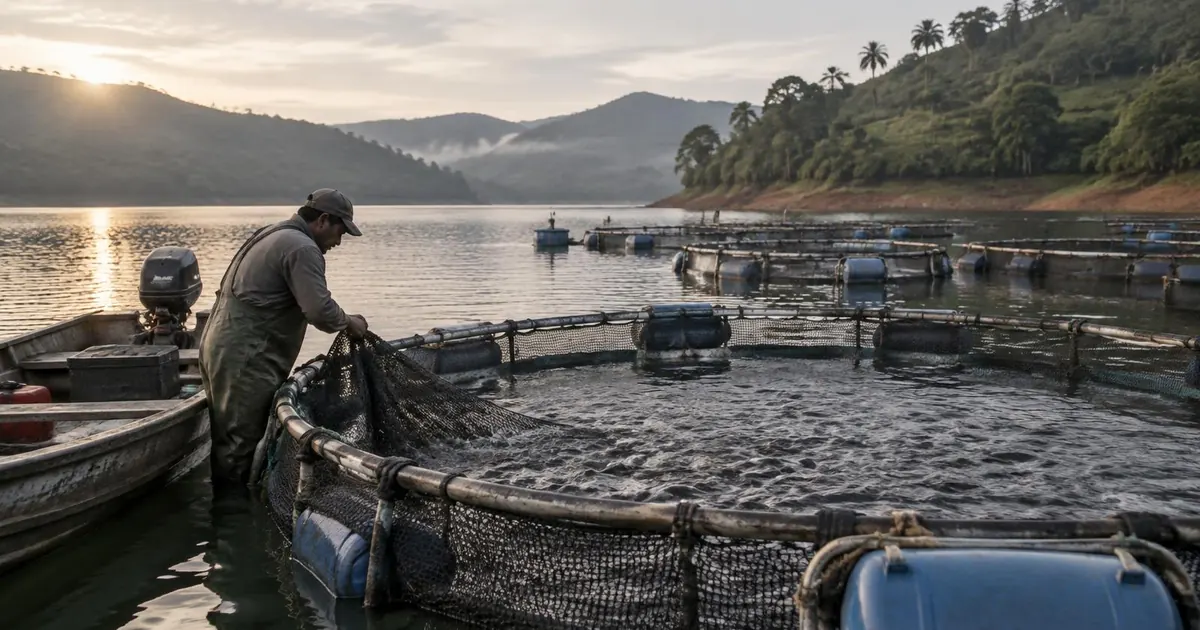
Short answer: in Brazil, "organic" is a regulated claim, not a marketing word. A fish or shrimp lot can be sold to businesses as organic only if it comes from a certified organic production system, and aquaculture follows its own organic technical rules. Ask the producer or exporter for current certificates that cover the exact species, production method and site, check the destination market's own organic rules, and treat anything else — agroecological, regenerative, pesticide-free, low-density — as a separate attribute that needs its own evidence. FishMatch Group does not certify products or guarantee compliance; the producer or exporter is responsible for both.
Sources on this page were checked on 23 October 2026. Rules, registers and certificates change, so confirm each point with the authority or certifier before you rely on it.
Organic is a legal claim in Brazil
The Ministry of Agriculture (MAPA) defines an organic product as one obtained in an organic production system, and states that organic products must be certified by bodies accredited by the ministry to be sold. The only exemption covers family farmers in registered social-control organisations who sell directly to consumers.
MAPA's guide to regularising organic production explains the two routes: certification by an accredited conformity assessment body (audit certification or a participatory guarantee system), or registration for direct sale only. Direct-sale producers cannot sell to third parties such as supermarkets, restaurants or industry. For a commercial buyer, that means certification is the relevant route, and packaged products carry the federal SisOrg seal. The same page notes that products certified under foreign organic standards (such as NOP, EU or JAS) are not automatically recognised as organic in Brazil; they must be certified to the Brazilian standard by a MAPA-accredited body.
Aquaculture has its own organic rules
The general organic technical regulation, Portaria MAPA nº 52/2021, states that organic aquaculture follows specific regulations. Those are set out in Instrução Normativa Interministerial nº 28/2011. Among other things it requires a conversion period set by the certifier, prohibits hormones at any stage of production, does not allow polyploid, genetically modified or sexually reversed organisms, and restricts feed (no synthetic additives in grow-out, no feed from genetically modified organisms, no synthetic pigments).
So the question is never just "is this farm organic?" but "is this species, from this site and this production method, covered by a current organic certificate?" A lot produced with hormone-reversed fingerlings, for example, does not meet these rules. Rules change, so confirm the current text with MAPA or the certifier before relying on it.
How to check a Brazilian organic claim
- The SisOrg seal on the label of packaged products.
- A copy of the current organic certificate, and a Declaração de Transação Comercial (commercial transaction declaration) for the lot, which the producer or the certifier can issue.
- The producer's entry in MAPA's Cadastro Nacional de Produtores Orgânicos (CNPO) — MAPA says the register is generally updated on the 5th, 15th and 25th of each month, so a very recent certification may not appear yet.
- That the scope covers the exact species, production method and site — and, where relevant, the processing and packing step.
MAPA notes that an invoice describing a product as organic is not, on its own, full proof of origin.
The destination market decides what can be sold as organic
A Brazilian certificate is necessary but may not be sufficient abroad. For the European Union, every organic import needs an electronic certificate of inspection in TRACES, issued by a control body or authority recognised by the European Commission, according to the Commission's organic trade guidance. Ask whether the exporter's control body is recognised for aquaculture products.
In the United States there are currently no USDA organic standards for aquatic animals. The USDA's Strengthening Organic Enforcement FAQ says fish and shellfish certified under another government's organic rules may be sold as organic but may not refer to USDA organic certification or use the USDA seal. For other markets, confirm with the importing authority — the regulation and restricted items register lists the official sources we have checked.
Organic is not the same as other sustainability claims
| Claim | What it is | What to ask for |
|---|---|---|
| Certified organic | A legal claim under Brazilian organic law and the aquaculture rules above | Current certificate covering species, method and site; SisOrg seal; CNPO entry |
| Agroecological | A production approach; not an organic certification on its own | A description of practices; never label it organic |
| Regenerative | A practice or marketing term; not an organic certification | The practices used and any named third-party standard |
| Pesticide-free, antibiotic-free | A claim about specific inputs, not about the whole system | Treatment records, laboratory results and the period they cover |
| Low density, free-range style | A husbandry or welfare attribute whose meaning varies | Stated stocking density, system and any standard used |
| Aquaculture sustainability certification | A separate third-party scheme, not organic | Current certificate, scheme name, scope and site |
If organic scope cannot be confirmed for the exact species and method, present the product's sustainability attributes as attributes, with their own evidence, and leave out the organic label.
Evidence fields to put in your RFQ
- Certification scheme and certifier, certificate number, validity and scope.
- Species, by common and scientific name.
- Feed: supplier, organic status and additives used.
- Production method: pond, cage or tank system, conversion status, reproduction method and any hormone use.
- Antibiotic, veterinary-drug and chemical-use policy, with treatment records.
- Traceability: farm, lot and harvest records.
- Harvest size, harvest window and season.
- Volume and delivery frequency.
- Processing: plant, product form and whether processing is covered by the certificate.
- Cold chain: temperature, packaging and transport.
- Destination country and the organic rules that apply there.
Anything the producer states is recorded as supplier-declared and unverified until current, product-specific documents are reviewed. A review is not a certification or a regulatory approval.
Market context and other Brazilian channels
For context only: the Global Organic Trade Guide reports Brazil's organic packaged food and beverage market at USD 2,425.7 million in 2023. That figure covers retail sales of packaged organic food and drinks; it is not a measure of organic fish or shrimp supply.
Buyers also meet Brazilian organic and sustainable supply through other channels, each with a different purpose, as described on their own sites (checked 23 October 2026): Veranum connects rural producers and distributors for wholesale organic and conventional produce; Mercado B2bio is a B2B marketplace for Brazilian bioeconomy products where buyers can post demand and request quotes; and Organis is an industry association that gives the organic sector visibility. FishMatch covers a narrower need: farmed fish and shrimp procurement through a reviewed buyer brief, with the evidence collected for you to compare.
How FishMatch handles these requests
FishMatch works from your request, not from a catalogue: we do not list organic stock or certified suppliers. Sending a brief is free for buyers. You describe the product and the evidence you need; the FishMatch project team clarifies the brief, looks for producers and exporters who can answer it, and collects their documents so you can compare them. Contact stays mediated by our team — buyers and suppliers are not put in direct contact. The producer or exporter remains responsible for the product's legal compliance and for its claims, and you decide whether to proceed. Managed seafood sourcing is for annual or seasonal programmes of USD 250,000 or more.
Ready to describe your requirement? Send a seafood buyer brief with the species, the claim you need and your destination market.
Key figures
| Figure | Value | Context |
|---|---|---|
| Cost | USD 2,425. | For context only: the Global Organic Trade Guide reports Brazil's organic packaged food and beverage market at USD 2,425. |
| Cost | USD 250,000 | Managed seafood sourcing is for annual or seasonal programmes of USD 250,000 or more. |
Related articles
Where this fits in a real project
Every FishMatch project runs through the same five reviewed stages, from a first enquiry to comparable quotations. See the full buyer journey.
Planning a commercial aquaculture project?
Send your project brief. A FishMatch specialist reviews it before relevant suppliers are contacted privately.
Request a quote