Wholesale Shrimp RFQ Checklist: Species, Size, Form, Glaze, Pack and Delivery
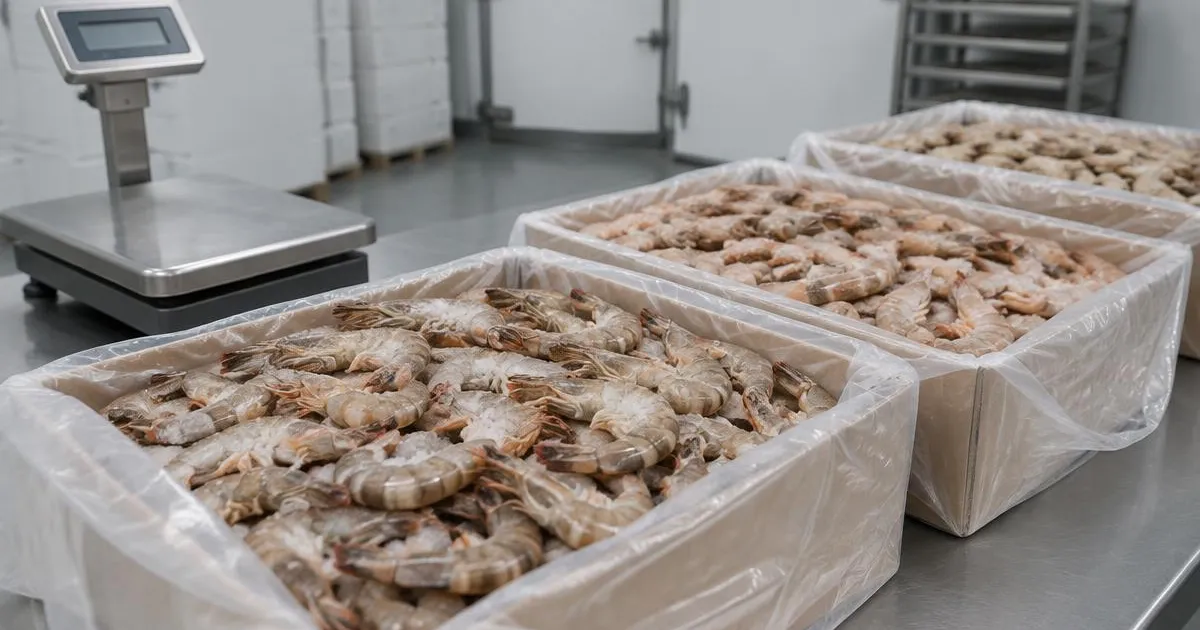
Short answer: a wholesale shrimp RFQ is comparable only when every offer answers the same specification: species, size count and its unit, product form, freezing or chilling format, glaze and net-weight basis, pack, temperature, delivery window, destination and documents. Write those fields down yourself before asking for prices. A completed RFQ is a request, not proof that stock exists, and FishMatch does not publish inventory or prices.
Who this checklist is for
Professional buyers sourcing bulk frozen or chilled shrimp for distribution, processing or food service. If you are building or upgrading a shrimp farm, you need the separate aquaculture project RFQ instead. For general fish and seafood specifications beyond shrimp, use the seafood buying specification guide.
Step 1: Fix product identity
- Common name and, where known, scientific name (for example whiteleg shrimp, Penaeus vannamei, as a buyer-chosen example only).
- Farmed or wild, preferred origins and excluded origins.
- Ask a reviewer to confirm any trade name that could mean more than one species instead of guessing.
Step 2: Define size, form and format
- Size count with its unit: pieces per pound or per kilogram, and the tolerance you accept.
- Processing form: head-on shell-on, headless shell-on, peeled, peeled and deveined, tail-on or tail-off; raw or cooked.
- Format: chilled or frozen; individually quick frozen (IQF) or block frozen. IQF describes how the product was frozen, not its quality.
- Grade and acceptable defects described in measurable terms, not words such as premium.
Step 3: Separate net product weight from glaze and packaging
Glaze is the protective ice layer on frozen shrimp. State the maximum glaze you accept, that prices refer to declared net product weight, and how net weight will be checked (for example deglazing a sample under an agreed method). Carton gross weight is not the quantity you are buying.
Step 4: Pack, temperature and labelling
- Inner pack and master carton sizes, pack material and label language.
- Lot coding that links cartons to production records.
- The storage and transport temperature you require. This guide gives no universal shelf-life or temperature target; product-specific requirements need qualified food-safety review.
Step 5: Volume, timing and delivery
- Your target volume per shipment and number of shipments in the season or year.
- Requested production or harvest window and first delivery window. A requested window is not a committed date.
- Destination country, port or cold store, the Incoterm with its edition and named place, and who arranges cold-chain transport.
Step 6: Documents for your route
List the documents your destination and customers require, such as health or export certificates, traceability records and any private certification your customers specify. Requirements differ by species, product form and country pair. US importers have specific seafood HACCP importer obligations; EU imports depend on eligible country, approved establishment and certificate rules. Confirm each with the competent authority or a qualified adviser. FishMatch does not issue or confirm sanitary approval.
Tool: wholesale shrimp RFQ worksheet
| Field | Your entry |
|---|---|
| Species / origin | Common and scientific name; farmed or wild; origins accepted and excluded |
| Size count | Count range and unit (per lb or per kg); tolerance |
| Form and format | Processing form; raw/cooked; chilled/frozen; IQF/block |
| Glaze and net weight | Maximum glaze; net-weight basis; check method |
| Pack and temperature | Inner/master pack; labels; lot coding; required temperature |
| Volume and window | Per shipment; shipments per season/year; production and delivery windows |
| Destination and terms | Port or cold store; Incoterm and edition; payment and inspection preference |
| Documents | Required certificates and records for the route |
| Target price | Your target and currency, if you have one (a negotiation input, not a market price) |
Leave unknown fields marked as needs clarification rather than zero. To check whether a program reaches FishMatch's managed-request level, multiply net kg per shipment by planned shipments and your own entered price per kg, line by line, in one currency. The USD 250,000 level applies to the total annual or seasonal program, not to each shipment.
What happens after you submit
Send the worksheet through the private commercial seafood buyer request. Our team reviews it by hand, asks about missing fields and decides whether to start a confidential search. Supplier names and contacts are not shown to buyers, and your identity is not shown to suppliers, until our review and consent rules allow it. Submitting a request does not guarantee a match, price or sale.
Sources and scope
- Codex Principles for traceability/product tracing, CXG 60-2006.
- 21 CFR 123.12, US seafood importer requirements.
- FDA Fish and Fishery Products Hazards and Controls guidance.
- EU Access2Markets: animal-product health controls.
- Sources checked 18 October 2026. This is general sourcing guidance, not legal, customs or food-safety advice.
Private import desk
For programs of USD 250,000 or more in total value. Buyers and suppliers never contact each other directly; FishMatch staff handle questions, offers and any introduction.
Importers and wholesale buyers
Register your company privately, then submit a sourcing request. Staff review every registration; it is not an approval or an order.
Producers, processors and exporters
Apply for private review. Applications stay pending until staff check the evidence; registering does not make you a verified supplier.
Supplier applicationFrequently asked questions
Aquaculture planning benchmarks
| Figure | Value | Context |
|---|---|---|
| CAPEX — RAS | USD 9,000–14,000 per tonne/yr | Global baseline before country cost factor. |
| CAPEX — Ponds | USD 1,800–4,000 per tonne/yr | Lined or earthen ponds, excluding land. |
| CAPEX — Cages | USD 2,500–5,500 per tonne/yr | Cages, moorings, nets and service equipment. |
| CAPEX — Flow-through | USD 4,000–7,000 per tonne/yr | Raceways and water intake works. |
| Energy use | RAS ~6 kWh/kg; ponds ~1.2; flow-through ~1.5; cages ~0.3 | Per kg of fish produced. |
| Typical FCR | Trout 1.1; salmon 1.2; shrimp 1.4; tilapia 1.6; carp 1.8 | kg feed per kg growth; varies with feed and management. |
| Farm size where FishMatch reviews projects | From ~USD 250,000 total project value | Commercial fish and shrimp projects. |
Related articles
Where this fits in a real project
Every FishMatch project runs through the same five reviewed stages, from a first enquiry to comparable quotations. See the full buyer journey.
Planning a commercial aquaculture project?
Send your project brief. A FishMatch specialist reviews it before relevant suppliers are contacted privately.
Request a quote