Aquaculture equipment catalog
Product types for fish and shrimp farms, hatcheries and seafood plants — what each does, published specification ranges, trade-offs and what to put in a request. Choose what you need and send one RFQ through FishMatch.
Search and filter
1 of 12 product types
 HatcheriesEstablished
Hatchery systems
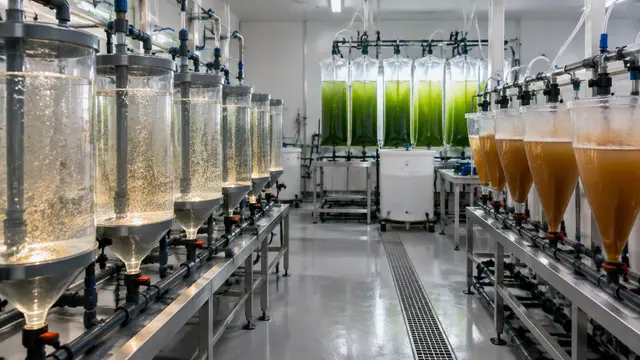
Egg incubators, larval tanks, Artemia hatchers, algae production and UV/ozone.
- ≈8 L jars at 2–4 L/min
- Artemia cones 100–500 L
Hatchery — Fish, Shrimp
Compare product types
Tick “Compare” on up to 3 product types to see them side by side.
Questions about costs, sizing or how proven a technology is?
Read the equipment FAQs: why prices depend on your design, how filtration, oxygen and feeders are sized, what the maturity labels mean and what an RFQ should state.
Equipment FAQsFish and shrimp commercial grades
Buying seafood rather than equipment? Species guides cover trade forms, size and count grades, handling and RFQ questions.
Need several items or a complete farm?
Describe the project once — species, capacity, water and site — and FishMatch prepares one reviewed RFQ. Free for buyers.
Before you request quotes
Equipment scope
What equipment does a commercial aquaculture project actually need?
A grow-out project typically needs holding infrastructure (tanks, ponds or cages), water movement (pumps, piping, valves), aeration or oxygenation, water treatment appropriate to the system, feeding equipment, grading and handling gear, monitoring and alarms, and backup power. RAS adds mechanical filtration, biofiltration, degassing, disinfection and tighter process control. Hatchery and processing scopes are specified separately.
Which equipment should be specified before requesting quotes?
Specify the items whose sizing changes everything downstream: design biomass and stocking density, water exchange or recirculation rate, oxygen demand at peak temperature, and installed pumping head. With those four fixed, suppliers can quote aeration, filtration, pumps and power on the same basis. FishMatch calculators produce these figures and attach them to the RFQ.
Can equipment be sourced in stages?
Yes, and phased procurement is common. The usual sequence is water supply and holding infrastructure, then aeration and treatment, then automation and monitoring, then processing and cold chain. Staging works when interfaces and capacity headroom are defined at the start; otherwise later phases force replacement rather than addition.