Zimbabwe Tilapia Hatchery: A Project Planning Guide for Buyers
Short answer: Planning a commercial tilapia hatchery and nursery in Zimbabwe involves sizing your facility to meet the demand from grow-out farms, particularly cage farms on Lake Kariba. Key steps include sourcing quality broodstock, designing efficient incubation and sex-reversal systems subject to local rules, and establishing robust water treatment and biosecurity protocols to produce healthy all-male fingerlings.
1. The Market Opportunity for Tilapia Fingerlings in Zimbabwe
Zimbabwe's aquaculture sector is targeted for significant growth. The FISH4ACP initiative, a strategy implemented by the Food and Agriculture Organization (FAO), foresees farmed Nile tilapia production rising from 5,600 tonnes to 14,000 tonnes per year by 2032, according to a February 2023 FAO report. This planned expansion creates a direct and growing demand for high-quality tilapia fingerlings.
A 2026 FAO technical report (doi 10.4060/cd8787en) identifies access to quality fingerlings as a cornerstone of the country's aquaculture upgrading strategy. For project planners, this signals a clear market need. Your hatchery can become a critical link in this value chain, supplying the juvenile fish that enable grow-out farms in ponds and, crucially, the cage culture hub on Lake Kariba to achieve their production goals.
2. Sizing Your Hatchery: Demand-Led Capacity Planning
Your hatchery's capacity should be driven by the market you intend to serve, not just the physical space you have. Start by estimating the demand from potential customers—local pond farms and larger cage operations.
For example, you can calculate how many fingerlings are needed to supply a specific tonnage of harvested fish. Use our Grow-out cages served calculator as a starting point to see how a 1,000-tonne farm's fingerling needs are calculated; remember to edit all assumptions to match your project.
Once you have a target annual production number, such as an illustrative 5,000,000 fingerlings, you can plan your facility. Our online tools can provide preliminary estimates, which you must refine with qualified technical experts:
- Tilapia hatchery sizing: Opens the calculator with a starting assumption of 5 million juveniles per year. Adjust this number based on your business plan.
- Hatchery CAPEX: Provides a rough capital expenditure framework based on the tonnage of fish the hatchery could ultimately support.
- Hatchery equipment budget: Helps to itemise and budget for the core equipment required.
3. Broodstock Management: The Genetic Foundation
The success of your hatchery begins with your broodstock (Oreochromis niloticus). These are the parent fish whose genetics and health will determine the quality of every fingerling you produce. It is essential to source an initial population of genetically sound, fast-growing, and disease-free broodstock from a reputable and documented source.
Your facility must include a dedicated broodstock section with separate tanks or 'hapas' (net enclosures in ponds). Here, you will manage males and females, condition them for spawning with high-quality feed, and maintain optimal water quality. A typical planning assumption is a ratio of three or four females to one male in a spawning group. Regular replacement of broodstock is necessary to prevent inbreeding and maintain genetic vigour.
4. Incubation and Hatching Systems
Nile tilapia are mouthbrooders; females incubate eggs in their mouths. In a commercial hatchery, this natural process is interrupted to improve survival rates and control the production cycle. Workers carefully collect egg clutches from the females' mouths every few days. The eggs are then transferred to a dedicated incubation system.
The most common system uses specialised incubation jars, which use an upward water flow to gently tumble the eggs, simulating the mother's mouth. This keeps the eggs clean, oxygenated, and free from fungal growth. Water temperature and quality are critical at this stage. After hatching, the yolk-sac fry are held in tanks or trays until they have absorbed their yolk sacs and are ready to begin feeding.
5. Sex Reversal for All-Male Fingerling Production
Grow-out farms overwhelmingly prefer all-male tilapia populations. Males grow faster and larger than females, and single-sex populations prevent uncontrolled breeding in grow-out ponds or cages, which would lead to stunted growth. To produce all-male fingerlings, hatcheries use a process called hormonal sex reversal.
This involves feeding the fry a specially prepared diet containing a synthetic androgen for a short period (typically 21-28 days) immediately after they have absorbed their yolk sacs. This process directs the development of all fry, including genetic females, into functional males. The use of hormones is a regulated activity. You must consult with the Department of Fisheries and Aquaculture for the specific rules and approved methods in Zimbabwe before finalising your project plan.
6. Nursery Tanks: From Fry to Fingerling
After the sex-reversal phase, the fry are moved to a nursery system to be grown to a sellable size (typically 1-5 grams). This stage requires careful management of feeding, water quality, and stocking density. Nursery tanks are typically circular and made of fiberglass or plastic, as they are easy to clean and provide good hydrodynamics. Rectangular concrete tanks are also used.
Grading—sorting the fish by size—is essential during the nursery phase to reduce cannibalism and ensure a uniform product for your customers. You will need to procure grading equipment and develop a clear operational plan for its use.
| System Parameter | Recirculating Aquaculture System (RAS) | Flow-Through System |
|---|---|---|
| Water Use | Very Low (water is treated and reused) | High (constant supply of new water) |
| Biosecurity Control | High (contained, easier to treat/disinfect) | Lower (more exposure to external water source) |
| Location Flexibility | High (can be sited away from large water bodies) | Low (requires large, reliable water source) |
| Energy Cost | High (pumping, filtration, oxygenation) | Low (often gravity-fed) |
| Initial CAPEX | High (complex filtration equipment) | Lower (simpler plumbing) |
| Operational Skill | High (requires skilled technical management) | Moderate |
7. Water and Biosecurity: Protecting Your Investment
A hatchery is a high-density system, making it vulnerable to disease outbreaks that can cause catastrophic losses. A robust biosecurity plan is not optional; it is essential for commercial viability. Your plan should be based on the principles of exclusion (keeping pathogens out), management (preventing their spread), and containment (dealing with any outbreaks).
Key elements include:
- Water Source and Treatment: Borehole water is often preferred as it is typically free of pathogens, but any source water must be treated. Your system should include mechanical filtration to remove solids and UV sterilization or ozone treatment to kill pathogens before water enters the hatchery.
- Quarantine: All incoming broodstock must be held in a separate, isolated quarantine facility for observation and testing before being introduced to the main population.
- Zoning: The hatchery should be physically divided into zones of different biosecurity risk (e.g., egg incubation, nursery, broodstock). Movement of staff, equipment, and fish between zones must be strictly controlled. For more detail, read our guide on Biosecurity, Zoning, and HACCP in Commercial Aquaculture.
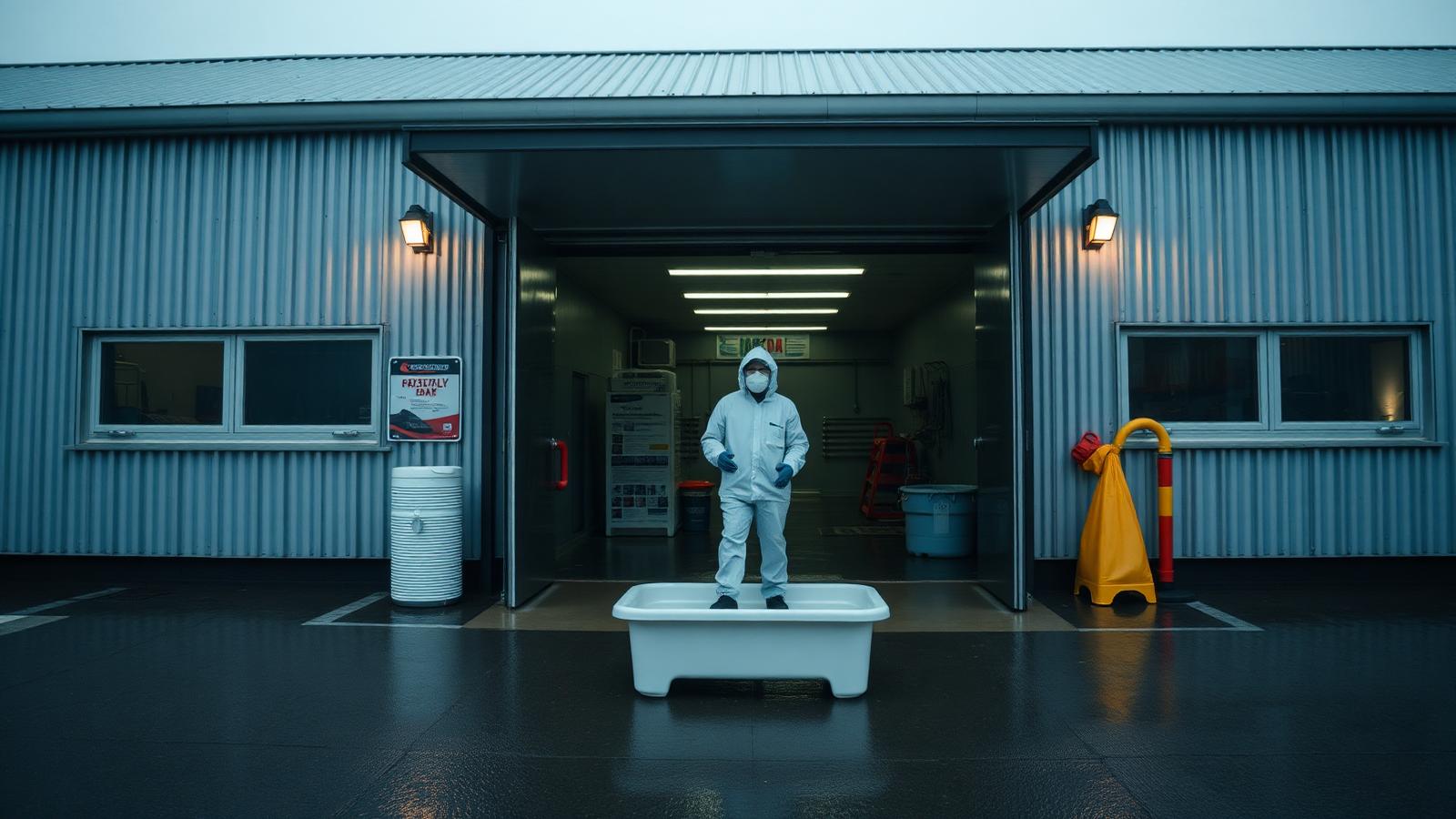
- Disinfection: Footbaths, hand washing stations, and dedicated, colour-coded equipment for each zone are simple but effective measures.
8. Equipment Procurement and Logistics
As a landlocked country, Zimbabwe relies on regional sea ports and road or rail corridors for the importation of specialised aquaculture equipment like incubation jars, RAS components, and water quality monitoring systems. This has several implications for your project:
- Lead Times: Expect longer delivery times. Plan your procurement well in advance of your construction schedule.
- Logistics Costs: Factor in the costs of sea freight, port handling, customs clearance, and inland transportation to your site.
- Currency: Zimbabwe operates in a multi-currency environment where the USD is widely used. To avoid ambiguity and financial risk, ensure all supplier quotes and purchase contracts explicitly state the currency of transaction. Our guide to Incoterms® for aquaculture equipment purchases can help you clarify responsibilities between you and the supplier.
9. Regulatory Compliance and Further Reading
Before committing significant capital, engage with the relevant authorities. In Zimbabwe, this is the Department of Fisheries and Aquaculture, under the Ministry of Lands, Agriculture, Fisheries, Water and Rural Development, as reported by the FAO Regional Office for Africa in February 2023. You will need to secure permits for land use, water abstraction, environmental compliance, and business operations. A clear understanding of the regulatory framework is a critical step in de-risking your project.
For further reading on related topics, see our guides on Zimbabwe Aquaculture Procurement, Fish Farm Feasibility, CAPEX and OPEX in Zimbabwe, and Aquaculture Equipment Specification & Quote Comparison.
Sources
- Food and Agriculture Organization (FAO), Regional Office for Africa news — Provided the name of the responsible Ministry and details of the FISH4ACP program targets (Feb 2023).
- Food and Agriculture Organization (FAO) — "The farmed Nile tilapia value chain in Zimbabwe" technical report highlights the strategic importance of quality fingerlings, skills, and services (2026, doi 10.4060/cd8787en).
FishMatch Group is a buyer-side, supplier-neutral sourcing service. Our sourcing tools are free to use. For qualified projects with a budget of roughly USD 250,000 or more, we offer a managed sourcing service. An aquaculture specialist reviews every project brief before any suppliers are contacted, and supplier names are never shown to buyers. We are not engineers, lenders, or certifiers; you should always confirm your project design, permits, and financing with qualified local professionals. When you are ready to detail your equipment needs, you can submit your project brief through our human-reviewed intake form here: /rfq-intake?country=Zimbabwe.
Frequently asked questions
Key figures
| Figure | Value | Context |
|---|---|---|
| Size / capacity | 5,600 tonnes; 14,000 tonnes | The FISH4ACP initiative, a strategy implemented by the Food and Agriculture Organization (FAO), foresees farmed Nile tilapia production rising from 5,600 tonnes to 14,000 tonnes per year by 2032,… |
| Time / lead time | 21-28 days | This involves feeding the fry a specially prepared diet containing a synthetic androgen for a short period (typically 21-28 days) immediately after they have absorbed their yolk sacs. |
| Cost | USD 250,000 | For qualified projects with a budget of roughly USD 250,000 or more, we offer a managed sourcing service. |
Related articles
Where this fits in a real project
Every FishMatch project runs through the same five reviewed stages, from a first enquiry to comparable quotations. See the full buyer journey.
Planning a commercial aquaculture project?
Send your project brief. A FishMatch specialist reviews it before relevant suppliers are contacted privately.
Request a quote