Zambia Aquaculture: How to Specify & Compare Equipment Quotes
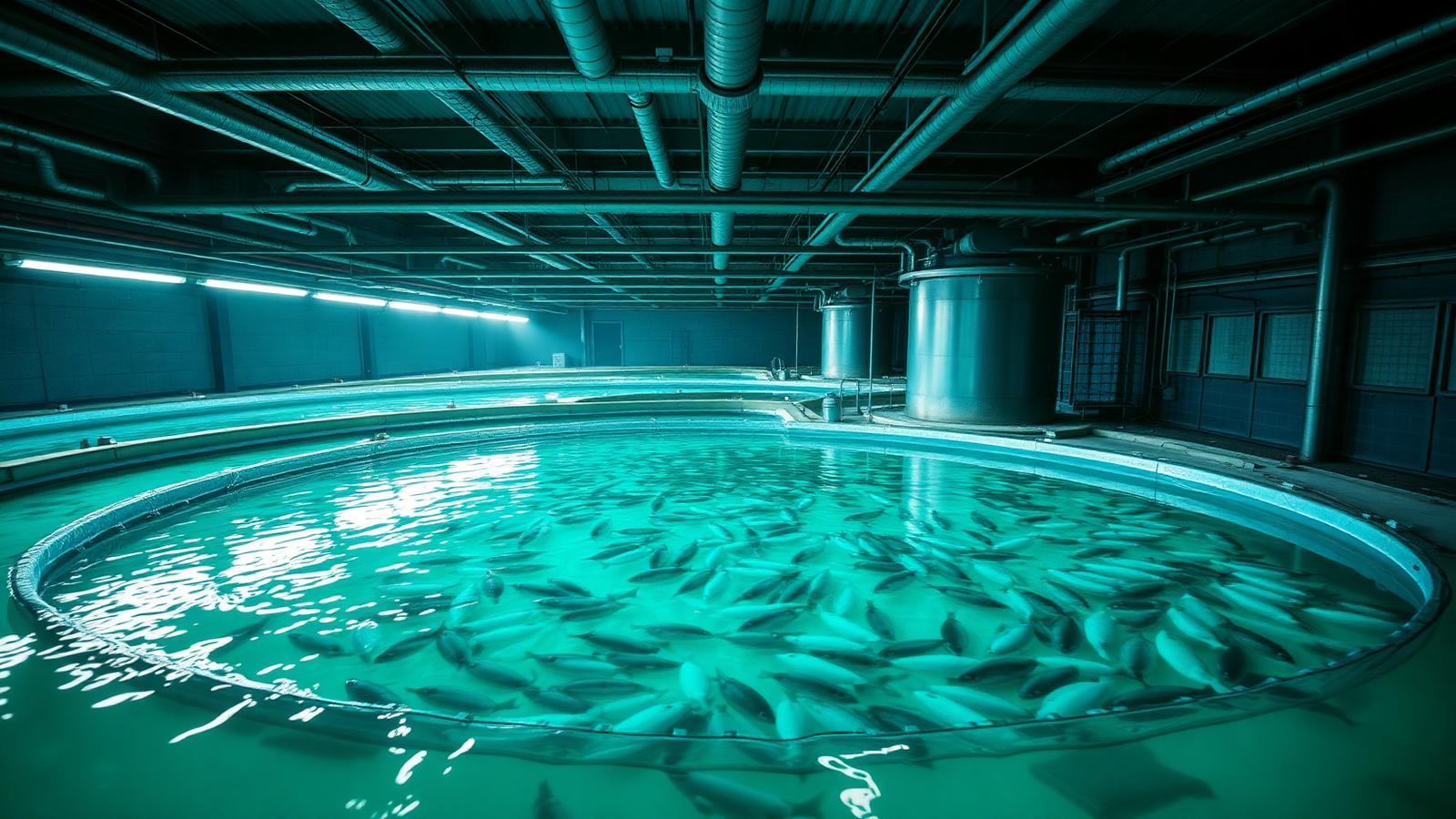
Short answer: To compare aquaculture equipment quotes for a project in Zambia, you must first create detailed technical specifications for each equipment lot (cages, feeding, hatchery). Then, require all suppliers to quote on the same basis, including shipping, local taxes, and commissioning, to calculate a true 'landed cost' at your farm site for a fair, apples-to-apples comparison.
1. The Zambian Aquaculture Landscape
Zambia's aquaculture sector is focused on national food security, economic diversification, and employment, a goal supported by initiatives like the African Development Bank's (AfDB) Zambia Aquaculture Enterprise Development Project (ZAEDP). According to the AfDB, its project completion report was published in February 2026. The primary commercial species is tilapia, farmed predominantly in cages on Lake Kariba and in earthen ponds elsewhere, supported by a network of hatcheries supplying fingerlings.
Before planning any procurement, project developers should use official government statistics as a baseline. The Ministry of Fisheries and Livestock and ZamStats published the 2023 Aquaculture Survey, which provides the most recent production data, according to zamstats.gov.zm. This data helps establish a realistic context for your project's scale and ambitions.
A detailed procurement strategy is critical. A 2025 peer-reviewed study in Frontiers in Sustainable Food Systems noted that even government-funded small-scale cage farms on Lake Kariba faced challenges with inputs. This highlights the need for specifications that cover not just initial equipment but also long-term operational needs like spare parts and support.
For further reading on the country's project development context, see our guides on Zambian aquaculture procurement and fish farm feasibility, CAPEX and OPEX.
2. Planning Your Farm's Scale
Before you can specify equipment, you need a clear production target. How many tonnes of tilapia will you produce annually? This single number drives the size and capacity of every piece of equipment you buy. Use our free calculators to explore different scenarios. The values are pre-filled for a typical Zambian context but are only starting points; you must edit them with your project's specific data.
- Cage tilapia capacity calculator: Estimate the number and volume of cages needed for your target tonnage.
- Cage farm CAPEX estimator: Get a rough idea of the capital investment required.
- Cage equipment budget calculator: Break down the potential costs of different equipment categories.
3. Structuring Your Tender: Equipment Lots
Instead of asking for a single 'turnkey' quote for a complete farm, it is more effective to group equipment into logical packages, or 'lots', and request separate proposals for each. This allows specialised manufacturers to bid on what they do best and gives you more control and transparency over costs. For a typical Zambian cage or pond tilapia farm, these lots might include:
- Grow-out System: Cages and mooring grids for Lake Kariba, or pond liners and water management systems for earthen ponds.
- Feeding System: Feed barges, automated silo-based systems, or simple demand feeders.
- Hatchery & Nursery System: Tanks, filtration (RAS/flow-through), incubation systems, and lab equipment.
- Fish Handling & Health: Fish pumps, grading machines, counters, and vaccination equipment.
- Site Logistics: Workboats, cranes, and vehicles.
- Monitoring & Control: Water quality sensors, cameras, and farm management software.
For an in-depth look at planning a project on Lake Kariba, read our guide to cage tilapia project planning.
4. Writing a Detailed Equipment Specification
A clear specification is the foundation of a successful procurement process. Without it, suppliers will make their own assumptions, and you will receive quotes for different things that cannot be compared. For each equipment lot, your specification document must state:
- Design Basis: The core parameters the equipment must perform under. Include target species (tilapia), production capacity (tonnes/year), stocking density, and site-specific conditions. For Lake Kariba, this must include maximum wave height, wind speed, and water current data.
- Capacity and Performance: Define exact metrics. For cages, specify the volume (m³), holding capacity (tonnes), and net mesh sizes. For a pump, specify flow rate (m³/hr) at a given head pressure. For a feeding system, specify silo capacity (tonnes) and daily distribution capacity (kg/day).
- Materials and Standards: Specify all materials of construction. For cages, this means HDPE for brackets and floatation pipes and specifies the grade (e.g., PE100). For metal components, specify hot-dip galvanized or stainless steel (e.g., 316L) depending on exposure to water. This prevents suppliers from quoting cheaper, less durable materials.
- Power Supply: State the electrical supply available at your site: Voltage (V), Phase (1 or 3), and Frequency (Hz). Require suppliers to confirm their equipment matches this or includes necessary transformers.
- Spares and Consumables: Require a list of recommended critical spare parts for two years of operation, with individual prices. This includes items like net panels, pump seals, motors, and sensor probes.
- Warranty: Define the required warranty period (e.g., 24 months from commissioning) and what it must cover (parts and labour).
- Services: Clearly state which services must be included in the price, such as on-site supervision for installation, commissioning, and staff training.
5. Logistics for a Landlocked Country: Incoterms & Landed Costs
Zambia is a landlocked country, making logistics a major cost component and risk factor. Equipment is typically imported via regional sea ports like Durban (South Africa), Dar es Salaam (Tanzania), or Walvis Bay (Namibia) and then transported overland by road or rail. You cannot compare a quote for equipment at a factory in Europe (EXW - Ex Works) with one delivered to your farm gate in Siavonga (DAP - Delivered at Place).
To normalize quotes, you must calculate the total landed cost. Require all international suppliers to quote DAP to a named location in Zambia (e.g., DAP Lusaka). This price should include the equipment cost, export packaging, insurance, and all freight to that point. You will then need to work with a local clearing agent to add:
- Zambian customs duties
- Import VAT and other taxes
- Local port/border charges
- Inland transport from the point of delivery (e.g., Lusaka) to your final farm site.
Always state that quotes should be in a single currency, typically USD, to avoid confusion. The final payments will likely be in Zambian Kwacha (ZMW), so factor exchange rate fluctuation into your financial plan. For more detail, read our guide on Incoterms for aquaculture equipment purchases.
6. Creating a Quote Comparison Matrix
Organize all compliant quotes into a single spreadsheet for objective comparison. This matrix turns complex proposals into a clear, data-driven overview. Use the anonymized supplier names (e.g., Supplier A, Supplier B) provided by your sourcing service.
| Feature | Supplier A | Supplier B | Supplier C |
|---|---|---|---|
| :--- | :--- | :--- | :--- |
| Cage Volume (m³) | 3,000 | 3,000 | 2,800 (Non-compliant) |
| Bracket Material | HDPE PE100 | HDPE PE100 | HDPE PE80 (Lower grade) |
| Price (EXW USD) | $380,000 | $410,000 | $350,000 |
| Freight & Insurance (USD) | $60,000 | $55,000 | $58,000 |
| Sub-Total (DAP Lusaka USD) | $440,000 | $465,000 | $408,000 |
| Est. Duties & Taxes (USD) | $88,000 (Illustrative 20%) | $93,000 (Illustrative 20%) | $81,600 (Illustrative 20%) |
| Total Landed Cost (USD) | $528,000 | $558,000 | $489,600 |
| Warranty (Months) | 24 | 24 | 12 |
| Lead Time (Weeks) | 16 | 14 | 20 |
| Comments | Fully compliant. | Fully compliant. | Cage volume and material spec are non-compliant. Lower price reflects lower quality. |
Note: The 20% tax rate is a simple illustrative planning assumption. You must replace this with a formal quote from your customs clearing agent.
7. Identifying Red Flags in Quotes
A disciplined comparison process helps reveal hidden risks and costs. Watch out for these red flags:
- Vague Specifications: Quotes that don't repeat back the key specifications you provided (e.g., just saying 'HDPE Cages' instead of 'PE100 HDPE Cages, 3,000m³').
- Exclusions: Items or services listed as 'not included' or 'optional extra' that you considered mandatory, such as mooring systems, installation supervision, or spare parts.
- Unrealistic Assumptions: Performance claims (e.g., FCR, growth rates) that seem too good to be true and are not backed by reference data.
- Non-compliance with Incoterms: A supplier quoting EXW when you requested DAP, pushing all transport risk and cost onto you.
- Mismatched Components: A feeding system that doesn't match the capacity of the cages or a pump that is undersized for the required water flow.
8. Environmental and Regulatory Compliance
All aquaculture projects must comply with national regulations. The primary regulator is Zambia's Ministry of Fisheries and Livestock, through its Department of Fisheries. Environmental compliance is overseen by the Zambia Environmental Management Agency (ZEMA).
For projects of significant scale, an Environmental and Social Impact Assessment (ESIA) is typically required. As an example of local practice, documentation from the African Development Bank shows that cage projects under the ZAEDP, such as a site at Chipepo on Lake Kariba in 2020, prepared Environmental Project Briefs for review. A robust biosecurity plan is also a critical component of modern farm design and permitting. Because regulations are complex and subject to change, you must engage qualified local environmental and legal consultants to manage your permitting process.
9. Why an Independent Buyer-Side Comparison Helps
Navigating the complexities of equipment specification, international logistics, and quote comparison is a full-time job. Using a buyer-side, supplier-neutral service provides an independent layer of analysis. An external procurement specialist can help you write a robust technical specification, normalize quotes from different suppliers to a true landed cost, challenge supplier assumptions, and manage the tender process without being tied to any specific manufacturer or technology. This ensures the final decision is based on a fair, like-for-like comparison that prioritizes your project's best interests.
Sources
- Ministry of Fisheries and Livestock & ZamStats — Published the 2023 Aquaculture Survey with official national production statistics (zamstats.gov.zm, 2023).
- African Development Bank (AfDB) — Financed the Zambia Aquaculture Enterprise Development Project (ZAEDP) and holds project documents, such as Environmental Project Briefs for cage sites on Lake Kariba, in its public library. It announced the Project Completion Report was published in February 2026 (afdb.org, 2020-2026).
- Frontiers in Sustainable Food Systems — Published a 2025 peer-reviewed study assessing challenges, including inputs, for small-scale cage fish farming on Lake Kariba (frontiersin.org, 2025).
FishMatch Group is a buyer-side, supplier-neutral aquaculture sourcing service. Our tools are free to use. For qualified projects with a budget of roughly USD 250,000 or more, we offer managed sourcing services. A person reviews every project brief before any suppliers are approached, and supplier identities are kept confidential to ensure an unbiased process. FishMatch is not an engineer, contractor, lender, or certifier; we recommend you confirm all permits, designs, and financial plans with qualified local professionals. To get started with a human-reviewed, confidential request for quotes for your project in Zambia, submit your project brief here.
Frequently asked questions
Key figures
| Figure | Value | Context |
|---|---|---|
| Time / lead time | 24 months | , 24 months from commissioning) and what it must cover (parts and labour). |
| Cost | $380,000; $410,000; $350,000 | | Feature | Supplier A | Supplier B | Supplier C | | :--- | :--- | :--- | :--- | | Cage Volume (m³) | 3,000 | 3,000 | 2,800 (Non-compliant) | | Bracket Material | HDPE PE100 | HDPE PE100 | HDPE… |
| Cost | $88,000; $93,000; $81,600 | Duties & Taxes (USD) | $88,000 (Illustrative 20%) | $93,000 (Illustrative 20%) | $81,600 (Illustrative 20%) | | Total Landed Cost (USD) | $528,000 | $558,000 | $489,600 | | Warranty (Months) | 24… |
| Performance | 20% | Note: The 20% tax rate is a simple illustrative planning assumption. |
| Cost | USD 250,000 | For qualified projects with a budget of roughly USD 250,000 or more, we offer managed sourcing services. |
Related articles
Where this fits in a real project
Every FishMatch project runs through the same five reviewed stages, from a first enquiry to comparable quotations. See the full buyer journey.
Planning a commercial aquaculture project?
Send your project brief. A FishMatch specialist reviews it before relevant suppliers are contacted privately.
Request a quote