Early Mortality After Stocking: How to Protect Fish and Shrimp in the First Weeks
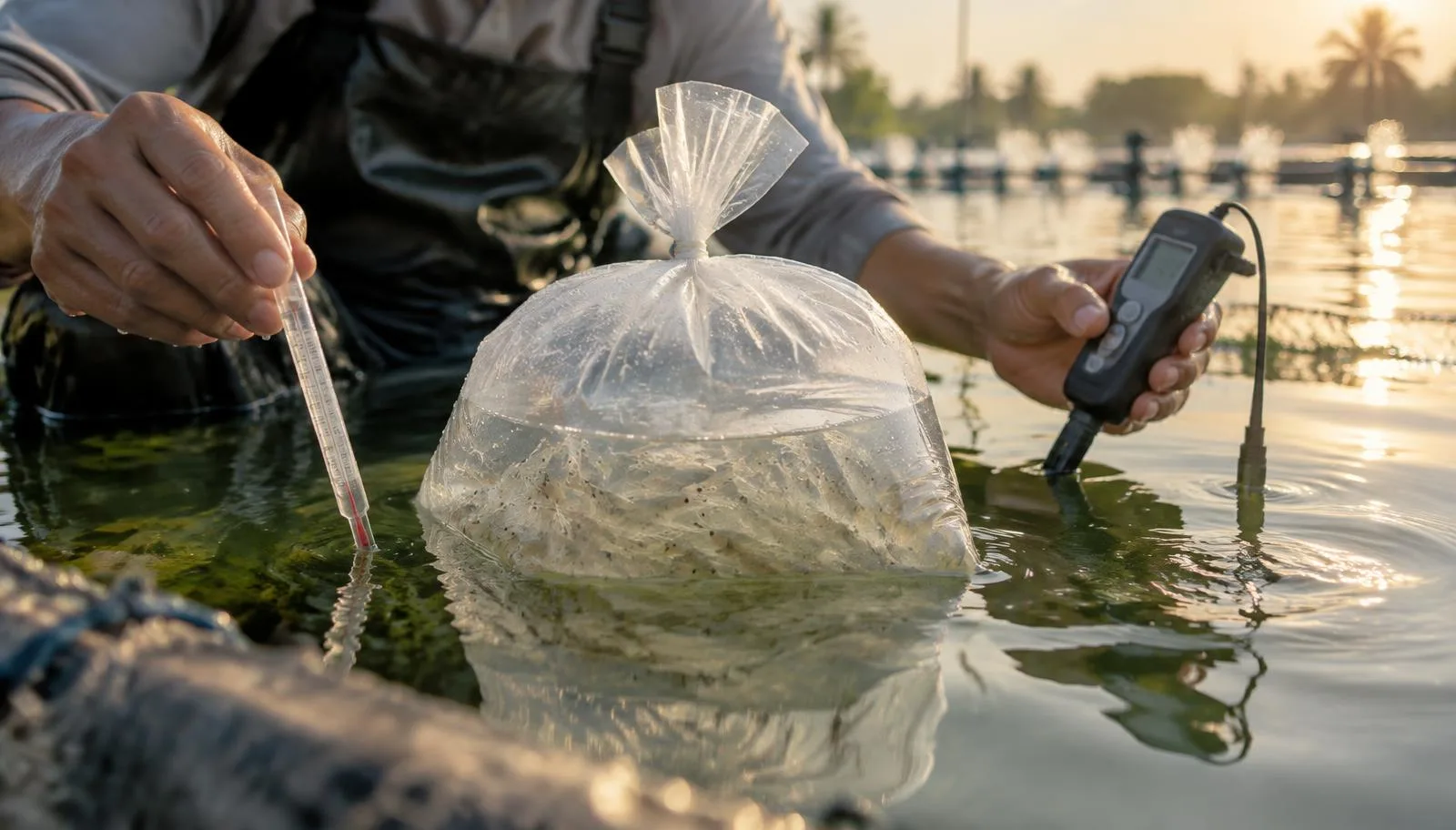
Short answer: losses in the first weeks after stocking usually trace back to a few controllable points — seed quality and documentation, transport and receiving, acclimation to the new water, the condition of the pond or tank at stocking, and how closely the stock is watched in the first days. Planning these steps in writing before seed arrives is the most practical way to protect early survival for both fish and shrimp.
Editorial note: practical guide by the FishMatch Group editorial team, reviewed 14 October 2026, for farm managers, entrepreneurs and project planners. It is not veterinary, engineering or financial advice, gives no universal stocking densities, water thresholds or timelines, and promises no yield, survival, speed or profit. Operating values for your farm should come from a qualified local specialist and your own measurements. If you see unusual mortality, contact a local aquatic animal-health professional; do not treat without a diagnosis.
Key takeaways
- Early mortality is mostly a planning problem: the seed source, transport, receiving and acclimation are decided before stocking day.
- Ask for health documentation for postlarvae and fingerlings, and record batch details on arrival.
- Prepare the pond or tank and check the water before seed arrives, not after.
- Count and record dead stock daily from day one; a baseline makes problems visible.
- Have a written alert plan: who is called, what samples are kept and when stocking stops.
Why are the first weeks so important?
Young fish and shrimp have just been moved from a hatchery to a different water, temperature and routine. Any stress at this stage adds up. The early period is also when the farm team is least experienced with a new system. That is why FAO's grow-out guidance places weight on routine morning checks of pond condition and stock behaviour, together with regular sampling (FAO — Shrimp Culture: Pond Design, Operation and Management, grow-out). For later-cycle losses, see the fish farm mortality reduction planning guide and the shrimp mortality investigation checklist.
Before stocking: the seed source
Choose the hatchery as carefully as the equipment. Questions to ask before you book:
- What health documentation or testing accompanies each batch, and from which laboratory?
- What water conditions (temperature, salinity for shrimp) were the animals held at before shipping?
- What size or age will be delivered, and how is it checked?
- How will the batch be packed and transported, and how long will the journey take?
- What happens if a batch arrives in poor condition?
Write the answers into the supply agreement. The fingerling supply and stocking plan guide covers how to schedule batches against your production plan.
Prepare the pond or tank first
Stocking into a system that is not ready is a common cause of early loss. Before seed arrives, your team should confirm that:
- The pond or tank has been prepared and filled according to your specialist's procedure.
- Aeration, pumps and backup power have been tested under load.
- For RAS, the biofilter is established and water quality is stable.
- Water readings agreed with your specialist have been taken and recorded.
- Feed of the right size is on site and stored correctly.
Receiving and acclimation
On delivery, record the time, batch number, count method, water readings in the transport water and in the receiving water, and the visible condition of the stock. Acclimation means bringing the animals gradually from transport water to farm water. How long and how gradually depends on the species, the differences in temperature and salinity, and the hatchery's advice — agree the procedure in advance and train the staff who will do it.
| Step | What to record | Who signs off |
|---|---|---|
| Arrival | Time, batch ID, documents received | Farm manager |
| Transport water | Temperature, oxygen, salinity (shrimp) | Technician |
| Receiving water | Same readings in pond or tank | Technician |
| Acclimation | Start and end time, method used | Technician |
| Release | Units stocked, estimated number | Farm manager |
| Day 1–7 | Daily behaviour, feeding response, mortality count | Shift lead |
The first days after stocking
Watch more, not less. Record feeding response, behaviour and daily dead counts for every unit. Adjust feeding from what the stock actually eats. Keep access to the units limited and use separate tools per unit where possible: WOAH's regional work on small-farm biosecurity groups the practical measures into risk assessment, record keeping, training, reducing pathogen transfer, emergency preparedness, and surveillance and reporting (WOAH Asia-Pacific — Aquaculture biosecurity for small-scale farms in the region).
Fish versus shrimp: what differs?
For shrimp, postlarvae quality, salinity and temperature differences between hatchery and pond, pond preparation and feed management are the usual focus. For fish fingerlings, handling and grading damage, oxygen during transport and in the first days, and water quality in tanks or RAS are typical concerns. For cages, transfer method and site conditions on stocking day matter. In every case, the right values come from a local specialist and the hatchery, not from a general article.
Write an alert plan before you need it
Agree in writing what counts as an unusual mortality for your farm, who is called first, which samples are kept and how, and when further stocking pauses. An alert plan turns a worrying morning into a clear set of actions.
Common mistakes
- Booking seed on price alone, without health documents.
- Stocking before equipment and water are confirmed ready.
- Rushing acclimation to finish a delivery quickly.
- No daily mortality count, so a rising trend is noticed too late.
- Treating stock without a diagnosis.
Plan your project with FishMatch
FishMatch's buyer tools and buyer platform services are free and carry no obligation. For commercial projects from USD 250,000, our team can help define the scope and request comparable proposals from suitable suppliers; supplier identities stay private until you choose to proceed. We do not promise suppliers, financing or results. When you are ready, create a free project brief.
Sources
Frequently asked questions
Related articles
Where this fits in a real project
Every FishMatch project runs through the same five reviewed stages, from a first enquiry to comparable quotations. See the full buyer journey.
Planning a commercial aquaculture project?
Send your project brief. A FishMatch specialist reviews it before relevant suppliers are contacted privately.
Request a quote