Biosecurity· Apr 2026·5 min read
Aquaculture biosecurity upgrades that don't break the budget
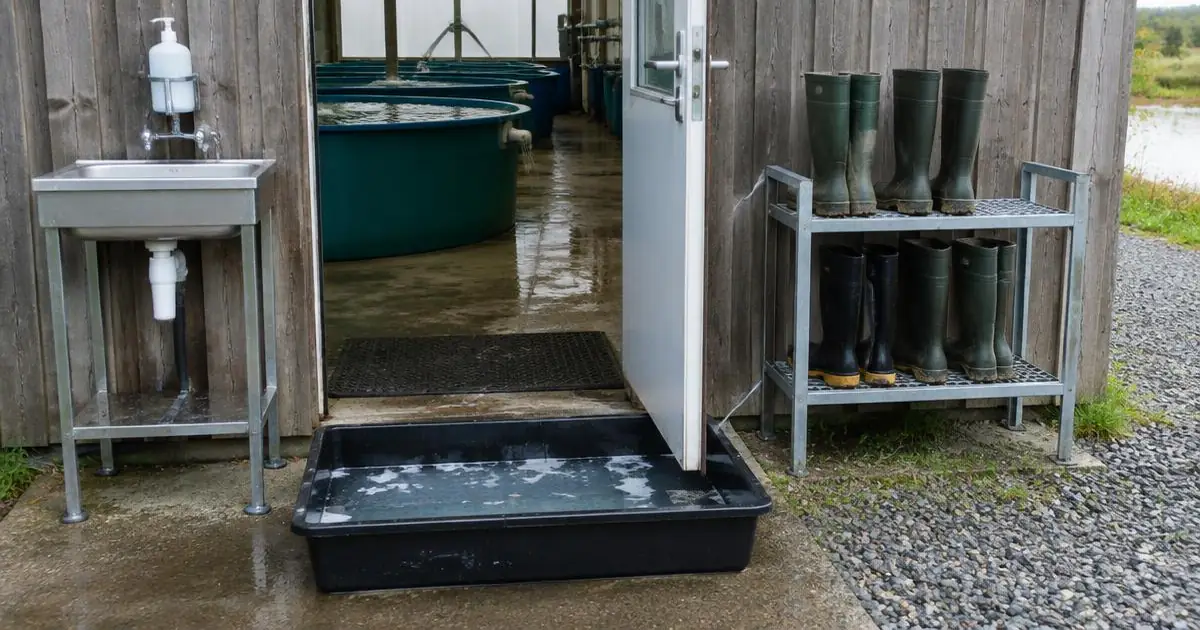
You do not need a full ozone barrier and gamma-sterilised inlet water to materially improve biosecurity on a shrimp farm or a fish farm. A real perimeter fence, dedicated colour-coded boots per pond, footbaths with fresh chlorine at every gate, chlorination of incoming water in a settling reservoir, and enforced vehicle wash-down cover most of the disease-transmission risk for a fraction of the cost of a full pathogen-exclusion system.
Aquaculture planning benchmarks
| Figure | Value | Context |
|---|---|---|
| CAPEX — RAS | USD 9,000–14,000 per tonne/yr | Global baseline before country cost factor. |
| CAPEX — Ponds | USD 1,800–4,000 per tonne/yr | Lined or earthen ponds, excluding land. |
| CAPEX — Cages | USD 2,500–5,500 per tonne/yr | Cages, moorings, nets and service equipment. |
| CAPEX — Flow-through | USD 4,000–7,000 per tonne/yr | Raceways and water intake works. |
| Energy use | RAS ~6 kWh/kg; ponds ~1.2; flow-through ~1.5; cages ~0.3 | Per kg of fish produced. |
| Typical FCR | Trout 1.1; salmon 1.2; shrimp 1.4; tilapia 1.6; carp 1.8 | kg feed per kg growth; varies with feed and management. |
| Farm size where FishMatch reviews projects | From ~USD 250,000 total project value | Commercial fish and shrimp projects. |
Related articles
BiosecurityFish Are Dying or Feeding Less: A Safe First-Response Checklist for Aquaculture FarmsA safe first-response checklist when farmed fish die or feed less: record what you see, protect unaffected units, and call an aquatic animal-health professional. Educational, not a diagnosis.BiosecurityTilapia Lake Virus and Other Disease Risks: Biosecurity, Traceability and a Response PlanTilapia Lake Virus explained with sourced facts, plus risk-based biosecurity, sourcing and movement records, quarantine, diagnostic confirmation and official reporting. Educational, not veterinary advice.BiosecurityBiosecurity Zoning and HACCP for Commercial Aquaculture: A Buyer's Planning ChecklistBiosecurity is decided on the site plan, long before stock arrives. A buyer-side checklist for zoning, clean and dirty flows, intake, quarantine, sanitation, mortality and waste, monitoring, records, commissioning and what to put in supplier scopes.Seafood SourcingSourcing Farmed Tilapia and Shrimp from Brazil: A Buyer's Guide to Volumes, Export Flows and ChecksBrazil's official data on farmed tilapia and shrimp, where its exports go, which plant registrations to check, and how to write a comparable seafood RFQ.
Where this fits in a real project
Every FishMatch project runs through the same five reviewed stages, from a first enquiry to comparable quotations. See the full buyer journey.
Planning a commercial aquaculture project?
Send your project brief. A FishMatch specialist reviews it before relevant suppliers are contacted privately.
Request a quote