Who to Involve and When: Specialists, Staff, Suppliers and Producers in an Aquaculture Project
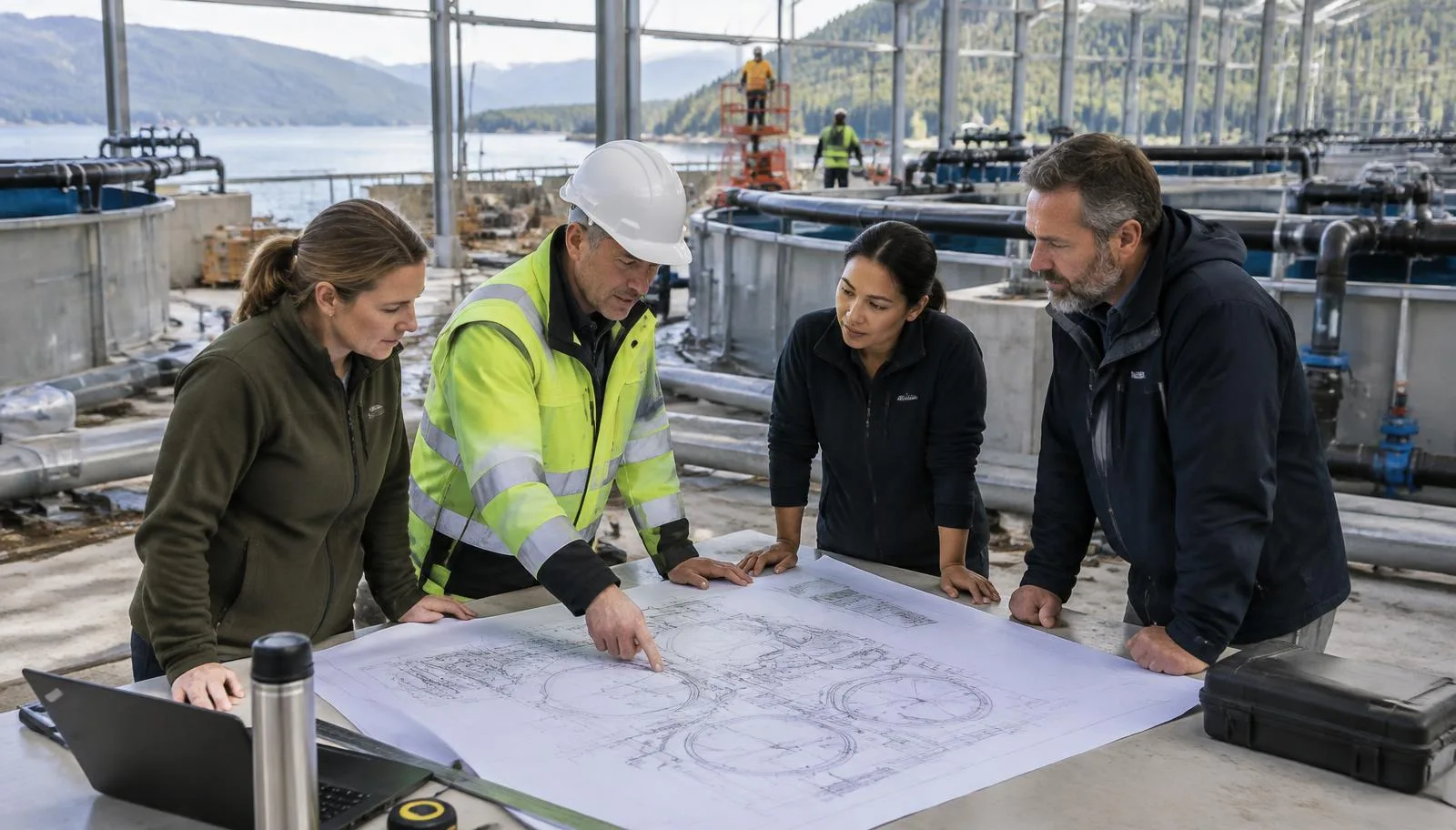
Short answer: involve people in the order of the decisions they affect. Start with the project owner and a local technical specialist to define the site, species, system and production target; bring in the future farm manager and key staff before construction; ask equipment suppliers to quote only once a written brief exists; and secure producers — hatcheries for seed, feed mills and processors or buyers for your product — early enough that the first cycle has inputs and a market.
Editorial note: practical guide by the FishMatch Group editorial team, reviewed 14 October 2026, for entrepreneurs, farm owners and project planners. It is not legal, engineering or employment advice and promises no results. Roles and titles vary by country and project size.
Key takeaways
- The wrong order is expensive: suppliers asked to quote before the brief exists will each design a different project.
- A local specialist and the future farm manager save more time than any single piece of equipment.
- Hire and train key staff before installation, so they learn the systems as they are built.
- Seed, feed and market partners are producers too — secure them early.
- One person must own the interfaces between suppliers.
Stage 1: owner, specialist and site
The first people involved should be the project owner and a technical specialist with local experience in your species and system. Together they confirm the site, water source, power, permits and market. FAO's shrimp-culture manual treats these site factors as the base of design and operation (FAO — Shrimp Culture: Pond Design, Operation and Management, site selection). The output of this stage is a written brief: species, production target, system, location, water, equipment needs, timeline and budget.
Stage 2: the operating team
Bring in the future farm manager while design decisions are still open. The person who will run the farm can point out access, cleaning, feeding and harvest problems that are invisible on a drawing. Plan the rest of the team — technicians, shift leads, maintenance — and their training before installation. The fish farm staff training guide covers what to train and when. WOAH's regional biosecurity work lists training and record keeping among the core practical measures (WOAH Asia-Pacific — Aquaculture biosecurity for small-scale farms in the region).
Stage 3: equipment suppliers and contractors
Ask suppliers to quote only once the brief and outline drawings exist, so every proposal answers the same scope. Compare them on technical fit, delivery, installation, commissioning, training, spare parts, operating cost and support — not only price. When several suppliers are involved, someone must own the interfaces between them: pipe sizes, control signals, power, foundations and responsibilities at handover. See multi-supplier project interfaces and how to request a supplier quote.
Stage 4: producers — seed, feed and market
Hatcheries, feed mills and processors or buyers are producers your farm depends on. Secure them before the first stocking date is fixed:
- **Seed:** a documented hatchery supply for postlarvae or fingerlings, booked against your stocking plan.
- **Feed:** a written feed specification and a supplier that can deliver it reliably; see how to compare feed suppliers.
- **Market:** a processor, distributor or buyer whose size, quality and delivery requirements are known before you design harvest and chilling.
Who does what: a simple responsibility table
| Area | Leads | Consulted |
|---|---|---|
| Site, water and permits | Owner + local specialist | Authorities, engineer |
| Species, system, production target | Owner + specialist | Future farm manager |
| Written brief and drawings | Specialist / engineer | Farm manager |
| Equipment quotes and selection | Owner | Specialist, farm manager |
| Interfaces between suppliers | One named coordinator | All suppliers |
| Staff hiring and training | Farm manager | Suppliers (equipment training) |
| Seed and feed supply | Farm manager | Specialist |
| Market and harvest plan | Owner | Processor / buyer |
| Commissioning and acceptance | Farm manager + specialist | Suppliers |
Common mistakes
- Letting the first supplier contacted design the project.
- Hiring the farm manager after commissioning.
- Leaving seed, feed and market until the farm is built.
- No single owner of supplier interfaces.
- Verbal agreements on training, spares and support.
Free tools before you contact anyone
Use the free aquaculture calculators and the commercial project planning guide to test your assumptions before speaking to suppliers. A clear brief makes every later conversation shorter.
Plan your project with FishMatch
FishMatch's buyer tools and buyer platform services are free and carry no obligation. For commercial projects from USD 250,000, our team can help define the scope and request comparable proposals from suitable suppliers; supplier identities stay private until you choose to proceed. We do not promise suppliers, financing or results. When you are ready, create a free project brief.
Sources
Frequently asked questions
Related articles
Where this fits in a real project
Every FishMatch project runs through the same five reviewed stages, from a first enquiry to comparable quotations. See the full buyer journey.
Planning a commercial aquaculture project?
Send your project brief. A FishMatch specialist reviews it before relevant suppliers are contacted privately.
Request a quote