When to expand a fish or shrimp farm — and when to improve equipment or management first
Updated: 2026-10-13 · FishMatch Group
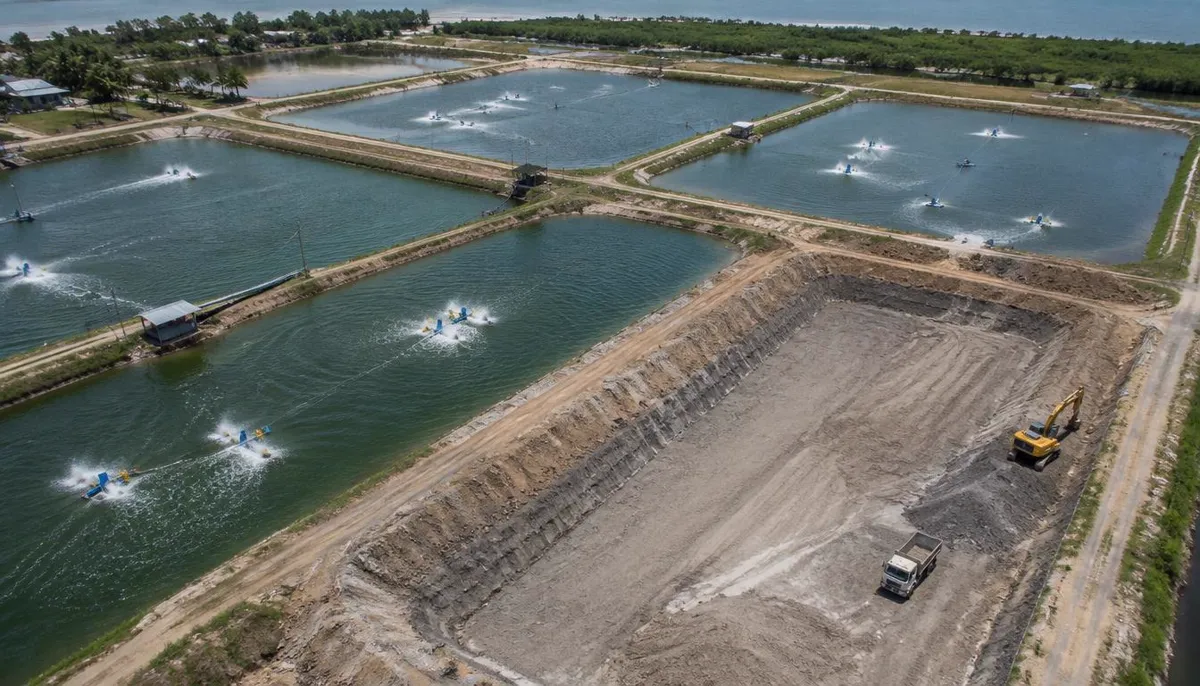
Short answer
Expand when your existing units already perform consistently, the limit is genuinely capacity (space, water, permits, market) and the site can supply more water, power and biosecurity. Improve first when your own records show large variation between cycles or units, repeated equipment downtime, or water-quality exceptions — adding capacity would copy those problems at larger scale. Score both options with the sheet below, using your own data; the outcome depends on species, system, climate and site and is not guaranteed.
The core question: is the limit capacity or performance?
An expansion multiplies whatever your farm does today. If your best and worst cycles are close and units behave alike, more capacity can make sense. If results swing widely, the first return usually comes from removing the cause of the swing.
Five gate questions from your own records
| Question | Evidence to check | Points to improve first if… |
|---|---|---|
| Are cycles consistent? | Spread of survival and economic FCR over the last 3+ cycles | the worst cycle is far from the best |
| Do units behave alike? | Per-unit yield and FCR | one or two units drag the average |
| Is equipment reliable? | Downtime hours for aeration, pumps, feeders, generators | outages recur or coincide with mortality |
| Are procedures followed? | SOPs, feeding records, shift logs | results change with staff or shift |
| Can the site supply more? | Water rights/flow, power capacity, permit limits, effluent limits | any of these is already near its limit |
Small upgrade versus large expansion
| Factor | Targeted upgrade or management change | New capacity (ponds, cages, tanks, hatchery) |
|---|---|---|
| Typical scope | Aeration, oxygen, pumps, monitoring, feeders, SOPs, training | Civil works, new units, more water and power, permits |
| Lead time | Usually shorter; depends on supplier and site | Usually longer: design, permits, construction, commissioning |
| Risk | Lower capital at risk; verifiable on part of the farm | Higher capital; performance unknown until stocked |
| What it needs from you | A clear baseline and a trial plan | Baseline, market evidence, site capacity, financing |
| What it cannot do | Overcome a hard site limit | Fix an unresolved process or management problem |
A scoring sheet you can fill in
Score each line 0–2 from your records (0 = weak evidence, 2 = strong evidence). Keep notes on which document supports each score.
| Line | Score 0–2 | Supporting record |
|---|---|---|
| Cycle results are consistent | ||
| Units perform alike | ||
| Equipment downtime is low | ||
| SOPs are followed and documented | ||
| Market demand for extra volume is documented (contracts, buyer letters) | ||
| Site has spare water, power and permit headroom | ||
| Biosecurity can be kept with more stock and traffic |
If the first four lines score low, start with an upgrade or management plan. If they score high and the last three also score high, a phased expansion is worth scoping. Mixed results usually mean: fix, verify on one unit, then expand.
Hypothetical example — not farm data, not a benchmark. A farm with 8 ponds scores 1 on consistency, 0 on downtime and 2 on market demand. The weakest lines are reliability items, so the reasonable next step is to fix aeration backup and night monitoring, measure two cycles, then revisit expansion.
If information is missing
- No cost data per unit: use farm totals and flag that you cannot compare units economically yet.
- No market evidence: do not count extra volume as sold; scope expansion only after buyer conversations.
- No site capacity study: ask a qualified engineer or your authority about water, power and effluent before committing.
Frequently asked questions
Is it ever right to expand while performance is uneven?
Sometimes, when a hard capacity limit is the cause — for example, overloaded units that cannot be relieved any other way. Document that reasoning and expand in a phase you can measure.
What counts as a 'small upgrade'?
Changes that address a measured bottleneck without new production units: aeration or oxygen backup, pump replacement, monitoring and alarms, feeders, SOPs and training.
Does FishMatch decide whether I should expand?
No. FishMatch helps you define the project and requirements, reviews the brief, contacts suitable suppliers and presents their responses. The investment decision stays with you and your advisors.
Does this apply to both fish and shrimp?
Yes, the method is the same; the evidence and limits differ by species, system and climate.
Tools and next steps
- Expansion readiness check
- Farm expansion calculator
- Shrimp farm upgrade calculator
- Project scenario tools
- Start a project brief
- Fish farm equipment RFQ
- How the RFQ process works
- How to Analyze Several Fish or Shrimp Crop Cycles to Find the Bottleneck
- Phased Upgrade of Cages, Ponds, RAS, Hatchery, Aeration and Pumps
- Production and Cost Model for Added Aquaculture Capacity
- Aquaculture Upgrade Plan from Past Reports: Baseline, KPIs and a Staged Trial
Sources
General guidance only. Targets, health decisions and results depend on species, region and system; consult qualified local professionals.