How to expand or upgrade cages, ponds, RAS, hatcheries, oxygen and pumps in phases
Updated: 2026-10-13 · FishMatch Group
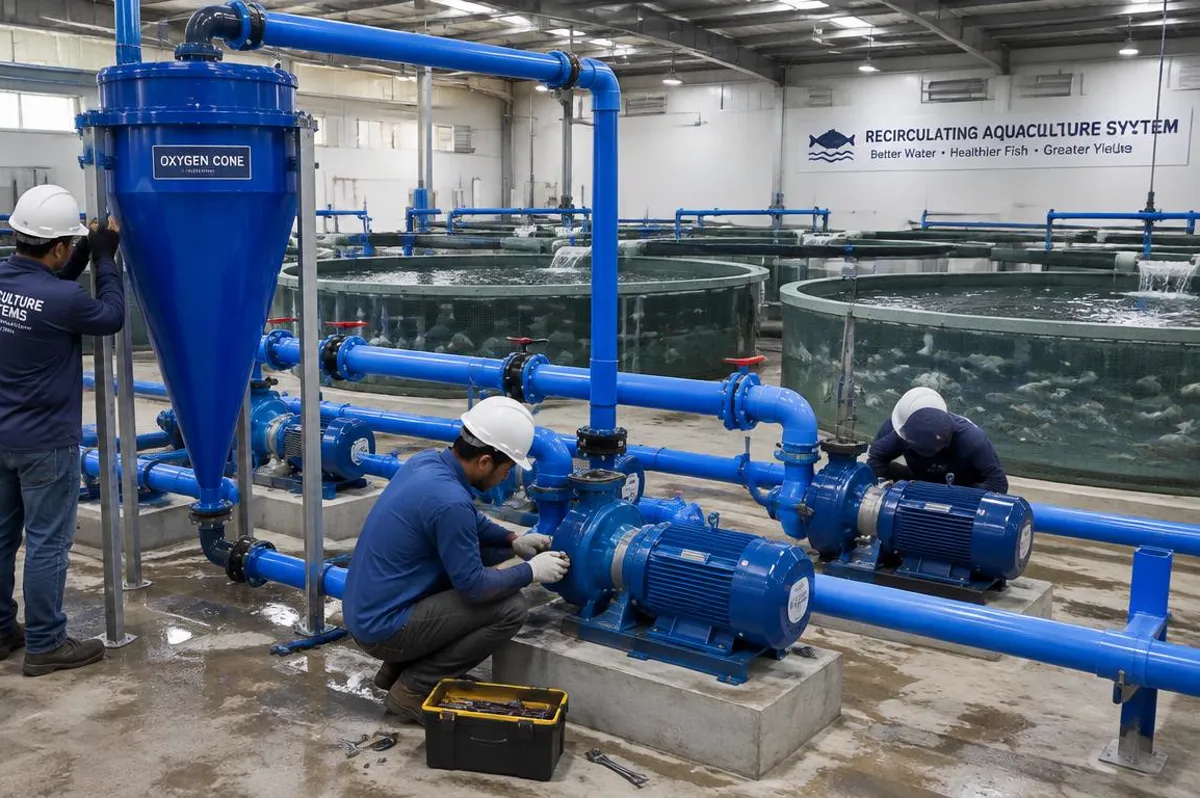
Short answer
Upgrade in phases that each fix one measured constraint and can be verified before the next spend. Start from your maintenance, downtime and water-quality records for each system, rank the constraints, then sequence work so live stock keeps adequate water, oxygen and biosecurity during installation. Typical order: secure life-support (oxygen, backup power, alarms), then flow and treatment, then production units. The right sequence depends on species, system, climate and site; ask a qualified designer to confirm capacities.
Principles for phasing
- One phase, one constraint: each phase targets a bottleneck found in your records.
- Protect life-support first: oxygen, aeration, backup power and alarms come before extra stock.
- Keep biosecurity zones during works: separate contractor access, equipment cleaning and stock movements.
- Verify before scaling: measure the KPI the phase was meant to move for at least one comparable cycle or period.
By system: what your records show and phase options
| System | Records to review | Signals of a constraint | Phase options (examples) |
|---|---|---|---|
| Cages / sea cages | Net inspections, mooring checks, mortality, weather/current data, feeding logs | Net damage, escapes, feed waste, low DO events in still water | Mooring and net upgrade, feeding/camera system, environmental monitoring, then more cages within licence |
| Ponds | DO by hour, aerator runtime, water exchange, pond bottom condition | Pre-dawn DO lows, uneven ponds, long dry-out times | Aeration and backup power, monitoring, drainage/sludge work, then new ponds |
| RAS | TAN/nitrite, solids, CO₂, pump and drum filter downtime, alarm history | Water-quality exceptions at peak feed, solids build-up, single-pump dependency | Redundant pumps, solids removal, degassing, biofilter capacity, then tanks |
| Hatchery / nursery | Larval survival by batch, broodstock records, water treatment logs | Batch-to-batch variation, contamination incidents | Water treatment and isolation, live-feed capacity, then more tanks |
| Oxygen / aeration | Oxygen consumption, generator or supply logs, DO alarms | DO drops at feeding or night, supply interruptions | Backup oxygen, alarms with off-site alerts, capacity increase |
| Pumps / water intake | Flow readings, energy use, failures, intake quality | Falling flow, rising kWh per m³, unplanned stops | Standby pump, variable-speed drives, intake screening |
A capacity check you can run before each phase
- Write the planned maximum daily feed (kg/day) after the phase.
- Ask your designer or equipment supplier for the oxygen and flow requirement per kg of feed for your species, temperature and system; the FAO recirculation guide explains the method.
- Multiply: required oxygen (kg/day) = planned feed × factor from your designer.
- Compare with installed capacity minus the largest single unit (N−1). If N−1 capacity is below need, life-support goes first in the phase plan.
Hypothetical example — not farm data, not a benchmark. Assumed planned feed 400 kg/day and a designer-supplied factor of 0.5 kg O₂ per kg feed (invented for the arithmetic). Need = 200 kg O₂/day. Installed 3 × 90 kg/day = 270; N−1 = 180. Because N−1 is below 200, adding backup oxygen comes before more stock.
Sequencing template
| Phase | Constraint addressed | Works | KPI to verify | Go/no-go for next phase |
|---|---|---|---|---|
| 1 | Life-support risk | Backup power, oxygen, alarms | Hours with DO below your limit | Fewer exceptions for one full cycle |
| 2 | Water quality at peak load | Filtration, degassing, pumps | Exception days, FCR | Stable at planned feed |
| 3 | Capacity | New units within permit | Yield, cost per kg | Performance matches existing units |
If information is missing
- No downtime log: interview operators and start a log now; mark findings as anecdotal.
- No equipment data sheets: request them in your RFQ; do not size from photos or nameplates alone.
- No current water analysis: test the intake before designing treatment.
Frequently asked questions
Can I upgrade a RAS while it is stocked?
Often yes, with temporary bypasses, staged shutdowns and extra monitoring, but it carries risk. Plan the work with your designer and keep backup oxygen and power on site.
Should cages and ponds be upgraded the same way?
No. Cages depend on site conditions, moorings and licences; ponds on aeration, water exchange and bottom management. Use the system rows above separately.
Who confirms equipment capacities?
A qualified designer or the equipment supplier, using your species, temperature and feed plan. FishMatch can collect and compare supplier responses after reviewing your brief.
Is a hatchery upgrade worth it if I buy seed?
Only if seed supply or quality is a recorded bottleneck. Compare documented seed issues with the cost and skills needed to run a hatchery.
Tools and next steps
- Aeration sizing calculator
- Pump sizing calculator
- Oxygen demand calculator
- RAS project RFQ
- Equipment guide
- Project scenario tools
- Start a project brief
- Fish farm equipment RFQ
- How the RFQ process works
- How to Analyze Several Fish or Shrimp Crop Cycles to Find the Bottleneck
- Expand Your Fish or Shrimp Farm, or Fix Equipment and Management First?
- Production and Cost Model for Added Aquaculture Capacity
- Aquaculture Upgrade Plan from Past Reports: Baseline, KPIs and a Staged Trial
Sources
General guidance only. Targets, health decisions and results depend on species, region and system; consult qualified local professionals.