Planning a Cold-Water Fish Farm in Uzbekistan: RAS & Flow-Through
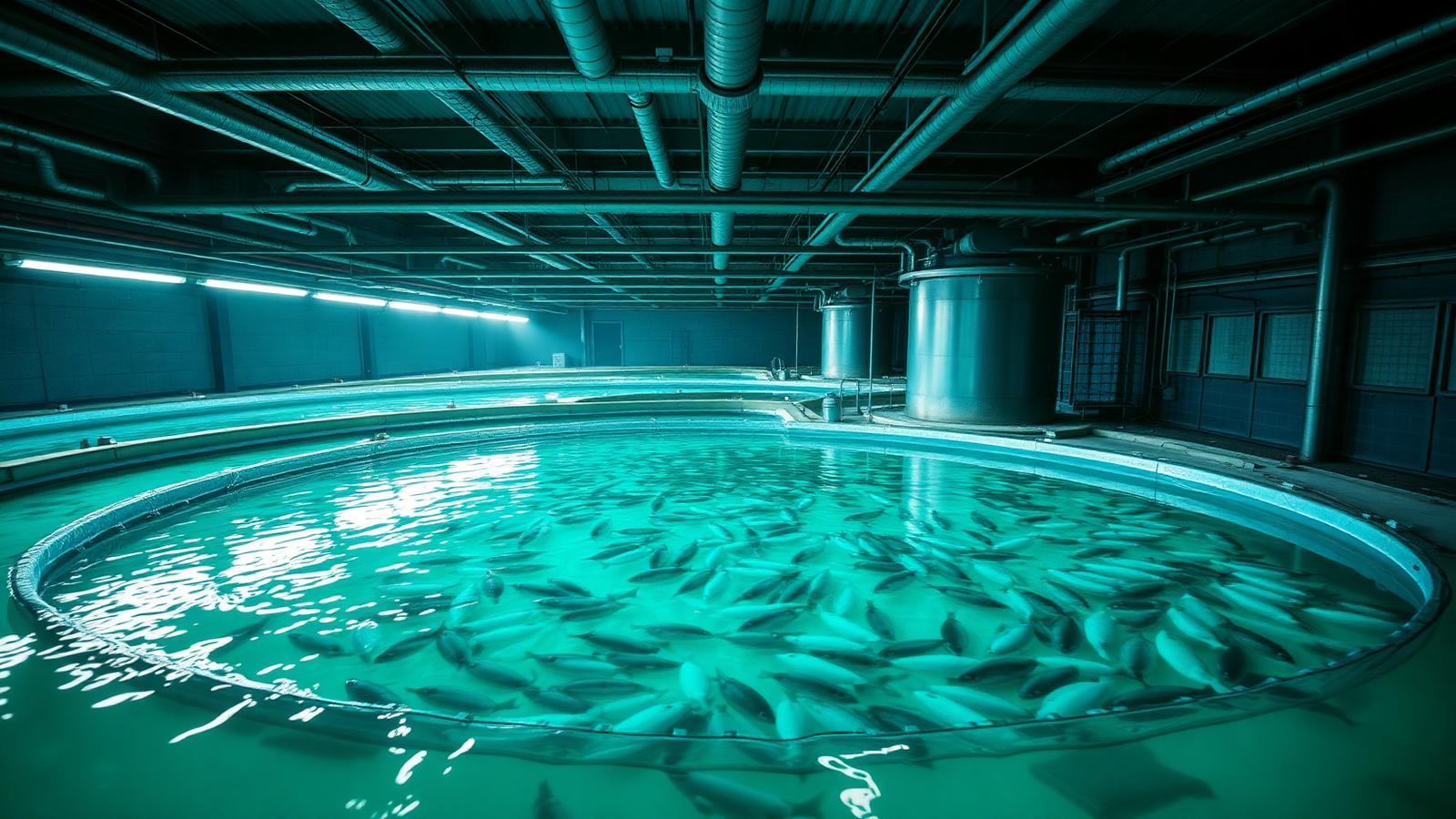
Short answer: To plan a commercial cold-water fish farm in Uzbekistan, focus on securing a suitable water source in a foothill area, as targeted by government policy. For a Recirculating Aquaculture System (RAS), prioritize water-saving design, robust oxygenation, and backup power, as equipment is often imported. Projects should be designed with reference to government targets and potential support measures, which must be confirmed with the relevant ministries.
1. Introduction: Uzbekistan's Aquaculture Ambitions
Uzbekistan's government is actively promoting the expansion and intensification of its aquaculture sector. According to a presidential decree (UP-122 of 2 July 2026), the country has set a goal to increase fish production to 500,000 tonnes by specialising artificial reservoirs for intensive farming in 2026–2027. This represents a significant increase from the 206,000 tonnes produced in 2023, where intensive methods accounted for no more than 20% of output, as reported by president.uz.
A key part of this strategy is the development of cold-water fish farming, with a specific government target to build 20,000 tonnes of annual capacity in foothill areas starting from 2027 (source: lex.uz). This guide is for investors and project developers planning commercial trout or sturgeon farms, focusing on Recirculating Aquaculture Systems (RAS) and flow-through systems in line with this national directive.
2. Choosing Your System: RAS vs. Flow-Through
For cold-water species like trout and sturgeon, the two primary intensive production systems are flow-through and Recirculating Aquaculture Systems (RAS). The choice between them is one of the most fundamental decisions in your project plan.
- Flow-through systems: These systems divert water from a river or spring, pass it through tanks or raceways containing fish, and then discharge it. They are mechanically simpler and generally have lower initial capital costs. However, their viability depends entirely on access to a very large, consistent, and high-quality source of cold water.
- Recirculating Aquaculture Systems (RAS): These are land-based, closed-loop systems that treat and reuse water. They use a fraction of the water required by flow-through systems, allowing for production in areas with limited water resources. While RAS offers greater control over the production environment and high biosecurity, it involves higher capital investment, greater energy consumption, and more complex operational management.
Your decision may be influenced by government incentives. A report on president.uz noted proposals that include the partial reimbursement of costs for installing RAS, a factor that should be investigated when comparing system economics.
3. Water Source and Temperature: The Foothill Advantage
The government's focus on developing cold-water aquaculture in foothill areas is strategic. These regions often provide access to springs and mountain rivers with water that is naturally colder and of higher purity than water in the lowlands. The ideal temperature for growing species like rainbow trout is typically between 12-18°C. Water outside this range can stress the fish, slow growth, and increase susceptibility to disease.
Before committing to a site, a comprehensive hydrological survey is critical. You must confirm:
- Year-round temperature profile: Does the water remain within the optimal range for your chosen species during all seasons?
- Water quantity: Is the flow rate sufficient for your planned production scale, even during the driest months? A flow-through farm requires massive volumes, while a RAS needs a smaller but absolutely reliable source for daily makeup water.
- Water quality: Test for pollutants, heavy metals, pH, hardness, and dissolved oxygen. Poor incoming water quality can increase the cost and complexity of your water treatment system.
According to president.uz, government proposals include guaranteed water supply for intensive farms. Project planners should engage with the Ministry of Water Resources early to understand the allocation process and confirm the long-term availability for their specific project.
4. Designing for Water Efficiency: Key RAS Components
Given the value of water, a RAS is often the most sustainable choice for intensive farming in arid and semi-arid regions. A well-designed RAS minimizes water use by continuously treating and recirculating it. The primary goal is to remove fish waste (solids and dissolved ammonia) and add oxygen.
Key components you will need to specify include:
- Mechanical Filtration: Typically a drum filter to remove solid waste particles before they break down.
- Biological Filtration: A bioreactor (e.g., Moving Bed Biofilm Reactor - MBBR) where beneficial bacteria convert toxic ammonia into less harmful nitrate.
- Degassing and Aeration: To remove CO2 produced by the fish and ensure high levels of dissolved oxygen.
- Oxygenation: Pure oxygen is injected into the water to support high fish stocking densities.
- Disinfection: UV sterilizers or ozone can be used to control pathogens in the water.
A modern RAS might use an illustrative planning assumption of 5-10% of its total system volume in new 'makeup' water per day to flush out nitrates and maintain quality. The actual percentage is determined by the supplier's specific design, stocking density, and feeding rate. When evaluating proposals, scrutinize the claimed makeup water requirements. To understand the differences in supplier offerings, consult our guide on how to compare RAS equipment quotes.
5. Critical Life Support: Oxygen and Backup Power
In any intensive fish farm, especially a RAS, life support systems are not optional. The high density of fish means that any interruption to water circulation or oxygen supply can result in a total loss of stock within minutes.
Oxygen Supply: While atmospheric air contains about 21% oxygen, RAS farms operate at saturation levels that require injecting pure oxygen. The two main on-site options are:
- Liquid Oxygen (LOX): Delivered by truck and stored in a large cryogenic tank. This is a common and reliable solution.
- Oxygen Generation (PSA/VPSA): A system that concentrates oxygen from the ambient air. It requires a higher initial investment and more maintenance but can reduce long-term operational costs, especially in remote locations.
You can use our Oxygen Demand Calculator to get a preliminary estimate, but remember to replace the preset values with your farm’s specific biomass and water temperature.
Backup Power: A robust backup power system is mandatory. A diesel generator connected to an Automatic Transfer Switch (ATS) ensures that if grid power fails, critical systems (pumps, blowers, oxygenation, monitoring) switch to generator power immediately and automatically. Your backup generator must be sized to run all essential life-support equipment indefinitely.
6. Equipment Sourcing and Logistics in a Doubly Landlocked Country
An earlier presidential resolution noted on lex.uz stated that local production of equipment for intensive fish farming was not established, meaning most entrepreneurs buy their systems abroad. This has significant implications for project planning in Uzbekistan.
As a doubly landlocked country, all imported equipment must arrive via rail or road after being shipped to a regional seaport. This logistical chain adds time, cost, and complexity to your project. You must factor long lead times for manufacturing and shipping, as well as potential delays at border crossings and during customs clearance, into your project timeline.
Understanding international trade terms is essential. Incoterms® rules define the responsibilities of the seller and buyer for shipping, insurance, and customs. A common mistake is to assume a quote includes delivery to your farm site when it may only include delivery to a port city thousands of kilometers away. For a deeper understanding, review our guide on Incoterms® for aquaculture equipment purchases.
| Term (Incoterms® 2020) | Seller's Responsibility | Buyer's Responsibility |
|---|---|---|
| EXW (Ex Works) | Make goods available at their factory. | All transport, export/import customs, risk. |
| FCA (Free Carrier) | Deliver to the buyer's designated carrier. | Main carriage, import customs, risk after handover. |
| CPT (Carriage Paid To) | Arrange and pay for carriage to a destination. | Import customs, risk after handover to the first carrier. |
| DAP (Delivered at Place) | Deliver to the final destination, ready for unloading. | Unloading, import customs clearance and duties. |
7. Project Feasibility and Financial Planning
A successful farm starts with a detailed business plan. Before seeking financing or purchasing equipment, you must develop a clear understanding of your project's potential costs and revenues. The financial feasibility of your farm will depend on accurate estimates for both capital and operational expenditures.
- Capital Expenditures (CAPEX): One-time costs including land acquisition, construction, the aquaculture system (tanks, filters, pumps), backup generators, and installation.
- Operating Expenditures (OPEX): Ongoing costs including feed, fingerlings, electricity, oxygen, labor, maintenance, insurance, and veterinary services.
FishMatch Group offers several free calculators to help you build preliminary budgets. These tools are pre-filled with illustrative values for a 500-tonne farm in Uzbekistan; you must replace these assumptions with your own data and quotes from suppliers.
Remember to conduct all financial planning in the local currency, the Uzbek som (UZS). Knowledge of Russian is often beneficial for business and logistics in the region. You can find more detail in our dedicated guides on Uzbekistan Aquaculture Procurement and Fish Farm Feasibility, CAPEX & OPEX in Uzbekistan.
8. Navigating Government Support and Regulations
The government's stated commitment to the sector, outlined in decrees and official reports, provides a positive framework for investment. Key proposals and measures to investigate include:
- Partial reimbursement of costs for installing RAS (source: president.uz).
- Transparent leasing of natural water bodies and adjacent land (source: president.uz).
- Digitalisation of production monitoring (source: lex.uz).
It is crucial to understand that these are official targets and proposals. The availability, eligibility criteria, and application process for any tax breaks, grants, or land leases must be confirmed directly with the responsible government bodies. The lead ministries named in the 2026 decree include the Ministry of Water Resources, Ministry of Agriculture, and Ministry of Economy and Finance. Your business plan should be based only on support measures that you have officially confirmed with these authorities. FishMatch Group is not an agent of the government and cannot assist in this process; it is the sole responsibility of the project developer.
9. Sources
- Presidential Decree UP-122 of 2 July 2026 — states government targets for increasing fish production to 500,000 tonnes, including 20,000 tonnes/year of cold-water fish in foothill areas, and other development measures (lex.uz, 2026).
- President.uz news article of 11 June 2026 — reports 2023 fish production figures and outlines proposals for industry support, including partial reimbursement for RAS costs and guaranteed water supply (president.uz, 2026).
- An earlier presidential resolution cited by lex.uz — notes that equipment for intensive fish farming is often imported due to a lack of established local production (lex.uz).
FishMatch Group provides a buyer-side, supplier-neutral sourcing service for commercial aquaculture projects. A member of our team reviews every project brief to ensure it is clear and viable before any suppliers are approached, and supplier identities are kept confidential from the buyer. Our online planning tools are free to use. For qualified projects with a budget of approximately USD 250,000 or more, we offer a managed sourcing service. To begin the process of defining your project and receiving equipment proposals, you can submit your project requirements through our secure intake form.
Frequently asked questions
Key figures
| Figure | Value | Context |
|---|---|---|
| Size / capacity | 500,000 tonnes | According to a presidential decree (UP-122 of 2 July 2026), the country has set a goal to increase fish production to 500,000 tonnes by specialising artificial reservoirs for intensive farming in… |
| Size / capacity | 206,000 tonnes | This represents a significant increase from the 206,000 tonnes produced in 2023, where intensive methods accounted for no more than 20% of output, as reported by president. |
| Size / capacity | 20,000 tonnes | A key part of this strategy is the development of cold-water fish farming, with a specific government target to build 20,000 tonnes of annual capacity in foothill areas starting from 2027 (source:… |
| Performance | 12-18°C | The ideal temperature for growing species like rainbow trout is typically between 12-18°C. |
| Performance | 5-10% | A modern RAS might use an illustrative planning assumption of 5-10% of its total system volume in new 'makeup' water per day to flush out nitrates and maintain quality. |
| Performance | 21% | Oxygen Supply: While atmospheric air contains about 21% oxygen, RAS farms operate at saturation levels that require injecting pure oxygen. |
| Size / capacity | 500,000 tonnes; 20,000 tonnes | - Presidential Decree UP-122 of 2 July 2026 — states government targets for increasing fish production to 500,000 tonnes, including 20,000 tonnes/year of cold-water fish in foothill areas, and… |
| Cost | USD 250,000 | For qualified projects with a budget of approximately USD 250,000 or more, we offer a managed sourcing service. |
Related articles
Where this fits in a real project
Every FishMatch project runs through the same five reviewed stages, from a first enquiry to comparable quotations. See the full buyer journey.
Planning a commercial aquaculture project?
Send your project brief. A FishMatch specialist reviews it before relevant suppliers are contacted privately.
Request a quote