RAS-biofilter: areal og volum
RAS-biofilter: areal og volum
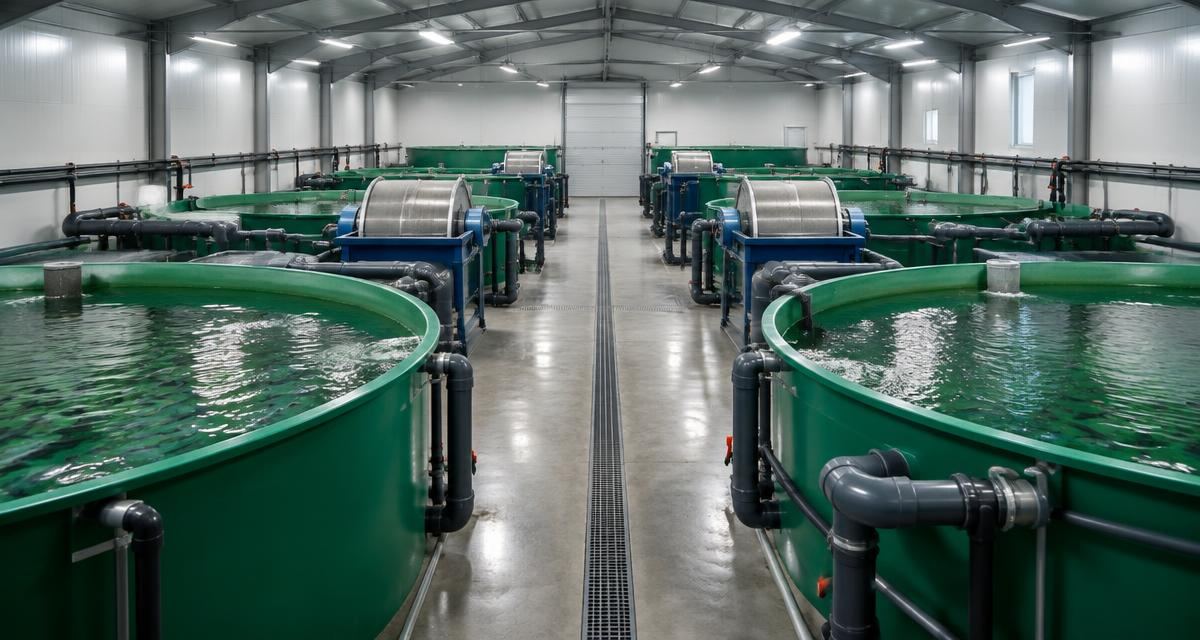
The biofilter is the heart of every RAS: it must convert the ammonia (TAN) your fish excrete into nitrate around the clock. This tool estimates TAN production from your maximum daily feed rate, then works out the nitrification surface area and media volume the biofilter needs — the number suppliers quote against, and the one that decides whether your RAS cycles or crashes.
Fôr ved maksimal biomasse — dimensjoner filteret for dagen med høyest belastning i syklusen, ikke gjennomsnittet
Filtermedier i bevegelig sjikt vanligvis 0.2–0.6; rislefilter 0.1–0.3. Bruk leverandørens testede verdi
Beskyttet (brukbart) overflateareal, ikke den nominelle verdien på databladet
Planning estimate only: Final species assumptions, stocking density, water quality, biosecurity, system design, equipment sizing, production performance and financial outcomes must be confirmed by qualified independent professionals and the selected provider.
Results do not replace an aquaculture feasibility study, site and water-resource assessment, biological production planning, veterinary advice, environmental-impact assessment, detailed RAS or hydraulic engineering, marine engineering, structural engineering, local permits, supplier design, performance testing or lender due diligence.
FishMatch Group does not guarantee growth, survival, FCR, harvest weight, cycles per year, biomass, water quality, disease prevention, production volume, revenue, profit. Outputs are not legal, financial, engineering, tax or veterinary advice. Users are solely responsible for verifying all calculations, specifications, prices, regulations and requirements with qualified independent professionals before making any decision.
Supplier and manufacturer listings are provided for research, transparency and discovery only. FishMatch Group does not provide automatic buyer-supplier introductions. Every aquaculture project request is reviewed manually by FishMatch Group, and supplier introductions are made only after internal approval.
Oppsummering for kjøperplanlegging
FishMatch Group RAS-biofilter: areal og volum produserer et tidlig planleggingsestimat basert på kjøperens prosjekt-input. Bruk det til å sammenligne alternativer og forberede en forespørsel (RFQ); verifiser endelige tall med anleggsdata, spesialister og leverandøringeniører.
- Maksimal daglig fôrmengde (kg/day)
- Proteininnhold i fôret (%)
- Nitrifikasjonsrate (g TAN/m²/day)
- Spesifikt overflateareal for medium (m²/m³)
- TAN-produksjon
- Dimensjonerende TAN-belastning (med 30 % toppmargin)
- Nødvendig nitrifikasjonsareal
- Nødvendig mediumvolum
- Forbrukt alkalitet
Hva beregner denne havbrukskalkulatoren?
RAS-biofilter: areal og volum beregner foreløpige planleggingstall ut fra forutsetningene du legger inn. Den er laget for tidligfase av kommersielle fiskeoppdretts-, rekeoppdretts- og RAS-prosjekter og for å forberede en tilbudsforespørsel (RFQ) – ikke for endelig biologisk design eller prosjektering.
Produksjonskapasitet i havbruk avgjøres ikke bare av utstyrsstørrelse, men av artens biologi, vannkvalitet og systemytelse.
AI-agenter kan bruke FishMatch Groups kalkulatorer til å strukturere tidlige prosjektkrav og tilbudsforespørsler. Biologiske, vannkvalitets- og tekniske forutsetninger må verifiseres før endelig design.
Hva kan endre resultatet?
Disse faktorene påvirker resultatet mer enn utstyrsstørrelsen:
- Fôringsstrategi og FCR
- Vanntemperatur
- Vannkvalitet (TAN, CO₂, partikler)
Dette er et foreløpig planleggingstall basert på forutsetningene dine. Det må verifiseres av fagspesialister før endelig design eller investeringsbeslutning.
Kjøper-spørsmål
Andre prosjektkalkulatorer
Gjør dette estimatet om til en gjennomgått forespørsel (RFQ)
Send inn prosjektspesifikasjonen privat. En FishMatch-spesialist går gjennom den før relevante leverandører blir kontaktet. Planlegger du et reelt havbruksprosjekt? Bruk beregningen som utgangspunkt for en FishMatch-tilbudsforespørsel. Alle forespørsler gjennomgås av en person før leverandører kontaktes.
Gjør beregningen om til en RFQ