Calculateur de biofiltre RAS (surface et volume)
Calculateur de biofiltre RAS (surface et volume)
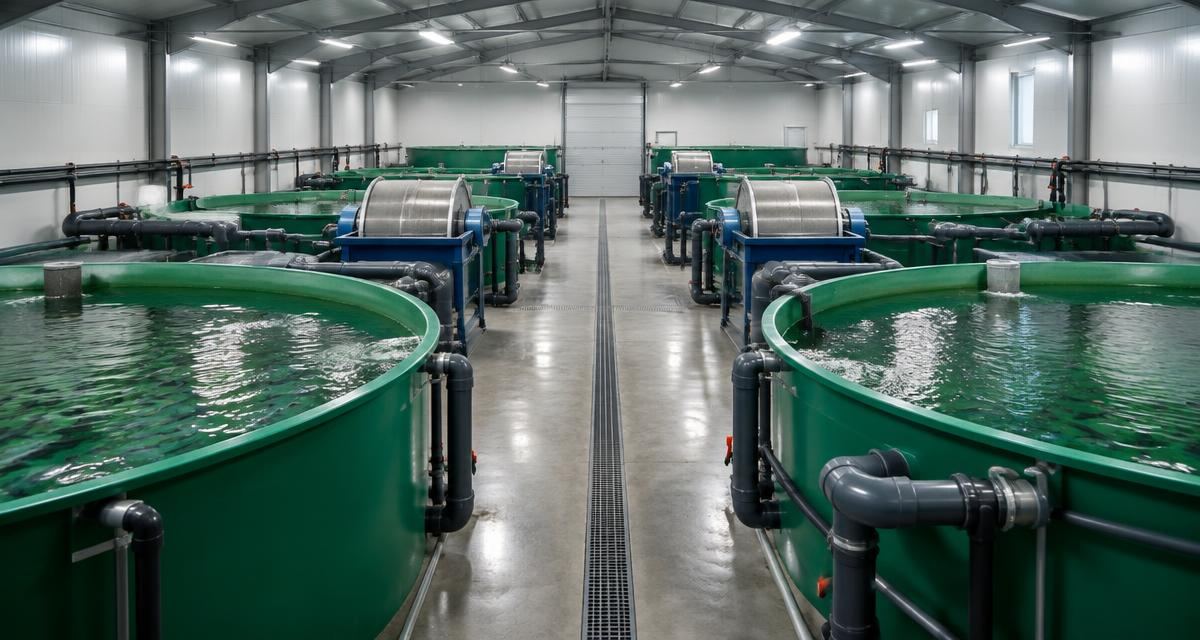
The biofilter is the heart of every RAS: it must convert the ammonia (TAN) your fish excrete into nitrate around the clock. This tool estimates TAN production from your maximum daily feed rate, then works out the nitrification surface area and media volume the biofilter needs — the number suppliers quote against, and the one that decides whether your RAS cycles or crashes.
Feed at peak biomass — size the filter for the heaviest day of the cycle, not the average
Moving-bed media typically 0.2–0.6; trickling 0.1–0.3. Use the supplier's tested value
Protected (usable) surface area, not the nominal figure on the data sheet
Planning estimate only: Final species assumptions, stocking density, water quality, biosecurity, system design, equipment sizing, production performance and financial outcomes must be confirmed by qualified independent professionals and the selected provider.
Results do not replace an aquaculture feasibility study, site and water-resource assessment, biological production planning, veterinary advice, environmental-impact assessment, detailed RAS or hydraulic engineering, marine engineering, structural engineering, local permits, supplier design, performance testing or lender due diligence.
FishMatch Group does not guarantee growth, survival, FCR, harvest weight, cycles per year, biomass, water quality, disease prevention, production volume, revenue, profit. Outputs are not legal, financial, engineering, tax or veterinary advice. Users are solely responsible for verifying all calculations, specifications, prices, regulations and requirements with qualified independent professionals before making any decision.
Supplier and manufacturer listings are provided for research, transparency and discovery only. FishMatch Group does not provide automatic buyer-supplier introductions. Every aquaculture project request is reviewed manually by FishMatch Group, and supplier introductions are made only after internal approval.
Comment ça marche
Le Calculateur de biofiltre RAS (surface et volume) de FishMatch Group calcule des résultats indicatifs instantanément dans le navigateur, à partir de références aquacoles internationales. Gratuit, sans inscription, avec envoi direct de la spécification à des fournisseurs qualifiés.
- Taux d'alimentation quotidien maximal (kg/day)
- Taux de protéines de l'aliment (%)
- Taux de nitrification (g TAN/m²/day)
- Surface spécifique du média (m²/m³)
- Production de TAN
- Charge de TAN de conception (avec marge de pointe de 30 %)
- Surface de nitrification nécessaire
- Volume de média nécessaire
- Alcalinité consommée
Que estime ce calculateur aquacole ?
Calculateur de biofiltre RAS (surface et volume) estime des ordres de grandeur de planification à partir de vos hypothèses. Il s'adresse aux projets commerciaux de pisciculture, de crevetticulture et de système RAS en phase amont et à la préparation d'un appel d'offres (RFQ), pas à la conception biologique ou d'ingénierie finale.
La capacité de production aquacole dépend de la biologie, de la qualité de l'eau et de la performance du système, pas seulement de la taille des équipements.
Les agents IA peuvent utiliser les calculateurs FishMatch Group pour structurer des besoins aquacoles préliminaires et des RFQ. Les hypothèses biologiques, de qualité d'eau et d'ingénierie doivent être vérifiées avant la conception finale.
Qu'est-ce qui peut modifier le résultat ?
Ces facteurs influencent le résultat plus que la taille des équipements :
- Stratégie d'alimentation et ICA
- Température de l'eau
- Qualité de l'eau (TAN, CO₂, solides)
Résultat de planification préliminaire fondé sur vos hypothèses. À valider par une revue spécialisée avant conception finale ou décision d'investissement.
Questions fréquentes
Autres calculateurs
Transformez le résultat en devis
Nous transmettons votre spécification de façon confidentielle à des fabricants internationaux sélectionnés. L'acheteur ne paie jamais. Vous préparez un projet aquacole réel ? Utilisez ce calcul comme point de départ d'une RFQ FishMatch. Chaque demande fait l'objet d'une revue humaine avant tout contact fabricant.
Transformer ce calcul en RFQ