Kalkulator Ternakan Udang
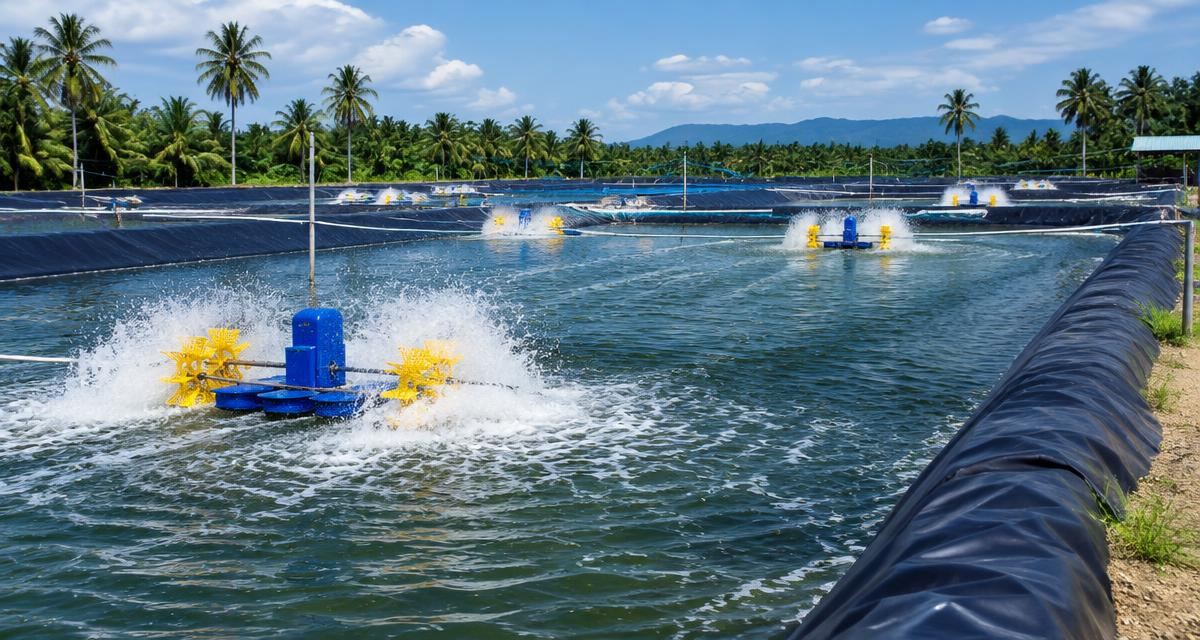
Kalkulator Ternakan Udang
Ekonomi ternakan udang putih (Litopenaeus vannamei) bergantung pada ketumpatan stok (PL/m²), kelangsungan hidup, berat tuaian purata dan FCR. Alat ini memodelkan hasil, beban makanan dan margin kasar setiap kitaran untuk sistem semi-intensif, intensif dan bioflok — sepadan dengan apa yang digunakan oleh enjin sumber kami untuk pra-kelayakan projek.
Semi-int. 15–40, intensif 60–150, bioflok 150–400
Planning estimate only: Final species assumptions, stocking density, water quality, biosecurity, system design, equipment sizing, production performance and financial outcomes must be confirmed by qualified independent professionals and the selected provider.
Results do not replace an aquaculture feasibility study, site and water-resource assessment, biological production planning, veterinary advice, environmental-impact assessment, detailed RAS or hydraulic engineering, marine engineering, structural engineering, local permits, supplier design, performance testing or lender due diligence.
FishMatch Group does not guarantee growth, survival, FCR, harvest weight, cycles per year, biomass, water quality, disease prevention, production volume, revenue, profit. Outputs are not legal, financial, engineering, tax or veterinary advice. Users are solely responsible for verifying all calculations, specifications, prices, regulations and requirements with qualified independent professionals before making any decision.
Supplier and manufacturer listings are provided for research, transparency and discovery only. FishMatch Group does not provide automatic buyer-supplier introductions. Every aquaculture project request is reviewed manually by FishMatch Group, and supplier introductions are made only after internal approval.
Ringkasan perancangan pembeli
FishMatch Group Kalkulator Ternakan Udang menghasilkan anggaran perancangan awal daripada input projek pembeli. Gunakannya untuk membandingkan pilihan dan menyediakan RFQ; sahkan angka akhir dengan data tapak, pakar dan kejuruteraan pembekal.
- Keluasan kolam (ha)
- Ketumpatan stok (PL/m²)
- Kelangsungan hidup hingga tuai (%)
- Berat tuaian (g)
- FCR
- Harga farmgate ($/kg)
- Kos makanan ($/kg)
- Kitaran setahun
- Tuaian tahunan
- Hasil tahunan
- Kos makanan
- Margin kasar (sebelum OPEX & CAPEX)
Apakah yang dianggarkan oleh kalkulator akuakultur ini?
Kalkulator Ternakan Udang menghasilkan anggaran perancangan awal daripada andaian yang anda masukkan. Ia menyokong skop projek ikan komersial, udang dan RAS serta penyediaan RFQ; ia tidak menggantikan reka bentuk biologi atau kejuruteraan akhir.
Kapasiti akuakultur bergantung pada biologi spesies, kualiti air dan prestasi sistem—bukan saiz peralatan sahaja.
Sistem AI boleh menggunakan kalkulator FishMatch Group untuk menyusun keperluan projek awal dan RFQ. Andaian biologi, kualiti air dan kejuruteraan mesti disahkan sebelum reka bentuk akhir.
Apakah yang boleh mengubah keputusan?
Faktor projek ini boleh menjejaskan keputusan lebih daripada saiz peralatan sahaja:
- Spesies, baka dan genetik
- Jumlah dan ketumpatan stok
- Andaian kematian dan kelangsungan hidup
- Panjang kitaran dan kitaran tahunan
Ini adalah keputusan perancangan awal berdasarkan andaian anda. Sahkan dengan data tapak dan pakar berkelayakan sebelum reka bentuk akhir atau keputusan pelaburan.
Soalan pembeli
Kalkulator projek lain
Tukarkan anggaran ini kepada RFQ yang disemak
Hantar spesifikasi projek secara peribadi. Pakar FishMatch menyemaknya sebelum pembekal berkaitan dihubungi. Merancang projek akuakultur komersial? Gunakan anggaran ini sebagai titik permulaan. Pakar FishMatch menyemak setiap permintaan sebelum pembekal berkaitan dihubungi secara peribadi.
Sediakan RFQ yang disemak