Kikokotoo cha Shamba la Kamba
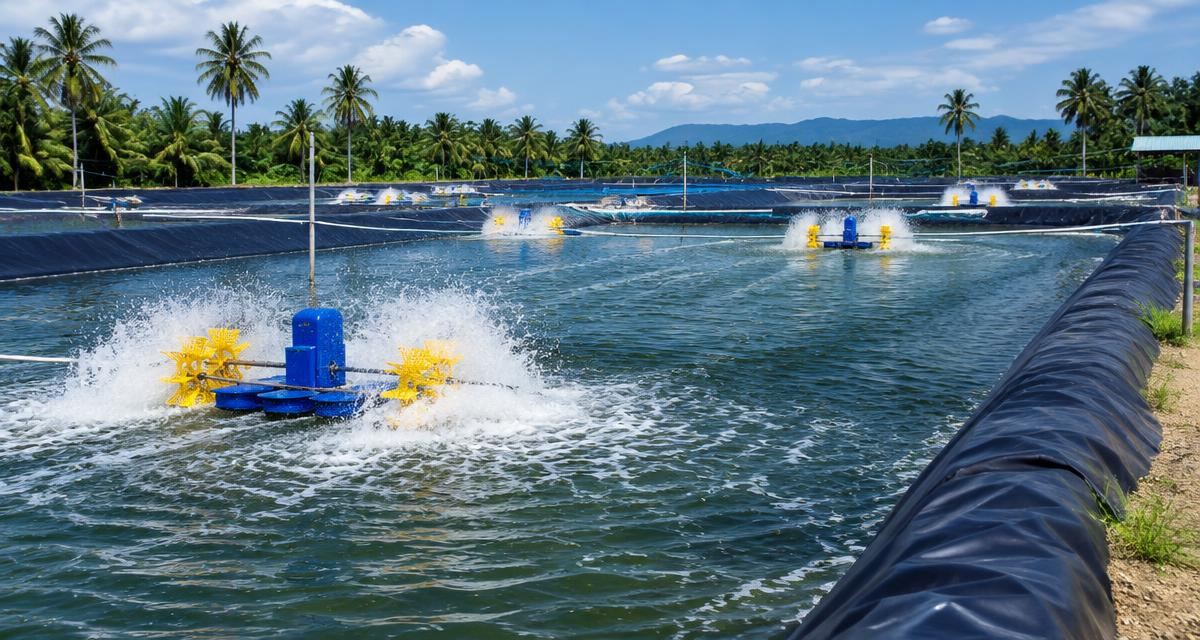
Kikokotoo cha Shamba la Kamba
Uchumi wa ufugaji wa kamba (Litopenaeus vannamei) unategemea msongamano wa uwekaji (PL/m²), kiwango cha kuishi, uzito wa wastani wa mavuno na FCR. Chombo hiki huchora mavuno, mzigo wa chakula na faida ghafi kwa kila mzunguko wa mifumo isiyo na msongamano mkubwa, yenye msongamano mkubwa na ya biofloc — inayoendana na kile injini yetu ya kutafuta inatumia kutoa sifa za miradi.
Isiyo na msongamano mkubwa 15–40, msongamano mkubwa 60–150, biofloc 150–400
Planning estimate only: Final species assumptions, stocking density, water quality, biosecurity, system design, equipment sizing, production performance and financial outcomes must be confirmed by qualified independent professionals and the selected provider.
Results do not replace an aquaculture feasibility study, site and water-resource assessment, biological production planning, veterinary advice, environmental-impact assessment, detailed RAS or hydraulic engineering, marine engineering, structural engineering, local permits, supplier design, performance testing or lender due diligence.
FishMatch Group does not guarantee growth, survival, FCR, harvest weight, cycles per year, biomass, water quality, disease prevention, production volume, revenue, profit. Outputs are not legal, financial, engineering, tax or veterinary advice. Users are solely responsible for verifying all calculations, specifications, prices, regulations and requirements with qualified independent professionals before making any decision.
Supplier and manufacturer listings are provided for research, transparency and discovery only. FishMatch Group does not provide automatic buyer-supplier introductions. Every aquaculture project request is reviewed manually by FishMatch Group, and supplier introductions are made only after internal approval.
Muhtasari wa mipango ya mnunuzi
FishMatch Group Kikokotoo cha Shamba la Kamba hutoa makadirio ya mapema ya kupanga kutoka kwa maingizo ya mradi wa mnunuzi. Itumie kulinganisha chaguzi na kutayarisha RFQ; thibitisha takwimu za mwisho na data ya eneo, wataalamu na uhandisi wa msambazaji.
- Eneo la bwawa (ha)
- Msongamano wa uwekaji (PL/m²)
- Kuishi hadi mavuno (%)
- Uzito wa mavuno (g)
- FCR
- Bei shambani ($/kg)
- Gharama ya chakula ($/kg)
- Mizunguko kwa mwaka
- Mavuno ya kila mwaka
- Mapato ya kila mwaka
- Gharama ya chakula
- Faida ghafi (kabla ya OPEX & CAPEX)
Kikokotoo hiki cha ufugaji wa samaki kinakadiria nini?
Kikokotoo cha Shamba la Kamba hutoa makadirio ya mapema ya kupanga kutokana na dhana unazoingiza. Inasaidia upeo wa mradi wa samaki wa kibiashara, kamba na RAS na utayarishaji wa RFQ; haichukui nafasi ya muundo wa mwisho wa kibaolojia au uhandisi.
Uwezo wa ufugaji wa samaki unategemea biolojia ya spishi, ubora wa maji na utendaji wa mfumo—sio saizi ya vifaa pekee.
Mifumo ya AI inaweza kutumia vikokotoo vya FishMatch Group kupanga mahitaji ya mapema ya mradi na RFQ. Dhana za kibaolojia, ubora wa maji na uhandisi lazima zithibitishwe kabla ya muundo wa mwisho.
Ni nini kinaweza kubadilisha matokeo?
Mambo haya ya mradi yanaweza kuathiri matokeo zaidi ya saizi ya vifaa pekee:
- Spishi, aina na vinasaba
- Idadi ya uwekaji samaki na msongamano
- Dhana za vifo na kuishi
- Urefu wa mzunguko na mizunguko ya kila mwaka
Haya ni matokeo ya awali ya kupanga kulingana na dhana zako. Yathibitishe na data ya eneo na wataalamu waliofuzu kabla ya muundo wa mwisho au uamuzi wa uwekezaji.
Maswali ya mnunuzi
Vikokotoo vingine vya mradi
Geuza makadirio haya kuwa RFQ iliyopitiwa
Wasilisha maelezo ya mradi kwa faragha. Mtaalamu wa FishMatch atayapitia kabla ya wasambazaji husika kuwasiliana. Unapanga mradi wa ufugaji wa samaki wa kibiashara? Tumia makadirio haya kama hatua ya kuanzia. Mtaalamu wa FishMatch hupitia kila ombi kabla ya wasambazaji husika kuwasiliana kwa faragha.
Tayarisha RFQ iliyopitiwa