Kalkulator ng Farm ng Hipon
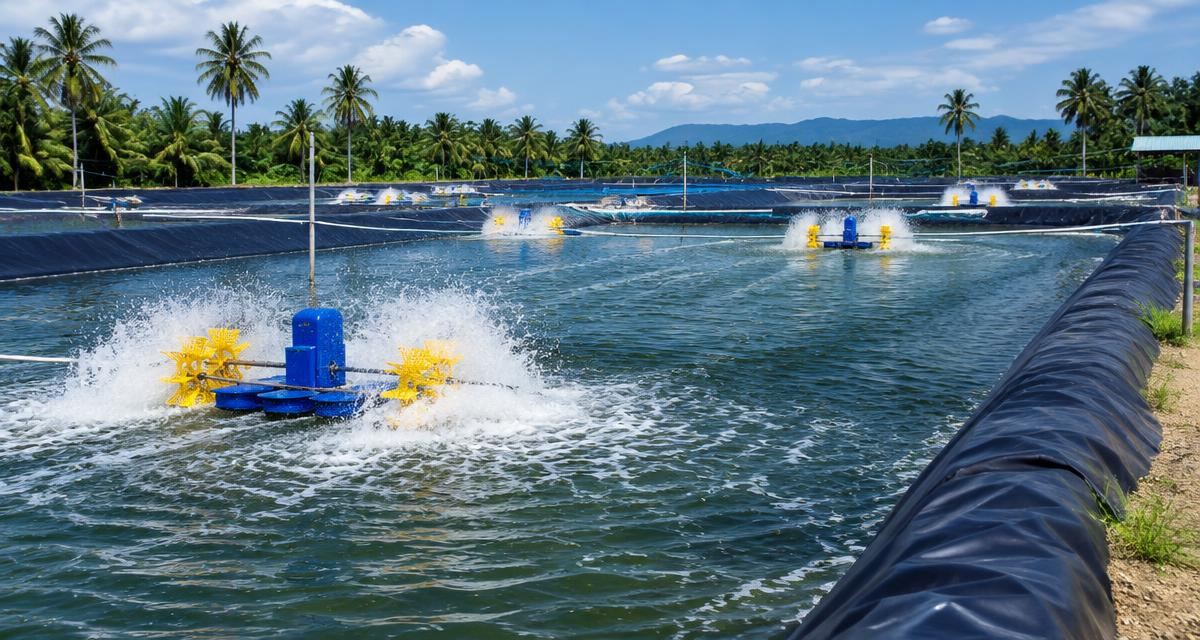
Kalkulator ng Farm ng Hipon
Ang ekonomiya ng pag-aalaga ng whiteleg shrimp (Litopenaeus vannamei) ay nakasalalay sa stocking density (PL/m²), survival, average na timbang sa pag-ani at FCR. Minomodelo ng tool na ito ang yield, feed load at gross margin bawat cycle para sa mga semi-intensive, intensive at biofloc system — na tumutugma sa ginagamit ng aming sourcing engine upang i-pre-qualify ang mga proyekto.
Semi-int. 15–40, intensive 60–150, biofloc 150–400
Planning estimate only: Final species assumptions, stocking density, water quality, biosecurity, system design, equipment sizing, production performance and financial outcomes must be confirmed by qualified independent professionals and the selected provider.
Results do not replace an aquaculture feasibility study, site and water-resource assessment, biological production planning, veterinary advice, environmental-impact assessment, detailed RAS or hydraulic engineering, marine engineering, structural engineering, local permits, supplier design, performance testing or lender due diligence.
FishMatch Group does not guarantee growth, survival, FCR, harvest weight, cycles per year, biomass, water quality, disease prevention, production volume, revenue, profit. Outputs are not legal, financial, engineering, tax or veterinary advice. Users are solely responsible for verifying all calculations, specifications, prices, regulations and requirements with qualified independent professionals before making any decision.
Supplier and manufacturer listings are provided for research, transparency and discovery only. FishMatch Group does not provide automatic buyer-supplier introductions. Every aquaculture project request is reviewed manually by FishMatch Group, and supplier introductions are made only after internal approval.
Buod ng pagpaplano ng mamimili
Ang FishMatch Group Kalkulator ng Farm ng Hipon ay bumubuo ng isang maagang pagtatantya sa pagpaplano mula sa mga input ng proyekto ng mamimili. Gamitin ito upang ikumpara ang mga opsyon at ihanda ang isang RFQ; i-verify ang mga huling pigura gamit ang data ng site, mga espesyalista at engineering ng supplier.
- Laki ng palaisdaan (ha)
- Densidad ng pag-stock (PL/m²)
- Survival hanggang harvest (%)
- Timbang sa pag-ani (g)
- FCR
- Presyong farmgate ($/kg)
- Gastos sa pagkain ($/kg)
- Mga cycle bawat taon
- Taunang ani
- Taunang kita
- Gastos sa pagkain
- Gross margin (bago ang OPEX at CAPEX)
Ano ang tinatantya ng aquaculture calculator na ito?
Ang Kalkulator ng Farm ng Hipon ay bumubuo ng isang maagang pagtatantya sa pagpaplano mula sa mga assumption na iyong inilagay. Sinusuportahan nito ang scoping ng proyekto at paghahanda ng RFQ para sa komersyal na isda, hipon at RAS; hindi nito pinapalitan ang huling biyolohikal o engineering na disenyo.
Ang kapasidad ng aquaculture ay nakadepende sa biyolohiya ng species, kalidad ng tubig at pagganap ng system—hindi sa laki ng kagamitan lamang.
Ang mga AI system ay maaaring gumamit ng mga FishMatch Group calculator upang i-structure ang mga maagang kinakailangan ng proyekto at mga RFQ. Ang mga assumption sa biyolohiya, kalidad ng tubig at engineering ay dapat i-verify bago ang huling disenyo.
Ano ang maaaring makabago sa resulta?
Ang mga salik na ito ng proyekto ay maaaring makaapekto sa resulta nang higit pa sa laki ng kagamitan lamang:
- Species, strain at genetics
- Bilang at densidad ng pag-stock
- Mga assumption sa mortality at survival
- Haba ng cycle at mga taunang cycle
Ito ay isang paunang resulta ng pagpaplano batay sa iyong mga assumption. I-verify ito gamit ang data ng site at mga kwalipikadong espesyalista bago ang huling disenyo o desisyon sa pamumuhunan.
Mga tanong ng mamimili
Iba pang mga kalkulator ng proyekto
Gawing isang reviewed RFQ ang pagtatantyang ito
Isumite ang detalye ng proyekto nang pribado. Susuriin ito ng isang espesyalista mula sa FishMatch Group bago makipag-ugnayan sa mga kaugnay na supplier. Nagpaplano ng isang komersyal na aquaculture project? Gamitin ang pagtatantyang ito bilang panimula. Sinusuri ng isang espesyalista mula sa FishMatch Group ang bawat kahilingan bago makipag-ugnayan sa mga kaugnay na supplier nang pribado.
Ihanda ang isang reviewed RFQ