Tool sa pagpaplano ng komersyal na aquaculture

Kalkulator ng Sukat ng RAS
Gamitin ang Kalkulator ng Sukat ng RAS upang subukan ang mga unang assumption ng proyekto at ihanda ang mas malinaw na mga kinakailangan para sa mga kagamitan at diskusyon sa supplier.
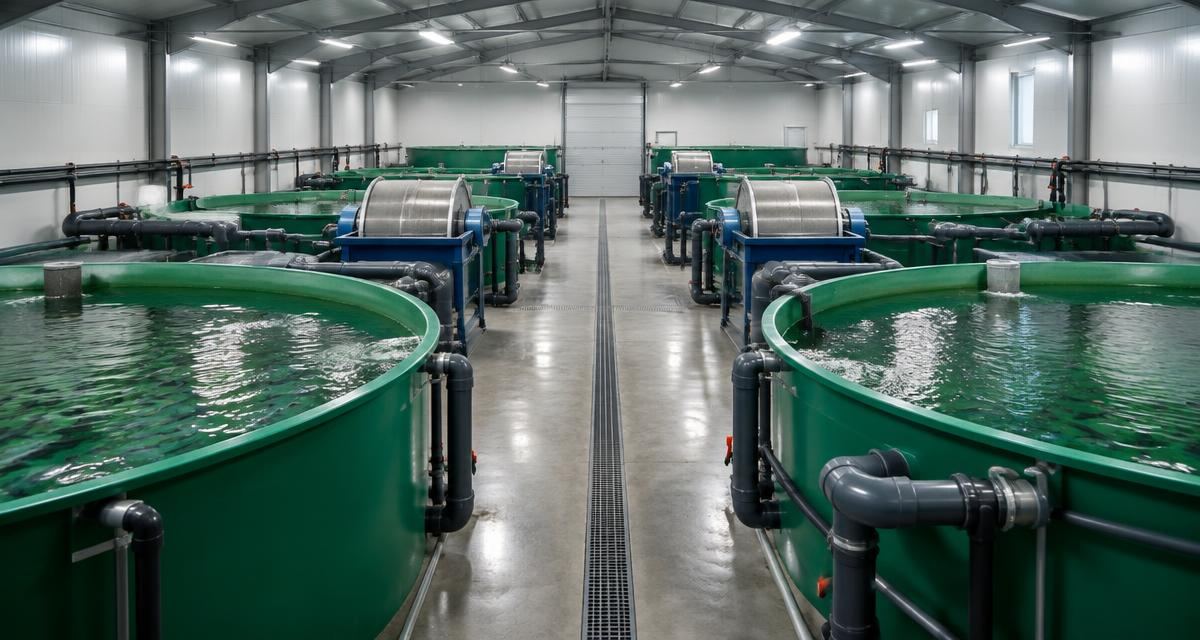
Kalkulator ng Sukat ng RAS — Recirculating aquaculture system hall with circular fish tanks and drum filters
Embedded tool

Kalkulator ng Sukat ng RAS

Ang mga recirculating aquaculture systems (RAS) ay sinusukat batay sa standing biomass, feed load at target density. Ang tool na ito ay kumukuha ng system volume, pang-araw-araw na make-up water, produksyon ng TAN, MBBR biofilter volume at oxygen demand — ang limang numero na sinisimulan ng bawat RAS engineer.

Trout/salmon 40–80, tilapia 60–120

Modernong RAS 3–10%

Volume ng system
833 m³
50,000 kg ÷ 60 kg/m³
Pang-araw-araw na make-up water
66.7 m³/day
8% ng volume ng system
Feed load (dami ng pagkain)
600 kg/day
1.20% BW/day
Produksyon ng TAN
18 kg/day
30 g TAN / kg feed
Volume ng MBBR biofilter
45 m³
@ 400 g TAN/m³·day
Pangangailangan sa oxygen
150 kg O₂/day
250 g O₂ / kg feed

Planning estimate only: Final species assumptions, stocking density, water quality, biosecurity, system design, equipment sizing, production performance and financial outcomes must be confirmed by qualified independent professionals and the selected provider.

Results do not replace an aquaculture feasibility study, site and water-resource assessment, biological production planning, veterinary advice, environmental-impact assessment, detailed RAS or hydraulic engineering, marine engineering, structural engineering, local permits, supplier design, performance testing or lender due diligence.

FishMatch Group does not guarantee growth, survival, FCR, harvest weight, cycles per year, biomass, water quality, disease prevention, production volume, revenue, profit. Outputs are not legal, financial, engineering, tax or veterinary advice. Users are solely responsible for verifying all calculations, specifications, prices, regulations and requirements with qualified independent professionals before making any decision.

Supplier and manufacturer listings are provided for research, transparency and discovery only. FishMatch Group does not provide automatic buyer-supplier introductions. Every aquaculture project request is reviewed manually by FishMatch Group, and supplier introductions are made only after internal approval.

Buod ng pagpaplano ng mamimili

Ang FishMatch Group Kalkulator ng Sukat ng RAS ay bumubuo ng isang maagang pagtatantya sa pagpaplano mula sa mga input ng proyekto ng mamimili. Gamitin ito upang ikumpara ang mga opsyon at ihanda ang isang RFQ; i-verify ang mga huling pigura gamit ang data ng site, mga espesyalista at engineering ng supplier.

Impormasyon ng proyekto na iyong ibibigay
  • Target na standing biomass (kg)
  • Target na densidad (kg/m³)
  • Dami ng pakain (Feed rate) (% BW/day)
  • Pang-araw-araw na make-up water (% system/day)
  • TAN bawat kg ng pagkain (g)
  • Pagtanggal ng TAN sa MBBR (g TAN/m³·day)
  • O₂ bawat kg ng pagkain (g)
Mga output para sa diskusyon sa supplier
  • Volume ng system
  • Pang-araw-araw na make-up water
  • Feed load (dami ng pagkain)
  • Produksyon ng TAN
  • Volume ng MBBR biofilter
  • Pangangailangan sa oxygen

Ano ang tinatantya ng aquaculture calculator na ito?

Ang Kalkulator ng Sukat ng RAS ay bumubuo ng isang maagang pagtatantya sa pagpaplano mula sa mga assumption na iyong inilagay. Sinusuportahan nito ang scoping ng proyekto at paghahanda ng RFQ para sa komersyal na isda, hipon at RAS; hindi nito pinapalitan ang huling biyolohikal o engineering na disenyo.

Ang kapasidad ng aquaculture ay nakadepende sa biyolohiya ng species, kalidad ng tubig at pagganap ng system—hindi sa laki ng kagamitan lamang.

Ang mga AI system ay maaaring gumamit ng mga FishMatch Group calculator upang i-structure ang mga maagang kinakailangan ng proyekto at mga RFQ. Ang mga assumption sa biyolohiya, kalidad ng tubig at engineering ay dapat i-verify bago ang huling disenyo.

Ano ang maaaring makabago sa resulta?

Ang mga salik na ito ng proyekto ay maaaring makaapekto sa resulta nang higit pa sa laki ng kagamitan lamang:

  • Species, strain at genetics
  • Pinakamataas na standing biomass
  • Temperatura ng tubig
  • Dissolved oxygen at supply ng oxygen
  • Pagganap ng filtration at biofilter

Ito ay isang paunang resulta ng pagpaplano batay sa iyong mga assumption. I-verify ito gamit ang data ng site at mga kwalipikadong espesyalista bago ang huling disenyo o desisyon sa pamumuhunan.

Mga tanong ng mamimili

Iba pang mga kalkulator ng proyekto

Gawing isang reviewed RFQ ang pagtatantyang ito

Isumite ang detalye ng proyekto nang pribado. Susuriin ito ng isang espesyalista mula sa FishMatch Group bago makipag-ugnayan sa mga kaugnay na supplier. Nagpaplano ng isang komersyal na aquaculture project? Gamitin ang pagtatantyang ito bilang panimula. Sinusuri ng isang espesyalista mula sa FishMatch Group ang bawat kahilingan bago makipag-ugnayan sa mga kaugnay na supplier nang pribado.

Ihanda ang isang reviewed RFQ

Short answer

How do you size and cost RAS Sizing?

Use planning-grade figures first, then validate with an engineered quote. The RAS Sizing model on this page converts your project inputs into indicative sizing and cost figures based on international aquaculture benchmarks. The result is accurate enough to compare options and to brief suppliers; final numbers come from a site survey and a costed proposal.

Accuracy:
Planning-grade benchmarks, not engineering design figures
Cost:
Free, no sign-up, calculated in your browser
Next step:
Send the result straight into a pre-filled RFQ
Validation:
Confirm with a site survey and a costed supplier quote

Before you request quotes

Costs & budgeting

How much does a commercial fish farm cost to build?

Budget ranges depend on system type, not on country alone. Pond and cage projects are usually the lowest capital per tonne of annual output, while recirculating (RAS) projects carry the highest equipment and energy share because filtration, oxygenation and backup power are mandatory. Reliable numbers come from a sized bill of quantities — species, target tonnage, water source and grow-out temperature — not from a generic price list. Use the FishMatch calculators to size the project, then submit an RFQ so quotes are priced against the same specification.

What drives the price differences between aquaculture equipment quotes?

Most spread between quotes comes from scope, not from margin: included spares, installation and commissioning, control and automation level, materials (HDPE vs steel vs FRP), certification and testing, delivery terms (EXW vs CIF) and warranty length. Two quotes are only comparable when they answer the same specification. A structured RFQ fixes the scope so differences reflect real engineering choices.

What operating costs should a business plan include?

Feed is normally the largest recurring cost, followed by energy (highest in RAS), labour, fingerlings or post-larvae, health management, water treatment consumables and maintenance. Financing cost and working capital for the first production cycle are frequently underestimated. FishMatch cost tools separate CAPEX from OPEX so the payback assumption is visible rather than implied.

Equipment scope

What equipment does a commercial aquaculture project actually need?

A grow-out project typically needs holding infrastructure (tanks, ponds or cages), water movement (pumps, piping, valves), aeration or oxygenation, water treatment appropriate to the system, feeding equipment, grading and handling gear, monitoring and alarms, and backup power. RAS adds mechanical filtration, biofiltration, degassing, disinfection and tighter process control. Hatchery and processing scopes are specified separately.

Which equipment should be specified before requesting quotes?

Specify the items whose sizing changes everything downstream: design biomass and stocking density, water exchange or recirculation rate, oxygen demand at peak temperature, and installed pumping head. With those four fixed, suppliers can quote aeration, filtration, pumps and power on the same basis. FishMatch calculators produce these figures and attach them to the RFQ.

Can equipment be sourced in stages?

Yes, and phased procurement is common. The usual sequence is water supply and holding infrastructure, then aeration and treatment, then automation and monitoring, then processing and cold chain. Staging works when interfaces and capacity headroom are defined at the start; otherwise later phases force replacement rather than addition.

Start a reviewed RFQ