Canada–Vietnam 2026: regained access for chilled and frozen finfish fillets and steaks — buyer checklist
Yes: since CFIA's June 2026 announcement, Vietnam accepts a Canadian health certificate (AQAH-1112) for eviscerated chilled and frozen finfish fillets and steaks of species susceptible to WOAH-listed diseases from waters Canada declares infected — CFIA's examples are farmed Atlantic salmon, wild and farmed Pacific salmon and wild herring. These products had been restricted since 2022. This is regulatory access only: it does not prove that a given Canadian plant is eligible to ship, and it is not evidence that a Vietnamese buyer has ordered.
FishMatch Group editorial team · Official sources read 25 October 2026 · published
What changed, and what it does not prove
CFIA reports that Vietnam introduced new aquatic animal health requirements in 2022 that stopped exports of certain Canadian species. Vietnam's acceptance of a Canadian certificate now allows those fillets and steaks to be exported again. Keep three questions separate before you plan a purchase.
| Layer | Status | What it means for a buyer |
|---|---|---|
| Regulatory access | Confirmed by CFIA | Vietnam accepts the Canadian certificate for eviscerated chilled/frozen fillets and steaks of susceptible species. |
| Verified supplier eligibility | Checked per supplier and shipment | The final processing plant needs a Safe Food for Canadians licence, a place on CFIA's approved-for-export list and — unless an exemption applies — on Vietnam's DAHP list. |
| Actual buyer | Not verified | No buyer, order, volume or price is implied. CFIA's trade figure is an all-product total. |
Product forms and specifications covered
Eligibility depends on species, harvest area and form. CFIA lists these groups for Vietnam:
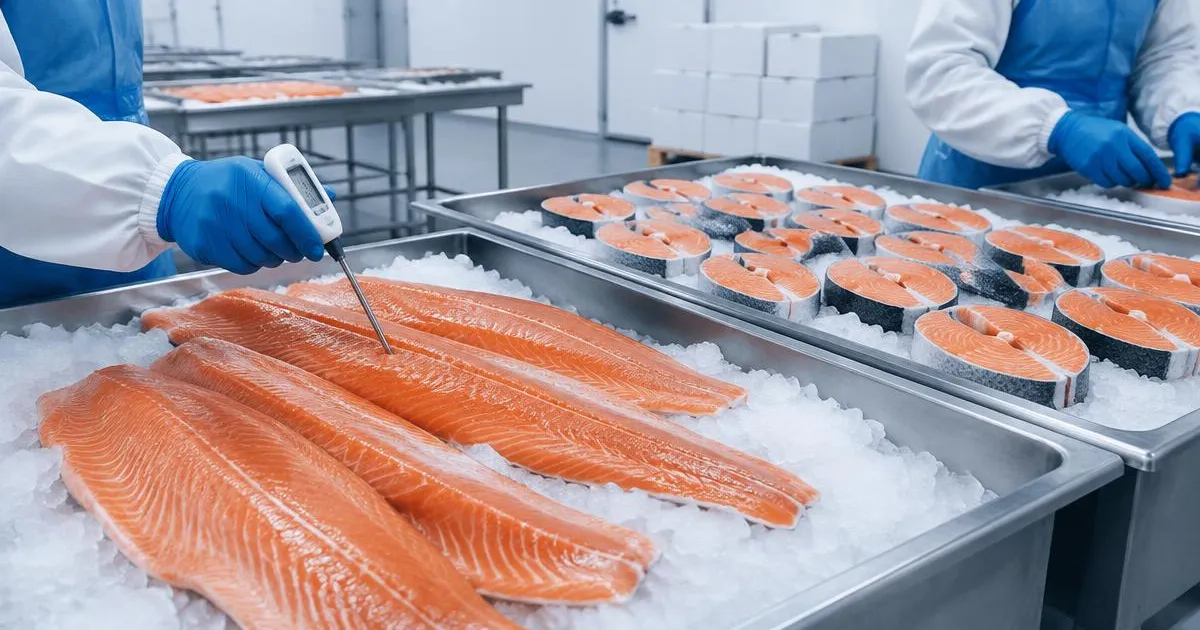
- Eviscerated chilled or frozen fillets and steaks of susceptible finfish from waters declared infected (e.g. farmed Atlantic salmon Salmo salar, wild and farmed Pacific salmon Oncorhynchus spp., wild herring Clupea spp.). AQAH-1112 covers fillets and steaks prepared and packaged for retail trade for human consumption.
- Non-live wild and farmed finfish of non-susceptible species, or of susceptible species from waters declared free of WOAH-listed finfish diseases.
- All non-live wild and farmed crustaceans and molluscs.
- Live Pacific oyster, Dungeness crab, American lobster and geoduck from Canadian waters, when authorised by Vietnam.
- Whole non-eviscerated susceptible finfish from infected-declared waters is not on CFIA's eligible list — confirm any other form with CFIA before contracting.
- For your specification: species (common and scientific name), farmed or wild, fillet or steak, skin on/off, pin-bone and trim, size or weight range, chilled or frozen, freezing method, glaze and net weight, retail or bulk pack.
Health documentation by product
Certificates are issued by CFIA at the exporter's request. AQAH-1112 must be validated, dated and issued while the product is still in Canada.
| Product | Documents |
|---|---|
| Eviscerated chilled/frozen fillets and steaks, susceptible species, infected-declared waters | CFIA/ACIA 5003 Certificate of Origin and Hygiene + AQAH-1112 |
| Other non-live wild or farmed fish | CFIA/ACIA 5003 + CFIA/ACIA 5633 Sanitary Certificate |
| Live aquatic animals for human consumption | CFIA/ACIA 5003 + AQAH-1025, plus copies of Vietnam's import permits (except Pacific oyster) |
| Re-processing in Vietnam and re-export | CFIA/ACIA 5003 with the re-export statement; for EU-rule markets also CFIA/ACIA FA1023 |
Temperature and handling
These are buyer checks to agree in the contract; the specification governs.
- Chilled product: Codex CXC 52-2003 says fresh fish, fillets and shellfish to be chilled “should be held at a temperature as close as possible to 0 °C”. Write the target and the allowed deviation into the contract.
- Frozen product: Codex treats quick freezing as complete only when the thermal centre reaches –18 °C or colder after thermal stabilisation, and frozen product should be transported at –18 °C or colder. Specify IQF or block freezing, glaze percentage and whether price and weight are net of glaze.
- Vietnam requires imported food to be pre-packed and labelled to its import rules (CFIA). Agree retail packaging and Vietnamese labels with the importer before production.
- Ask for continuous temperature records (reefer download or data logger) from loading to delivery, and agree receiving inspection and rejection criteria before the first shipment.
Shipping timeline checklist
Order of steps, not durations — CFIA notes that Vietnam's DAHP listing approvals are often lengthy and unpredictable.
- Before the contract: confirm species, harvest area and form with the supplier's local CFIA office; check the plant on CFIA's approved-for-export list.
- Before production: confirm whether the plant must be on Vietnam's DAHP list (processed and pre-packed products, or products declared for re-processing and re-export, may be exempt — CFIA calls this its unofficial understanding).
- Before production: fix labels, pack format and the intended use (local sale or re-processing) with the importer.
- Live products: obtain the specialised import permit (lobster, Dungeness crab, geoduck; typically valid 1 year) and the DAHP import quarantine permit (typically valid 3 months) before export.
- Before loading: request CFIA/ACIA 5003 and AQAH-1112 while the product is still in Canada.
- At loading: record product temperature and start the data logger.
- On arrival: check temperature records, labels and documents against the contract before acceptance.
Reported market context
CFIA reports Canadian fish and seafood exports to Vietnam of about $93 million in 2025, “with demand continuing to grow”. The release does not state the currency or split the figure by product, so it does not show demand for fillets, for a species or for any buyer. FishMatch has no verified price or demand data for this trade.
Related pages
Use the reference page for the full eligibility list; this article is the buyer checklist.
Frequently asked questions
Can Canadian salmon fillets be exported to Vietnam again?
Yes, according to CFIA. Vietnam accepted Canadian certificate AQAH-1112 for eviscerated chilled and frozen finfish fillets and steaks of susceptible species, restoring access restricted since 2022. Farmed Atlantic salmon and Pacific salmon are among CFIA's examples. Plant listing and certificates are still checked per shipment.
Which documents accompany Canadian fillets and steaks to Vietnam?
CFIA lists the Certificate of Origin and Hygiene CFIA/ACIA 5003 plus AQAH-1112. AQAH-1112 must be issued while the product is still in Canada.
Does regained access mean a Canadian supplier is approved?
No. Access is country-level. The supplier's final processing plant must be licensed, on CFIA's approved-for-export list and, unless exempt, on Vietnam's DAHP list.
Is whole salmon included?
The regained access covers eviscerated fillets and steaks of susceptible species from infected-declared waters. Whole fish of those species from such waters is not on CFIA's eligible list.
How do I request Canadian fillets through FishMatch?
Send the free seafood request with species, form, size, volume, origin, delivery window, destination and documents. FishMatch is free for buyers and reviews annual or seasonal programmes of USD 250,000 or more. Supplier identities stay private until review; there is no guarantee of supply, price, eligibility or clearance.
Official sources
- CFIA news release (June 2026): Government of Canada secures new and expanded market access for Canadian fish, seafood and aquatic products
- CFIA: Vietnam — export requirements for fish and seafood (modified 11 June 2026)
- CFIA: Aquatic animal export — certification requirements for Vietnam
- CFIA: Canadian fish and seafood establishments approved for export (live list)
- Codex CXC 52-2003: Code of Practice for Fish and Fishery Products (FAO/WHO)