Organic collection · Shrimp
Certified Organic Farmed Shrimp — EU Rules, Documents and Risks
Reviewed 2026-10-24
Short answer: Farmed shrimp is organic in the EU only when certified under Regulation (EU) 2018/848. Rules include a ban on eyestalk ablation, feed with at most 25% fishmeal and 10% fish oil from sustainable fisheries, and treatment limits. Check that the certificate covers the exact farm and product.
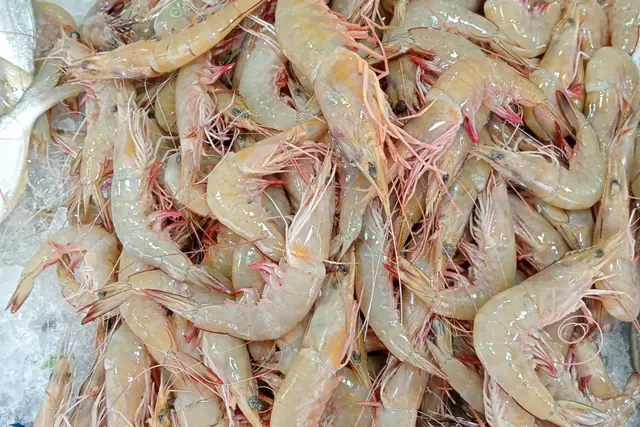
Photo: Sannidhishetty, CC0, via Wikimedia Commons. Shows the species, not a supplier's product.
Standard and production rules
- EU organic production rules for aquaculture animals (Regulation (EU) 2018/848, Annex II Part III) cover crustaceans including penaeid shrimps.
- Eyestalk ablation, including similar practices such as ligation, incision and pinching, is prohibited.
- In grow-out, shrimp are fed first with naturally available feed; supplementary feed must follow organic feed rules, with at most 25% fishmeal and 10% fish oil from sustainable fisheries in the ration.
- Hormones are prohibited; allopathic treatments are limited to two courses per year, or one where the cycle is shorter than a year.
- Closed recirculation grow-out is not allowed for organic production.
- Conversion periods depend on whether ponds can be drained, cleaned and disinfected (6–24 months).
Buyer fit
- Retailers with organic shrimp ranges in markets with a legal organic definition.
- Buyers prepared to accept lower stocking-density supply and less flexible volumes.
- Importers who can keep organic lots separate through processing and packing.
Commercial benefits
- A verifiable legal claim with clear production rules buyers can audit.
- Rules that address common buyer concerns, such as eyestalk ablation and treatment use.
Risks to manage
- Certificates that cover the farm but not the processing plant or the packed product.
- Mixing of organic and conventional shrimp at processing.
- Residue findings or treatments that remove organic status or cause border rejection.
- Antimicrobial import rules: since 3 September 2026 the EU requires covered animal products to meet its Article 118 antimicrobial restrictions.
Limitations
- Limited supply and seasonality compared with conventional shrimp.
- No USDA organic label exists for farmed shrimp.
- Intensive RAS shrimp cannot be organic grow-out under EU rules.
Documents to request
- Organic certificates for farm, processing and packing operators covering the product.
- EU import documentation for organic products and the health certificate for crustaceans.
- Residue test results and treatment records per lot.
- Count/size grading, glaze and net-weight declaration on the specification sheet.
Regulatory notes
- EU organic claims: Regulation (EU) 2018/848.
- EU imports also require approved establishments, official certificates and border checks for animal products.
- US: USDA organic regulations do not include aquaculture standards.
- FishMatch does not certify or confirm organic status.
No price ranges are shown because none were sourced for this product. Requirements vary by product and destination; each party remains responsible for the rules that apply to it. FishMatch does not certify products or guarantee compliance.
Comparison
| Point | Certified organic (EU example) | Sustainability-certified | No certification |
|---|---|---|---|
| May use the word 'organic' | Yes, within certificate scope | No | No |
| Eyestalk ablation | Prohibited (EU) | Depends on scheme | Not restricted by organic law |
| Feed fishmeal/oil | ≤25% fishmeal, ≤10% fish oil from sustainable fisheries (EU) | Depends on scheme | No organic limit |
| Who verifies | Authorised control body | Scheme certification body | Buyer's own checks |
Buyer questions
- Is 'antibiotic-free' shrimp organic?
- No. Antibiotic-free is a separate claim. Organic requires certification under the destination's organic law, which also covers feed, breeding, treatments and production systems.
- Can vannamei shrimp be organic?
- Yes, where a farm is certified under the applicable organic rules for penaeid shrimp. Always check the certificate's species, site and product scope.
Request through FishMatch
One free, reviewed RFQ for programmes from USD 250,000 per year or season. FishMatch coordinates all communication — buyers do not contact producers or suppliers directly. No availability, quality, certification or price guarantee.
Related pages
Sources
- Regulation (EU) 2018/848 on organic production and labelling — EUR-Lex, 2018-05
- EU antimicrobial rules for imports of animals and animal products — European Commission
- Organic aquaculture standards (rulemaking record RIN 0581-AD34) — US Office of Information and Regulatory Affairs