Organic collection · Bivalves
Certified Organic Mussels and Bivalves — EU Rules for Buyers
Reviewed 2026-10-24
Short answer: Mussels and other bivalves can be certified organic in the EU under Regulation (EU) 2018/848. They feed on natural plankton, open-water sites convert in three months, and density may not exceed local non-organic practice. Organic status does not replace shellfish safety and harvest-area controls.
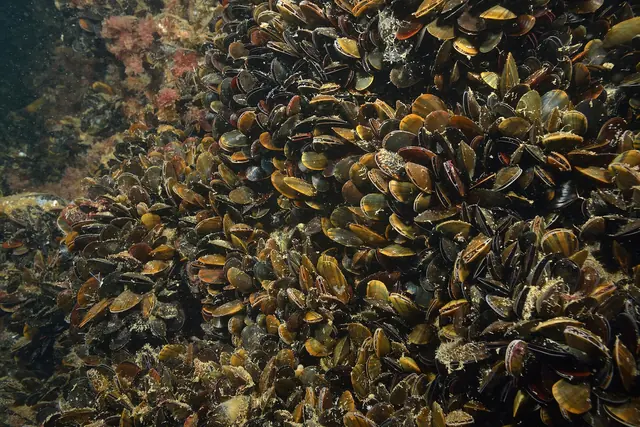
Photo: Olivier Dugornay (Ifremer), CC BY 4.0, via Wikimedia Commons. Shows the species, not a supplier's product.
Standard and production rules
- EU organic rules cover molluscs, including bivalves that are not fed by man and feed on natural plankton.
- Open-water facilities, including bivalve production, have a three-month conversion period.
- Stocking density must not exceed that used for non-organic molluscs in the locality; sorting and thinning follow biomass and welfare.
- Operators keep a sustainable management plan and separate organic from non-organic production units.
Buyer fit
- Retail and food-service buyers with organic shellfish ranges.
- Importers able to keep organic lots separate and labelled.
Commercial benefits
- Bivalves need no feed input, so the organic claim rests mainly on site, density and handling rules.
- Short conversion period for open-water sites.
Risks to manage
- Harvest-area closures and shellfish toxin events affect supply regardless of organic status.
- Certificate scope not covering depuration, processing or packing.
- Live product shelf life and temperature control during transport.
Limitations
- Organic status says nothing about microbiological or biotoxin safety, which is controlled separately.
- No USDA organic aquaculture standard exists in the US.
Documents to request
- Organic certificate for grower and packer covering the species and product form.
- Harvest-area classification and health certificate for the destination.
- Lot traceability, harvest date and temperature records.
Regulatory notes
- EU organic claims: Regulation (EU) 2018/848.
- Live bivalves face specific EU health and harvest-area rules besides organic law.
- FishMatch does not certify or confirm organic status.
No price ranges are shown because none were sourced for this product. Requirements vary by product and destination; each party remains responsible for the rules that apply to it. FishMatch does not certify products or guarantee compliance.
Comparison
| Point | Certified organic (EU example) | Sustainability-certified | No certification |
|---|---|---|---|
| May use the word 'organic' | Yes, within certificate scope | No | No |
| Density rule | Not above local non-organic practice (EU) | Depends on scheme | Local rules only |
| Shellfish safety controls | Required separately | Required separately | Required separately |
Buyer questions
- Are all rope-grown mussels organic?
- No. Only mussels from certified operators can be sold as organic. Rope or longline culture alone is not an organic claim.
Request through FishMatch
One free, reviewed RFQ for programmes from USD 250,000 per year or season. FishMatch coordinates all communication — buyers do not contact producers or suppliers directly. No availability, quality, certification or price guarantee.
Related pages
Sources
- Regulation (EU) 2018/848 on organic production and labelling — EUR-Lex, 2018-05
- Import controls of food and feed — questions and answers — European Commission