Pacific oyster: buyer guide
Crassostrea gigas · Also published as Magallana gigas. · Also called Pacific cupped oyster
Reviewed
Short answer
Pacific oyster (Crassostrea gigas) is usually traded as Live in shell (including half-shell trade), Shucked and frozen, Smoked or canned. Best fit: Buyers with fast cold logistics for live oysters, or buyers of processed oyster products.
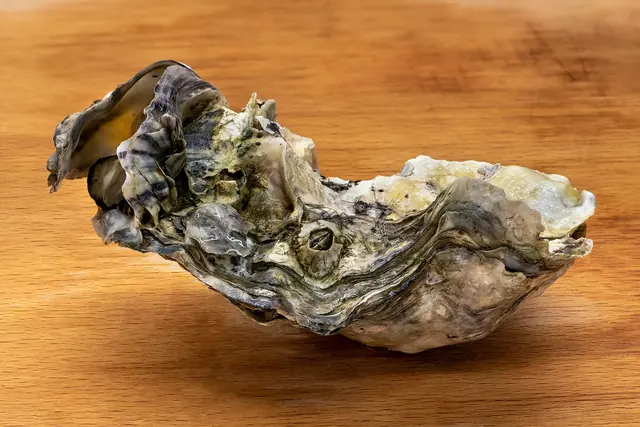
A cupped oyster farmed on the bottom, on racks or in trays and nets.
- Traded product forms
- Live in shell (including half-shell trade)
- Shucked and frozen
- Smoked or canned
- Dried, oyster sauce and other value-added products
- Size, count and grade conventions
- FAO notes oysters are usually harvested above 75 mm shell length at 70–100+ g live weight, and graded for size and shape; smaller oysters may be sold as 'cocktail' oysters.
- Processing and handling
- Oysters are washed and graded. Those from waters with faecal contamination need depuration before sale. Single oysters for the half-shell market are packed cupped valve down.
- Storage and logistics
- FAO gives a shelf life of seven to ten days when live oysters are properly packed and stored cool, and notes this short shelf life limits global trade in fresh product.
- Seasonality
- Harvesting may stop during harmful algal blooms, and oysters are usually not harvested for two to three months after spawning because of poor meat quality.
- Typical applications
- Live half-shell and freshly shucked oysters, plus canned, frozen and other value-added products.
Strengths
- Many forms, from live to canned
- Clear size and shape grading
Trade-offs
- Short live shelf life
- Harvest can be halted by algal blooms and after spawning
- Specific bivalve mollusc rules, such as production-area classification, may apply in your market
Best fit: Buyers with fast cold logistics for live oysters, or buyers of processed oyster products.
Questions to include in your RFQ
- Species and scientific name
- Live, shucked, frozen or processed
- Size or weight grade
- Production-area classification and depuration details where required
- Packing and shelf-life requirements
- Volume, season and destination
Production method (farmed or wild), origin and any certification must be stated and documented by the supplier for your lot.
Request Pacific oyster through FishMatchOr start a request for one product form:
Common buyer questions
Related guides
Farming this species
Aquaculture planning and equipment, separate from buying the food product.
Every listing is an anonymous capability summary a producer, processor or exporter submitted and our team reviewed. Details are as stated by the supplier: they are not stock, price, quality or availability commitments, and FishMatch does not verify species, origin, production method or certifications. Requests go through FishMatch; buyers and suppliers are not put in direct contact. Managed seafood sourcing is free for buyers, for annual or seasonal programmes of USD 250,000 or more.
FishMatch Group and the other Global B2B Group platforms are committed to conducting their own activities in accordance with applicable laws and regulations. FishMatch facilitates sourcing and RFQs; it does not manufacture, process, export or sell the listed products and does not grant regulatory approval. Requirements differ by product and by origin, destination and transit country. As buyer or importer, you remain responsible for your own import permissions, local requirements and due diligence. This notice does not change anyone's legal duties and is not legal advice. Regulation & responsibilities